Lista de correo. Espere su aprobación.
Correo electrónico:
Consultar este grupo

lunes, 23 de septiembre de 2013

EMERGENCIAS: Prácticas Sanitarias para Jeringas Desechables

Vacunación
La mayoría de los programas de inmunización en las Américas usan jeringas desechables para poner vacunas. Durante desastres naturales, como el causado por el huracán Mitch, todo el personal de salud (voluntarios internacionales y personal nacional) deben asegurarse que las guías de la OPS/OMS se sigan, para garantizar el uso sanitario del equipo de inyección desechable y que el equipo apropiado esté disponible para recoger y eliminar las jeringas y agujas contaminadas. Esto aplica especialmente cuando los métodos normales de operación no pueden ser seguidos, ya sea porque la recolección de desechos médicos ha sido interrumpida, o porque las instalaciones donde deben ser destruidos de la manera apropiada no funcionan.

La OPS/OMS recomienda las normas siguientes:

  • Las jeringas "autodestructibles" [a] son el tipo preferido de inyecciones desechables con el que se aplican vacunas y el material escogido para llevar a cabo campañas de inmunizaciones en gran cantidad de gente.
  • Los trabajadores de la salud no deben rehusar las agujas.
  • Las jeringas desechables usadas deben recolectarse en "Cajas de Seguridad", que son contenedores resistentes a perforaciones, diseñados para colectar equipo de inyecciones.
  • Las "Cajas de Seguridad" o contenedores similares donde se recolectan equipo de inoculación contaminado, debe ser transportado con mucho cuidado a un sitio de incineración.
  • Si no existen o no están en servicio las instalaciones o sitios para incineración, las "Cajas de Seguridad" se pueden quemar en una fosa o algo parecido, por ejemplo un barril metálico. Las agujas quemadas se pueden enterrar de una manera segura o eliminadas con otra basura.
  • No cumplir con estas normas puede poner en riesgo la salud pública ya que el material de inoculación podría ser utilizado de nuevo exponiendo a la gente a enfermedades y a la muerte.
  • Los trabajadores de la salud que rehusan agujas se arriesgan a contraer enfermedades infecciosas debido a pinchazos accidentales. El público podría pincharse accidentalmente si las agujas y jeringas no son destruidas de una manera apropiada.

Recuerde: toda inyección debe administrarse con una aguja y jeringa estéril.

a. Jeringas autodestructibles son jeringas desechables que contienen un mecanismo por el cual automáticamente no pueden ser rehusadas después de la primera vez.

REFERENCIA:
http://www.paho.org/disasters/index.php?option=com_content&task=view&id=555&Itemid=664

viernes, 20 de septiembre de 2013

VIDEO: Problemas sanitarios durante el terremoto en México - 1985

Esta producción describe los problemas sanitarios y las actividades de socorro realizadas a raíz de los terremotos del 19 y 20 de septiembre de 1985 en México. El primer sismo, de magnitud 8,1 en la escala de Richer, dejó más de 10.000 muertos o desaparecidos y miles de heridos.

miércoles, 18 de septiembre de 2013

Efficacy of disinfectants against naturally occurring and artificially cultivated bacteria.

Abstract
Naturally occurring bacteria, is exist in nature, and is never cultivated on conventional culture medium. We evaluated the efficacy of disinfectants against naturally occurring bacteria in in-use cotton balls soaked in 0.02% benzalkonium chloride solution which had been used to disinfect the genital area by patients undergoing self-catheterization at home and the same bacteria subcultured on nutrient broth (artificially cultivated bacteria). The colony forming units (CFU) of naturally occurring bacteria such as Serratia marcescens, Alcaligenes xylosoxidans, and Burkholderia cepacia were not decreased after 48 h exposure to 0.025-0.1% benzalkonium chloride solution, but the same strains subcultured on nutrient broth were killed within only 10 min exposure to 0.025-0.1% benzalkonium chloride solution. In addition, the CFU of these three kinds of naturally occurring bacteria were not decreased after 48 h exposure to 0.02% chlorhexidine gluconate solution, but the same strains subcultured on nutrient broth were killed within 2 h exposure to chlorhexidine gluconate solution. The result showed that disinfectant efficacy differed markedly against naturally occurring and artificially cultivated bacteria. Therefore, it is preferable to use the naturally occurring bacteria not only artificially cultivated bacteria when examining disinfectant efficacy.

REFERENCE:
Suwa M, Oie S, Furukawa H. Efficacy of disinfectants against naturally occurring and artificially cultivated bacteria. Biol Pharm Bull. 2013;36(3):360-3. PubMed PMID: 23449324.

martes, 17 de septiembre de 2013

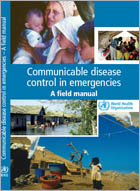
Communicable disease control in emergencies - A field manual

 
Publication details
Pages: 301
Pub. date: 2005
Language : English
ISBN  924154616 6
Download English
This manual is intended to help health professionals and public health coordinators working in emergency situations prevent, detect and control the major communicable diseases encountered by affected populations. Emergencies include complex emergencies and natural disasters (e.g. floods and earthquakes). The term “complex emergencies” has been coined to describe “situations of war or civil strife affecting large civilian populations with food shortages and population displacement, resulting in excess mortality and morbidity”.
In this manual, the generic term “emergencies” will be used to encompass all situations in which large populations are in need of urgent humanitarian relief. Following an emergency, the affected population is often displaced and temporarily resettled. They may be placed in camps or become dispersed among the local population (either in towns or in rural communities). People who are displaced across national borders are termed refugees whereas those who have been displaced within their country are called “internally displaced persons” (IDPs). Resettlement in camps may entail high population densities, inadequate shelter, poor water supplies and sanitation, and a lack of even basic health care. In these situations, there is an increased threat of communicable disease and a high risk of epidemics.

lunes, 16 de septiembre de 2013

Sanitizer Efficacy against Murine Norovirus on Stainless Steel Surfaces

Abstract
Human noroviruses are major etiologic agents of epidemic gastroenteritis. Outbreaks are often accompanied by contamination of environmental surfaces, but since these viruses cannot be routinely propagated in laboratory cultures, their response to surface disinfectants is predicted by using surrogates, such as murine norovirus 1 (MNV-1). This study compared the virucidal efficacies of various liquid treatments (three sanitizer liquids, 5% levulinic acid plus 2% SDS [LEV/SDS], 200 ppm chlorine, and an isopropanol-based quaternary ammonium compound [Alpet D2], and two control liquids, sterile tap water and sterile tap water plus 2% SDS) when delivered to MNV-1-inoculated stainless steel surfaces by conventional hydraulic or air-assisted, induction-charged (AAIC) electrostatic spraying or by wiping with impregnated towelettes. For the spray treatments, LEV/SDS proved effective when applied with hydraulic and AAIC electrostatic spraying, providing virus reductions of 2.71 and 1.66 log PFU/ml, respectively. Alpet D2 provided a 2.23-log PFU/ml reduction with hydraulic spraying, outperforming chlorine (1.16-log PFU/ml reduction). Chlorine and LEV/SDS were equally effective as wipes, reducing the viral load by 7.05 log PFU/ml. Controls reduced the viral load by <1 log with spraying applications and by >3 log PFU/ml with wiping. Results indicated that both sanitizer type and application methods should be carefully considered when choosing a surface disinfectant to best prevent and control environmental contamination by noroviruses.
REFERENCE:
Bolton SL, Kotwal G, Harrison MA, Law SE, Harrison JA, Cannon JL. Sanitizerefficacy against murine norovirus, a surrogate for human norovirus, on stainless steel surfaces when using three application methods. Appl Environ Microbiol. 2013
Feb;79(4):1368-77. doi: 10.1128/AEM.02843-12. Epub 2012 Dec 21. PubMed PMID:
23263949; PubMed Central PMCID: PMC3568589.

viernes, 13 de septiembre de 2013

WHO: Emergency Response Framework

Download
WHO’s Member States face a broad range of emergencies resulting from various hazards and differing in scale, complexity and international consequences. These  emergencies can have extensive political, economic, social and public health impacts,  with potential long-term consequences sometimes persisting for years after the  emergency. They may be caused by natural disasters, conflict, disease outbreaks, food contamination, or chemical or radio-nuclear spills, among other hazards. They can undermine decades of social development and hard-earned health gains, damage hospitals and other health infrastructure, weaken health systems and slow progress towards the Millennium Development Goals (MDGs). Preparing for and responding effectively to such emergencies are among the most pressing challenges facing the international community.

REFERENCE:
WHO: Emergency Response Framework. ISBN 978 92 4 150497 3

miércoles, 11 de septiembre de 2013

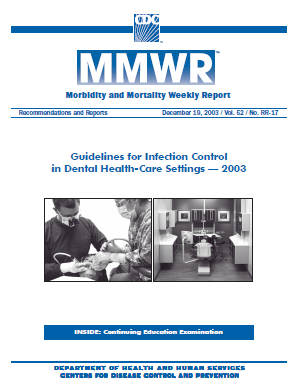
Guidelines for Infection Control in Dental Health-Care Settings

This report consolidates previous recommendations and adds new ones for infection control in dental settings. Recommendations are provided regarding 1) educating and protecting dental health-care personnel; 2) preventing transmission of bloodborne pathogens; 3) hand hygiene; 4) personal protective equipment; 5) contact dermatitis and latex hypersensitivity; 6) sterilization and disinfection of patient-care items; 7) environmental infection control; 8) dental unit waterlines, biofilm, and water quality; and 9) special considerations (e.g., dental handpieces and other devices, radiology, parenteral medications, oral surgical procedures, and dental laboratories). These recommendations were developed in collaboration with and after review by authorities on infection control from CDC and other public agencies, academia, and private and professional organizations.
REFERENCE:
Guidelines for Infection Control in Dental Health-Care Settings, 2003. MMWR, December 19, 2003:52(RR-17).
Puede también descargarlo AQUI

Recommendations on the Transport of Dangerous Goods, Model Regulation. Book UNECE 2013

Published:July 2013
ST/SG/AC.10/1/Rev.18

Complete set of two volumes
Sales No. 13.VIII.1
ISBN 978-92-1-139146-6
Price: US$ 155
Languages: E, F
(A, C, R forthcoming)
UNECE.ORG
These recommendations have been developed in the light of technical progress, the advent of new substances and materials, the exigencies of modern transport systems and, above all, the requirement to ensure the safety of people, property and the environment. They are addressed to governments and international organisations concerned with the regulation of the transport of dangerous goods. The Model Regulations cover the classification of dangerous goods, their listing, the use, construction, testing and approval of packagings and portable tanks, as well as consignment procedures such as marking, labelling, placarding and documentation.
This eighteenth revised edition contains various new and revised provisions concerning, inter alia, classification of solid oxidizing substances; transport of adsorbed gases; lithium batteries (including damaged or defective lithium batteries, lithium batteries for disposal or recycling); asymmetric capacitors; discarded packagings; ammonium nitrate and radioactive material; testing of gas cartridges and fuel cell cartridges; marking of bundles of cylinders; and the applicability of ISO standards to the manufacture of new pressure receptacles or service equipment.
UNECE: United Nations Economic Commision for Europe
Versión 2009 en Español

lunes, 9 de septiembre de 2013

Emergency First Responder Respirator Thermal Characteristics: Workshop Proceedings

The purpose of this workshop was to identify performance needs and establish research priorities to address the thermal characteristics of respiratory equipment used by emergency first responders. The workshop provided a forum for representatives from the first responder community, self contained breathing apparatus (SCBA) and component manufacturers, and research and testing experts to discuss issues, technologies, and research associated with SCBA high temperature performance. The goals of the workshop were defined in two parts: 1) Clarify baseline information, including the current state-of-the-art, applicable fire service events, and current related research, and 2) Research planning, including identification of performance needs and short and long term research priorities. Presentations were given to explain the current SCBA and certification process, understand experience from actual fire service incidents, and review the current state of respirator research. After the presentations, the workshop divided into three working group sessions to discuss performance needs and research priorities in smaller groups. Suggested topics for discussion included: a) Current Equipment, b) Current Practice and Usage, c) Future Trends, d) Short Term Research Needs, e) Long Term Research Needs, and f) other issues. The results of the three smaller groups’ deliberations were discussed when the full workshop reconvened. The responses from each group were merged into a combination of issues that related to the use and performance of the lens of the SCBA. The primary concerns and research priorities were the characterization of the fire fighter environment, performance of current and new technology, development of representative and realistic testing, and improvements to fire fighter training on the limitations of protective equipment. A significant amount of discussion concentrated on the testing for NFPA certification, which currently contains limited thermal testing.
REFERENCE
NIOSH Emergency First Responder Respirator  Thermal Characteristics: Workshop Proceedings
National Institute of Standards and Technology Special Publication 1123
Natl. Inst. Stand. Technol. Spec. Publ. 1123, 52 pages (June 2011)

viernes, 6 de septiembre de 2013

CLP Regulation and the transport of dangerous goods.

Abstract
Regulations concerning different modes of transport of dangerous goods are well harmonized at global level: they were then looked at as a model for developing Globally Harmonized System of Classification and Labelling of Chemicals (GHS), (on which CLP Regulations is based). Transport regulations do not cover some hazard classes, such as germ cell mutagenicity, carcinogenicity, reproductive toxicity, having been evaluated that such hazards are not relevant in transport because in general, in case of accident, no repeated and prolonged exposure takes place. Other differences with CLP Regulation are related to the use of "building block approach". Transport labels, which were used as a basis for GHS, can be used, instead of CLP pictograms, on packages during transport.

REFERENCE:
Benassai S. CLP Regulation and the transport of dangerous goods. Ann Ist Super
Sanita. 2011;47(2):153-6. doi: 10.4415/ANN_11_02_06. PubMed PMID: 21709384.

miércoles, 4 de septiembre de 2013

Manual de esterilización para centros de salud


Organización Panamericana de la Salud

“Manual de esterilización para centros de salud”
Washington, D.C.: OPS, © 2008
ISBN 978-92-75-32926-9
La Central de Esterilización juega un papel muy importante en la prevención de las infecciones adquiridas en el hospital, porque tales infecciones han sido asociadas con una desinfección inapropiada de objetos reusables incluyendo el equipo endoscópico, el equipo de cuidado respiratorio, transductores y equipos de hemodiálisis reusables. Recientemente, ha habido una controversia con respecto al reprocesamiento de dispositivos médicos caros (por ej. sondas sin lumen para electrofisiología cardíaca) etiquetados por el fabricante como de “uso único”. Si uno elige reusar un dispositivo descartable, la institución responsable debe demostrar que la Seguridad, efectividad e integridad del producto no ha sido comprometido en el proceso. 
El Servicio de Central de Esterilización tiene, además, la responsabilidad de recoger y recibir los objetos y equipos usados durante la atención del paciente, procesarlo, almacenarlo, y distribuirlo en todo el hospital.
Este manual ha sido elaborado con el propósito de informar al personal de salud acerca de los protocolos y procedimientos simples desarrollados para prevenir las infecciones nosocomiales dentro y desde la Central de Esterilización. Su publicación ha sido realizada por la Oficina Central de la Organización Panamericana de la Salud.
Las normas escritas en este manual orientan sobre los pasos a seguir en la limpieza, acondicionamiento, esterilización, almacenamiento y transporte del equipamiento hospitalario a fin de obtener un material estéril. Es muy importante estar consciente de esta información para proveer al paciente una práctica segura de atención de la salud.
Pueden descargarlo LINK1 o en LINK2


Evaluation of full-facepiece respirator fit on fire fighters in the municipality of Jeddah, Saudi Arabia

Types of respiratos usen in the study
left: Drager; right: MSA

Abstract

The purpose of this study was to assess the effect of personal variables on the fit of the respirators used by firefighters and workers in highly polluted environments. However, resistance from many plants managers was met to conduct the study on their workers. Therefore, we were forced to limit the study on firefighters who were found very cooperative. Forty volunteer firefighters from different departments participated in the study. They were subjected to a daily leak rate measurement using a Control Negative Pressure (CNP) fit tester for five consecutive days. Two types of respirators were used for each volunteer: the Drager type and the MSA. At the end of the study, the association between face shape and presence of beard with the respirator leak rates was investigated. A significant difference in the leak rate was detected between the two types of respirators used, with the Drager respirator having higher leak rates. The presence of a beard increased dramatically the leak rate whatever the face shape was. The oval shape was the best fitting to the respirators, followed by the rounded and finally the rectangular face. The study recommends that personal variables like face shape must be taken into consideration and fit testing must be carried out periodically, to specify the respirator that best fits each firefighter. Having beard must be absolutely prohibited, since it can be life threatening in environmental dangerous conditions such those encountered during extinguishing fires and overhaul situations.

REFERENCE
Balkhyour MA. Evaluation of full-facepiece respirator fit on fire fighters in the municipality of Jeddah, Saudi Arabia. Int J Environ Res Public Health. 2013
Jan 14;10(1):347-60. doi: 10.3390/ijerph10010347. PubMed PMID: 23343987; PubMed
Central PMCID: PMC3564146.


lunes, 2 de septiembre de 2013

StarTalkRadio: Viruses, Outbreaks and Pandemics

Normalmente, el famoso astrofísico Neil deGrasse Tyson habla acerca de estrellas, galaxias, hoyos negros, big bang, y hasta la posibilidad de vida en otros planetas. En este capítulo, Neil entrevista a Laurie Garrett, autora del libro "The coming plague" acerca de virus, epidemias y zombies! No se lo pierdan.
 

Languaje: English
45 min

¿Su hospital es seguro?

ISBN: 978-9978-45-930-0
Según estudios realizados, "aproximadamente el 50% de los 15,000 hospitales en America Latina y el Caribe, están ubicados en zonas de alto riesg"; diversos eventos adversos lo han confirmado, lo que ha ocasionado la interrupción en la prestación de servicios de salud y ha dejado a la población sin posibilidad de acceder a estos.
Los países del mundo se reunieron en la segunda conferencia mundial en Kobe, Japón, para proponer un plan de acción. Este plan subraya la necesidad de integrar la planificación de la reducción de riesgos de desastre en el sector salud y promover la meta de hospitales seguros frente a desastres, asegurar que todos los hospitales nuevos se construyan con un nivel de confiabilidad e implementar medidas de mitigación para reforzar los establecimientos de salud existentes.
Se entiende por hospital seguro a un establecimiento de salud cuyos servicios permanecen accesibles y funcionan a su máxima capacidad instalada y en su misma infraestructura, inmediatemente después de un fenómeno destructivo de gran intensidad; esto implica la estabilidad de la estructura, la disponibilidad permanente de servicios básicos y la organización al interior de la unidad de salud.
REFERENCIA:
¿Su hospital es seguro? Preguntas y respuestas para el personal de salud. WHO/PAHO 2007

viernes, 30 de agosto de 2013

Assessment of biosafety precautions in Khartoum state diagnostic laboratories, Sudan

Biosafety precautions
Abstract
BACKGROUND: This study was conducted to evaluate the biosafety precautions that applied by diagnostic laboratories in Khartoum state, 2009.
METHODS: A total number of 190 laboratories were surveyed about their compliance with standard biosafety precautions. These laboratories included 51 (27%) laboratories from government, 75 (39%) from private sectors and 64 (34%) laboratories belong to organization providing health care services.
RESULTS: The study found that 32 (16.8%) of laboratories appointed biosafety officers. Only, ten (5.2%) participated in training about response to fire emergency, and 28 (14.7%) reported the laboratory accident occurred during work. 45 (23.7%) laboratories had a written standard operation procedures (SOPs), and 35 (18.4%) had written procedures for the lean-up of spills. Moreover, biosafety cabinet was found in 11 (5.8%) laboratories, autoclave in 28 (14.7%) and incinerator in only two (1.1%) laboratories. Sharp disposable containers were found in 84 (44.2%). Fire alarm system was found in 2 (1.1%) laboratories, fire extinguisher in 39 (20.5%) laboratories, and fire emergency exit found in 14 (7.4%) laboratories. Furthermore, 19 (10%) laboratories had a hepatitis B virus vaccination programme, 5 (6.2%) applied BCG vaccine, and 2 (1.1%0) vaccinated the staff against influenza.
CONCLUSION: The study concluded that the standards biosafety precautions adopted by the diagnostic laboratories in Khartoum state was very low. Further, the laboratory personnel awareness towards biosafety principles implementation was very low too.

REFERENCE
Elduma AH. Assessment of biosafety precautions in Khartoum state diagnostic laboratories, Sudan. Pan Afr Med J. 2012;11:19. Epub 2012 Feb 3. PubMed PMID:
22514753; PubMed Central PMCID: PMC3325057.

martes, 27 de agosto de 2013

Effectiveness of shoe covers for bioexclusion within an animal facility

Black-light examination of the floor
after the completion of study 1.
Abstract
The personal protective equipment (PPE) required for entry into rodent barrier rooms often includes a hair bonnet, face mask, disposable gown, gloves, and shoe covers. Traditionally, shoe covers have been considered essential PPE for maintaining a 'clean' animal room. The introduction of microisolation caging and ventilated rack housing prompted us to reevaluate the contribution of shoe covers to bioexclusion. Contamination powder that fluoresces under black light was to track particle dispersal on the floor and personnel. The test mouse room contained a ventilated microisolation rack and biosafety cabinet. Powder was applied directly inside or outside the animal room doorway. PPE with or without shoe covers was donned outside of the animal room doorway and discarded on exiting. Participants either were scanned on entry into the room for the presence of florescence or asked to complete a simulated standard animal room activity while wearing full PPE. Animal rooms were scanned for florescence after exit of participants. All participants donning shoe covers fluoresced in multiple areas, primarily on gloves and gowns. Shoe covers had no effect on the spread of powder in normal traffic patterns, with no powder detected within caging. Powder also was used to determine the distance substances could be carried on the floor from building entry points. Results indicate that shoe covers do not improve (and actually may compromise) bioexclusion. Donning of shoe covers offers a potential for contamination of personnel from contact with shoe bottoms.

REFERENCE
Hickman-Davis JM, Nicolaus ML, Petty JM, Harrison DM, Bergdall VK.
Effectiveness of shoe covers for bioexclusion within an animal facility. J Am
Assoc Lab Anim Sci. 2012 Mar;51(2):181-8. PubMed PMID: 22776118; PubMed Central
PMCID: PMC3314521.

lunes, 26 de agosto de 2013

Efficacy of hand rubs with a low alcohol concentration

Abstract
BACKGROUND: Some national hospital hygiene societies in Europe such as the French society for hospital hygiene (SFHH) have positive lists of disinfectants. Few hand disinfectants with a rather low concentration of ethanol are listed by one society as effective for hygienic hand disinfection with 3 mL in 30 s including a virucidal activity in 30 s or 60 s, but published data allow having doubts. We have therefore evaluated the efficacy of three commonly used hand disinfectants according to EN 1500 and EN 14476.
METHODS: Products 1 (Aniosgel 85 NPC) and 2 (Aniosrub 85 NPC) were based on 70% ethanol, product 3 (ClinoGel derma+) on 60% ethanol and 15% isopropanol (all w/w). They were tested in 3 laboratories according to EN 1500. Three mL were applied for 30 s and compared to the reference treatment of 2 x 3 mL applications of isopropanol 60% (v/v), on hands artificially contaminated with Escherichia coli. Each laboratory used a cross-over design against the reference alcohol with 15 or 20 volunteers. The virucidal activity of the products was evaluated (EN 14476) in one laboratory against adenovirus and poliovirus in different concentrations (80%, 90%, 97%), with different organic loads (none; clean conditions; phosphate-buffered saline) for up to 3 min.
RESULTS: Product 1 revealed a mean log10-reduction of 3.87 +/- 0.79 (laboratory 1) and 4.38 +/- 0.87 (laboratory 2) which was significantly lower compared to the reference procedure (4.62 +/- 0.89 and 5.00 +/- 0.87). In laboratory 3 product 1 was inferior to the reference disinfection (4.06 +/- 0.86 versus 4.99 +/- 0.90). Product 2 revealed similar results. Product 3 fulfilled the requirements in one laboratory but failed in the two other. None of the three products was able to reduce viral infectivity of both adenovirus and poliovirus by 4 log10 steps in 3 min according to EN 14476.
CONCLUSIONS: Efficacy data mentioned in a positive list published by a society for hospital hygiene should still be regarded with caution if they quite obviously contradict published data on the same or similar products.

REFERENCE:
Kampf G, Ostermeyer C, Werner HP, Suchomel M. Efficacy of hand rubs with a lowalcohol concentration listed as effective by a national hospital hygiene society in Europe. Antimicrob Resist Infect Control. 2013 Jun 12;2(1):19. [Epub ahead of 
print] PubMed PMID: 23759059; PubMed Central PMCID: PMC3689097.

viernes, 23 de agosto de 2013

WHO: Flip Chart Safe Hospital


How could we call on a community, a school, or a rural health center to be partners and participants in the promotion of Hospitals Safe from Disasters? This flip chart gives us that opportunity. It has an entertaining format and design, and it teaches by using simple and direct language. Each illustrated sheet presents only the most important ideas; pictures are accompanied by short, simple text written in a font that is easy to read.
It was conceived and developed as an informational, motivational, and educational tool that could communicate the strategic importance of safe health facilities, whether large hospitals in urban areas or small health posts serving urban and rural populations. The flip chart can be used to work with a variety of audiences, including children and teenagers, persons associated with health services, users of health services, media and education sectors, authorities from different levels and sectors, including regional and local authorities, and the community at large.
The three objectives–to inform, motivate, and educate–are achieved by inviting reflection on the “stories” that are presented. A story is presented on each page of the flip chart. Through individual or collective reflection about the images, new stories, behavior, lessons, and conclusions will emerge that will enhance the potential and scope of the material.
The flip chart can be “guided use” teaching, where the person leading the session suggests that the audience perform certain activities such as: discuss these stories as a group and compare different versions from the discussion process and propose conclusions and lessons learned from each of the stories. For “open use” teaching, sheets from the flip chart can be placed in locations throughout the community, such as waiting rooms and clinics of health facilities, shops and supermarkets, places where people stand in line (city hall and other public institutions, banks, utility payment windows, etc.), and educational facilities. With open use, there is the potential for collective reaction to messages on each sheet, as well as individual reflection. Having the media use the sheets as newspaper inserts is a good use of the material.
WHO, UNICEF, OPS, RED CROSS, EUROPEAN COMISSION
PDF:
http://new.paho.org/disasters/index.php?option=com_docman&task=doc_download&gid=1886&Itemid=
IMAGE: FACEBOOK

jueves, 22 de agosto de 2013

Comparative efficacy evaluation of disinfectants routinely used in hospital practice: India

Abstract
AIM: The aim of this study was to evaluate and compare practically achieved disinfection efficacy of some locally available disinfectants on surfaces and infectious microbiological hospital waste.
MATERIALS AND METHODS: Seven disinfectants were tested at concentrations recommended by manufacturers on rough and smooth surfaces that were contaminated experimentally by locally circulating isolates of methicillin-resistant Staphylococcus aureus, multidrug-resistant Acinetobacter baumannii, Klebsiella pneumoniae, Enterobacter aerogenes, Pseudomonas aeruginosa strains, standard isolate of Salmonella typhi and Candida albicans. Reduction in microbial counts before and after surface disinfection was expressed as log reduction. A very heavy microbial waste load was simulated by immersing culture plates with heavy microbial growth in disinfectants. Daily, a sample of disinfectant was taken and subjected to in-use test.
RESULTS: The highest average log reduction of test microbes on the rough surface was given by DesNet (5.05) and Bacillocid special (5.02). A comparable average log reduction of test microbes on a smooth steel surface was noted (5.68, 5.67, 5.50) for Lysol, Bacillocid sp. and DesNet, respectively. In the discard jars, Bacillocid special worked satisfactorily for 4 days, DesNet for 3 days and Hi-giene Germitol for 1 day. The remainder of the disinfectants failed in the in-use test on Day 1. Phenolics, although widely used in our settings, may not be as good surface disinfectants as newer formulations like DesNet and Bacillocid special.
CONCLUSIONS: Newer quaternary ammonium compounds and aldehyde formulations were found to be the best disinfectants for disinfection of heavy contamination.
KEYWORDS: Disinfectant, evaluation, hospital practice

REFERENCE
Singh M, Sharma R, Gupta PK, Rana JK, Sharma M, Taneja N. Comparative efficacyevaluation of disinfectants routinely used in hospital practice: India. Indian J 
Crit Care Med. 2012 Jul;16(3):123-9. doi: 10.4103/0972-5229.102067. PubMed PMID: 
23188950; PubMed Central PMCID: PMC3506067

Biorisk assessment of medical diagnostic laboratories in Nigeria

BACKGROUND: The aim of this study was to assess public and private medical diagnostic laboratories in Nigeria for the presence of biosafety equipment, devices, and measures.
METHODS: A total of 80 diagnostic laboratories in biosafety level 3 were assessed for the presence of biosafety equipment, devices, and compliance rate with biosafety practices. A detailed questionnaire and checklist was used to obtain the relevant information from enlisted laboratories.
RESULTS: The results showed the presence of an isolated unit for microbiological work, leak-proof working benches, self-closing doors, emergency exits, fire extinguisher(s), autoclaves, and hand washing sinks in 21.3%, 71.3%, 15.0%, 1.3%, 11.3%, 82.5%, and 67.5%, respectively, of all laboratories surveyed. It was observed that public diagnostic laboratories were significantly more likely to have an isolated unit for microbiological work (p = 0.001), hand washing sink (p = 0.003), and an autoclave (p ≤ 0.001) than private ones. Routine use of hand gloves, biosafety cabinet, and a first aid box was observed in 35.0%, 20.0%, and 2.5%, respectively, of all laboratories examined. Written standard operating procedures, biosafety manuals, and biohazard signs on door entrances were observed in 6.3%, 1.3%, and 3.8%, respectively, of all audited laboratories. No biosafety officer(s) or records of previous spills, or injuries and accidents, were observed in all diagnostic laboratories studied.
CONCLUSION: In all laboratories (public and private) surveyed, marked deficiencies were observed in the area of administrative control responsible for implementing biosafety. Increased emphasis on provision of biosafety devices and compliance with standard codes of practices issued by relevant authorities is strongly advocated.
KEYWORDS: Nigeria, biosafety, diagnostic laboratories, occupational infection, risk

REFERENCIA:
Oladeinde BH, Omoregie R, Odia I, Osakue EO, Imade OS. Biorisk assessment ofmedical diagnostic laboratories in Nigeria. Saf Health Work. 2013 Jun;4(2):100-4.
doi: 10.1016/j.shaw.2013.04.006. Epub 2013 Apr 25. PubMed PMID: 23961333.

miércoles, 7 de agosto de 2013

A Literature Review of Laboratory-Acquired Brucellosis

Brucellosis is a bacterial zoonotic disease which has been associated with laboratory-acquired infections. No recent reviews have addressed the characteristics of laboratory-acquired brucellosis (LAB). English-language literature was reviewed to identify reports of laboratory exposures to Brucella spp. and LAB cases between 1982 and 2007. Evaluation of twenty-eight case reports identified 167 potentially exposed laboratory workers of which 71 had LAB. Nine reports were identified that summarized an additional 186 cases of LAB. Only 18 (11%) exposures were due to laboratory accidents, 147 (88%) exposures were due to aerosolization of organisms during routine identification activities and 2 (1%) exposures were unknown. Brucella melitensis was the causative agent for 80% (135/167) of the exposures. Workers with high risk exposures were 9.3 times more likely to develop LAB than workers with low risk exposures (95% CI, 3.0-38.6; P<0.0001); they were also 0.009 times as likely to develop LAB if they took antimicrobial PEP than those who did not take PEP (95% CI, 0-0.042; P<0.0001). Median incubation period in case and summary reports was eight weeks (range 1-40 weeks). Antimicrobial PEP is effective in preventing LAB. The incubation period may be used to identify appropriate serological and symptom surveillance timeframes for exposed laboratory workers.
REFERENCIA:
Traxler RM, Lehman MW, Bosserman EA, Guerra MA, Smith TL. A Literature Review of Laboratory-Acquired Brucellosis. J Clin Microbiol. 2013 Jul 3. Pay-per-view

jueves, 1 de agosto de 2013

Biosafety Guidelines for Handling Microorganisms in the Teaching Laboratory: Development and Rationale

Teaching microbiology laboratory
www.mmg.msu.edu
The safe handling of microorganisms in the teaching laboratory is a top priority. However, in the absence of a standard set of biosafety guidelines tailored to the teaching laboratory, individual educators and institutions have been left to develop their own plans. This has resulted in a lack of consistency, and differing levels of biosafety practices across institutions. Influenced by the lack of clear guidelines and a recent outbreak of Salmonella infections that was traced back to teaching laboratory exposures, the Education Board of the American Society for Microbiology charged a task force to develop a uniform set of biosafety guidelines for working with microorganisms in the teaching laboratory. These guidelines represent best practices for safely handling microbes, based on the safety requirements found in the Centers for Disease Control and Prevention's (CDC's) Biosafety in Microbiological and Biomedical Laboratories (BMBL). Guidelines for safely handling microbes at both biosafety level 1 (BSL1) and biosafety level 2 (BSL2) were developed. The guidelines are brief by design for ease of use and are accompanied by an extensive appendix containing explanatory notes, sample documents, and additional resources. These guidelines provide educators with a clear and consistent way to safely work with microorganisms in the teaching laboratory.
REFERENCE:
Emmert EA; ASM Task Committee on Laboratory Biosafety. Biosafety guidelines for handling microorganisms in the teaching laboratory: development and rationale. J Microbiol Biol Educ. 2013 May 6;14(1):78-83.
DESCARGAR ARCHIVOS

miércoles, 24 de julio de 2013

Antibiotic resistance: The last resort

Vea imagen AQUI
Oficiales de salud observan con horror como las bacterias llegan a ser resistente al poderoso antibiótico carbapenema, uno de los más recientes medicamentos en los estantes.
Como regla, los oficiales de salud de alto rango evitan utilizar adjetivos apocalípticos. Por lo que fué preocupante escuchar a Thomas Frieden y Sally Davies advertir de la "pesadilla" que se acerca y de la "amenaza catastrófica" con pocos días de diferencia en Marzo.
Los oficiales estaban hablando de el incremento en una clase de bacteria poco conocida, resistente a antibióticos: Enterobacterias resistentes al cabapenema (CREs). Davies, Oficial Médico en Jefe del Reino Unido, describe a los CREs como un riesgo tan serio como el terrorismo. "Tenemos un problema muy serio, y necesitamos sonar la alarma", mencionó Frieden, director del CDC en Atlanta Georgia.
Estas baceries ocasionan infecciones en vejiga, pulmones y sangre, causando shock séptico y amanazar la vida.
Continúa en inglés:

lunes, 15 de julio de 2013

Bioaerosols in the Workplace: Evaluation, Control and Prevention Guide


Microorganisms are ubiquitous in any environment and are called bioaerosols when they are present in the air. While no inhalation exposure standard has yet been established, the international scientific community nevertheless acknowledges that some bioaerosols have an adverse effect on air quality and workers’ health. This well-illustrated practical guide describes the approach recommended by the IRSST for the evaluation, control and prevention of bioaerosol exposure. It contains a synthesis of the most recent information on bioaerosols in the workplace and their effects on health, a discussion of concentrations measured in different contexts, and proposed exposure values. The guide describes evaluation strategies as well as methods for the interpretation and application of results. Finally, it presents strategies and methods for the control and prevention of bioaerosol exposure, and discusses certain specific cases. This guide, which explains the possibilities and limitations of such an approach, is aimed at stakeholders in all sectors in which bioaerosols can be present in high concentrations.
REFERENCIA:
Bioaerosols in the Workplace: Evaluation, Control and Prevention Guide. Goyer, N; Lavoie, J; Lazure, L; Marchand, G. Studies and Research Projects / Technical Guide  T-24, Montréal, IRSST, 2001, 72 pages

lunes, 8 de julio de 2013

Heating, Ventilation and Air Conditioning - Validation of System Cleaning Initiation Criteria under Real Conditions


The cleanliness of a ventilation system invariably affects the quality of the air that it distributes. However, it is difficult for building managers to assess the relevance of having their systems cleaned and to choose from among all the proposals from cleaning specialists because no objective method exists for evaluating the dustiness of systems. In the context of a previous project, the researchers developed a method for collecting surface dusts in heating, ventilation and air conditioning (HVAC) ducts and identified criteria for initiating cleaning. The method was validated in the laboratory and compared to those methods mentioned in the scientific literature [Association pour la prévention et l’étude de la contamination (ASPEC), of France, and the National Air Duct Cleaners Association (NADCA), of the United States]. They all proved feasible by using their corresponding cleaning initiation criterion.
In a new study, which this report describes, the same team validated the criteria for these methods in the ventilation systems of occupied non-industrial buildings. Once again, the results were conclusive. Building managers can now rely on the objective criteria of the offered methods, rather than basing themselves solely on visual inspection, which is subjective.

REFERENCIA
Heating, Ventilation and Air Conditioning - Validation of System Cleaning Initiation Criteria under Real Conditions.