Lista de correo. Espere su aprobación.
Correo electrónico:
Consultar este grupo
Mostrando las entradas con la etiqueta Equipo de protección personal. Mostrar todas las entradas

viernes, 16 de octubre de 2015

NSF/ANSI Standard 49 Certification Testing of Biosafety Cabinets

NSF International maintains NSF/ANSI Standard 49 Class II (laminar flow) biosafety cabinetry and also certifies that biosafety cabinets conform to the requirements of the standard. More than 20 tests are required during initial qualification testing; of these, the biological challenge tests are the most critical to ensuring that the model tested will provide personnel, product, and cross contamination protection.

REFERENCE:
Maren H. Roush and Stephen C. Williams. NSF/ANSI Standard 49 Certification Testing of Biosafety Cabinets. JALA 2009;14:171–3

-----------------------------------------------------------
Sigue este Blog en Facebook y Twitter

viernes, 10 de octubre de 2014

Contact tracing during an #ebola outbreak

Persons in close contact with Ebola cases (alive or dead) are at higher risk of infection. All potential contacts of Ebola cases should be identified and closely observed for 21 days from the last day of exposure. Contacts that develop illness should be immediately isolated to prevent further transmission of infection. An effective system for contact tracing should be established at the onset of the outbreak. Early involvement and full cooperation of affected communities is critical for successful contact tracing.
This document provides guidance for establishing and conducting contact tracing during filovirus disease outbreaks. The guidance notes are based on extensive field experience in filovirus disease outbreak response in the WHO African region. The notes are intended for frontline epidemiologists, surveillance officers, health workers and other volunteers involved in contact tracing. National and sub-national emergency management committees and rapid response teams require these guidelines to plan, implement and monitor contact tracing.National emergency management committees are advised to adapt these guidance notes to the local context in their application

REFERENCES:
Contact tracing during an #ebola outbreak
CDC poster: What is contact tracing?
Australasian Contract Tracing Manual
Development of a risk assessment tool for contact tracing people after contact with infectious patients while travelling by bus or other public ground transport: a Delphi consensus approach
-----------------------------------------------------------
Sigue este Blog en Facebook y Twitter

jueves, 9 de octubre de 2014

Detailed Hospital Checklist for #Ebola Preparedness

Lohud.com
Every hospital should ensure that it can detect a patient with Ebola, protect healthcare workers so they can safely care for the patient, and respond in a coordinated fashion. Many of the signs and symptoms of Ebola are non-specific and similar to those of many common infectious diseases, as well as other infectious diseases with high mortality rates. Transmission can be prevented with appropriate infection control measures.
In order to enhance our collective preparedness and response efforts, this checklist highlights key areas for hospital staff -- especially hospital emergency management officers, infection control practitioners, and clinical practitioners -- to review in preparation for a person with Ebola arriving at a hospital for medical care. The checklist provides practical and specific suggestions to ensure your hospital is able to detect possible Ebola cases, protect your employees, and respond appropriately.
While we are not aware of any domestic Ebola cases, now is the time to prepare, as it is possible that individuals with Ebola in West Africa may travel to your city, exhibit signs and symptoms of Ebola, and present to facilities.

REFERENCES:


-----------------------------------------------------------
Sigue este Blog en Facebook y Twitter

jueves, 25 de septiembre de 2014

Addressing climate change in healthcare settings

Publication details
Number of pages: 28
Publication date: 2009
Languages: English
Global climate change is no longer an ominous future threat but a dawning reality – one that is already creating disturbing shifts in the natural and human environment and eroding the delicate balance of our planet’s ecosystem and the species that depend on it.
This discussion draft is based on the World Health Organization’s (WHO) mandate from member states to develop “programmes for health systems that will contribute to reducing their own greenhouse gas emissions”. It also takes root in Health Care Without Harm’s (HCWH) more than 12 years of experience of working globally to transform the health sector so that it is no longer a source of harm to human health and the environment.
The paper begins to define a framework for analysing and addressing the health sector’s climate footprint – including identifying seven aspects of a climate-friendly hospital. It also draws on a series of examples from around the world that demonstrate that the health sector is indeed already beginning to provide leadership in this most important area of concern to the global community. This paper is the first step in a WHO project in collaboration with Health Care Without Harm (HCWH) aimed at addressing the climate footprint of the health sector.
REFERENCE:
World Health Organization and Health Care Without Harm. Healthy hospitals, healthy planet, healthy people: Addressing climate change in healthcare settings, 2009.
------------------------------------------------
Sigue este Blog en Facebook y Twitter

lunes, 22 de septiembre de 2014

The durability of examination gloves used on intensive care units

Background: The use of examination gloves is part of the standard precautions to prevent medical staff from transmission of infectious agents between patients. Gloves also protect the staff from infectious agents originating from patients. Adequate protection, however, depends on intact gloves. The risk of perforation of examination gloves is thought to correlate with duration of wearing, yet, only very few prospective studies have been performed on this issue.
Methods: A total number of 1500 consecutively used pairs of examination gloves of two different brands and materials (latex and nitrile) were collected over a period of two months on two ICU’s. Used gloves were examined for micro perforations using the “water-proof-test” according to EN 455–1. Cox-regression for both glove types was used to estimate optimal changing intervals.
Results: Only 26% of gloves were worn longer than 15 min. The total perforation rate was 10.3% with significant differences and deterioration of integrity of gloves between brands (p<0.001). Apart from the brand, “change of wound dressing” (p = 0.049) and “washing patients” (p = 0.001) were also significantly associated with an increased risk of perforation.
Conclusion: Medical gloves show marked differences in their durability that cannot be predicted based on the technical data routinely provided by the manufacturer. Based on the increase of micro perforations over time and the wearing behavior, recommendations for maximum wearing time of gloves should be given. Changing of gloves after 15 min could be a good compromise between feasibility and safety. HCWs should be aware of the benefits and limitations of medical gloves. To improve personal hygiene hand disinfection should be further encouraged.
Keywords: Hand hygiene, Examination gloves, Micro perforation, Glove change, Intensive care unit, Disinfection, Multi-barrier strategy
REFERENCE:
Hübner NO, et al. The durability of examination gloves used on intensive care units. BMC Infect Dis. 2013; 13: 226.
-----------------------------------------------------------
Sigue este Blog en Facebook y Twitter

miércoles, 3 de septiembre de 2014

Reducing Needle Stick Injuries in Healthcare Occupations

oasisdiscussions.ca
Needlestick injuries frequently occur among healthcare workers, introducing high risk of bloodborne pathogen infection for surgeons, assistants, and nurses. This systematic review aims to explore the impact of both educational training and safeguard interventions to reduce needlestick injuries. Several databases were searched including MEDLINE, PsycINFO, SCOPUS, CINAHL and Sciencedirect. Studies were selected if the intervention contained a study group and a control group and were published between 2000 and 2010. Of the fourteen studies reviewed, nine evaluated a double-gloving method, one evaluated the effectiveness of blunt needle, and one evaluated a bloodborne pathogen educational training program. Ten studies reported an overall reduction in glove perforations for the intervention group. In conclusion, this review suggests that both safeguard interventions and educational training programs are effective in reducing the risk of having needlestick injuries. However, more studies using a combination of both safeguards and educational interventions in surgical and nonsurgical settings are needed.
REFERENCE:
Yang L, Mullan B. Reducing needle stick injuries in healthcare occupations: an integrative review of the literature. ISRN Nurs. 2011;2011:315432.
-------------------------------------------------
Sigue este Blog en Facebook y Twitter

martes, 2 de septiembre de 2014

Infection Control During Filoviral Hemorrhagic Fever Outbreaks #Ebola

Breaking the human-to-human transmission cycle remains the cornerstone of infection control during filoviral (Ebola and Marburg) hemorrhagic fever outbreaks. This requires effective identification and isolation of cases, timely contact tracing and monitoring, proper usage of barrier personal protection gear by health workers, and safely conducted burials. Solely implementing these measures is insufficient for infection control; control efforts must be culturally sensitive and conducted in a transparent manner to promote the necessary trust between the community and infection control team in order to succeed. This article provides a review of the literature on infection control during filoviral hemorrhagic fever outbreaks focusing on outbreaks in a developing setting and lessons learned from previous outbreaks. The primary search database used to review the literature was PUBMED, the National Library of Medicine website.

REFERENCES:
  1. Raabea VN, Borcherta M. Infection control during filoviral hemorrhagic Fever outbreaks. J Glob Infect Dis. 2012 Jan;4(1):69-74.
  2. CDC Interim Guidance for Environmental Infection Control in Hospitals for Ebola Virus
  3. WHO Interim Infection Prevention and Control Guidance for Care of Patients with Suspected or Confirmed Filovirus Haemorrhagic Fever  in Health-Care Settings, with Focus on Ebola => DESCARGA OPCIONAL
  4. Health Canada. Interim Biosafety Guidelines for Laboratories Handling Specimens from Patients Under Investigation for Ebola Virus Disease
-----------------------------------------------------------
Sigue este Blog en Facebook y Twitter

miércoles, 13 de agosto de 2014

Barriers to rapid containment of the #Ebola outbreak

By August 11, 2014, a total of 170 healthcare workers has been infected, 81 have died. 

The outbreak of Ebola virus disease in west Africa continues to evolve in alarming ways, with no immediate end in sight. Many barriers stand in the way of rapid containment.
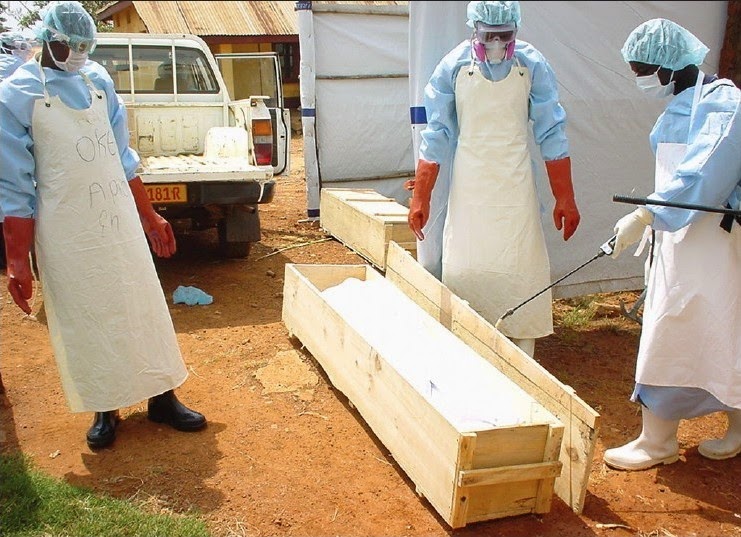
The Ebola virus is highly contagious, but is not airborne. Transmission requires close contact with the bodily fluids of an infected person, as can occur during health-care procedures, home care, or traditional burial practices, which involve the close contact of family members and friends with bodies. 

ESPAÑOL:

El virus del Ebola es uno de los patógenos más virulentos. El equipo de protección personal es esencial, pero escasea. Además es caliente e incómodo, y limita mucho el número de horas que el personal médico y de enfermería puede trabajar en una planta de aislamiento. Según las estimaciones actuales, un centro en el que se estén tratando 70 pacientes necesitará como mínimo 250 profesionales sanitarios.

Ahora que el brote ha cumplido 6 meses, se comprueba que el miedo es el obstáculo más difícil de vencer. El miedo hace que los contactos de los casos escapen al sistema de vigilancia, que las familias escondan a los parientes con síntomas o los lleven a curanderos tradicionales, y que los pacientes huyan de los centros terapéuticos. El miedo y la hostilidad que este puede alimentar han puesto en peligro la seguridad de los equipos de respuesta nacionales e internacionales.

El personal sanitario teme por sus vidas. Hasta la fecha se han infectado más de 170 profesionales sanitarios y al menos 81 han fallecido.

REFERENCE:
En españolhttp://www.who.int/csr/disease/ebola/overview-august-2014/es/
-----------------------------------------------------------
Sigue este Blog en Facebook y Twitter
  

jueves, 7 de agosto de 2014

Evaluation of transmission risks associated with in vivo replication of several high containment pathogens in a biosafety level 4 laboratory #EBOLA

Containment level 4 (CL4) laboratories studying biosafety level 4 viruses are under strict regulations to conduct nonhuman primate (NHP) studies in compliance of both animal welfare and biosafety requirements. NHPs housed in open-barred cages raise concerns about cross-contamination between animals, and accidental exposure of personnel to infectious materials. To address these concerns, two NHP experiments were performed. One examined the simultaneous infection of 6 groups of NHPs with 6 different viruses (Machupo, Junin, Rift Valley Fever, Crimean-Congo Hemorrhagic Fever, Nipah and Hendra viruses). Washing personnel between handling each NHP group, floor to ceiling biobubble with HEPA filter, and plexiglass between cages were employed for partial primary containment. The second experiment employed no primary containment around open barred cages with Ebola virus infected NHPs 0.3 meters from naïve NHPs. Viral antigen-specific ELISAs, qRT-PCR and TCID50 infectious assays were utilized to determine antibody levels and viral loads. No transmission of virus to neighbouring NHPs was observed suggesting limited containment protocols are sufficient for multi-viral CL4 experiments within one room. The results support the concept that Ebola virus infection is self-contained in NHPs infected intramuscularly, at least in the present experimental conditions, and is not transmitted to naïve NHPs via an airborne route.

REFERENCE:
Alimonti J, et al. Evaluation of transmission risks associated with in vivo replication of several high containment pathogens in a biosafety level 4 laboratory. Scientific Reports 4, Article number: 5824.
-----------------------------------------------------------
Sigue este Blog en Facebook y Twitter

miércoles, 6 de agosto de 2014

Transmission of #Ebola virus from pigs to non-human primates

Ebola viruses (EBOV) cause often fatal hemorrhagic fever in several species of simian primates including human. While fruit bats are considered natural reservoir, involvement of other species in EBOV transmission is unclear. In 2009, Reston-EBOV was the first EBOV detected in swine with indicated transmission to humans. In-contact transmission of Zaire-EBOV (ZEBOV) between pigs was demonstrated experimentally. Here we show ZEBOV transmission from pigs to cynomolgus macaques without direct contact. Interestingly, transmission between macaques in similar housing conditions was never observed. Piglets inoculated oro-nasally with ZEBOV were transferred to the room housing macaques in an open inaccessible cage system. All macaques became infected. Infectious virus was detected in oro-nasal swabs of piglets, and in blood, swabs, and tissues of macaques. This is the first report of experimental interspecies virus transmission, with the macaques also used as a human surrogate. Our finding may influence prevention and control measures during EBOV outbreaks.
REFERENCE:
Weingartl HM et al. Transmission of Ebola virus from pigs to non-human primates. Scientific Reports 2 (2012), Article number: 811 doi:10.1038/srep00811
COMMENT ON:
Are we *sure* Ebola isn’t airborne?
-----------------------------------------------------------
Sigue este Blog en Facebook y Twitter

viernes, 16 de mayo de 2014

Fitting Characteristics of #N95 Filtering-Facepiece #Respirators Used Widely in China

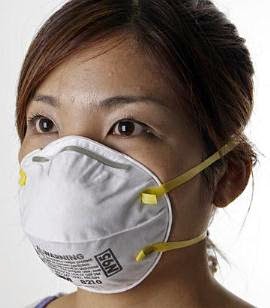
Millions of people rely on N95 filtering facepiece respirators to reduce the risk of airborne particles and prevent them from respiratory infections. However, there are no respirator fit testing and training regulations in China. Meanwhile, no study has been conducted to investigate the fit of various respirators. The objective of this study was to investigate whether people obtained adequate fit when wearing N95 filtering facepiece respirators (FFRs) used widely in China. Fifty adult participants selected using the Chinese respirator fit test panel donned 10 common models of N95 FFRs. Fit factors (FF) and inward leakage were measured using the TSI PortaCount Plus. Each subject was tested with three replications for each model. A subject was considered to pass the fit test when at least two of the three FFs were greater than 100. Two models were conducted fit tests before and after training to assess the role of training.
REFERENCE:
Yu et al. Fitting Characteristics of N95 Filtering-Facepiece Respirators Used Widely in China. PLoS One. 2014; 9(1): e85299.
--------------------------------------------
Sigue este Blog en Facebook y Twitter.

lunes, 28 de abril de 2014

Development and Performance Evaluation of an Exhaled-Breath #Bioaerosol Collector for #Influenza Virus

Abstract
The importance of the aerosol mode for transmission of influenza is unknown. Understanding the role of aerosols is essential to developing public health interventions such as the use of surgical masks as a source control to prevent the release of infectious aerosols. Little information is available on the number and size of particles generated by infected persons, which is partly due to the limitations of conventional air samplers, which do not efficiently capture fine particles or maintain microorganism viability. We designed and built a new sampler, called the G-II, that collects exhaled breath particles that can be used in infectivity analyses. The G-II allows test subjects to perform various respiratory maneuvers (i.e. tidal breathing, coughing, and talking) and allows subjects to wear a mask or respirator during testing. A conventional slit impactor collects particles > 5.0 μm. Condensation of water vapor is used to grow remaining particles, including fine particles, to a size large enough to be efficiently collected by a 1.0 μm slit impactor and be deposited into a buffer-containing collector. We evaluated the G-II for fine particle collection efficiency with inert particle aerosols and evaluated infective virus collection using influenza A virus aerosols. Testing results showed greater than 85% collection efficiency for particles greater than 50nm and influenza virus collection comparable with a reference SKC BioSampler®. The new design will enable determination of exhaled infectious virus generation rate and evaluate control strategies such as wearing a surgical type mask to prevent the release of viruses from infected persons.
REFERENCE:
McDevitt JJ,  Koutrakis P, Ferguson ST, et al.  Development and Performance Evaluation of an Exhaled-Breath Bioaerosol Collector for Influenza Virus. Aerosol Sci Technol. 2013 January 1; 47(4): 444–451.

miércoles, 2 de abril de 2014

Exposure of Laboratory Animal Care Workers to Airborne Mouse and Rat Allergens

Abstract
Urine of rats and mice is the main source of allergenic proteins that can enter the respiratory tract of laboratory animal care workers. Little is known about the levels and determinants of these exposures in the United States. We investigated the relationship between activities in animal facilities and levels of personal exposure to allergen by collecting personal breathing zone dust samples from 7 caretakers during full workdays for 1 wk. Mice and rat urinary allergens in inhalable dust were quantified via immunoassay. The activities of the sampled workers were observed, and the methods of preventing exposure to allergens were recorded. Mouse urinary allergen was detected in 20 of 39 measurements, yielding a geometric mean of 0.8 ng/m(3) with a maximum of 24 ng/m(3). Washing and cleaning cages and the number of mice handled daily were the most important determinants of personal exposure to mouse urinary allergen, as identified by using multiple linear regressions that explained 51% of total variance. Personal exposures to mouse urinary allergen were associated with day-to-day variation of tasks rather than characteristics of workers. Where potential for personal exposure is the highest, protective measures (N95 masks and cage dumping stations) appeared to be used, as is appropriate. Rat urinary allergen was detected in 4 of 39 measurements; detectable concentrations were between 0.8 and 39 ng/m(3). Only persons who handled rats were exposed to rat urinary allergen. The current findings are valuable for establishing exposure levels against which comparisons of improvement or deterioration of personal exposures can be made.
REFERENCE:
Glueck JT, Huneke RB, Perez H, Burstyn I. Exposure of laboratory animal care workers to airborne mouse and rat allergens. J Am Assoc Lab Anim Sci. 2012;51(5):554-60.

lunes, 24 de marzo de 2014

Exhaled Air Dispersion during Coughing #N95

Abstract
Objectives: We compared the expelled air dispersion distances during coughing from a human patient simulator (HPS) lying at 45u with and without wearing a surgical mask or N95 mask in a negative pressure isolation room.
Methods: Airflow was marked with intrapulmonary smoke. Coughing bouts were generated by short bursts of oxygen flow at 650, 320, and 220L/min to simulate normal, mild and poor coughing efforts, respectively. The coughing jet was revealed by laser light-sheet and images were captured by high definition video. Smoke concentration in the plume was estimated from the light scattered by smoke particles. Significant exposure was arbitrarily defined where there was $ 20% of normalized smoke concentration.
Results: During normal cough, expelled air dispersion distances were 68, 30 and 15 cm along the median sagittal plane when the HPS wore no mask, a surgical mask and a N95 mask, respectively. In moderate lung injury, the corresponding air dispersion distances for mild coughing efforts were reduced to 55, 27 and 14 cm, respectively, p , 0.001. The distances were reduced to 30, 24 and 12 cm, respectively during poor coughing effort as in severe lung injury. Lateral dispersion distances during normal cough were 0, 28 and 15 cm when the HPS wore no mask, a surgical mask and a N95 mask, respectively.
Conclusions: Normal cough produced a turbulent jet about 0.7 m towards the end of the bed from the recumbent subject. N95 mask was more effective than surgical mask in preventing expelled air leakage during coughing but there was still significant sideway leakage.

Reference

David S. Hui, Benny K. Chow, Leo Chu, Susanna S. Ng, Nelson Lee, Tony Gin, Matthew T. V. Chan. Exhaled Air Dispersion during Coughing with and without Wearing a Surgical or N95 Mask. PLoS One. 2012; 7(12): e50845.

lunes, 17 de marzo de 2014

Availability, consistency and evidence-base of policies and guidelines on the use of mask and respirator

Abstract
Background: Currently there is an ongoing debate and limited evidence on the use of masks and respirators for the prevention of respiratory infections in health care workers (HCWs). This study aimed to examine available policies and guidelines around the use of masks and respirators in HCWs and to describe areas of consistency between guidelines, as well as gaps in the recommendations, with reference to the WHO and the CDC guidelines.
Methods: Policies and guidelines related to mask and respirator use for the prevention of influenza, SARS and TB were examined. Guidelines from the World Health Organization (WHO), the Center for Disease Control and Prevention (CDC), three high-income countries and six low/middle-income countries were selected.
Results: Uniform recommendations are made by the WHO and the CDC in regards to protecting HCWs against seasonal influenza (a mask for low risk situations and a respirator for high risk situations) and TB (use of a respirator). However, for pandemic influenza and SARS, the WHO recommends mask use in low risk and respirators in high risk situations, whereas, the CDC recommends respirators in both low and high risk situations. Amongst the nine countries reviewed, there are variations in the recommendations for all three diseases. While, some countries align with the WHO recommendations, others align with those made by the CDC. The choice of respirator and the level of filtering ability vary amongst the guidelines and the different diseases. Lastly, none of the policies discuss reuse, extended use or the use of cloth masks.
Conclusion: Currently, there are significant variations in the policies and recommendations around mask and respirator use for protection against influenza, SARS and TB. These differences may reflect the scarcity of level-one evidence available to inform policy development. The lack of any guidelines on the use of cloth masks, despite widespread use in many low and middle-income countries, remains a policy gap. Health organizations and countries should jointly evaluate the available evidence, prioritize research to inform evidence gaps, and develop consistent policy on masks and respirator use in the health care setting.
Reference
Abrar Ahmad Chughtai, Holly Seale, Chandini Raina MacIntyre. Availability, consistency and evidence-base of policies and guidelines on the use of mask and respirator to protect hospital health care workers: a global analysis. BMC Res Notes. 2013; 6: 216.

miércoles, 12 de marzo de 2014

New Antimicrobial Surgical Glove

ABSTRACT
Background: Perforations of surgical gloves are common and increase with the duration of glove wear. Skin flora, re-grown after pre-operative disinfection of the hands, may contaminate a surgical site. An antimicrobial surgical glove with chlorhexidine on its inner surface has been developed. We hypothesized that by suppressing the re-growth of skin flora during the complete course of a surgical procedure, antimicrobial gloves may reduce the risk of surgical site contamination in the event of an intra-operative glove breach.
Methods: We conducted a randomized, double-blind, single-center trial, to measure any differences in the bacterial skin populations of surgeons' hands during surgical procedures done with antimicrobial and non-antimicrobial surgical gloves [ISRCTN71391952]. In this study, 25 pairs of gloves were retrieved from 14 surgeons who donned them randomly on their dominant or non-dominant hand. The number of bacteria retrieved from glove fluid was measured and expressed as colony forming units (CFU)/mL.
Results: The median cfu/mL of antimicrobial gloves was 0.00 (LQ: 0.00 CFU/mL; UQ: 0.00 cfu/mL), with a mean log10 cfu/mL=0.02 (range: 0.00–0.30). The median CFU/mL of non-antimicrobial gloves was 54.00 (LQ: 3.00 cfu/mL; UQ: 100.00 cfu/mL) with a mean log10 CFU/mL=1.32 (range: 0.00–2.39). After a mean operating time of 112 min, the difference in the log10 CFU/mL was 1.30 (p<0.001).
Conclusions: A new antimicrobial surgical glove suppressed surgeons' hand flora during operative procedures. In the event of a glove breach, the use of such a glove may have the potential to prevent bacterial contamination of a sterile surgical site, thereby decreasing the risk of surgical site infection (SSI) and increasing patient safety. Further clinical studies are needed to confirm this concept.
Reference
Assadian O, Kramer A, Ouriel K et al. Suppression of Surgeons' Bacterial Hand Flora during Surgical Procedures with a New Antimicrobial Surgical Glove. Surg Infect (Larchmt). Feb 1, 2014; 15(1): 43–49.

viernes, 31 de enero de 2014

#VIDEOS: Toma de muestras para diagnóstico de #influenza #EPP #Transporte

EQUIPO DE PROTECCIÓN PERSONAL PARA 
TOMA DE MUESTRAS NASOFARÍNGEAS  

 TOMA DE MUESTRAS NASOFARINGEAS  

 EMPAQUE DE MUESTRAS

Curso: Capacitación en prevención de infecciones respiratorias #Influenza

Cómo utilizar los módulos de capacitación
Los módulos de capacitación están divididos en 6 presentaciones, complementarias más independientes. Se espera que el comité de control de infecciones o equipo responsable por educación del personal en salud utilicen estas presentaciones para la actualización del personal de salud y comunidad en el tema de medidas de prevención y control de infecciones con enfoque en las enfermedades respiratorias.
Se sugiere también que antes y después de la capacitación los participantes sean evaluados con la "Evaluación de la capacitación" para que se pueda saber cuál es el impacto de la capacitación en el conocimiento del personal de salud sobre el tema.
REFERENCIA:
Curso: Capacitación en prevención de infecciones en los servicios de salud con enfoque en las enfermedades respiratorias

viernes, 11 de octubre de 2013

Fire Exposures of Fire Fighter Self-Contained Breathing Apparatus Facepiece Lenses

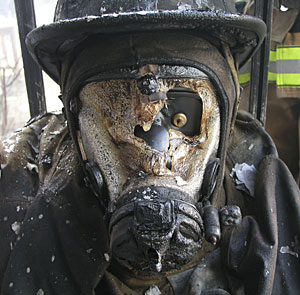
National Institute of Standards and Technology (NIST), conducted experiments which demonstrated a range of realistic thermal exposures and environmental conditions that firefighters could be exposed to. Self-contained breathing apparatus (SCBA) facepieces were exposed to thermal environments from propane-fueled calibration experiments and furnished townhouse fire experiments. The rooms and the facepieces were instrumented to measure temperatures of the environment and the facepieces. The fire experiments lasted 5 minutes to 10 minutes and produced ceiling temperatures of approximately 500 °C (932 °F) to 750 °C (1382 °F) in the room adjacent to the fire. A heat flux gauge was also installed next to the facepieces and measured peak heat fluxes from approximately 2 kW/m2 to 55 kW/m2. Eight facepieces were tested in six different experiments, with three facepiece lenses showing evidence of thermal degradation from the exposure. Maximum exterior lens temperatures were as high as 300 °C (572 °F) in these cases. The environments that caused the failures were identified in an attempt to characterize the thermal performance of SCBA facepieces. Although much was learned about conditions associated with thermal degradation of SCBA facepiece lenses, more experiments are needed to be able to understand the thermal degradation and more definitively predict the conditions that are likely to cause a facepiece lens failure.
REFERENCE
Fire Exposures of Fire Fighter Self-Contained Breathing Apparatus Facepiece Lenses
National Institute of Standards and Technology Technical Note 1724
Natl. Inst. Stand. Technol. Tech. Note 1724, 45 pages (November 2011)
CODEN: NSPUE2