Lista de correo. Espere su aprobación.
Correo electrónico:
Consultar este grupo
Mostrando las entradas con la etiqueta Emergencias. Mostrar todas las entradas

viernes, 10 de octubre de 2014

Contact tracing during an #ebola outbreak

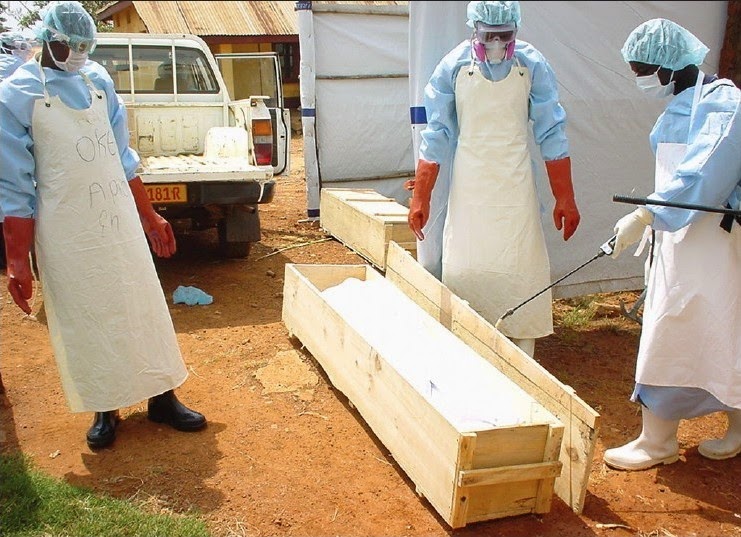
Persons in close contact with Ebola cases (alive or dead) are at higher risk of infection. All potential contacts of Ebola cases should be identified and closely observed for 21 days from the last day of exposure. Contacts that develop illness should be immediately isolated to prevent further transmission of infection. An effective system for contact tracing should be established at the onset of the outbreak. Early involvement and full cooperation of affected communities is critical for successful contact tracing.
This document provides guidance for establishing and conducting contact tracing during filovirus disease outbreaks. The guidance notes are based on extensive field experience in filovirus disease outbreak response in the WHO African region. The notes are intended for frontline epidemiologists, surveillance officers, health workers and other volunteers involved in contact tracing. National and sub-national emergency management committees and rapid response teams require these guidelines to plan, implement and monitor contact tracing.National emergency management committees are advised to adapt these guidance notes to the local context in their application

REFERENCES:
Contact tracing during an #ebola outbreak
CDC poster: What is contact tracing?
Australasian Contract Tracing Manual
Development of a risk assessment tool for contact tracing people after contact with infectious patients while travelling by bus or other public ground transport: a Delphi consensus approach
-----------------------------------------------------------
Sigue este Blog en Facebook y Twitter

jueves, 9 de octubre de 2014

Detailed Hospital Checklist for #Ebola Preparedness

Lohud.com
Every hospital should ensure that it can detect a patient with Ebola, protect healthcare workers so they can safely care for the patient, and respond in a coordinated fashion. Many of the signs and symptoms of Ebola are non-specific and similar to those of many common infectious diseases, as well as other infectious diseases with high mortality rates. Transmission can be prevented with appropriate infection control measures.
In order to enhance our collective preparedness and response efforts, this checklist highlights key areas for hospital staff -- especially hospital emergency management officers, infection control practitioners, and clinical practitioners -- to review in preparation for a person with Ebola arriving at a hospital for medical care. The checklist provides practical and specific suggestions to ensure your hospital is able to detect possible Ebola cases, protect your employees, and respond appropriately.
While we are not aware of any domestic Ebola cases, now is the time to prepare, as it is possible that individuals with Ebola in West Africa may travel to your city, exhibit signs and symptoms of Ebola, and present to facilities.

REFERENCES:


-----------------------------------------------------------
Sigue este Blog en Facebook y Twitter

lunes, 6 de octubre de 2014

Aviso preventivo de viaje por #ebola a países africanos

La Secretaria de Salud Federal, a través del Unidad de Inteligencia Epidemiológica y Sanitaria emite el siguiente aviso preventivo de viaje ante los brotes de Enfermedad por Virus del Ébola, en GUINEA, LIBERIA, SIERRA LEONA, NIGERIA Y SENEGAL en el continente Africano, actualizado al 03 de Octubre de 2014.
La Secretaría de Salud reitera la recomendación de evitar viajes no esenciales a Guinea, Liberia, Sierra Leona, Nigeria y Senegal debido a la evolución del brote de Enfermedad por el Virus del Ébola.

-----------------------------------------------------------
Sigue este Blog en Facebook y Twitter

martes, 23 de septiembre de 2014

Future Projections for #ebola outbreak

BACKGROUND. On March 23, 2014, the World Health Organization (WHO) was notified of an outbreak of Ebola virus disease (EVD) in Guinea. On August 8, the WHO declared the epidemic to be a “public health emergency of international concern.”
METHODS. By September 14, 2014, a total of 4507 probable and confirmed cases, including 2296 deaths from EVD (Zaire species) had been reported from five countries in West Africa — Guinea, Liberia, Nigeria, Senegal, and Sierra Leone. We analyzed a detailed subset of data on 3343 confirmed and 667 probable Ebola cases collected in Guinea, Liberia, Nigeria, and Sierra Leone as of September 14.
RESULTS: The majority of patients are 15 to 44 years of age (49.9% male), and we estimate that the case fatality rate is 70.8% (95% confidence interval [CI], 69 to 73) among persons with known clinical outcome of infection. The course of infection, including signs and symptoms, incubation period (11.4 days), and serial interval (15.3 days), is similar to that reported in previous outbreaks of EVD. On the basis of the initial periods of exponential growth, the estimated basic reproduction numbers (R0 ) are 1.71 (95% CI, 1.44 to 2.01) for Guinea, 1.83 (95% CI, 1.72 to 1.94) for Liberia, and 2.02 (95% CI, 1.79 to 2.26) for Sierra Leone. The estimated current reproduction numbers (R) are 1.81 (95% CI, 1.60 to 2.03) for Guinea, 1.51 (95% CI, 1.41 to 1.60) for Liberia, and 1.38 (95% CI, 1.27 to 1.51) for Sierra Leone; the corresponding doubling times are 15.7 days (95% CI, 12.9 to 20.3) for Guinea, 23.6 days (95% CI, 20.2 to 28.2) for Liberia, and 30.2 days (95% CI, 23.6 to 42.3) for Sierra Leone. Assuming no change in the control measures for this epidemic, by November 2, 2014, the cumulative reported numbers of confirmed and probable cases are predicted to be 5740 in Guinea, 9890 in Liberia, and 5000 in Sierra Leone, exceeding 20,000 in total.
CONCLUSIONS: These data indicate that without drastic improvements in control measures, the numbers of cases of and deaths from EVD are expected to continue increasing from hundreds to thousands per week in the coming months.
REFERENCES:
Ebola Virus Disease in West Africa — The First 9 Months of the Epidemic and Forward Projections. NEJM 2014
Meltzer mi, et al. Estimating the Future Number of Cases in the Ebola Epidemic — Liberia and Sierra Leone, 2014–2015. MMWR 2015. September 23, 2014 / 63(Early Release);1-14. 

-----------------------------------------------------------
Sigue este Blog en Facebook y Twitter

viernes, 19 de septiembre de 2014

Reporte de casos de #ébola en trabajadores de la salud en África


En el reporte publicado el día de ayer, la organización mundial de la salud actualiza los datos de la situación epidemiológica del ébola en África. En resumen, existen 5335 casos reportados (probables, confirmados y sospechosos), con 2622 muertes hasta el 14/Sep/2014. Los países afectados son Guinea (942 casos, 601 muertes), Liberia (2710 casos, 1459 muertes), Sierra Leona (1673 casos, 562 muertes), Nigeria (21 casos, 8 muertes), y Senegal (1 caso, 0 muertes).
Dentro del reporte se hace mención de los casos registrados en trabajadores de la salud, que como resultado del trabajo de atención a pacientes con ébola, han resultado infectados con ébola. En el reporte de situación por países, claramente el país mas afectado es Liberia con 85 muertes de 172 casos reportados. En total de todos los países se han reportado 151 muertes de 318 casos de ébola. 
Los casos de los trabajares de la salud, es por lo tanto una de las más alarmantes, dado que son ellos quienes realizan las funciones del control de la epidemia, atención y cuidado de pacientes. Sin trabajadores de la salud, difícilmente podrá controlarse la epidemia, agravado por el hecho de que estos países cuentan con muy bajo número de médicos y enfermeras.

Tabla. Resumen de infecciones por ébola en trabajadores de la salud. 14/Sep/2014. 
PAÍS MUERTES       CASOS
Guinea     30         61
Liberia     85        172
Nigeria     5        11
Sierra Leona     31        74
TOTAL     151        318

REFERENCIA
WHO: Ebola Response Roadmap Situation Report 18 September 2014
REPORTE DE CASOS ACTUALIZADO WHO: Ebola Response Roadmap Situation Report 24 September 2014
-----------------------------------------------------------
Sigue este Blog en Facebook y Twitter

viernes, 12 de septiembre de 2014

UNICEF recruiting healthcare workers & other specialists

Ebola Crisis Response

The current crisis in West Africa is the largest Ebola outbreak ever reported, with 26 million people, including over 4.5 million children living in affected areas.

UNICEF is on the ground, working with community and religious leaders, youth organizations and others to fight widespread misconceptions about the disease and improve hygiene practices. UNICEF is also providing water and sanitation services to the affected communities, particularly through the procurement of water, sanitation and hygiene equipment and supplies -- as well as appropriate training for the health and medical partners.

As part of our drive to tackle the Ebola outbreak in West Africa, UNICEF seeks committed professionals, ready to be deployed immediately to countries in the affected area in the domains of Health and Nutrition, Communication for Development and Water and Sanitation.

Do you have the skills, competency and technical knowledge that we seek? Are you available to be deployed on short notice? UNICEF would like to hear from you.

Apply to our vacancies below and help our response to the Ebola crisis.

This page will be updated regularly to reflect our vacancies below in Ebola affected countries.

For more information, or if you have difficulties in applying, contact us at eRecruitment@unicef.org.

Check the full list of vacancies at: 
http://www.unicef.org/about/employ/index_75734.html

miércoles, 3 de septiembre de 2014

Reducing Needle Stick Injuries in Healthcare Occupations

oasisdiscussions.ca
Needlestick injuries frequently occur among healthcare workers, introducing high risk of bloodborne pathogen infection for surgeons, assistants, and nurses. This systematic review aims to explore the impact of both educational training and safeguard interventions to reduce needlestick injuries. Several databases were searched including MEDLINE, PsycINFO, SCOPUS, CINAHL and Sciencedirect. Studies were selected if the intervention contained a study group and a control group and were published between 2000 and 2010. Of the fourteen studies reviewed, nine evaluated a double-gloving method, one evaluated the effectiveness of blunt needle, and one evaluated a bloodborne pathogen educational training program. Ten studies reported an overall reduction in glove perforations for the intervention group. In conclusion, this review suggests that both safeguard interventions and educational training programs are effective in reducing the risk of having needlestick injuries. However, more studies using a combination of both safeguards and educational interventions in surgical and nonsurgical settings are needed.
REFERENCE:
Yang L, Mullan B. Reducing needle stick injuries in healthcare occupations: an integrative review of the literature. ISRN Nurs. 2011;2011:315432.
-------------------------------------------------
Sigue este Blog en Facebook y Twitter

martes, 2 de septiembre de 2014

Infection Control During Filoviral Hemorrhagic Fever Outbreaks #Ebola

Breaking the human-to-human transmission cycle remains the cornerstone of infection control during filoviral (Ebola and Marburg) hemorrhagic fever outbreaks. This requires effective identification and isolation of cases, timely contact tracing and monitoring, proper usage of barrier personal protection gear by health workers, and safely conducted burials. Solely implementing these measures is insufficient for infection control; control efforts must be culturally sensitive and conducted in a transparent manner to promote the necessary trust between the community and infection control team in order to succeed. This article provides a review of the literature on infection control during filoviral hemorrhagic fever outbreaks focusing on outbreaks in a developing setting and lessons learned from previous outbreaks. The primary search database used to review the literature was PUBMED, the National Library of Medicine website.

REFERENCES:
  1. Raabea VN, Borcherta M. Infection control during filoviral hemorrhagic Fever outbreaks. J Glob Infect Dis. 2012 Jan;4(1):69-74.
  2. CDC Interim Guidance for Environmental Infection Control in Hospitals for Ebola Virus
  3. WHO Interim Infection Prevention and Control Guidance for Care of Patients with Suspected or Confirmed Filovirus Haemorrhagic Fever  in Health-Care Settings, with Focus on Ebola => DESCARGA OPCIONAL
  4. Health Canada. Interim Biosafety Guidelines for Laboratories Handling Specimens from Patients Under Investigation for Ebola Virus Disease
-----------------------------------------------------------
Sigue este Blog en Facebook y Twitter

viernes, 8 de agosto de 2014

Guías y hojas para el manejo del #ébola

A number of guidelines and training tools are available from the WHO and have been posted on the emerging issues resources section of the International Federation of Biosafety Associations (IFBA) website as follows:
---------------------------------------------------------
En la página de la Organización Panamericana de la Salud pueden encontrar adicionalmente los siguientes materiales:

-----------------------------------------------------------
Sigue este Blog en Facebook y Twitter

martes, 7 de enero de 2014

Containing the accidental laboratory escape of potential pandemic influenza viruses.

Abstract
BACKGROUND:
The recent work on the modified H5N1 has stirred an intense debate on the risk associated with the accidental release from biosafety laboratory of potential pandemic pathogens. Here, we assess the risk that the accidental escape of a novel transmissible influenza strain would not be contained in the local community.
METHODS:
We develop here a detailed agent-based model that specifically considers laboratory workers and their contacts in microsimulations of the epidemic onset. We consider the following non-pharmaceutical interventions: isolation of the laboratory, laboratory workers' household quarantine, contact tracing of cases and subsequent household quarantine of identified secondary cases, and school and workplace closure both preventive and reactive.
RESULTS:
Model simulations suggest that there is a non-negligible probability (5% to 15%), strongly dependent on reproduction number and probability of developing clinical symptoms, that the escape event is not detected at all. We find that the containment depends on the timely implementation of non-pharmaceutical interventions and contact tracing and it may be effective (>90% probability per event) only for pathogens with moderate transmissibility (reproductive number no larger than R₀ = 1.5). Containment depends on population density and structure as well, with a probability of giving rise to a global event that is three to five times lower in rural areas.
CONCLUSIONS:
Results suggest that controllability of escape events is not guaranteed and, given the rapid increase of biosafety laboratories worldwide, this poses a serious threat to human health. Our findings may be relevant to policy makers when designing adequate preparedness plans and may have important implications for determining the location of new biosafety laboratories worldwide.

REFERENCE
1: Merler S, Ajelli M, Fumanelli L, Vespignani A. Containing the accidental laboratory escape of potential pandemic influenza viruses. BMC Med. 2013 Nov
28;11:252

viernes, 11 de octubre de 2013

Fire Exposures of Fire Fighter Self-Contained Breathing Apparatus Facepiece Lenses

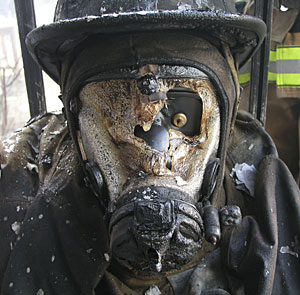
National Institute of Standards and Technology (NIST), conducted experiments which demonstrated a range of realistic thermal exposures and environmental conditions that firefighters could be exposed to. Self-contained breathing apparatus (SCBA) facepieces were exposed to thermal environments from propane-fueled calibration experiments and furnished townhouse fire experiments. The rooms and the facepieces were instrumented to measure temperatures of the environment and the facepieces. The fire experiments lasted 5 minutes to 10 minutes and produced ceiling temperatures of approximately 500 °C (932 °F) to 750 °C (1382 °F) in the room adjacent to the fire. A heat flux gauge was also installed next to the facepieces and measured peak heat fluxes from approximately 2 kW/m2 to 55 kW/m2. Eight facepieces were tested in six different experiments, with three facepiece lenses showing evidence of thermal degradation from the exposure. Maximum exterior lens temperatures were as high as 300 °C (572 °F) in these cases. The environments that caused the failures were identified in an attempt to characterize the thermal performance of SCBA facepieces. Although much was learned about conditions associated with thermal degradation of SCBA facepiece lenses, more experiments are needed to be able to understand the thermal degradation and more definitively predict the conditions that are likely to cause a facepiece lens failure.
REFERENCE
Fire Exposures of Fire Fighter Self-Contained Breathing Apparatus Facepiece Lenses
National Institute of Standards and Technology Technical Note 1724
Natl. Inst. Stand. Technol. Tech. Note 1724, 45 pages (November 2011)
CODEN: NSPUE2

miércoles, 9 de octubre de 2013

Volcanoes: Protecting the Public´s Health

This instructional guide is meant for use before, during and after the viewing of the video "Volcanoes: Protecting the Public’s Health." It uses a simple format to present the most important aspects of the video, providing technical information for health personnel who may be involved in prevention, preparedness, or response activities in volcanic emergencies. The information in the video and guide are based on experiences in the Americas, addressing the major health risks associated with volcanic eruptions and basic planning measures that the health sector should undertake to reduce potential losses. The video is divided into two distinct but complementary sections that can be used together or separately.
REFERENCIA:
Volcanoes: Protecting the Public’s Health

lunes, 30 de septiembre de 2013

Intervención de laboratorios y bancos de sangre en situaciones de desastre

ISBN 92 75 32380 1
OPS/HSP/HSE/08-2001
Las situaciones de emergencia o desastre requieren de una respuesta rápida y oportuna por parte de los servicios de salud. Desde hace varios años, la Organización Panamericana de la Salud ha venido promoviendo el desarrollo de acciones para reducir la vulnerabilidad del sector salud y fortalecer los programas de preparativos ante emergencias y desastres.
Desastres recientes ocurridos en Centroamérica como los huracanes Mitch y George en 1998 o el terremoto de El Salvador en 2001, alertaron sobre la necesidad de integrar a los laboratorios de salud pública, laboratorios clínicos y bancos de sangre dentro de los planes de contingencia sectorial de salud, revelando tres áreas prioritarias de intervención:
• La confirmación diagnóstica de las enfermedades transmisibles de alta mortalidad.
• La disponibilidad de exámenes básicos para el manejo de heridos.
• La provisión oportuna de sangre segura.
La presente guía pretende sensibilizar y orientar a las autoridades de salud, directores y técnicos de laboratorios y bancos de sangre en la identificación de responsabilidades y funciones de estos servicios ante situaciones de desastres, basándose en prioridades, necesidades y capacidad de respuesta inmediata local. La incorporación de actividades de mitigación y reducción de vulnerabilidad, rehabilitación y reorganización de los servicios en los planes de contingencia permitirá una mejor respuesta de los servicios de salud posterior a los desastres.
REFERENCIA:
Intervención de laboratorios y bancos de sangre en situaciones de desastre

lunes, 23 de septiembre de 2013

EMERGENCIAS: Prácticas Sanitarias para Jeringas Desechables

Vacunación
La mayoría de los programas de inmunización en las Américas usan jeringas desechables para poner vacunas. Durante desastres naturales, como el causado por el huracán Mitch, todo el personal de salud (voluntarios internacionales y personal nacional) deben asegurarse que las guías de la OPS/OMS se sigan, para garantizar el uso sanitario del equipo de inyección desechable y que el equipo apropiado esté disponible para recoger y eliminar las jeringas y agujas contaminadas. Esto aplica especialmente cuando los métodos normales de operación no pueden ser seguidos, ya sea porque la recolección de desechos médicos ha sido interrumpida, o porque las instalaciones donde deben ser destruidos de la manera apropiada no funcionan.

La OPS/OMS recomienda las normas siguientes:

  • Las jeringas "autodestructibles" [a] son el tipo preferido de inyecciones desechables con el que se aplican vacunas y el material escogido para llevar a cabo campañas de inmunizaciones en gran cantidad de gente.
  • Los trabajadores de la salud no deben rehusar las agujas.
  • Las jeringas desechables usadas deben recolectarse en "Cajas de Seguridad", que son contenedores resistentes a perforaciones, diseñados para colectar equipo de inyecciones.
  • Las "Cajas de Seguridad" o contenedores similares donde se recolectan equipo de inoculación contaminado, debe ser transportado con mucho cuidado a un sitio de incineración.
  • Si no existen o no están en servicio las instalaciones o sitios para incineración, las "Cajas de Seguridad" se pueden quemar en una fosa o algo parecido, por ejemplo un barril metálico. Las agujas quemadas se pueden enterrar de una manera segura o eliminadas con otra basura.
  • No cumplir con estas normas puede poner en riesgo la salud pública ya que el material de inoculación podría ser utilizado de nuevo exponiendo a la gente a enfermedades y a la muerte.
  • Los trabajadores de la salud que rehusan agujas se arriesgan a contraer enfermedades infecciosas debido a pinchazos accidentales. El público podría pincharse accidentalmente si las agujas y jeringas no son destruidas de una manera apropiada.

Recuerde: toda inyección debe administrarse con una aguja y jeringa estéril.

a. Jeringas autodestructibles son jeringas desechables que contienen un mecanismo por el cual automáticamente no pueden ser rehusadas después de la primera vez.

REFERENCIA:
http://www.paho.org/disasters/index.php?option=com_content&task=view&id=555&Itemid=664

viernes, 20 de septiembre de 2013

VIDEO: Problemas sanitarios durante el terremoto en México - 1985

Esta producción describe los problemas sanitarios y las actividades de socorro realizadas a raíz de los terremotos del 19 y 20 de septiembre de 1985 en México. El primer sismo, de magnitud 8,1 en la escala de Richer, dejó más de 10.000 muertos o desaparecidos y miles de heridos.

martes, 17 de septiembre de 2013

Communicable disease control in emergencies - A field manual

 
Publication details
Pages: 301
Pub. date: 2005
Language : English
ISBN  924154616 6
Download English
This manual is intended to help health professionals and public health coordinators working in emergency situations prevent, detect and control the major communicable diseases encountered by affected populations. Emergencies include complex emergencies and natural disasters (e.g. floods and earthquakes). The term “complex emergencies” has been coined to describe “situations of war or civil strife affecting large civilian populations with food shortages and population displacement, resulting in excess mortality and morbidity”.
In this manual, the generic term “emergencies” will be used to encompass all situations in which large populations are in need of urgent humanitarian relief. Following an emergency, the affected population is often displaced and temporarily resettled. They may be placed in camps or become dispersed among the local population (either in towns or in rural communities). People who are displaced across national borders are termed refugees whereas those who have been displaced within their country are called “internally displaced persons” (IDPs). Resettlement in camps may entail high population densities, inadequate shelter, poor water supplies and sanitation, and a lack of even basic health care. In these situations, there is an increased threat of communicable disease and a high risk of epidemics.

viernes, 13 de septiembre de 2013

WHO: Emergency Response Framework

Download
WHO’s Member States face a broad range of emergencies resulting from various hazards and differing in scale, complexity and international consequences. These  emergencies can have extensive political, economic, social and public health impacts,  with potential long-term consequences sometimes persisting for years after the  emergency. They may be caused by natural disasters, conflict, disease outbreaks, food contamination, or chemical or radio-nuclear spills, among other hazards. They can undermine decades of social development and hard-earned health gains, damage hospitals and other health infrastructure, weaken health systems and slow progress towards the Millennium Development Goals (MDGs). Preparing for and responding effectively to such emergencies are among the most pressing challenges facing the international community.

REFERENCE:
WHO: Emergency Response Framework. ISBN 978 92 4 150497 3

lunes, 9 de septiembre de 2013

Emergency First Responder Respirator Thermal Characteristics: Workshop Proceedings

The purpose of this workshop was to identify performance needs and establish research priorities to address the thermal characteristics of respiratory equipment used by emergency first responders. The workshop provided a forum for representatives from the first responder community, self contained breathing apparatus (SCBA) and component manufacturers, and research and testing experts to discuss issues, technologies, and research associated with SCBA high temperature performance. The goals of the workshop were defined in two parts: 1) Clarify baseline information, including the current state-of-the-art, applicable fire service events, and current related research, and 2) Research planning, including identification of performance needs and short and long term research priorities. Presentations were given to explain the current SCBA and certification process, understand experience from actual fire service incidents, and review the current state of respirator research. After the presentations, the workshop divided into three working group sessions to discuss performance needs and research priorities in smaller groups. Suggested topics for discussion included: a) Current Equipment, b) Current Practice and Usage, c) Future Trends, d) Short Term Research Needs, e) Long Term Research Needs, and f) other issues. The results of the three smaller groups’ deliberations were discussed when the full workshop reconvened. The responses from each group were merged into a combination of issues that related to the use and performance of the lens of the SCBA. The primary concerns and research priorities were the characterization of the fire fighter environment, performance of current and new technology, development of representative and realistic testing, and improvements to fire fighter training on the limitations of protective equipment. A significant amount of discussion concentrated on the testing for NFPA certification, which currently contains limited thermal testing.
REFERENCE
NIOSH Emergency First Responder Respirator  Thermal Characteristics: Workshop Proceedings
National Institute of Standards and Technology Special Publication 1123
Natl. Inst. Stand. Technol. Spec. Publ. 1123, 52 pages (June 2011)

lunes, 2 de septiembre de 2013

¿Su hospital es seguro?

ISBN: 978-9978-45-930-0
Según estudios realizados, "aproximadamente el 50% de los 15,000 hospitales en America Latina y el Caribe, están ubicados en zonas de alto riesg"; diversos eventos adversos lo han confirmado, lo que ha ocasionado la interrupción en la prestación de servicios de salud y ha dejado a la población sin posibilidad de acceder a estos.
Los países del mundo se reunieron en la segunda conferencia mundial en Kobe, Japón, para proponer un plan de acción. Este plan subraya la necesidad de integrar la planificación de la reducción de riesgos de desastre en el sector salud y promover la meta de hospitales seguros frente a desastres, asegurar que todos los hospitales nuevos se construyan con un nivel de confiabilidad e implementar medidas de mitigación para reforzar los establecimientos de salud existentes.
Se entiende por hospital seguro a un establecimiento de salud cuyos servicios permanecen accesibles y funcionan a su máxima capacidad instalada y en su misma infraestructura, inmediatemente después de un fenómeno destructivo de gran intensidad; esto implica la estabilidad de la estructura, la disponibilidad permanente de servicios básicos y la organización al interior de la unidad de salud.
REFERENCIA:
¿Su hospital es seguro? Preguntas y respuestas para el personal de salud. WHO/PAHO 2007

sábado, 4 de mayo de 2013

Prevención de exposición de paramédicos a patógenos transmitidos por sangre

Resumen
Paramédicos atendiendo a un paciente.
Foto cortesía de 911imaging
Los paramédicos corren el riesgo de exposición a la sangre cuando atienden a los pacientes. Estas exposiciones conllevan riesgos de infección por agentes patógenos transmitidos por la sangre, como virus de la hepatitis B (VHB), virus de la hepatitis C (VHC) y virus de la inmunodeficiencia humana (VIH), causante del sida. Una encuesta nacional en la que participaron 2,664 paramédicos, aportó información nueva sobre los riesgos de exposición a la sangre e identificó oportunidades para controlar exposiciones y prevenir infecciones en esta profesión.
Referencia
Prevención de Exposiciones de Paramédicos a Agentes Patógenos Transmitidos por la Sangre. NIOHS-CDC, USA.