Vaccine scientist, pediatrician, and autism dad Peter Hotez talks about his new book, Vaccines Did Not Cause Rachel’s Autism.
Host: Vincent Racaniello
Guest: Peter Hotez
Click arrow to play
Download TWiV Special (12 MB .mp3, 19 min)
-----------------------------------------------------------
Sigue este Blog en Facebook y Twitter
-----------------------------------------------------------
| Lista de correo. Espere su aprobación. |
| Consultar este grupo |
martes, 30 de abril de 2019
lunes, 29 de abril de 2019
Emergency Response for a Laboratory Biosafety Incident
On December 14, 2017, a faculty member of a university in Hunan Province reported that an anthrax vaccine strain might have recovered virulence during an undergraduate experiment and potential exposure could not be ruled out for the students involved. Upon receiving the case report, the CDC, health bureaus, and local governments at the county, prefectural, and provincial levels promptly organized experts in different fields (including epidemiologists, biosafety experts, and laboratory testing experts) for case investigation, evaluation, and response. As the investigation results showed, no virulence recovery was identified in the involved anthrax vaccine strain; and no contamination of Bacillus anthracis was detected at the involved areas. Thus, the university returned to normal functioning.
REFERENCE:
Zhang EM, et al. Emergency Response for a Laboratory Biosafety Incident. Biomed Environ Sci. 2019 Mar;32(3):231-233. doi: 10.3967/bes2019.032. PubMed PMID: 30987699.
-----------------------------------------------------------
Sigue este Blog en Facebook y Twitter
-----------------------------------------------------------
REFERENCE:
Zhang EM, et al. Emergency Response for a Laboratory Biosafety Incident. Biomed Environ Sci. 2019 Mar;32(3):231-233. doi: 10.3967/bes2019.032. PubMed PMID: 30987699.
-----------------------------------------------------------
Sigue este Blog en Facebook y Twitter
-----------------------------------------------------------
jueves, 25 de abril de 2019
Semana Mundial de la Inmunización de 2019 #VaccinesWork
Protegidos colectivamente: ¡las vacunas funcionan!
La Semana Mundial de la Inmunización —que se celebra la última semana de abril— tiene por objetivo promover la vacunación para proteger contra las enfermedades a las personas de todas las edades. Cada año, la inmunización salva millones de vidas y en todo el mundo se la reconoce ampliamente como una de las intervenciones de salud más costoeficaces y que da mejores resultados. Aun así, sigue habiendo en el mundo cerca de 20 millones de niños no vacunados o vacunados de forma incompleta.El lema de este año es Protected Together: Vaccines Work! («Protegidos colectivamente: ¡las vacunas funcionan!»), y la campaña rendirá homenaje a los héroes de la vacunación de todo el mundo —desde los progenitores y los miembros de la comunidad hasta los trabajadores e innovadores del sector de la salud— que ayudan a velar por que todos estemos protegidos mediante el poder de las vacunas.
https://www.who.int/es/campaigns/world-immunization-week/world-immunization-week-2019
https://www.who.int/es/campaigns/world-immunization-week/world-immunization-week-2019/key-messages
https://www.who.int/es/campaigns/world-immunization-week/world-immunization-week-2019/campaign-materials
-----------------------------------------------------------
Sigue este Blog en Facebook y Twitter
-----------------------------------------------------------
Surveillance of laboratory exposures to human pathogens and toxins: Canada 2017.
BACKGROUND: Under Canada's Human Pathogens and Toxins Act and Human Pathogens and Toxins Regulations, the Public Health Agency of Canada (PHAC) is mandated with monitoring laboratory incident notifications through the Laboratory Incident Notification Canada (LINC) surveillance system. The year 2017 marks the second complete year of data.
OBJECTIVE: To describe the laboratory exposure and laboratory-acquired infection incidents that occurred in Canada in 2017 by sector, human pathogens and toxins involved, number of affected persons, incident type and root causes.
METHODS: The incidents included in the analysis occurred between January 1 and December 31, 2017. They were reported by laboratories with active licences to PHAC through the LINC surveillance system. Microsoft Excel 2010 was used for basic descriptive statistics.
RESULTS: A total of 44 exposure and laboratory-acquired infection incidents were reported to the LINC in 2017. Compared by sector and their respective shares of licences, the number of incidents was highest in the academic and hospital sectors compared with government laboratories and private industry. Altogether 118 people were exposed for an average of 2.7 people per incident (range of 1-29). There were no reports of secondary exposure. Six exposure incidents (14%) led to "suspected" (n=5) or confirmed (n=1) cases of laboratory-acquired infection. Although overall, risk group (RG)2 human pathogens and toxins were involved in the majority of incidents (n=23; 52%), Francisella tularensis (n=4; 9%) and Coccidioides immitis (n=3; 7%) were the most frequently involved in reported exposure incidents. These two pathogens are both RG3 and security-sensitive biological agents (SSBAs). An average of 2.3 root causes were identified per incident (n=101). Problems with standard operating procedures (SOPs) and human error were the two most common causes.
CONCLUSION: The incidence of laboratory exposure incidents was relatively low in 2017. The most common route of exposure was through inhalation and the most common root causes were problems with SOPs and human error. Since this is a new surveillance system, baseline estimates are still being established.
REFERENCE:
pomerleau-Normandin D, Heisz M, Tanguay F. Surveillance of laboratory exposures to human pathogens and toxins: Canada 2017. Can Commun Dis Rep. 2018 Nov 1;44(11):297-304. doi: 10.14745/ccdr.v44i11a05. eCollection 2018 Nov 1. PubMed PMID: 30996692; PubMed Central PMCID: PMC6449110
-----------------------------------------------------------
Sigue este Blog en Facebook y Twitter
-----------------------------------------------------------
OBJECTIVE: To describe the laboratory exposure and laboratory-acquired infection incidents that occurred in Canada in 2017 by sector, human pathogens and toxins involved, number of affected persons, incident type and root causes.
METHODS: The incidents included in the analysis occurred between January 1 and December 31, 2017. They were reported by laboratories with active licences to PHAC through the LINC surveillance system. Microsoft Excel 2010 was used for basic descriptive statistics.
RESULTS: A total of 44 exposure and laboratory-acquired infection incidents were reported to the LINC in 2017. Compared by sector and their respective shares of licences, the number of incidents was highest in the academic and hospital sectors compared with government laboratories and private industry. Altogether 118 people were exposed for an average of 2.7 people per incident (range of 1-29). There were no reports of secondary exposure. Six exposure incidents (14%) led to "suspected" (n=5) or confirmed (n=1) cases of laboratory-acquired infection. Although overall, risk group (RG)2 human pathogens and toxins were involved in the majority of incidents (n=23; 52%), Francisella tularensis (n=4; 9%) and Coccidioides immitis (n=3; 7%) were the most frequently involved in reported exposure incidents. These two pathogens are both RG3 and security-sensitive biological agents (SSBAs). An average of 2.3 root causes were identified per incident (n=101). Problems with standard operating procedures (SOPs) and human error were the two most common causes.
CONCLUSION: The incidence of laboratory exposure incidents was relatively low in 2017. The most common route of exposure was through inhalation and the most common root causes were problems with SOPs and human error. Since this is a new surveillance system, baseline estimates are still being established.
REFERENCE:
pomerleau-Normandin D, Heisz M, Tanguay F. Surveillance of laboratory exposures to human pathogens and toxins: Canada 2017. Can Commun Dis Rep. 2018 Nov 1;44(11):297-304. doi: 10.14745/ccdr.v44i11a05. eCollection 2018 Nov 1. PubMed PMID: 30996692; PubMed Central PMCID: PMC6449110
-----------------------------------------------------------
Sigue este Blog en Facebook y Twitter
-----------------------------------------------------------
lunes, 22 de abril de 2019
Biosafety Level 4 Laboratory User Training Program, China
Experienced, qualified personnel certified to work in high-level biocontainment laboratories contribute to the safe operation of these facilities. China began a training program for laboratory users after establishing its first Biosafety Level 4 laboratory, the Wuhan National Biosafety Laboratory (Level 4) of the Chinese Academy of Sciences. We provide an overview of the content of this training program, which can serve as a reference for developing national norms for high-containment laboratory training.
REFERENCE:
Xia H, et al. Biosafety Level 4 Laboratory User Training Program, China. Emerg Infect Dis. 2019 May;25(5). doi: 10.3201/eid2505.180220. PubMed PMID: 31002302.
-----------------------------------------------------------
Sigue este Blog en Facebook y Twitter
Ayúdanos a traducir las fichas de seguridad de microorganismos.
www.seguridadbiologica.blogspot.com
-----------------------------------------------------------
REFERENCE:
Xia H, et al. Biosafety Level 4 Laboratory User Training Program, China. Emerg Infect Dis. 2019 May;25(5). doi: 10.3201/eid2505.180220. PubMed PMID: 31002302.
-----------------------------------------------------------
Sigue este Blog en Facebook y Twitter
Ayúdanos a traducir las fichas de seguridad de microorganismos.
www.seguridadbiologica.blogspot.com
-----------------------------------------------------------
miércoles, 10 de abril de 2019
Comparación de factores de ajuste con tres tipos de respiradores N95
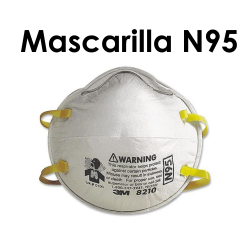
Introducción: Se han recomendado respiradores con filtro N95 o superior en entornos de atención médica, aunque todavía existe un riesgo de infección debido a la selección inadecuada y el uso de los respiradores. El objetivo fue evaluar los efectos del entrenamiento con respiradores con filtro N95 o superior en el desempeño de protección de los respiradores entre los proveedores de atención médica en el centro médico de emergencia (EMC). Métodos: Este estudio aleatorizado cruzado evaluó a 23 proveedores de atención médica. Se realizaron pruebas de ajuste cuantitativas (QNFT) antes y después del entrenamiento con tres tipos de respiradores con filtro N95 o superior (tipo copa, tipo plegado, tipo válvula). La capacitación se realizó mediante conferencia, comentarios en tiempo real y control de ajuste. El resultado primario fue el factor de ajuste, y los resultados secundarios fueron el factor de ajuste general, la tasa de protección adecuada y la preferencia respiratoria. Resultados: Los factores de ajuste, el factor de ajuste general y la tasa de protección adecuada fueron mayores después del entrenamiento que antes del entrenamiento para los 3 tipos de respiradores (p <0,05). Para la respiración normal, los factores de ajuste antes y después del entrenamiento fueron 121 (10–185) vs 192 (161–200) para el tipo de copa, 200 (39–200) vs 200 (200–200) para el tipo de pliegue, y 85 ( 18–157) vs 173 (117–200) para el tipo de válvula. Para la respiración normal, las tasas de protección adecuadas antes y después del entrenamiento fueron 62 (0–100) frente a 100 (90–100) para el tipo de copa, 100 (0–100) frente a 100 (100–100) para el tipo de doblez, y 19 (0–100) vs 100 (44–100) para el tipo de válvula (todos P <.05). El tipo de respirador más preferido fue el tipo de válvula (10 personas, 45.5%). Conclusiones: La capacitación sobre el uso de un respirador N95 o superior mejoró el rendimiento de protección de los respiradores entre los proveedores de atención médica que trabajan en el EMC. La selección de respiradores adecuados y la capacitación serían beneficiosos para la seguridad de los proveedores de atención médica. Palabras clave: centro médico de emergencia, factor de ajuste, respirador N95, entrenamiento.
REFERENCIA:
Kim, Hongjung et al. “Comparison of fit factors among healthcare providers working in the Emergency Department Center before and after training with three types of N95 and higher filter respirators.” Medicine vol. 98,6 (2019): e14250. doi:10.1097/MD.0000000000014250
-----------------------------------------------------------
Sigue este Blog en Facebook y Twitter
Ayúdanos a traducir las fichas de seguridad de microorganismos.
www.seguridadbiologica.blogspot.com
-----------------------------------------------------------
REFERENCIA:
Kim, Hongjung et al. “Comparison of fit factors among healthcare providers working in the Emergency Department Center before and after training with three types of N95 and higher filter respirators.” Medicine vol. 98,6 (2019): e14250. doi:10.1097/MD.0000000000014250
-----------------------------------------------------------
Sigue este Blog en Facebook y Twitter
Ayúdanos a traducir las fichas de seguridad de microorganismos.
www.seguridadbiologica.blogspot.com
-----------------------------------------------------------
lunes, 8 de abril de 2019
Bioaerosols and Transmission, a Diverse and Growing Community of Practice
La transmisión de microorganismos infecciosos a través de bioaerosoles es una preocupación importante para la salud humana y animal. Sin embargo, persisten las lagunas en nuestra comprensión de la transmisión de patógenos respiratorios y la heterogeneidad metodológica. Los nuevos desarrollos han permitido avanzar en este dominio, y uno de los principales puntos de inflexión ha sido el reconocimiento de las colaboraciones interdisciplinarias en esferas de la salud humana y animal, microbiología, biofísica, ingeniería, aerobiología, control de infecciones, salud pública, salud ocupacional, Y la higiene industrial es esencial. Las iniciativas de colaboración respaldan los avances en temas como el comportamiento del bioaerosol, los modelos de dispersión, la evaluación de riesgos, los efectos de riesgo / exposición y las estrategias de mitigación en entornos clínicos, experimentales, agrícolas y de otro tipo. Existe la necesidad de mejorar la traducción del conocimiento para que los investigadores, partes interesadas y socios privados apoyen a una red cada vez mayor de individuos y agencias para lograr objetivos comunes para mitigar la transmisión de patógenos entre especies y dentro de las especies a través de bioaerosoles.
-----------------------------------------------------------
Sigue este Blog en Facebook y Twitter
Ayúdanos a traducir las fichas de seguridad de microorganismos.
www.seguridadbiologica.blogspot.com
-----------------------------------------------------------
REFERENCE:
Mubareka, Samira et al. “Bioaerosols and Transmission, a Diverse and Growing Community of Practice.” Frontiers in public health vol. 7 23. 21 Feb. 2019, doi:10.3389/fpubh.2019.00023-----------------------------------------------------------
Sigue este Blog en Facebook y Twitter
Ayúdanos a traducir las fichas de seguridad de microorganismos.
www.seguridadbiologica.blogspot.com
-----------------------------------------------------------
viernes, 5 de abril de 2019
Another hazard to laboratory worker #tuberculosis
Needle-stick injuries, unfortunately, are a common occurrence during blood extraction and handling of specimens in the laboratory, which often lead to the contraction of blood-borne viral diseases. Mycobacterium tuberculosis infection also poses a threat to healthcare workers, especially laboratory workers in areas with endemic levels of tuberculosis infections. We present in this report, a case of primary inoculation of tuberculosis of the skin transmitted following a needle-stick injury, which was successfully treated. Reports of such an occurrence are few, and our report further underlines the need to take greater precautions against these accidents. In addition, our case draws attention to the possibility of prophylactic anti-tuberculous treatment in high-risk patients to prevent the progression of an overt illness.
REFERENCE:
Ghanbar MI, Bukharie HA. Another hazard to laboratory workers. Saudi J Med Med Sci 2015;3:174-7
-----------------------------------------------------------
Sigue este Blog en Facebook y Twitter
Ayúdanos a traducir las fichas de seguridad de microorganismos.
www.seguridadbiologica.blogspot.com
-----------------------------------------------------------
REFERENCE:
Ghanbar MI, Bukharie HA. Another hazard to laboratory workers. Saudi J Med Med Sci 2015;3:174-7
-----------------------------------------------------------
Sigue este Blog en Facebook y Twitter
Ayúdanos a traducir las fichas de seguridad de microorganismos.
www.seguridadbiologica.blogspot.com
-----------------------------------------------------------
miércoles, 3 de abril de 2019
El hongo destructor de especies

Parece un título exagerado, pero no lo es. Un hongo está erradicando especies de anfibios (ranas, sapos) y salamandras a escala global. Su nombre: Batrachochytrium dendrobatidis, y se calcula que desde 1965, de las 500 especies afectadas por este hongo, 90 especies ya se han extinguido(1). Este hongo es el agente causal de una infección en la piel de los anfibios llamada quitridiomicosis. Y aunque es una enfermedad tratable, en especies silvestres es casi imposible administrar los tratamientos. Es tan grave el asunto que la Oficina Internacional de Epizootías (OIE), de la Organización Mundial de Sanidad animal ha declarado a la enfermedad como de notificación obligatoria por la gran amenaza que representa a la biodiversidad. El término científico es que es una "panzootia", lo que en términos de patógenos humanos sería equivalente a una "pandemia". Al existir una pérdida tan grande en la biodiversidad, B. dendrobatidis se ha convertido en el patógeno con mayor mortalidad en el mundo.
REFERENCIA:
1. Scheele BC, et al. (2019) Amphibian fungal panzootic causes catastrophic and ongoing loss of biodiversity Science 363(6434):1459–1463.
lunes, 1 de abril de 2019
Gene editing using CRISPR/Cas9: implications for dual-use and #biosecurity
[FRAGMENT...]
We have read with interest the recent paper by Kang, et al (2017), addressing clinical and ethical issues related to the safe and responsible use of CRISPR/Cas. The authors provide a number of important considerations about the current capabilities offered by this novel gene-editing tool, including germ line editing in embryos, and potential diverse uses in adult human applications. The authors posit that the tool in of itself does not represent a threat, and that periodic assessment will ensure its responsible use. We agree, but with caveat: namely, that any tool that imparts great capability also involves at least some risk, if not threat, that the power conferred by such capacity can be used to leverage or evoke a variety of ends. This deviation of intent is a principal concern of dual-use research and its applications.
REFERENCE:
DiEuliis, Diane and James Giordano. “Gene editing using CRISPR/Cas9: implications for dual-use and biosecurity” Protein & cell vol. 9,3 (2017): 239-240.
-----------------------------------------------------------
Sigue este Blog en Facebook y Twitter
Ayúdanos a traducir las fichas de seguridad de microorganismos.
www.seguridadbiologica.blogspot.com
-----------------------------------------------------------
We have read with interest the recent paper by Kang, et al (2017), addressing clinical and ethical issues related to the safe and responsible use of CRISPR/Cas. The authors provide a number of important considerations about the current capabilities offered by this novel gene-editing tool, including germ line editing in embryos, and potential diverse uses in adult human applications. The authors posit that the tool in of itself does not represent a threat, and that periodic assessment will ensure its responsible use. We agree, but with caveat: namely, that any tool that imparts great capability also involves at least some risk, if not threat, that the power conferred by such capacity can be used to leverage or evoke a variety of ends. This deviation of intent is a principal concern of dual-use research and its applications.
REFERENCE:
DiEuliis, Diane and James Giordano. “Gene editing using CRISPR/Cas9: implications for dual-use and biosecurity” Protein & cell vol. 9,3 (2017): 239-240.
-----------------------------------------------------------
Sigue este Blog en Facebook y Twitter
Ayúdanos a traducir las fichas de seguridad de microorganismos.
www.seguridadbiologica.blogspot.com
-----------------------------------------------------------
Suscribirse a:
Entradas (Atom)


