Lista de correo. Espere su aprobación.
Correo electrónico:
Consultar este grupo
Mostrando las entradas con la etiqueta Microorganismos. Mostrar todas las entradas

viernes, 28 de noviembre de 2014

Chimpanzee Adenovirus Vector #Ebola Vaccine - Preliminary Report.

Background 
The unprecedented 2014 epidemic of Ebola virus disease (EVD) has prompted an international response to accelerate the availability of a preventive vaccine. A replication-defective recombinant chimpanzee adenovirus type 3-vectored ebolavirus vaccine (cAd3-EBO), encoding the glycoprotein from Zaire and Sudan species that offers protection in the nonhuman primate model, was rapidly advanced into phase 1 clinical evaluation. 
Methods 
We conducted a phase 1, dose-escalation, open-label trial of cAd3-EBO. Twenty healthy adults, in sequentially enrolled groups of 10 each, received vaccination intramuscularly in doses of 2×10¹⁰ particle units or 2×10¹¹ particle units. Primary and secondary end points related to safety and immunogenicity were assessed throughout the first 4 weeks after vaccination. 
Results 
In this small study, no safety concerns were identified; however, transient fever developed within 1 day after vaccination in two participants who had received the 2×10¹¹ particle-unit dose. Glycoprotein-specific antibodies were induced in all 20 participants; the titers were of greater magnitude in the group that received the 2×10¹¹ particle-unit dose than in the group that received the 2×10¹⁰ particle-unit dose (geometric mean titer against the Zaire antigen, 2037 vs. 331; P=0.001). Glycoprotein-specific T-cell responses were more frequent among those who received the 2x10¹¹ particle-unit dose than among those who received the 2×10¹⁰ particle-unit dose, with a CD4 response in 10 of 10 participants versus 3 of 10 participants (P=0.004) and a CD8 response in 7 of 10 participants versus 2 of 10 participants (P=0.07). 
Conclusions 
Reactogenicity and immune responses to cAd3-EBO vaccine were dose-dependent. At the 2×10¹¹ particle-unit dose, glycoprotein Zaire-specific antibody responses were in the range reported to be associated with vaccine-induced protective immunity in challenge studies involving nonhuman primates. Clinical trials assessing cAd3-EBO are ongoing. (Funded by the Intramural Research Program of the National Institutes of Health; VRC 207 ClinicalTrials.gov number, NCT02231866 .).
REFERENCE:

Ledgerwood JE, et al; the VRC 207 Study Team. Chimpanzee Adenovirus Vector Ebola Vaccine - Preliminary Report. N Engl J Med. 2014 Nov 26. [Epub ahead of print] PubMed PMID: 25426834.

lunes, 24 de noviembre de 2014

Algae-based oral recombinant vaccines

Recombinant subunit vaccines are some of the safest and most effective vaccines available, but their high cost and the requirement of advanced medical infrastructure for administration make them impractical for many developing world diseases. Plant-based vaccines have shifted that paradigm by paving the way for recombinant vaccine production at agricultural scale using an edible host. However, enthusiasm for “molecular pharming” in food crops has waned in the last decade due to difficulty in developing transgenic crop plants and concerns of contaminating the food supply. Microalgae could be poised to become the next candidate in recombinant subunit vaccine production, as they present several advantages over terrestrial crop plant-based platforms including scalable and contained growth, rapid transformation, easily obtained stable cell lines, and consistent transgene expression levels. Algae have been shown to accumulate and properly fold several vaccine antigens, and efforts are underway to create recombinant algal fusion proteins that can enhance antigenicity for effective orally delivered vaccines. These approaches have the potential to revolutionize the way subunit vaccines are made and delivered – from costly parenteral administration of purified protein, to an inexpensive oral algae tablet with effective mucosal and systemic immune reactivity.

REFERENCE:
Specht EA and Mayfield SP. Algae-based oral recombinant vaccines. Front Microbiol. 2014; 5: 60.
-----------------------------------------------------------
Sigue este Blog en Facebook y Twitter

martes, 18 de noviembre de 2014

El virus de #Chikungunya

La fiebre chikungunya es una enfermedad vírica transmitida al ser humano por mosquitos infectados. Además de fiebre y fuertes dolores articulares, produce otros síntomas, tales como dolores musculares, dolores de cabeza, náuseas, cansancio y erupciones cutáneas.
Algunos signos clínicos de esta enfermedad son iguales a los del dengue, con el que se puede confundir en zonas donde este es frecuente. Como no tiene tratamiento curativo, el tratamiento se centra en el alivio de los síntomas. Un factor de riesgo importante es la proximidad de las viviendas a lugares de cría de los mosquitos. La enfermedad se da en África, Asia y el subcontinente indio. En los últimos decenios los vectores de la enfermedad se han propagado a Europa y las Américas. En 2007 se notificó por vez primera la transmisión de la enfermedad en Europa, en un brote localizado en el nordeste de Italia.

REFERENCIAS:
  1. WHO Chikungunya factsheet ESP
  2. Chikungunya: un nuevo virus en la región de las Américas
  3. Cuidados para prevenir y tratar el chikungunya
  4. CHIKUNGUNYA VIRUS. PATHOGEN SAFETY DATA SHEET - INFECTIOUS SUBSTANCES
  5. CDC: Chikungunya
  6. CDC: Chikungunya. Información para el público
-----------------------------------------------------------
Sigue este Blog en Facebook y Twitter

lunes, 3 de noviembre de 2014

Plant-derived virus-like particles as vaccines

Virus-like particles (VLPs) are self-assembled structures derived from viral antigens that mimic the native architecture of viruses but lack the viral genome. VLPs have emerged as a premier vaccine platform due to their advantages in safety, immunogenicity, and manufacturing. The particulate nature and high-density presentation of viral structure proteins on their surface also render VLPs as attractive carriers for displaying foreign epitopes. Consequently, several VLP-based vaccines have been licensed for human use and achieved significant clinical and economical success. The major challenge, however, is to develop novel production platforms that can deliver VLP-based vaccines while significantly reducing production times and costs. Therefore, this review focuses on the essential role of plants as a novel, speedy and economical production platform for VLP-based vaccines. The advantages of plant expression systems are discussed in light of their distinctive posttranslational modifications, cost-effectiveness, production speed, and scalability. Recent achievements in the expression and assembly of VLPs and their chimeric derivatives in plant systems as well as their immunogenicity in animal models are presented. Results of human clinical trials demonstrating the safety and efficacy of plant-derived VLPs are also detailed. Moreover, the promising implications of the recent creation of "humanized" glycosylation plant lines as well as the very recent approval of the first plant-made biologics by the U. S. Food and Drug Administration (FDA) for plant production and commercialization of VLP-based vaccines are discussed. It is speculated that the combined potential of plant expression systems and VLP technology will lead to the emergence of successful vaccines and novel applications of VLPs in the near future.

REFERENCE:
Chen Q1, Lai H. Hum Plant-derived virus-like particles as vaccines. Vaccin Immunother. 2013 Jan;9(1):26-49.
-----------------------------------------------------------
Sigue este Blog en Facebook y Twitter

lunes, 27 de octubre de 2014

Biologically hazardous agents at work and efforts to protect workers' health: a review of recent reports

Because information on biological agents in the workplace is lacking, biological hazard analyses at the workplace to securely recognize the harmful factors with biological basis are desperately needed. This review concentrates on literatures published after 2010 that attempted to detect biological hazards to humans, especially workers, and the efforts to protect them against these factors. It is important to improve the current understanding of the health hazards caused by biological factors at the workplace. In addition, this review briefly describes these factors and provides some examples of their adverse health effects. It also reviews risk assessments, protection with personal protective equipment, prevention with training of workers, regulations, as well as vaccinations.

REFERENCE:
Rim KT, Lim CH. Biologically hazardous agents at work and efforts to protect workers' health: a review of recent reports. Saf Health Work. Jun 2014; 5(2): 43–52.
----------------------------------------------------------- 
Sigue este Blog en Facebook y Twitter

sábado, 18 de octubre de 2014

Consolidated #Ebola Virus Disease Preparedness Checklist

The Consolidated Checklist for Ebola Virus Disease Preparedness is based on efforts by various national and international institutions, including WHO, CDC and UN OCHA.
It identifies 10 key components and tasks for both countries and the international community that should be completed within 30, 60 and 90 days respectively from the date of issuing this list. Minimal required resources in terms of equipment and material as well as human resources are defined. Key reference documents such as guidelines, training manuals and guidance notes will help the technical experts to implement required action in the key components.

DESCARGA 1   /   DESCARGA OPCIONAL
-----------------------------------------------------------
Sigue este Blog en Facebook y Twitter

viernes, 17 de octubre de 2014

OSHA: Cleaning and Decontamination of #Ebola on Surfaces

Guidance for Workers and Employers in Non-Healthcare/Non-Laboratory Settings
Workers tasked with cleaning surfaces that may be contaminated with Ebola virus, the virus that causes Ebola hemorrhagic fever (EHF), must be protected from exposure. Employers are responsible for ensuring that workers are protected from exposure to Ebola and that workers are not exposed to harmful levels of chemicals used for cleaning and disinfection.
DESCARGA A   /   DESCARGA B

----------------------------------------------------
Sigue este Blog en Facebook y Twitter

jueves, 16 de octubre de 2014

Mobile phones carry the personal microbiome of their owners

Most people on the planet own mobile phones, and these devices are increasingly being utilized to gather data relevant to our personal health, behavior, and environment. During an educational workshop, we investigated the utility of mobile phones to gather data about the personal microbiome — the collection of microorganisms associated with the personal effects of an individual. We characterized microbial communities on smartphone touchscreens to determine whether there was significant overlap with the skin microbiome sampled directly from their owners. We found that about 22% of the bacterial taxa on participants’ fingers were also present on their own phones, as compared to 17% they shared on average with other people’s phones. When considered as a group, bacterial communities on men’s phones were significantly different from those on their fingers, while women’s were not. Yet when considered on an individual level, men and women both shared significantly more of their bacterial communities with their own phones than with anyone else’s. In fact, 82% of the OTUs were shared between a person’s index and phone when considering the dominant taxa (OTUs with more than 0.1% of the sequences in an individual’s dataset). Our results suggest that mobile phones hold untapped potential as personal microbiome sensors.

REFERENCE
Meadow JF, et al. Mobile phones carry the personal microbiome of their owners. PeerJ. 2014; 2: e447.
-----------------------------------------------------------
Sigue este Blog en Facebook y Twitter

lunes, 13 de octubre de 2014

Día Mundial del Lavado de Manos, Octubre 15

Este 15 de Octubre, la Organización Mundial de la Salud, en conjunto con la UNICEF celebran el Día Mundial del Lavado de Manos. Esta es una oportunidad para recordar a todos la importancia del Lavado de Manos. Infórmate y distribuye la información acerca de la importancia del lavado de manos en: http://globalhandwashing.org
Descarga los posters y manuales de la campaña de la UNICEF AQUI.

OTROS MATERIALES Y RECURSOS (INGLÉS)
This course and promotional materials review key concepts of hand hygiene and other standard precautions to prevent healthcare-associated infections.
Promotional materials (Posters).
A variety of resources including guidelines for providers, patient empowerment materials, the latest technological advances in hand hygiene adherence measurement, frequently asked questions, and links to promotional and educational tools.
All health-care workers require clear and comprehensive training and education on the importance of hand hygiene, the "My 5 Moments for Hand Hygiene" approach and the correct procedures for handrubbing and handwashing.
Hygiene refers to behaviors that can improve cleanliness and lead to good health, such as frequent hand washing, face washing, and bathing with soap and water. In many areas of the world, practicing personal hygiene etiquette is difficult due to lack of clean water and soap. Many diseases can be spread if the hands, face, or body are not washed appropriately at key times.

--------------------------------------------
Sigue este Blog en Facebook y Twitter

viernes, 10 de octubre de 2014

Contact tracing during an #ebola outbreak

Persons in close contact with Ebola cases (alive or dead) are at higher risk of infection. All potential contacts of Ebola cases should be identified and closely observed for 21 days from the last day of exposure. Contacts that develop illness should be immediately isolated to prevent further transmission of infection. An effective system for contact tracing should be established at the onset of the outbreak. Early involvement and full cooperation of affected communities is critical for successful contact tracing.
This document provides guidance for establishing and conducting contact tracing during filovirus disease outbreaks. The guidance notes are based on extensive field experience in filovirus disease outbreak response in the WHO African region. The notes are intended for frontline epidemiologists, surveillance officers, health workers and other volunteers involved in contact tracing. National and sub-national emergency management committees and rapid response teams require these guidelines to plan, implement and monitor contact tracing.National emergency management committees are advised to adapt these guidance notes to the local context in their application

REFERENCES:
Contact tracing during an #ebola outbreak
CDC poster: What is contact tracing?
Australasian Contract Tracing Manual
Development of a risk assessment tool for contact tracing people after contact with infectious patients while travelling by bus or other public ground transport: a Delphi consensus approach
-----------------------------------------------------------
Sigue este Blog en Facebook y Twitter

jueves, 9 de octubre de 2014

Detailed Hospital Checklist for #Ebola Preparedness

Lohud.com
Every hospital should ensure that it can detect a patient with Ebola, protect healthcare workers so they can safely care for the patient, and respond in a coordinated fashion. Many of the signs and symptoms of Ebola are non-specific and similar to those of many common infectious diseases, as well as other infectious diseases with high mortality rates. Transmission can be prevented with appropriate infection control measures.
In order to enhance our collective preparedness and response efforts, this checklist highlights key areas for hospital staff -- especially hospital emergency management officers, infection control practitioners, and clinical practitioners -- to review in preparation for a person with Ebola arriving at a hospital for medical care. The checklist provides practical and specific suggestions to ensure your hospital is able to detect possible Ebola cases, protect your employees, and respond appropriately.
While we are not aware of any domestic Ebola cases, now is the time to prepare, as it is possible that individuals with Ebola in West Africa may travel to your city, exhibit signs and symptoms of Ebola, and present to facilities.

REFERENCES:


-----------------------------------------------------------
Sigue este Blog en Facebook y Twitter

lunes, 6 de octubre de 2014

Review on #Ebola vaccines

Introduction. Ebolaviruses cause severe viral hemorrhagic fever in humans and non-human primates, with case fatality rates of up to 90%. Currently, neither a specific treatment nor a vaccine licensed for use in humans is available. However, a number of vaccine candidates have been developed in the last decade that are highly protective in non-human primates, the gold standard animal model for Ebola hemorrhagic fever.
Areas covered. This review analyzes a number of scenarios for the use of ebolavirus vaccines, discusses the requirements for ebolavirus vaccines in these scenarios, and describes current ebolavirus vaccines. Among these vaccines are recombinant Adenoviruses, recombinant Vesicular Stomatitis viruses, recombinant Human Parainfluenza viruses and virus-like particles. Interestingly, one of these vaccine platforms, based on recombinant Vesicular Stomatitis viruses, has also demonstrated post-exposure protection in non-human primates.
Expert opinion. The most pressing remaining challenge is now to move these vaccine candidates forward into human trials and towards licensure. In order to achieve this, it will be necessary to establish the mechanisms and correlates of protection for these vaccines, and to continue to demonstrate their safety, particularly in potentially immunocompromised populations. However, already now there is sufficient evidence that, from a scientific perspective, a vaccine protective against ebolaviruses is possible.

REFERENCE;
Hoenen T, Groseth A & Feldmann H. Current Ebola vaccines. Expert Opin Biol Ther 2012; 12(7): 859–872.
--------------------------------------------------
Sigue este Blog en Facebook y Twitter

Aviso preventivo de viaje por #ebola a países africanos

La Secretaria de Salud Federal, a través del Unidad de Inteligencia Epidemiológica y Sanitaria emite el siguiente aviso preventivo de viaje ante los brotes de Enfermedad por Virus del Ébola, en GUINEA, LIBERIA, SIERRA LEONA, NIGERIA Y SENEGAL en el continente Africano, actualizado al 03 de Octubre de 2014.
La Secretaría de Salud reitera la recomendación de evitar viajes no esenciales a Guinea, Liberia, Sierra Leona, Nigeria y Senegal debido a la evolución del brote de Enfermedad por el Virus del Ébola.

-----------------------------------------------------------
Sigue este Blog en Facebook y Twitter

martes, 23 de septiembre de 2014

Future Projections for #ebola outbreak

BACKGROUND. On March 23, 2014, the World Health Organization (WHO) was notified of an outbreak of Ebola virus disease (EVD) in Guinea. On August 8, the WHO declared the epidemic to be a “public health emergency of international concern.”
METHODS. By September 14, 2014, a total of 4507 probable and confirmed cases, including 2296 deaths from EVD (Zaire species) had been reported from five countries in West Africa — Guinea, Liberia, Nigeria, Senegal, and Sierra Leone. We analyzed a detailed subset of data on 3343 confirmed and 667 probable Ebola cases collected in Guinea, Liberia, Nigeria, and Sierra Leone as of September 14.
RESULTS: The majority of patients are 15 to 44 years of age (49.9% male), and we estimate that the case fatality rate is 70.8% (95% confidence interval [CI], 69 to 73) among persons with known clinical outcome of infection. The course of infection, including signs and symptoms, incubation period (11.4 days), and serial interval (15.3 days), is similar to that reported in previous outbreaks of EVD. On the basis of the initial periods of exponential growth, the estimated basic reproduction numbers (R0 ) are 1.71 (95% CI, 1.44 to 2.01) for Guinea, 1.83 (95% CI, 1.72 to 1.94) for Liberia, and 2.02 (95% CI, 1.79 to 2.26) for Sierra Leone. The estimated current reproduction numbers (R) are 1.81 (95% CI, 1.60 to 2.03) for Guinea, 1.51 (95% CI, 1.41 to 1.60) for Liberia, and 1.38 (95% CI, 1.27 to 1.51) for Sierra Leone; the corresponding doubling times are 15.7 days (95% CI, 12.9 to 20.3) for Guinea, 23.6 days (95% CI, 20.2 to 28.2) for Liberia, and 30.2 days (95% CI, 23.6 to 42.3) for Sierra Leone. Assuming no change in the control measures for this epidemic, by November 2, 2014, the cumulative reported numbers of confirmed and probable cases are predicted to be 5740 in Guinea, 9890 in Liberia, and 5000 in Sierra Leone, exceeding 20,000 in total.
CONCLUSIONS: These data indicate that without drastic improvements in control measures, the numbers of cases of and deaths from EVD are expected to continue increasing from hundreds to thousands per week in the coming months.
REFERENCES:
Ebola Virus Disease in West Africa — The First 9 Months of the Epidemic and Forward Projections. NEJM 2014
Meltzer mi, et al. Estimating the Future Number of Cases in the Ebola Epidemic — Liberia and Sierra Leone, 2014–2015. MMWR 2015. September 23, 2014 / 63(Early Release);1-14. 

-----------------------------------------------------------
Sigue este Blog en Facebook y Twitter

viernes, 19 de septiembre de 2014

Reporte de casos de #ébola en trabajadores de la salud en África


En el reporte publicado el día de ayer, la organización mundial de la salud actualiza los datos de la situación epidemiológica del ébola en África. En resumen, existen 5335 casos reportados (probables, confirmados y sospechosos), con 2622 muertes hasta el 14/Sep/2014. Los países afectados son Guinea (942 casos, 601 muertes), Liberia (2710 casos, 1459 muertes), Sierra Leona (1673 casos, 562 muertes), Nigeria (21 casos, 8 muertes), y Senegal (1 caso, 0 muertes).
Dentro del reporte se hace mención de los casos registrados en trabajadores de la salud, que como resultado del trabajo de atención a pacientes con ébola, han resultado infectados con ébola. En el reporte de situación por países, claramente el país mas afectado es Liberia con 85 muertes de 172 casos reportados. En total de todos los países se han reportado 151 muertes de 318 casos de ébola. 
Los casos de los trabajares de la salud, es por lo tanto una de las más alarmantes, dado que son ellos quienes realizan las funciones del control de la epidemia, atención y cuidado de pacientes. Sin trabajadores de la salud, difícilmente podrá controlarse la epidemia, agravado por el hecho de que estos países cuentan con muy bajo número de médicos y enfermeras.

Tabla. Resumen de infecciones por ébola en trabajadores de la salud. 14/Sep/2014. 
PAÍS MUERTES       CASOS
Guinea     30         61
Liberia     85        172
Nigeria     5        11
Sierra Leona     31        74
TOTAL     151        318

REFERENCIA
WHO: Ebola Response Roadmap Situation Report 18 September 2014
REPORTE DE CASOS ACTUALIZADO WHO: Ebola Response Roadmap Situation Report 24 September 2014
-----------------------------------------------------------
Sigue este Blog en Facebook y Twitter

Fatal meningococcal disease in a laboratory worker - california, 2012

Occupationally acquired meningococcal disease is rare. Adherence to recommendations for safe handling of Neisseria meningitidis in the laboratory greatly reduces the risk for transmission to laboratory workers. A California microbiologist developed fatal serogroup B meningococcal disease after working with N. meningitidis patient isolates in a research laboratory (laboratory A). The California Department of Public Health (CDPH), the local health department, the California Division of Occupational Safety and Health (CalOSHA), and the federal Occupational Safety and Health Administration (OSHA) collaborated on an investigation of laboratory A, which revealed several breaches in recommended laboratory practice for safe handling of N. meningitidis, including manipulating cultures on the bench top. Additionally, laboratory workers had not been offered meningococcal vaccine in accordance with Advisory Committee on Immunization Practices (ACIP) recommendations and CalOSHA Aerosol Transmissible Diseases Standard requirements. In accordance with OSHA and CalOSHA regulations, laboratory staff members must receive laboratory biosafety training and use appropriate personal protective equipment, and those who routinely work with N. meningitidis isolates should receive meningococcal vaccine.
REFERENCE:
Sheets CD, et al. Fatal meningococcal disease in a laboratory worker - california, 2012. MMWR Morb Mortal Wkly Rep. 2014 Sep 5;63(35):770-2.
----------------------------------------------------------
Sigue este Blog en Facebook y Twitter

viernes, 12 de septiembre de 2014

UNICEF recruiting healthcare workers & other specialists

Ebola Crisis Response

The current crisis in West Africa is the largest Ebola outbreak ever reported, with 26 million people, including over 4.5 million children living in affected areas.

UNICEF is on the ground, working with community and religious leaders, youth organizations and others to fight widespread misconceptions about the disease and improve hygiene practices. UNICEF is also providing water and sanitation services to the affected communities, particularly through the procurement of water, sanitation and hygiene equipment and supplies -- as well as appropriate training for the health and medical partners.

As part of our drive to tackle the Ebola outbreak in West Africa, UNICEF seeks committed professionals, ready to be deployed immediately to countries in the affected area in the domains of Health and Nutrition, Communication for Development and Water and Sanitation.

Do you have the skills, competency and technical knowledge that we seek? Are you available to be deployed on short notice? UNICEF would like to hear from you.

Apply to our vacancies below and help our response to the Ebola crisis.

This page will be updated regularly to reflect our vacancies below in Ebola affected countries.

For more information, or if you have difficulties in applying, contact us at eRecruitment@unicef.org.

Check the full list of vacancies at: 
http://www.unicef.org/about/employ/index_75734.html

viernes, 5 de septiembre de 2014

WHO Antimicrobial resistance: global report on surveillance 2014

     Antimicrobial resistance (AMR) threatens the effective prevention and treatment of an ever-increasing range of infections caused by bacteria, parasites, viruses and fungi. An increasing number of governments around the world are devoting efforts to a problem so serious that it threatens the achievements of modern medicine. A post-antibiotic era – in which common infections and minor injuries can kill – far from being an apocalyptic fantasy, is instead a very real possibility for the 21st Century. This WHO report, produced in collaboration with Member States and other partners, provides for the first time, as accurate a picture as is presently possible of the magnitude of AMR and the current state of surveillance globally.
     The report makes a clear case that resistance to common bacteria has reached alarming levels in many parts of the world and that in some settings, few, if any, of the available treatments options remain effective for common infections. Another important finding of the report is that surveillance of antibacterial resistance is neither coordinated nor harmonized and there are many gaps in information on bacteria of major public health importance. Strengthening global AMR surveillance is critical as it is the basis for informing global strategies, monitoring the effectiveness of public health interventions and detecting new trends and threats. As WHO, along with partners across many sectors moves ahead in developing a global action plan to mitigate AMR, this report will serve as a baseline to measure future progress.
REFERENCE:
WHO Antimicrobial resistance: global report on surveillance 2014
     SLIDE SET   |    INFOGRAPHIC   |   SUMMARY
-----------------------------------------------------------
Sigue este Blog en Facebook y Twitter https://www.facebook.com/seguridadbiologica www.twitter.com/klintsy

martes, 2 de septiembre de 2014

Infection Control During Filoviral Hemorrhagic Fever Outbreaks #Ebola

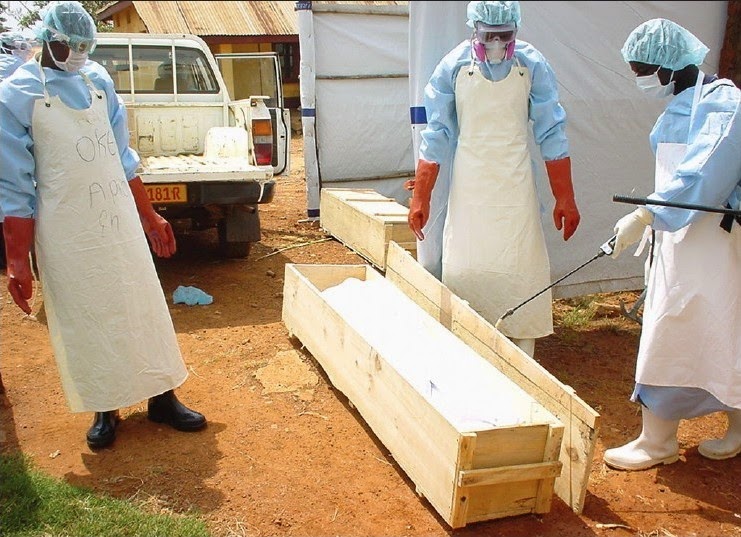
Breaking the human-to-human transmission cycle remains the cornerstone of infection control during filoviral (Ebola and Marburg) hemorrhagic fever outbreaks. This requires effective identification and isolation of cases, timely contact tracing and monitoring, proper usage of barrier personal protection gear by health workers, and safely conducted burials. Solely implementing these measures is insufficient for infection control; control efforts must be culturally sensitive and conducted in a transparent manner to promote the necessary trust between the community and infection control team in order to succeed. This article provides a review of the literature on infection control during filoviral hemorrhagic fever outbreaks focusing on outbreaks in a developing setting and lessons learned from previous outbreaks. The primary search database used to review the literature was PUBMED, the National Library of Medicine website.

REFERENCES:
  1. Raabea VN, Borcherta M. Infection control during filoviral hemorrhagic Fever outbreaks. J Glob Infect Dis. 2012 Jan;4(1):69-74.
  2. CDC Interim Guidance for Environmental Infection Control in Hospitals for Ebola Virus
  3. WHO Interim Infection Prevention and Control Guidance for Care of Patients with Suspected or Confirmed Filovirus Haemorrhagic Fever  in Health-Care Settings, with Focus on Ebola => DESCARGA OPCIONAL
  4. Health Canada. Interim Biosafety Guidelines for Laboratories Handling Specimens from Patients Under Investigation for Ebola Virus Disease
-----------------------------------------------------------
Sigue este Blog en Facebook y Twitter

jueves, 28 de agosto de 2014

.@WHO & CDC Interim Guidelines for #Ebola

CDC ebola print resources
This document provides a summary of infection prevention and control (IPC) measures for those providing direct and non-direct care to patients with suspected or confirmed cases of Filovirus haemorrhagic fever (HF), including Ebola or Marburg haemorrhagic fevers, in health-care facilities (HCFs). It also includes some instructions and directions for those managing the implementation of IPC activities. These IPC measures should be applied not only by health-care professionals but by anyone in direct contact with patients (e.g., visitors, family members, volunteers), as well as by those not in contact with patients but potentially exposed the virus through contact with the environment (e.g., c leaners, laundry, house-keepers, security).
-----------------------------------------------------------
Sigue este Blog en Facebook y Twitter