Lista de correo. Espere su aprobación.
Correo electrónico:
Consultar este grupo
Mostrando las entradas con la etiqueta Desinfectantes. Mostrar todas las entradas

miércoles, 20 de julio de 2016

Hipoclorito de sodio como agente desinfectante

Este artículo es sobre soluciones desinfectantes, siga el link para ver: 

Publicado originalmente el 19 de Julio de 2008. 

Actualizado 03/feb/2025

El hipoclorito de sodio (NaOCl) es un compuesto oxidante de rápida acción utilizado a gran escala para la desinfección de superficies, desinfección de ropa hospitalaria y desechos, descontaminar salpicaduras de sangre, desinfección de equipos y mesas de trabajo resistentes a la oxidación, eliminación de olores y desinfección del agua. Los equipos o muebles metálicos tratados con cloro, tienden a oxidarse rápidamente en presencia de hipoclorito de sodio.
El hipoclorito de sodio es vendido en una solución clara de ligero color verde-amarillento y un olor característico. Como agente blanqueante de uso domestico normalmente contiene 5-6.5% de hipoclorito de sodio (con un pH de alrededor de 11, es irritante y corrosivo a los metales). Cuando el hipoclorito se conserva en su contenedor a temperatura ambiente y sin abrirlo, puede conservarse durante 1 mes, pero cuando se ha utilizado para preparar soluciones, se recomienda  su cambio diario. Entre sus muchas propiedades incluyen su amplia y rápida actividad antimicrobiana, relativa estabilidad, fácil uso y bajo costo.
El hipoclorito es letal para varios microorganismos, virus y bacterias vegetativas, pero es menos efectivo contra esporas bacterianas, hongos y protozoarios. La actividad del hipoclorito se ve reducida en presencia de iones metálicos, biocapas, materiales orgánicos, bajo pH o luz UV. Las soluciones de trabajo deben ser preparadas diariamente. El cloro comercial que contiene 5-6%, que será utilizado para la desinfección de superficies, debe ser diluído 1:10 para obtener una concentración final de aproximadamente 0.5% de hipoclorito. Cuando se quiere desinfectar líquidos que pueden contener material orgánico, debe tenerse una concentración final de 1% de hipoclorito.
Gracias a su alta disponibilidad continua siendo de alto uso en hospitales. Pueden encontrar otras características y hojas de seguridad del hipoclorito de sodio. 
El modo de acción del hipoclorito es la oxidación: oxida proteínas, oxida DNA y RNA, oxida grasas, oxida metales.. OXIDA!, OXIDA!, OXIDA!, OXIDA!, OXIDA!... 


#VIDEOBLOG:


------------------------------------------------------------------------

CONCENTRACIONES RECOMENDADAS
  • Venta al público: (Blanqueador casero, presentación comercial): 5-6 % (50-60 g/l, 50,000 ppm) de cloro libre
  • Para desinfección con material orgánico o derrames:  1% (10 g/l, 10,000 ppm)
  • Para desinfección general de áreas sin materia orgánica:  0.5% (5g/L;  5,000 ppm)
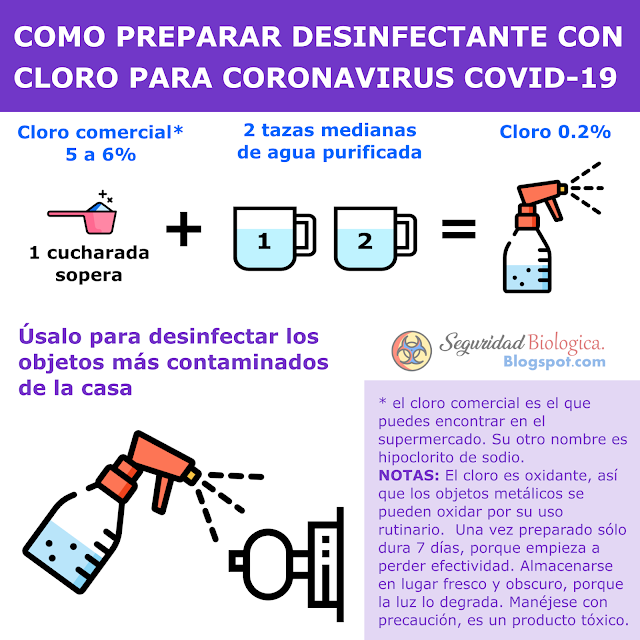
  • Para desinfección de superficies (CORONAVIRUS):  0.2%
  • Para limpieza general, desinfección de manos, desinfección de ropa: 0.05% (500 mg/L; 500 ppm) *
-----------------------------------------------------------------------

RECOMENDACIONES PARA LA PREPARACIÓN Y USO:
  1. Antes de elegir un agente desinfectante, por favor revisa su efectividad para el microorganismo que te interesa.
  2. USAR agua destilada o desinizada. El agua de la llave contiene muchos metales y sales que interfieren con su efectividad.
  3. Revisar la etiqueta antes de preparar el hipoclorito de sodio buscando la caducidad y la concentración de venta. 
  4. Existen dos tipos de hipoclorito de sodio. El regular, que tiene una caducidad de 2 a 3 meses, y el "estabilizado", que tiene una caducidad de 1 a 2 años. Pero ambos se degradan rápidamente una vez preparados, por lo que no deben utilizarse después de 5 días de su preparación. 
  5. Almacenar en un lugar fresco, seco y obscuro, ya que la luz y el calor aceleran su degradación.
  6. Existen varios procedimientos para la desinfección, por ejemplo LAVADO => DESINFECCIÓN => ENJUAGUE, es decir, realizar un lavado antes de la desinfección para retirar materia orgánica, luego aplicar el desinfectante, y realizar enjuagado para eliminar el exceso de desinfectate. 
  7. Para la desinfección de líquidos que puedan contener microorganismos, debe prepararse una solución al 2% de hipoclorito de sodio. Posteriormente, mezclar en proporción 1:1 (1 volumen de desinfectante, 1 volumen de líquido). De esta forma, al final tendrá una concentración de 1%. Dejar reposar durante 30 minutos. Por ejemplo: 200 ml de orina + 200 ml de solución de hipoclorito de sodio al 2%.
  8. Para desinfectar superficies o materiales de laboratorio (que no sean metálicos), que no contengan material orgánico, deberá usarse una solución de hipoclorito de sodio al 0.5%. Por ejemplo, para desinfectar gradillas de laboratorio de plástico, sumérjalas en la solución al 0.5% por al menos 30 minutos.
-----------------------------------------------------------------------

FÓRMULA PARA PREPARAR SOLUCIONES DESINFECTANTES


Cualquier concentración puede ser utilizada para obtener una solución de hipoclorito diluída utilizando la siguiente fórmula:  =>

Por ejemplo para preparar una solución 0.5% a partir de una 4.5% de hipoclorito de sodio se utilizarán 8 partes de agua con 1 parte de hipoclorito de sodio. 
Donde "parte" puede ser utilizado para cualquier unidad de medida (litro, mililitro, galones, etc), o utilizando cualquier medidor (taza, frasco, garrafón, etc). En países de habla francesa, la cantidad de hipoclorito se expresa como "grados de cloro". Un grado de cloro = 0.3% de cloro activo. (Ref. 8)

Otra fórmula para calcular el volumen necesario para preparar el hipoclorito de sodio 0.5% a partir de una solución concentrada:


REVISAR LA ETIQUETA PARA VER LA CONCENTRACIÓN DE CLORO 


DESCARGAR AQUI TABLA PARA PREPARAR HIPOCLORITO DE SODIO CON FINES DE DESINFECCIÓN PDF

------------------------------------------------------------------------

PREPARACIÓN RÁPIDA DE HIPOCLORITO DE SODIO

En el caso de coronavirus COVID-19 las concentraciones consideradas efectivas es a partir del 0.2%. El tiempo de contacto recomendado es de 2 a 5 minutos. 


--------------------------------------------------------------------


--------------------------------------------------------------------

DESINFECCIÓN DE SÁBANAS Y ROPA DE CAMA 

Toda la ropa de cama que ha estado en contacto con pacientes puede estar contaminado con líquidos o fluidos corporales (orina, sangre, vómito). Cuando se manejan este tipo de ropa, debe utilizarse equipo de protección adecuado, pero debe incluirse, guantes, mascarillas, lentes de protección, batas y botas. Los excesos de excremento deberán retirarse y colocarse en bolsas para desechos. Antes de desinfectar, deberá realizarse un lavado en lavadora con agua y jabón. Enjuagar para eliminar el exceso de jabón. Finalmente, colocar las sábanas en una solución de hipoclorito de sodio al 0.05%, durante por lo menos 30 minutos ó una hora. Puede realizarse un segundo enjuague para eliminar el exceso de hipoclorito, y continuar con los procesos normales de secado. 
El lavado a mano debe evitarse en la medida de lo posible. Cuando por las condiciones, no puede utilizarse lavadoras automáticas, las sábanas deberán colocarse en un gran contenedor con agua caliente y jabón, y agitar en círculos con un palo o varilla. Eliminar el agua, y colocar una solución al 0.1% de hipoclorito de sodio por 15 minutos, sumergiendo completamente las sábanas. Enjuagar nuevamente y dejar secar, evitando sacudir en la medida de lo posible (Ver Ref. 8).

------------------------------------------------------------------------

SOBRE LA INESTABILIDAD DEL CLORO:

Una vez preparadas, las soluciones comunes de hipoclorito de sodio guardadas a 25ºC, en recipientes cerrados, contenedores opacos, pierden 50% de su contenido de cloro libre en un periodo de 30 días. Una solución al 1%, tendrá solo 0.5% de cloro 30 días después de preparado. Las soluciones al 5% se degradan más lentamente si se almacenan en contenedores obscuros. A mayor temperatura y con mayor cantidad de luz que reciban, el proceso de degradación se acelera (Ref. 6). 

Existen soluciones "estabilizadas" de hipoclorito de sodio, que tienen una caducidad mínima de 1 año. Estas soluciones deben mantenerse a menos de 25ºC, lejos de la luz del sol y son comercializadas con ese nombre de "estabilizadas". Estas soluciones se mantienen estables mientras se encuentran bien cerradas en su envase original, ya que una vez que se preparan soluciones a partir de ellas, comienza su proceso de rápida degradación, debido a que los "estabilizadores" se diluyen. El hipoclorito de sodio normal se degrada rápidamente (Ref. 11). 

---------------------------------------------------------------------

SOBRE LA TOXICIDAD DEL CLORO:

El hipoclorito de sodio ocasiona:
  • Irritación ocular, orofaríngea, esofagial y quemaduras gástricas.
  • Corrosión a los metales 
  • Reacciona de forma tóxica con el amoniaco y ácidos (presente en los productos desinfectantes comunes), por lo que no deben hacerse mezclas de desinfectantes.
  • Producción de carcinógeno bis (clorometil) eter cuando se mezcla con formaldehído.
  • Producción de carcinógeno trihalometano cuando el agua es hiperclorinada (exceso de cloro).
  • Para la potabilización del agua, la NOM-127-SSA1-2021, establece que debe vigilarse los residos producto de la clorinación tales como: [1] Cloro residual libre, tabla 9; [2] trihalometanos (Bromodiclorometano, Bromoformo, Cloroformo y Dibromoclorometano), tabla 10, [3]  ácidos haloacéticos (Ácido cloroacético, Ácido dicloroacético, Ácido tricloroacético), tabla 11. 
Por favor visite esta página para ver las características y tratamiento de la intoxicación por cloro: https://medlineplus.gov/spanish/ency/article/002772.htm
 

Revista del consumidor Mayo 2020.

WEBINAR: Toxicidad del Dióxido de Cloro


-----------------------------------------------------------------------

REFERENCIAS:

  1. Rutala WA and Weber DJ. Uses of Inorganic Hypochlorite (Bleach) in Health-Care Facilities. Clinical Microbiological Reviews 1997; 10(4):597-610. PDF. 
  2. Enviromental Health and Safety. University of Kentucky. PDF.
  3. Sil, T., Malyshev, D., Aspholm, M. et al. Boosting hypochlorite’s disinfection power through pH modulation. BMC Microbiol 25, 101 (2025). https://doi.org/10.1186/s12866-025-03831-w
  4. Uso de desinfectantes. Guías para la prevención, control y vigilancia epidemiológica de infecciones intrahospitalarias. Secretaría Distrital de Salud de Bogotá. PDF.
  5. Githui WA, Matu SW, Tunge N, Juma E. Biocidal effect of bleach on Mycobacterium tuberculosis: a safety measure. Int J Tuberc Lung Dis 2007. 11(7):798–802. PDF.
  6. Hojas de seguridad de microorganismos, con las recomendaciones de agentes desinfectantes.
  7. Guideline for Disinfection and Sterilization in Healthcare Facilities, 2008. CDC.
  8. Intoxicación con hipoclorito de sodio
  9. How to make chlorine solutions for environmental disinfection (Annex 6 from Interim Infection Prevention and Control Guidance for Care of Patients with Suspected or Confirmed Filovirus Haemorrhagic Fever  in Health-Care Settings, with Focus on Ebola 2014)
  10. OSHA: Cleaning and Decontamination of #Ebola on Surfaces. Guidance for Workers and Employers in Non-Healthcare/Non-Laboratory Settings
  11. For General Healthcare Settings in West Africa: How to Prepare and Use Chlorine Solutions
  12. D. Lantagne, et al. Hypochlorite Solution Expiration and Stability in Household Water Treatment in Developing Countries. Journal of Environmental Engineering, Vol. 137, No. 2, February 1, 2011.
  13. Wolfe, Marlene K et al. “Handwashing and Ebola virus disease outbreaks: A randomized comparison of soap, hand sanitizer, and 0.05% chlorine solutions on the inactivation and removal of model organisms Phi6 and E. coli from hands and persistence in rinse water” PloS one vol. 12,2 e0172734. 23 Feb. 2017, doi:10.1371/journal.pone.0172734
  14. Potential role of inanimate surfaces for the spread ofcoronaviruses and their inactivation with disinfectantagents
  15. Kampf, G et al. Persistence of coronaviruses on inanimate surfaces and their inactivation with biocidal agents. The Journal of hospital infection vol. 104,3 (2020): 246-251. doi:10.1016/j.jhin.2020.01.022
  16. Lai, Mary Y Y et al. Survival of severe acute respiratory syndrome coronavirus. Clinical infectious diseases : an official publication of the Infectious Diseases Society of America vol. 41,7 (2005): e67-71. doi:10.1086/433186
  17. Lai, Mary Y Y et al. Survival of severe acute respiratory syndrome coronavirus. Clinical infectious diseases.vol. 41,7 (2005): e67-71. doi:10.1086/433186.
  18. Hulkower, Rachel L et al. “Inactivation of surrogate coronaviruses on hard surfaces by health care germicides.” American journal of infection control vol. 39,5 (2011): 401-407. doi:10.1016/j.ajic.2010.08.011
  19. NORMA Oficial Mexicana NOM-127-SSA1-2021, Agua para uso y consumo humano. Límites permisibles de la calidad del agua. https://www.dof.gob.mx/nota_detalle.php?codigo=5650705&fecha=02/05/2022#gsc.tab=0 
  20. Guidelines for drinking-water quality (WHO). Fourth edition, incorporating the first and second addenda. https://iris.who.int/bitstream/handle/10665/352532/9789240045064-eng.pdf?sequence=1 

viernes, 17 de octubre de 2014

OSHA: Cleaning and Decontamination of #Ebola on Surfaces

Guidance for Workers and Employers in Non-Healthcare/Non-Laboratory Settings
Workers tasked with cleaning surfaces that may be contaminated with Ebola virus, the virus that causes Ebola hemorrhagic fever (EHF), must be protected from exposure. Employers are responsible for ensuring that workers are protected from exposure to Ebola and that workers are not exposed to harmful levels of chemicals used for cleaning and disinfection.
DESCARGA A   /   DESCARGA B

----------------------------------------------------
Sigue este Blog en Facebook y Twitter

jueves, 16 de octubre de 2014

Mobile phones carry the personal microbiome of their owners

Most people on the planet own mobile phones, and these devices are increasingly being utilized to gather data relevant to our personal health, behavior, and environment. During an educational workshop, we investigated the utility of mobile phones to gather data about the personal microbiome — the collection of microorganisms associated with the personal effects of an individual. We characterized microbial communities on smartphone touchscreens to determine whether there was significant overlap with the skin microbiome sampled directly from their owners. We found that about 22% of the bacterial taxa on participants’ fingers were also present on their own phones, as compared to 17% they shared on average with other people’s phones. When considered as a group, bacterial communities on men’s phones were significantly different from those on their fingers, while women’s were not. Yet when considered on an individual level, men and women both shared significantly more of their bacterial communities with their own phones than with anyone else’s. In fact, 82% of the OTUs were shared between a person’s index and phone when considering the dominant taxa (OTUs with more than 0.1% of the sequences in an individual’s dataset). Our results suggest that mobile phones hold untapped potential as personal microbiome sensors.

REFERENCE
Meadow JF, et al. Mobile phones carry the personal microbiome of their owners. PeerJ. 2014; 2: e447.
-----------------------------------------------------------
Sigue este Blog en Facebook y Twitter

martes, 14 de octubre de 2014

Back to basics: hand hygiene and isolation

Purpose of review. Hand hygiene and isolation are basic, but very effective, means of preventing the spread of pathogens in healthcare. Although the principle may be straightforward, this review highlights some of the controversies regarding the implementation and efficacy of these interventions.
Recent findings. Hand hygiene compliance is an accepted measure of quality and safety in many countries. The evidence for the efficacy of hand hygiene in directly reducing rates of hospital-acquired infections has strengthened in recent years, particularly in terms of reduced rates of staphylococcal sepsis. Defining the key components of effective implementation strategies and the ideal method(s) of assessing hand hygiene compliance are dependent on a range of factors associated with the healthcare system. Although patient isolation continues to be an important strategy, particularly in outbreaks, it also has some limitations and can be associated with negative effects. Recent detailed molecular epidemiology studies of key healthcare-acquired pathogens have questioned the true efficacy of isolation, alone as an effective method for the routine prevention of disease transmission.
Summary. Hand hygiene and isolation are key components of basic infection control. Recent insights into the benefits, limitations and even adverse effects of these interventions are important for their optimal implementation.
Keywords: alcohol-based hand rub, hand hygiene, hospital acquired infections, isolation, WHO
REFERENCE:
G. Khai Lin Huang, et al.  Back to basics: hand hygiene and isolation. Curr Opin Infect Dis. Aug 2014; 27(4): 379–389.
-----------------------------------------------------------
Sigue este Blog en Facebook y Twitter

lunes, 13 de octubre de 2014

Día Mundial del Lavado de Manos, Octubre 15

Este 15 de Octubre, la Organización Mundial de la Salud, en conjunto con la UNICEF celebran el Día Mundial del Lavado de Manos. Esta es una oportunidad para recordar a todos la importancia del Lavado de Manos. Infórmate y distribuye la información acerca de la importancia del lavado de manos en: http://globalhandwashing.org
Descarga los posters y manuales de la campaña de la UNICEF AQUI.

OTROS MATERIALES Y RECURSOS (INGLÉS)
This course and promotional materials review key concepts of hand hygiene and other standard precautions to prevent healthcare-associated infections.
Promotional materials (Posters).
A variety of resources including guidelines for providers, patient empowerment materials, the latest technological advances in hand hygiene adherence measurement, frequently asked questions, and links to promotional and educational tools.
All health-care workers require clear and comprehensive training and education on the importance of hand hygiene, the "My 5 Moments for Hand Hygiene" approach and the correct procedures for handrubbing and handwashing.
Hygiene refers to behaviors that can improve cleanliness and lead to good health, such as frequent hand washing, face washing, and bathing with soap and water. In many areas of the world, practicing personal hygiene etiquette is difficult due to lack of clean water and soap. Many diseases can be spread if the hands, face, or body are not washed appropriately at key times.

--------------------------------------------
Sigue este Blog en Facebook y Twitter

#VIDEOS: Lávate las manos, Octubre 15, #IWashMyHands #ebola

COMPARTA ESTOS VIDEOS

viernes, 10 de octubre de 2014

Contact tracing during an #ebola outbreak

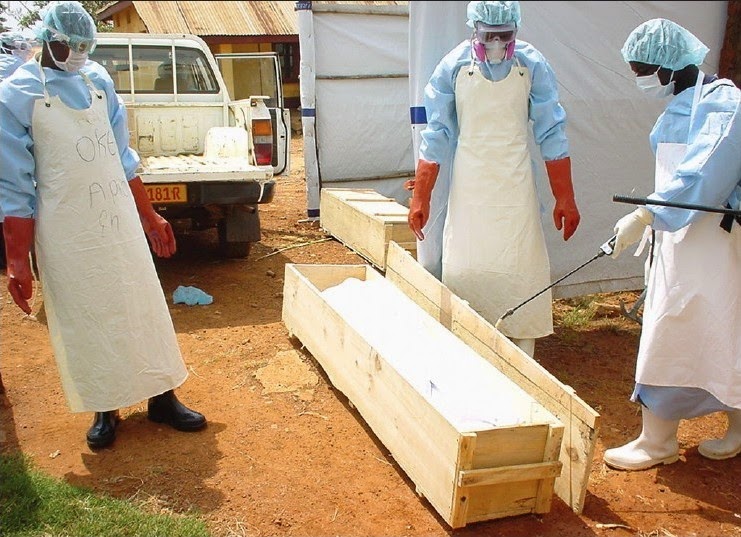
Persons in close contact with Ebola cases (alive or dead) are at higher risk of infection. All potential contacts of Ebola cases should be identified and closely observed for 21 days from the last day of exposure. Contacts that develop illness should be immediately isolated to prevent further transmission of infection. An effective system for contact tracing should be established at the onset of the outbreak. Early involvement and full cooperation of affected communities is critical for successful contact tracing.
This document provides guidance for establishing and conducting contact tracing during filovirus disease outbreaks. The guidance notes are based on extensive field experience in filovirus disease outbreak response in the WHO African region. The notes are intended for frontline epidemiologists, surveillance officers, health workers and other volunteers involved in contact tracing. National and sub-national emergency management committees and rapid response teams require these guidelines to plan, implement and monitor contact tracing.National emergency management committees are advised to adapt these guidance notes to the local context in their application

REFERENCES:
Contact tracing during an #ebola outbreak
CDC poster: What is contact tracing?
Australasian Contract Tracing Manual
Development of a risk assessment tool for contact tracing people after contact with infectious patients while travelling by bus or other public ground transport: a Delphi consensus approach
-----------------------------------------------------------
Sigue este Blog en Facebook y Twitter

jueves, 9 de octubre de 2014

Detailed Hospital Checklist for #Ebola Preparedness

Lohud.com
Every hospital should ensure that it can detect a patient with Ebola, protect healthcare workers so they can safely care for the patient, and respond in a coordinated fashion. Many of the signs and symptoms of Ebola are non-specific and similar to those of many common infectious diseases, as well as other infectious diseases with high mortality rates. Transmission can be prevented with appropriate infection control measures.
In order to enhance our collective preparedness and response efforts, this checklist highlights key areas for hospital staff -- especially hospital emergency management officers, infection control practitioners, and clinical practitioners -- to review in preparation for a person with Ebola arriving at a hospital for medical care. The checklist provides practical and specific suggestions to ensure your hospital is able to detect possible Ebola cases, protect your employees, and respond appropriately.
While we are not aware of any domestic Ebola cases, now is the time to prepare, as it is possible that individuals with Ebola in West Africa may travel to your city, exhibit signs and symptoms of Ebola, and present to facilities.

REFERENCES:


-----------------------------------------------------------
Sigue este Blog en Facebook y Twitter

Practicability of Hygienic Wrapping of Touchscreen Operated Mobile Devices in a Clinical Setting


Background. To prove effectiveness of wrapping tablet computers in order to reduce microbiological contamination and to evaluate whether a plastic bag-covered tablet leads to impaired user satisfaction or touchscreen functionality.
Materials and Methods. Within a period of 11 days 115 patients were provided with a tablet computer while waiting for their magnetic resonance imaging examination. Every day the contamination of the surface of the tablet was determined before the first and after the final use. Before the device was handed over to a patient, it was enclosed in a customized single-use plastic bag, which was analyzed for bacterial contamination after each use. A questionnaire was applied to determine whether the plastic bag impairs the user satisfaction and the functionality of the touchscreen.
Results. Following the use by patients the outside of the plastic bags was found to be contaminated with various bacteria (657.5 ± 368.5 colony forming units/day); some of them were potentially pathogenic. In contrast, the plastic bag covered surface of the tablet was significantly less contaminated (1.7 ± 1.9 colony forming units/day). Likewise, unused plastic bags did not show any contamination. 11% of the patients reported problems with the functionality of the touchscreen. These patients admitted that they had never used a tablet or a smartphone before.
Conclusions. Tablets get severely contaminated during usage in a clinical setting. Wrapping with a customized single-use plastic bag significantly reduces microbiological contamination of the device, protects patients from the acquisition of potentially pathogenic bacteria and hardly impairs the user satisfaction and the functionality of the touchscreen.

REFERENCE;
Hammon M, et al. (2014) Practicability of Hygienic Wrapping of Touchscreen Operated Mobile Devices in a Clinical Setting. PLoS ONE 9(9): e106445. doi:10.1371/journal.pone.0106445
-----------------------------------------------------------
Sigue este Blog en Facebook y Twitter

lunes, 29 de septiembre de 2014

Efficacy of a Educational Tool to Improve Handrubbing Technique in Healthcare Workers

Introduction. Hand hygiene is a key component of infection control in healthcare. WHO recommends that healthcare workers perform six specific poses during each hand hygiene action. SureWash (Glanta Ltd, Dublin, Ireland) is a novel device that uses video-measurement technology and immediate feedback to teach this technique. We assessed the impact of self-directed SureWash use on healthcare worker hand hygiene technique and evaluated the device's diagnostic capacity.
Methods. A controlled before-after study: subjects in Group A were exposed to the SureWash for four weeks followed by Group B for 12 weeks. Each subject's hand hygiene technique was assessed by blinded observers at baseline (T0) and following intervention periods (T1 and T2). Primary outcome was performance of a complete hand hygiene action, requiring all six poses during an action lasting ≥20 seconds. The number of poses per hand hygiene action (maximum 6) was assessed in a post-hoc analysis. SureWash's diagnostic capacity compared to human observers was assessed using ROC curve analysis.
Results. Thirty-four and 29 healthcare workers were recruited to groups A and B, respectively. No participants performed a complete action at baseline. At T1, one Group A participant and no Group B participants performed a complete action. At baseline, the median number of poses performed per action was 2.0 and 1.0 in Groups A and B, respectively (p = 0.12). At T1, the number of poses per action was greater in Group A (post-intervention) than Group B (control): median 3.8 and 2.0, respectively (p<0.001). In Group A, the number of poses performed twelve weeks post-intervention (median 3.0) remained higher than baseline (p<0.001). The area under the ROC curves for the 6 poses ranged from 0.59 to 0.88.
Discussion. While no impact on complete actions was demonstrated, SureWash significantly increased the number of poses per hand hygiene action and demonstrated good diagnostic capacity.

REFERENCE:
Stewardson AJ, et al. Efficacy of a New Educational Tool to Improve Handrubbing Technique amongst Healthcare Workers. PLoS One. 2014; 9(9): e105866.

-----------------------------------------------------------
Sigue este Blog en Facebook y Twitter

lunes, 8 de septiembre de 2014

WHO guidelines on hand hygiene in health care

The WHO guidelines on hand hygiene in health care provide health-care workers (HCWs), hospital administrators and health authorities with a thorough review of evidence on hand hygiene in health care and specific recommendations to improve practices and reduce transmission of pathogenic microorganisms to patients and HCWs.
The present guidelines are intended to be implemented in any situation in which health care is delivered either to a patient or to a specific group in a population. Therefore, this concept applies to all settings where health care is permanently or occasionally performed, such as home care by birth attendants. Definitions of health-care settings are proposed in Appendix 1.
REFERENCE:
WHO guidelines on hand hygiene in health care
descarga opcional
-----------------------------------------------------------
Sigue este Blog en Facebook y Twitter

martes, 2 de septiembre de 2014

Infection Control During Filoviral Hemorrhagic Fever Outbreaks #Ebola

Breaking the human-to-human transmission cycle remains the cornerstone of infection control during filoviral (Ebola and Marburg) hemorrhagic fever outbreaks. This requires effective identification and isolation of cases, timely contact tracing and monitoring, proper usage of barrier personal protection gear by health workers, and safely conducted burials. Solely implementing these measures is insufficient for infection control; control efforts must be culturally sensitive and conducted in a transparent manner to promote the necessary trust between the community and infection control team in order to succeed. This article provides a review of the literature on infection control during filoviral hemorrhagic fever outbreaks focusing on outbreaks in a developing setting and lessons learned from previous outbreaks. The primary search database used to review the literature was PUBMED, the National Library of Medicine website.

REFERENCES:
  1. Raabea VN, Borcherta M. Infection control during filoviral hemorrhagic Fever outbreaks. J Glob Infect Dis. 2012 Jan;4(1):69-74.
  2. CDC Interim Guidance for Environmental Infection Control in Hospitals for Ebola Virus
  3. WHO Interim Infection Prevention and Control Guidance for Care of Patients with Suspected or Confirmed Filovirus Haemorrhagic Fever  in Health-Care Settings, with Focus on Ebola => DESCARGA OPCIONAL
  4. Health Canada. Interim Biosafety Guidelines for Laboratories Handling Specimens from Patients Under Investigation for Ebola Virus Disease
-----------------------------------------------------------
Sigue este Blog en Facebook y Twitter

lunes, 18 de agosto de 2014

Evaluation of mycobactericidal activity of selected chemical disinfectants

BACKGROUND: The history of the investigation of standardized mycobactericidal activity of disinfectants and antiseptics is not very long. There is growing interest among the manufacturers of disinfectants in carrying out research on the antimicrobial activities in accordance with European standards (EN). This research could facilitate the introduction of high-quality disinfectants to the market. The aim of this study was to evaluate the mycobactericidal activity of selected chemical disinfectants and antiseptics used in the medical and veterinary fields.
MATERIAL AND METHODS: This study included 19 products submitted to the National Medicines Institute in Poland for evaluation of mycobactericidal activity. These products contain in their composition active substances belonging to different chemical groups, including aldehydes, alcohols, amines, quaternary ammonium compounds, phenols, guanidine, and oxidizing compounds. This study, conducted according to the manufacturers' description of the preparations, was carried out in accordance with European standards, which also met the Polish standards: PN-EN 14204: 2013, PN-EN 14348: 2006, and PN-EN 14563: 2012.
RESULTS: Tested products for disinfection and antiseptics containing active substances from different chemical groups showed high mycobactericidal activity and met the requirements of the appropriate European standards in most cases. In the case of products containing guanidine and amine compounds, the concentration of active ingredients used in the test and the test conditions specified by the manufacturer did not provide the mycobactericidal activity required by the standards.
CONCLUSIONS: Prior to the launch of a new product on the market, it is important to establish the appropriate usage and testing conditions of the preparation, such as its practical concentration, contact time, and environment condition (clean or dirty).
REFERENCIA
Bocian E, Grzybowska W, Tyski S. Evaluation of mycobactericidal activity of selected chemical disinfectants and antiseptics according to European standards. Med Sci Monit. 2014 Apr 22;20:666-73.
-----------------------------------------------------------
Sigue este Blog en Facebook y Twitter

lunes, 11 de agosto de 2014

Decontamination Efficacy Sporicidal Disinfectants Contaminated with Spores of #anthrax

In the event of a wide area release and contamination of a biological agent in an outdoor environment and to building exteriors, decontamination is likely to consume the Nation's remediation capacity, requiring years to cleanup, and leading to incalculable economic losses. This is in part due to scant body of efficacy data on surface areas larger than those studied in a typical laboratory (5×10-cm), resulting in low confidence for operational considerations in sampling and quantitative measurements of prospective technologies recruited in effective cleanup and restoration response. In addition to well-documented fumigation-based cleanup efforts, agencies responsible for mitigation of contaminated sites are exploring alternative methods for decontamination including combinations of disposal of contaminated items, source reduction by vacuuming, mechanical scrubbing, and low-technology alternatives such as pH-adjusted bleach pressure wash. If proven effective, a pressure wash-based removal of Bacillus anthracis spores from building surfaces with readily available equipment will significantly increase the readiness of Federal agencies to meet the daunting challenge of restoration and cleanup effort following a wide-area biological release. In this inter-agency study, the efficacy of commercial-of-the-shelf sporicidal disinfectants applied using backpack sprayers was evaluated in decontamination of spores on the surfaces of medium-sized (∼1.2 m2) panels of steel, pressure-treated (PT) lumber, and brick veneer. Of the three disinfectants, pH-amended bleach, Peridox, and CASCAD evaluated; CASCAD was found to be the most effective in decontamination of spores from all three panel surface types.
REFERENCE:
Edmonds JM, Sabol JP, Rastogi VK. Decontamination efficacy of three commercial-off-the-shelf (COTS) sporicidal disinfectants on medium-sized panels contaminated with surrogate spores of Bacillus anthracis. PLoS One. 2014 Jun 18;9(6):e99827.

-----------------------------------------------------------
Sigue este Blog en Facebook y Twitter

lunes, 23 de junio de 2014

Efficacy of surface #disinfectant against gram-negative #bacteria

ABSTRACT (partial).
Background. We determined the efficacy of several SDCs against clinically relevant bacterial species with and without common types of multidrug resistance.
Methods. Bacteria species used were ATCC strains; clinical isolates classified as antibiotic-susceptible; and multi-resistant clinical isolates. The five evaluated SDCs were based on alcohol and an amphoteric substance (AAS), an oxygen-releaser (OR), surface-active substances (SAS), or surface-active-substances plus aldehydes (SASA; two formulations). Bactericidal concentrations of SDCs were determined at two different contact times. Efficacy was defined as a log10 ≥ 5 reduction in bacterial cell count.
Results. SDCs based on AAS, OR, and SAS were effective against all six species irrespective of the degree of multi-resistance. The SASA formulations were effective against the bacteria irrespective of degree of multi-resistance except for one of the four P. aeruginosa isolates (VIM-1). We found no general correlation between SDC efficacy and degree of antibiotic resistance.
Conclusions. SDCs were generally effective against gram-negative bacteria with and without multidrug resistance. SDCs are therefore suitable for surface disinfection in the immediate proximity of patients. Single bacterial isolates, however, might have reduced susceptibility to selected biocidal agents.

REFERENCE:
Reichel M et al. Efficacy of surface disinfectant cleaners against emerging highly resistant gram-negative bacteria. BMC Infect Dis. 2014; 14: 292.
----------------------------------------------
Sigue este Blog en Facebook y Twitter

miércoles, 11 de junio de 2014

#LIBRO: Conceptos Básicos del Control de Infecciones 2011, ahora en Español!

Esta nueva edición de Conceptos básicos de control de infecciones de IFIC, se elaboró sobre la base de las versiones anteriores. Con un enfoque científico, profundiza y actualiza los conocimientos necesarios para sostener el desarrollo de políticas y procedimientos locales. Este libro está enfocado a las áreas hospitalarias.
Un panel internacional de expertos revisó y actualizó la mayoría de los capítulos. Además se incorporaron secciones nuevas, con el fin de asegurar que esta edición ofrecería un completo y sólido caudal de conocimientos.
REFERENCE:
IFIC’s Basic Concepts of Infection Control, 2nd Edition, 2011

PDF Download:
Español. Descarga 1             Español. Descarga 2
English1                               English2
--------------------------------------------
Sigue este Blog en Facebook y Twitter

miércoles, 21 de mayo de 2014

Evaluation of mycobactericidal activity of #disinfectants

The history of the investigation of standardized mycobactericidal activity of disinfectants and antiseptics is not very long. There is growing interest among the manufacturers of disinfectants in carrying out research on the antimicrobial activities in accordance with European standards (EN). This research could facilitate the introduction of high-quality disinfectants to the market. The aim of this study was to evaluate the mycobactericidal activity of selected chemical disinfectants and antiseptics used in the medical and veterinary fields.
REFERENCE:
Bocian E. et al. Evaluation of mycobactericidal activity of selected chemical disinfectants and antiseptics according to European standards. Med Sci Monit. 2014; 20: 666–673.

--------------------------------------------
Sigue este Blog en Facebook y Twitter 

miércoles, 26 de marzo de 2014

Evaluation of a Virucidal Quantitative Carrier Test for Surface Disinfectants

ABSTRACT
Surface disinfectants are part of broader preventive strategies preventing the transmission of bacteria, fungi and viruses in medical institutions. To evaluate their virucidal efficacy, these products must be tested with appropriate model viruses with different physico-chemical properties under conditions representing practical application in hospitals.
The aim of this study was to evaluate a quantitative carrier assay. Furthermore, different putative model viruses like adenovirus type 5 (AdV-5) and different animal parvoviruses were evaluated with respect to their tenacity and practicability in laboratory handling. To evaluate the robustness of the method, some of the viruses were tested in parallel in different laboratories in a multi-center study. Different biocides, which are common active ingredients of surface disinfectants, were used in the test. After drying on stainless steel discs as the carrier, model viruses were exposed to different concentrations of three alcohols, peracetic acid (PAA) or glutaraldehyde (GDA), with a fixed exposure time of 5 minutes. Residual virus was determined after treatment by endpoint titration.
All parvoviruses exhibited a similar stability with respect to GDA, while AdV-5 was more susceptible. For PAA, the porcine parvovirus was more sensitive than the other parvoviruses, and again, AdV-5 presented a higher susceptibility than the parvoviruses. All parvoviruses were resistant to alcohols, while AdV-5 was only stable when treated with 2-propanol. The analysis of the results of the multi-center study showed a high reproducibility of this test system.
In conclusion, two viruses with different physico-chemical properties can be recommended as appropriate model viruses for the evaluation of the virucidal efficacy of surface disinfectants: AdV-5, which has a high clinical impact, and murine parvovirus (MVM) with the highest practicability among the parvoviruses tested.
REFERENCE
Rabenau HF, Steinmann J, Rapp I, et al. Evaluation of a Virucidal Quantitative Carrier Test for Surface Disinfectants. PLoS One. 2014; 9(1): e86128.

miércoles, 19 de marzo de 2014

Poorly processed reusable surface disinfection tissue dispensers may be a source of infection

ABSTRACT
Background: Reusable surface disinfectant tissue dispensers are used in hospitals in many countries because they allow immediate access to pre-soaked tissues for targeted surface decontamination. On the other hand disinfectant solutions with some active ingredients may get contaminated and cause outbreaks. We determined the frequency of contaminated surface disinfectant solutions in reusable dispensers and the ability of isolates to multiply in different formulations.
Methods: Reusable tissue dispensers with different surface disinfectants were randomly collected from healthcare facilities. Solutions were investigated for bacterial contamination. The efficacy of two surface disinfectants was determined in suspension tests against two isolated species directly from a contaminated solution or after 5 passages without selection pressure in triplicate. Freshly prepared use solutions were contaminated to determine survival of isolates.
Results: 66 dispensers containing disinfectant solutions with surface-active ingredients were collected in 15 healthcare facilities. 28 dispensers from nine healthcare facilities were contaminated with approximately 107 cells per mL of Achromobacter species 3 (9 hospitals), Achromobacter xylosoxidans or Serratia marcescens (1 hospital each). In none of the hospitals dispenser processing had been adequately performed. Isolates regained susceptibility to the disinfectants after five passages without selection pressure but were still able to multiply in different formulations from different manufacturers at room temperature within 7 days.
Conclusions: Neglecting adequate processing of surface disinfectant dispensers has contributed to frequent and heavy contamination of use-solutions based on surface active ingredients. Tissue dispenser processing should be taken seriously in clinical practice.

Reference

Kampf G, Degenhardt S, Lackner S, et al. Poorly processed reusable surface disinfection tissue dispensers may be a source of infectionBMC Infect Dis. 2014; 14: 37.