

martes, 31 de diciembre de 2013

viernes, 13 de diciembre de 2013
VIDEO: Películas recomendadas para estas vacaciones
1. World War Z (2013)
2. How to survive a Plague (2012)
3. Perfect Sense (2012)
4. Antiviral (2012)
5. Contagion (2011)
6. Carriers (2009)
7. Andromeda Strain (2008)
8. 28 days later (2002)
jueves, 5 de diciembre de 2013
Hepatitis C Virus Maintains Infectivity for Weeks
ABSTRACT
Background: Healthcare workers may come into contact with fomites containing
infectious HCV during preparation of plasma, or following placement or removal of
venous lines. Similarly, injection drugs users may come into contact with fomites.
Hypothesizing that prolonged viability of HCV in fomites may contribute significantly to
incidence; we determined the longevity of virus infectivity and the effectiveness of
antiseptics.
Methods: We determined the volume of drops misplaced during transfer of serum or
plasma. Aliquots equivalent to the maximum drop volume of plasma spiked with 2a
HCV reporter virus were loaded into 24-well plates. Plates were stored uncovered at three
temperatures: 4°, 22°, and 37°C for up to 6 weeks before viral infectivity was determined
in a microculture assay.
Results: The mean volume of an accidental drop was 29 μl (min - max of 20 - 33 μl). At
storage temperatures 4° and 22°C, we recovered viable HCV from the low titer spots for
up to 6 weeks of storage. The rank order of HCV virucidal activity of commonly used
antiseptics was bleach (1:10) > cavicide (1:10) > ethanol (70%).
Conclusions:
The hypothesis of potential transmission from fomites was supported by the experimental
results. The anti-HCV activity of commercial antiseptics varied.
Reference
Elijah Paintsil1, Mawuena Binka2, Amisha Patel2, Brett D. Lindenbach3, and Robert Heimer2. Hepatitis C Virus Maintains Infectivity for Weeks after Drying on Inanimate Surfaces at Room Temperature: Implications for Risks of Transmission. JID 2013.
http://jid.oxfordjournals.org/content/early/2013/11/22/infdis.jit648.full.pdf
miércoles, 4 de diciembre de 2013
Global Health Risks (2009)

=> DESCARGAR <=
Global Health Risks (2009)
ISBN 978 92 4 156387 1
© World Health Organization 2009
domingo, 24 de noviembre de 2013
#REGENESIS: TV SERIES <= No se la pierdan #Feliz2014
Recomendaciones para fin de año.
Estas navidades, en las que tendremos mucho tiempo, les recomiento ver la serie de TV "Regenesis".
Estas navidades, en las que tendremos mucho tiempo, les recomiento ver la serie de TV "Regenesis".
Esta serie canadiense se estrenó el 2004, con 4 temporadas, y se canceló en 2007. Se puedo ver por la cadena FX Latin America y en Science Discovery. Pueden ver la lista completa de capítulos aquí. Desafortunadamente es dificil verla ahora por cable, pero pueden comprarla. Pueden ver algunos clips aquí. En USA puede verse en hulu.com.
David Sandstrom es un científico, genetista, virólogo/microbiólogo, jefe de un laboratorio que se dedica a investigar las causas de diversas enfermedades misteriosas, y que originan la muerte de diversas personas. Una combinación de serie policíaca/forense con tonos de microbiología. Aunque cuenta con algunas inexactitudes científicas, pero considerando el año en que empezó a producirse, logra captar la atención del espectador. No se la pueden perder.
David Sandstrom es un científico, genetista, virólogo/microbiólogo, jefe de un laboratorio que se dedica a investigar las causas de diversas enfermedades misteriosas, y que originan la muerte de diversas personas. Una combinación de serie policíaca/forense con tonos de microbiología. Aunque cuenta con algunas inexactitudes científicas, pero considerando el año en que empezó a producirse, logra captar la atención del espectador. No se la pueden perder.
jueves, 21 de noviembre de 2013
Responsible life sciences research for global health security #DURC
"Dual use research of concern (DURC)", es el término en inglés que hace referencia a aquella investigación científica que aunque se realiza con fines benéficos, podría utilizarse para hacer daño.
La posibilidad de le la investigación con doble uso pueda ser utilizada equivocadamente, intencional o no intencionalmente, es una preocupación a largo plazo en la ciencia. Los temas son amplios y en concordancia no sólo con la investigación y la salud pública, sino también con la seguridad, las publicaciones científicas y la comunicación al público, por lo que la biotecnología, la ética son temas muy amplios.
DESCARGAR =>
Responsible life sciences research for global health security #DURC
Publication details
Publication date: 2010
Languages: English
WHO reference number: WHO/HSE/GAR/BDP/2010.2

#Book : People, pathogens and our planet Vol. 2

This report analyzes and assesses the benefits and the costs of control of an important group of contagious diseases. Zoonotic diseases are caused by pathogens that can infect both animals and humans, resulting in disease outbreaks, including epidemics in humans and epizootics in animals. These diseases account for 70 percent of emerging infectious diseases. In the absence of timely disease control, zoonotic pathogens can cause pandemics, with potentially catastrophic impacts that are global in scale. The report also touches on food safety, but does not cover other risks and opportunities at the interfaces between humans, animals, and the ecosystem, such as food security and pollution. Limiting its focus to this topic matter has important advantages, particularly with respect to immediate relevance and relative simplicity.
=> DESCARGAR <=
miércoles, 20 de noviembre de 2013
#Book : People, pathogens and our planet Vol. 1
 | |||||||||
This study aims to build on the findings from the previously mentioned studies, and seeks to provide more detailed information on the costs of the various functions and categories of expenditure involved in the establishment and operation of system for the prevention and control of emerging zoonotic diseases at country and global level. It will also seek to provide information on efficiency and effectiveness gains that will result from the introduction of a One Health approach. With these aims, the study has two target audiences: (a) project planners, who will benefit from the information of the costs of setting up surveillance and control systems to be used as benchmarks when planning preparedness and control operations; and (b) policy planners at the decision-making level, who would use the information on the efficiency and effectiveness gains to guide them in the decision-making process regarding the eventual introduction of One Health. This report disaggregates costs by task, making explicit those activities that are critical for effectiveness and identifying scope for efficiencies. The analysis draws on a range of data sources and earlier work, including integrated national action plans for, and World Bank staff appraisal reports on, avian and pandemic influenzas responses, a survey of the directors of wildlife services, assessments of veterinary systems in developing countries, and OIE (Office International des Epizooties - World Organization for Animal Health) analyses of disease prevention systems.
DETAILS
=> DESCARGAR <=
sábado, 9 de noviembre de 2013
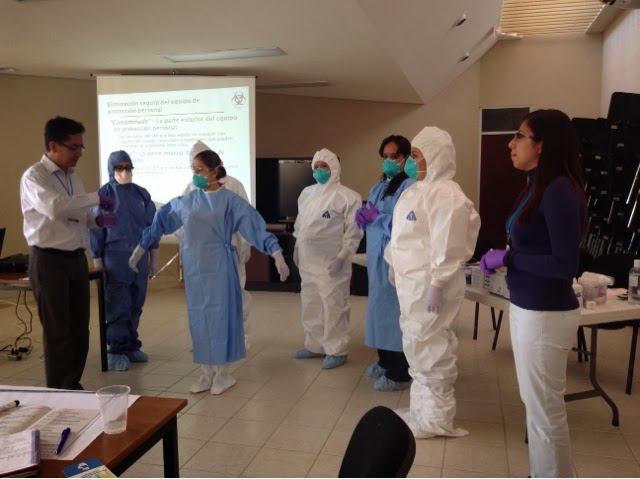
Sesión de entrenamiento en Capasits/COESIDA en #Oaxaca #bioseguridad
Sesión de entrenamiento básico en equipo de proteción personal...
Capasits/COESIDA en Oaxaca
Noviembre 6, 2013.
Gracias por participar
jueves, 7 de noviembre de 2013
Infecciones con Salmonella en laboratorio de microbiología universitario #LAI

On May 15, the Health and Environmental Testing Laboratory (HETL) determined that the clinical Salmonella isolates from stool specimens provided by outside hospital laboratories from both patients were indistinguishable by pulsed field gel electrophoresis (PFGE) analysis from a specimen used by the students during the microbiology class. The clinical isolates and laboratory class isolate all had a PFGE pattern indistinguishable from that of bacteria isolated during a national Salmonella Typhimurium outbreak in 2010 that was associated with clinical and teaching microbiology laboratories (1). No cases were reported from Maine during the 2010 outbreak. CONTINUA=>
lunes, 4 de noviembre de 2013
¡Los hospitales no se incendian!
¡Los hospitales no se incendian! Guía hospitalaria para la prevención de incendios y evacuación
Esta guía ha sido creada para poner de relieve la vulnerabilidad de los hospitales a los incendios. Es necesario que se adopten todas las medidas posibles para minimizar el riesgo de incendios en hospitales y asegurar la evacuación. El documento se puede aplicar en hospitales que han sido reforzados para mejorar la seguridad en cuanto a incendios, así como en nuevas instalaciones en proyecto.
El documento está dividido en cuatro secciones principales a considerarse en caso de incendio en hospitales, a saber, prevención, supresión, evacuación y simulacros de capacitación.
REFERENCIA:
|
lunes, 21 de octubre de 2013
Antimicrobial Resistance in the Food Chain: A Review
 |
| Overview of horizontal gene transfer in food products (For complete image click HERE). |
REFERENCIA:
Verraes C. Antimicrobial Resistance in the Food Chain: A Review. Int J Environ Res Public Health. 2013 July; 10(7): 2643–2669.
viernes, 18 de octubre de 2013
Influence of temperature and organic load on chemical disinfection

This study evaluated the influence of temperature and organic load on the effectiveness of domestic bleach (DB), Surface Decontamination Foam (SDF), and Virkon in inactivating Geobacillus stearothermophilus spores, which are a surrogate for Bacillus anthracis spores. The spores were suspended in light or heavy organic preparations and the suspension was applied to stainless steel carrier disks. The dried spore inoculum was covered with the disinfectants and the disks were then incubated at various temperatures. At −20°C, the 3 disinfectants caused less than a 2.0 log10 reduction of spores in both organic preparations during a 24-h test period. At 4°C, the DB caused a 4.4 log10 reduction of spores in light organic preparations within 2 h, which was about 3 log10 higher than what was achieved with SDF or Virkon. In heavy organic preparations, after 24 h at 4°C the SDF had reduced the spore count by 4.5 log10, which was about 2 log10 higher than for DB or Virkon. In general, the disinfectants were most effective at 23°C but a 24-h contact time was required for SDF and Virkon to reduce spore counts in both organic preparations by at least 5.5 log10. Comparable disinfecting activity with DB only occurred with the light organic load. In summary, at temperatures as low as 4°C, DB was the most effective disinfectant, inactivating spores within 2 h on surfaces with a light organic load, whereas SDF produced the greatest reduction of spores within 24 h on surfaces with a heavy organic load.
REFERENCE:
Jiewen Guan, Maria Chan, Brian W. Brooks, and Liz Rohonczy. Influence of temperature and organic load on chemical disinfection of Geobacillus steareothermophilus spores, a surrogate for Bacillus anthracis. Can J Vet Res. 2013 April; 77(2): 100–104.
jueves, 17 de octubre de 2013
Histoplasmosis: Protecting Workers at Risk
Outbreaks of histoplasmosis have shared similar circumstances: People who did not know the health risks of breathing in the spores of H. capsulatum became ill and sometimes caused others nearby to become ill when they disturbed contaminated soil or accumulations of bird or bat manure. Because they were unaware of the hazard, they did not take protective measures that could have prevented illness.
This booklet will help prevent such exposures by serving as a guide for safety and health professionals, environmental consultants, supervisors, and others responsible for the safety and health of those working near material contaminated with H. capsulatum. Activities that pose a health risk to workers at these sites include disturbance of soil at an active or inactive bird roost or poultry house, excavation in regions where this fungus is endemic, and removal of bat or bird manure from buildings.
REFERENCE:
Histoplasmosis: Protecting Workers at Risk. NIOSH/CDC 2003
miércoles, 16 de octubre de 2013
Technologies to Enable Autonomous Detection for BioWatch
Technologies to Enable Autonomous Detection for BioWatch is the summary of a workshop hosted jointly by the Institute of Medicine and the National Research Council in June 2013 to explore alternative cost-effective systems that would meet the requirements for a BioWatch Generation 3.0 autonomous detection system, or autonomous detector, for aerosolized agents . The workshop discussions and presentations focused on examination of the use of four classes of technologies--nucleic acid signatures, protein signatures, genomic sequencing, and mass spectrometry--that could reach Technology Readiness Level (TRL) 6-plus in which the technology has been validated and is ready to be tested in a relevant environment over three different tiers of temporal timeframes: those technologies that could be TRL 6-plus ready as part of an integrated system by 2016, those that are likely to be ready in the period 2016 to 2020, and those are not likely to be ready until after 2020. Technologies to Enable Autonomous Detection for BioWatch discusses the history of the BioWatch program, the role of public health officials and laboratorians in the interpretation of BioWatch data and the information that is needed from a system for effective decision making, and the current state of the art of four families of technology for the BioWatch program. This report explores how the technologies discussed might be strategically combined or deployed to optimize their contributions to an effective environmental detection capability.
Paperback
300 pages | 6 x 9
ISBN 978-0-309-29251-1
lunes, 14 de octubre de 2013
Oct 15, Día Mundial del Lavado de Manos #IWashMyHands

El Día Mundial del Lavado de Manos es un llamamiento para concientizar a la población de que un poco de agua y jabón pueden salvar muchas vidas. Este día se celebra por primera vez este 15 de octubre en 70 países de los cinco contienentes. Es la primera vez en la historia en la que una campaña mundial pide a millones de personas que laven sus manos con agua y jabón
Referencias:
Global Hand Washing
UNICEF
Referencias:
Global Hand Washing
UNICEF
viernes, 11 de octubre de 2013
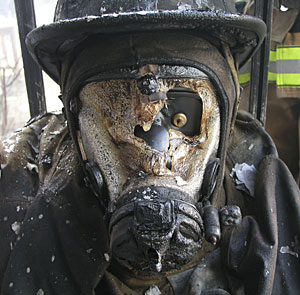
Fire Exposures of Fire Fighter Self-Contained Breathing Apparatus Facepiece Lenses
REFERENCE
Fire Exposures of Fire Fighter Self-Contained Breathing Apparatus Facepiece Lenses
National Institute of Standards and Technology Technical Note 1724
Natl. Inst. Stand. Technol. Tech. Note 1724, 45 pages (November 2011)
CODEN: NSPUE2
jueves, 10 de octubre de 2013
The Handwashing Handbook

TheHandwashingHandbook:A guide for developing a hygiene promotion programto increase handwashing with soap
miércoles, 9 de octubre de 2013
Volcanoes: Protecting the Public´s Health

REFERENCIA:
Volcanoes: Protecting the Public’s Health
lunes, 7 de octubre de 2013
Advancing infection control in dental care settings

Background and Overview. The authors set out to identify factors associated with implementation by U.S. dentists of four practices first recommended in the Centers for Disease Control and Prevention’s Guidelines for Infection Control in Dental Health-Care Settings—2003.
Methods. In 2008, the authors surveyed a stratified random sample of 6,825 U.S. dentists. The response rate was 49 percent. The authors gathered data regarding dentists’ demographic and practice characteristics, attitudes toward infection control, sources of instruction regarding the guidelines and knowledge about the need to use sterile water for surgical procedures. Then they assessed the impact of those factors on the implementation of four recommendations: having an infection control coordinator, maintaining dental unit water quality, documenting percutaneous injuries and using safer medical devices, such as safer syringes and scalpels. The authors conducted bivariate analyses and proportional odds modeling.
Results. Responding dentists in 34 percent of practices had implemented none or one of the four recommendations, 40 percent had implemented two of the recommendations and 26 percent had implemented three or four of the recommendations. The likelihood of implementation was higher among dentists who acknowledged the importance of infection control, had practiced dentistry for less than 30 years, had received more continuing dental education credits in infection control, correctly identified more surgical procedures that require the use of sterile water, worked in larger practices and had at least three sources of instruction regarding the guidelines. Dentists with practices in the South Atlantic, Middle Atlantic or East South Central U.S. Census divisions were less likely to have complied.
Conclusions. Implementation of the four recommendations varied among U.S. dentists. Strategies targeted at raising awareness of the importance of infection control, increasing continuing education requirements and developing multiple modes of instruction may increase implementation of current and future Centers for Disease Control and Prevention guidelines.
REFERENCE:
Jennifer L. Cleveland, et al. Advancing infection control in dental care settings. JADA 2012;143(10):1127-1138.
viernes, 4 de octubre de 2013
StarTalkRadio: Zombie Apocalypse (Part 2)
PART 2: The Zombie Apocalypse rages on as Neil deGrasse Tyson hunts for the truth with World War Z author Max Brooks and Pulitzer Prize winning journalist and virus expert Laurie Garrett.
45 mins.
45 mins.
miércoles, 2 de octubre de 2013
How to choose a suit for a BSL4 laboratory

REFERENCIA:
Kümin D, Krebs C & Wick P. How to choose a suit for a BSL4 laboratory- The approach taken at Spiez Laboratory. Applied Biosafety 2011. Vol. 16, No. 2, p94-102
lunes, 30 de septiembre de 2013
Intervención de laboratorios y bancos de sangre en situaciones de desastre
 |
| ISBN 92 75 32380 1 OPS/HSP/HSE/08-2001 |
• La confirmación diagnóstica de las enfermedades transmisibles de alta mortalidad.
• La disponibilidad de exámenes básicos para el manejo de heridos.
• La provisión oportuna de sangre segura.
La presente guía pretende sensibilizar y orientar a las autoridades de salud, directores y técnicos de laboratorios y bancos de sangre en la identificación de responsabilidades y funciones de estos servicios ante situaciones de desastres, basándose en prioridades, necesidades y capacidad de respuesta inmediata local. La incorporación de actividades de mitigación y reducción de vulnerabilidad, rehabilitación y reorganización de los servicios en los planes de contingencia permitirá una mejor respuesta de los servicios de salud posterior a los desastres.
REFERENCIA:
Intervención de laboratorios y bancos de sangre en situaciones de desastre
viernes, 27 de septiembre de 2013
StarTalkRadio: Zombie Apocalypse (Part 1)
PART 1: There’s no escaping the Zombie Apocalypse when Neil deGrasse Tyson interviews Max Brooks, author of World War Z and the world’s leading “authority” on these nonexistent killers.
45 mins.
45 mins.
miércoles, 25 de septiembre de 2013
Evaluation of the Operator Protection Factors Offered by Positive Pressure Air Suit

REFERENCE
Jackie A. Steward * and Mark S. Lever. Evaluation of the Operator Protection Factors Offered by Positive Pressure Air Suits against Airborne Microbiological Challenge.
Viruses. 2012 August; 4(8): 1202–1211. PMCID: PMC3446757lunes, 23 de septiembre de 2013
EMERGENCIAS: Prácticas Sanitarias para Jeringas Desechables
 |
| Vacunación |
La OPS/OMS recomienda las normas siguientes:
- Las jeringas "autodestructibles" [a] son el tipo preferido de inyecciones desechables con el que se aplican vacunas y el material escogido para llevar a cabo campañas de inmunizaciones en gran cantidad de gente.
- Los trabajadores de la salud no deben rehusar las agujas.
- Las jeringas desechables usadas deben recolectarse en "Cajas de Seguridad", que son contenedores resistentes a perforaciones, diseñados para colectar equipo de inyecciones.
- Las "Cajas de Seguridad" o contenedores similares donde se recolectan equipo de inoculación contaminado, debe ser transportado con mucho cuidado a un sitio de incineración.
- Si no existen o no están en servicio las instalaciones o sitios para incineración, las "Cajas de Seguridad" se pueden quemar en una fosa o algo parecido, por ejemplo un barril metálico. Las agujas quemadas se pueden enterrar de una manera segura o eliminadas con otra basura.
- No cumplir con estas normas puede poner en riesgo la salud pública ya que el material de inoculación podría ser utilizado de nuevo exponiendo a la gente a enfermedades y a la muerte.
- Los trabajadores de la salud que rehusan agujas se arriesgan a contraer enfermedades infecciosas debido a pinchazos accidentales. El público podría pincharse accidentalmente si las agujas y jeringas no son destruidas de una manera apropiada.
Recuerde: toda inyección debe administrarse con una aguja y jeringa estéril.
a. Jeringas autodestructibles son jeringas desechables que contienen un mecanismo por el cual automáticamente no pueden ser rehusadas después de la primera vez.
REFERENCIA:
http://www.paho.org/disasters/index.php?option=com_content&task=view&id=555&Itemid=664
viernes, 20 de septiembre de 2013
VIDEO: Problemas sanitarios durante el terremoto en México - 1985
Esta producción describe los problemas sanitarios y las actividades de socorro realizadas a raíz de los terremotos del 19 y 20 de septiembre de 1985 en México. El primer sismo, de magnitud 8,1 en la escala de Richer, dejó más de 10.000 muertos o desaparecidos y miles de heridos.
miércoles, 18 de septiembre de 2013
Efficacy of disinfectants against naturally occurring and artificially cultivated bacteria.

Naturally occurring bacteria, is exist in nature, and is never cultivated on conventional culture medium. We evaluated the efficacy of disinfectants against naturally occurring bacteria in in-use cotton balls soaked in 0.02% benzalkonium chloride solution which had been used to disinfect the genital area by patients undergoing self-catheterization at home and the same bacteria subcultured on nutrient broth (artificially cultivated bacteria). The colony forming units (CFU) of naturally occurring bacteria such as Serratia marcescens, Alcaligenes xylosoxidans, and Burkholderia cepacia were not decreased after 48 h exposure to 0.025-0.1% benzalkonium chloride solution, but the same strains subcultured on nutrient broth were killed within only 10 min exposure to 0.025-0.1% benzalkonium chloride solution. In addition, the CFU of these three kinds of naturally occurring bacteria were not decreased after 48 h exposure to 0.02% chlorhexidine gluconate solution, but the same strains subcultured on nutrient broth were killed within 2 h exposure to chlorhexidine gluconate solution. The result showed that disinfectant efficacy differed markedly against naturally occurring and artificially cultivated bacteria. Therefore, it is preferable to use the naturally occurring bacteria not only artificially cultivated bacteria when examining disinfectant efficacy.
REFERENCE:
Suwa M, Oie S, Furukawa H. Efficacy of disinfectants against naturally occurring and artificially cultivated bacteria. Biol Pharm Bull. 2013;36(3):360-3. PubMed PMID: 23449324.
martes, 17 de septiembre de 2013
Communicable disease control in emergencies - A field manual
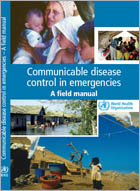 |
| Publication details Pages: 301 Pub. date: 2005 Language : English ISBN 924154616 6 Download English |
lunes, 16 de septiembre de 2013
Sanitizer Efficacy against Murine Norovirus on Stainless Steel Surfaces
 Abstract
Human noroviruses are major etiologic agents of epidemic gastroenteritis. Outbreaks are often accompanied by contamination of environmental surfaces, but since these viruses cannot be routinely propagated in laboratory cultures, their response to surface disinfectants is predicted by using surrogates, such as murine norovirus 1 (MNV-1). This study compared the virucidal efficacies of various liquid treatments (three sanitizer liquids, 5% levulinic acid plus 2% SDS [LEV/SDS], 200 ppm chlorine, and an isopropanol-based quaternary ammonium compound [Alpet D2], and two control liquids, sterile tap water and sterile tap water plus 2% SDS) when delivered to MNV-1-inoculated stainless steel surfaces by conventional hydraulic or air-assisted, induction-charged (AAIC) electrostatic spraying or by wiping with impregnated towelettes. For the spray treatments, LEV/SDS proved effective when applied with hydraulic and AAIC electrostatic spraying, providing virus reductions of 2.71 and 1.66 log PFU/ml, respectively. Alpet D2 provided a 2.23-log PFU/ml reduction with hydraulic spraying, outperforming chlorine (1.16-log PFU/ml reduction). Chlorine and LEV/SDS were equally effective as wipes, reducing the viral load by 7.05 log PFU/ml. Controls reduced the viral load by <1 log with spraying applications and by >3 log PFU/ml with wiping. Results indicated that both sanitizer type and application methods should be carefully considered when choosing a surface disinfectant to best prevent and control environmental contamination by noroviruses.
REFERENCE:
Bolton SL, Kotwal G, Harrison MA, Law SE, Harrison JA, Cannon JL. Sanitizerefficacy against murine norovirus, a surrogate for human norovirus, on stainless steel surfaces when using three application methods. Appl Environ Microbiol. 2013
Feb;79(4):1368-77. doi: 10.1128/AEM.02843-12. Epub 2012 Dec 21. PubMed PMID:
23263949; PubMed Central PMCID: PMC3568589.
viernes, 13 de septiembre de 2013
WHO: Emergency Response Framework
 |
| Download |
REFERENCE:
WHO: Emergency Response Framework. ISBN 978 92 4 150497 3
miércoles, 11 de septiembre de 2013
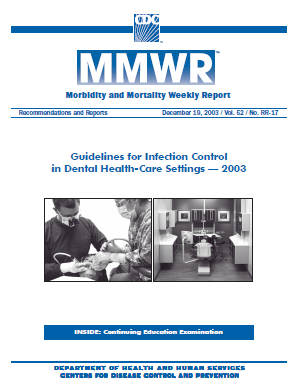
Guidelines for Infection Control in Dental Health-Care Settings
REFERENCE:
Guidelines for Infection Control in Dental Health-Care Settings, 2003. MMWR, December 19, 2003:52(RR-17).
Puede también descargarlo AQUI
Recommendations on the Transport of Dangerous Goods, Model Regulation. Book UNECE 2013
 |
| Published:July 2013 ST/SG/AC.10/1/Rev.18 Complete set of two volumes Sales No. 13.VIII.1 ISBN 978-92-1-139146-6 Price: US$ 155 Languages: E, F (A, C, R forthcoming) UNECE.ORG |
This eighteenth revised edition contains various new and revised provisions concerning, inter alia, classification of solid oxidizing substances; transport of adsorbed gases; lithium batteries (including damaged or defective lithium batteries, lithium batteries for disposal or recycling); asymmetric capacitors; discarded packagings; ammonium nitrate and radioactive material; testing of gas cartridges and fuel cell cartridges; marking of bundles of cylinders; and the applicability of ISO standards to the manufacture of new pressure receptacles or service equipment.
UNECE: United Nations Economic Commision for Europe
Versión 2009 en Español
lunes, 9 de septiembre de 2013
Emergency First Responder Respirator Thermal Characteristics: Workshop Proceedings

REFERENCE
NIOSH Emergency First Responder Respirator Thermal Characteristics: Workshop Proceedings
National Institute of Standards and Technology Special Publication 1123
Natl. Inst. Stand. Technol. Spec. Publ. 1123, 52 pages (June 2011)
viernes, 6 de septiembre de 2013
CLP Regulation and the transport of dangerous goods.

Regulations concerning different modes of transport of dangerous goods are well harmonized at global level: they were then looked at as a model for developing Globally Harmonized System of Classification and Labelling of Chemicals (GHS), (on which CLP Regulations is based). Transport regulations do not cover some hazard classes, such as germ cell mutagenicity, carcinogenicity, reproductive toxicity, having been evaluated that such hazards are not relevant in transport because in general, in case of accident, no repeated and prolonged exposure takes place. Other differences with CLP Regulation are related to the use of "building block approach". Transport labels, which were used as a basis for GHS, can be used, instead of CLP pictograms, on packages during transport.
REFERENCE:
Benassai S. CLP Regulation and the transport of dangerous goods. Ann Ist Super
Sanita. 2011;47(2):153-6. doi: 10.4415/ANN_11_02_06. PubMed PMID: 21709384.
miércoles, 4 de septiembre de 2013
Manual de esterilización para centros de salud
 |
Organización Panamericana de la Salud
“Manual de esterilización para centros de salud”
Washington, D.C.: OPS, © 2008
ISBN 978-92-75-32926-9 |
El Servicio de Central de Esterilización tiene, además, la responsabilidad de recoger y recibir los objetos y equipos usados durante la atención del paciente, procesarlo, almacenarlo, y distribuirlo en todo el hospital.
Este manual ha sido elaborado con el propósito de informar al personal de salud acerca de los protocolos y procedimientos simples desarrollados para prevenir las infecciones nosocomiales dentro y desde la Central de Esterilización. Su publicación ha sido realizada por la Oficina Central de la Organización Panamericana de la Salud.
Las normas escritas en este manual orientan sobre los pasos a seguir en la limpieza, acondicionamiento, esterilización, almacenamiento y transporte del equipamiento hospitalario a fin de obtener un material estéril. Es muy importante estar consciente de esta información para proveer al paciente una práctica segura de atención de la salud.
Evaluation of full-facepiece respirator fit on fire fighters in the municipality of Jeddah, Saudi Arabia
 |
| Types of respiratos usen in the study left: Drager; right: MSA |
Abstract
The purpose of this study was to assess the effect of personal variables on the fit of the respirators used by firefighters and workers in highly polluted environments. However, resistance from many plants managers was met to conduct the study on their workers. Therefore, we were forced to limit the study on firefighters who were found very cooperative. Forty volunteer firefighters from different departments participated in the study. They were subjected to a daily leak rate measurement using a Control Negative Pressure (CNP) fit tester for five consecutive days. Two types of respirators were used for each volunteer: the Drager type and the MSA. At the end of the study, the association between face shape and presence of beard with the respirator leak rates was investigated. A significant difference in the leak rate was detected between the two types of respirators used, with the Drager respirator having higher leak rates. The presence of a beard increased dramatically the leak rate whatever the face shape was. The oval shape was the best fitting to the respirators, followed by the rounded and finally the rectangular face. The study recommends that personal variables like face shape must be taken into consideration and fit testing must be carried out periodically, to specify the respirator that best fits each firefighter. Having beard must be absolutely prohibited, since it can be life threatening in environmental dangerous conditions such those encountered during extinguishing fires and overhaul situations.
REFERENCE
Balkhyour MA. Evaluation of full-facepiece respirator fit on fire fighters in the municipality of Jeddah, Saudi Arabia. Int J Environ Res Public Health. 2013
Jan 14;10(1):347-60. doi: 10.3390/ijerph10010347. PubMed PMID: 23343987; PubMed
Central PMCID: PMC3564146.
lunes, 2 de septiembre de 2013
StarTalkRadio: Viruses, Outbreaks and Pandemics
Normalmente, el famoso astrofísico Neil deGrasse Tyson habla acerca de estrellas, galaxias, hoyos negros, big bang, y hasta la posibilidad de vida en otros planetas. En este capítulo, Neil entrevista a Laurie Garrett, autora del libro "The coming plague" acerca de virus, epidemias y zombies! No se lo pierdan.
Languaje: English
45 min
¿Su hospital es seguro?
 |
| ISBN: 978-9978-45-930-0 |
Los países del mundo se reunieron en la segunda conferencia mundial en Kobe, Japón, para proponer un plan de acción. Este plan subraya la necesidad de integrar la planificación de la reducción de riesgos de desastre en el sector salud y promover la meta de hospitales seguros frente a desastres, asegurar que todos los hospitales nuevos se construyan con un nivel de confiabilidad e implementar medidas de mitigación para reforzar los establecimientos de salud existentes.
Se entiende por hospital seguro a un establecimiento de salud cuyos servicios permanecen accesibles y funcionan a su máxima capacidad instalada y en su misma infraestructura, inmediatemente después de un fenómeno destructivo de gran intensidad; esto implica la estabilidad de la estructura, la disponibilidad permanente de servicios básicos y la organización al interior de la unidad de salud.
REFERENCIA:
¿Su hospital es seguro? Preguntas y respuestas para el personal de salud. WHO/PAHO 2007
viernes, 30 de agosto de 2013
Assessment of biosafety precautions in Khartoum state diagnostic laboratories, Sudan
 |
| Biosafety precautions |
BACKGROUND: This study was conducted to evaluate the biosafety precautions that applied by diagnostic laboratories in Khartoum state, 2009.
METHODS: A total number of 190 laboratories were surveyed about their compliance with standard biosafety precautions. These laboratories included 51 (27%) laboratories from government, 75 (39%) from private sectors and 64 (34%) laboratories belong to organization providing health care services.
RESULTS: The study found that 32 (16.8%) of laboratories appointed biosafety officers. Only, ten (5.2%) participated in training about response to fire emergency, and 28 (14.7%) reported the laboratory accident occurred during work. 45 (23.7%) laboratories had a written standard operation procedures (SOPs), and 35 (18.4%) had written procedures for the lean-up of spills. Moreover, biosafety cabinet was found in 11 (5.8%) laboratories, autoclave in 28 (14.7%) and incinerator in only two (1.1%) laboratories. Sharp disposable containers were found in 84 (44.2%). Fire alarm system was found in 2 (1.1%) laboratories, fire extinguisher in 39 (20.5%) laboratories, and fire emergency exit found in 14 (7.4%) laboratories. Furthermore, 19 (10%) laboratories had a hepatitis B virus vaccination programme, 5 (6.2%) applied BCG vaccine, and 2 (1.1%0) vaccinated the staff against influenza.
CONCLUSION: The study concluded that the standards biosafety precautions adopted by the diagnostic laboratories in Khartoum state was very low. Further, the laboratory personnel awareness towards biosafety principles implementation was very low too.
REFERENCE
Elduma AH. Assessment of biosafety precautions in Khartoum state diagnostic laboratories, Sudan. Pan Afr Med J. 2012;11:19. Epub 2012 Feb 3. PubMed PMID:
22514753; PubMed Central PMCID: PMC3325057.
martes, 27 de agosto de 2013
Effectiveness of shoe covers for bioexclusion within an animal facility
 |
| Black-light examination of the floor after the completion of study 1. |
The personal protective equipment (PPE) required for entry into rodent barrier rooms often includes a hair bonnet, face mask, disposable gown, gloves, and shoe covers. Traditionally, shoe covers have been considered essential PPE for maintaining a 'clean' animal room. The introduction of microisolation caging and ventilated rack housing prompted us to reevaluate the contribution of shoe covers to bioexclusion. Contamination powder that fluoresces under black light was to track particle dispersal on the floor and personnel. The test mouse room contained a ventilated microisolation rack and biosafety cabinet. Powder was applied directly inside or outside the animal room doorway. PPE with or without shoe covers was donned outside of the animal room doorway and discarded on exiting. Participants either were scanned on entry into the room for the presence of florescence or asked to complete a simulated standard animal room activity while wearing full PPE. Animal rooms were scanned for florescence after exit of participants. All participants donning shoe covers fluoresced in multiple areas, primarily on gloves and gowns. Shoe covers had no effect on the spread of powder in normal traffic patterns, with no powder detected within caging. Powder also was used to determine the distance substances could be carried on the floor from building entry points. Results indicate that shoe covers do not improve (and actually may compromise) bioexclusion. Donning of shoe covers offers a potential for contamination of personnel from contact with shoe bottoms.
REFERENCE
Hickman-Davis JM, Nicolaus ML, Petty JM, Harrison DM, Bergdall VK.
Effectiveness of shoe covers for bioexclusion within an animal facility. J Am
Assoc Lab Anim Sci. 2012 Mar;51(2):181-8. PubMed PMID: 22776118; PubMed Central
PMCID: PMC3314521.
Suscribirse a:
Entradas (Atom)