| Lista de correo. Espere su aprobación. |
| Consultar este grupo |
lunes, 8 de diciembre de 2014
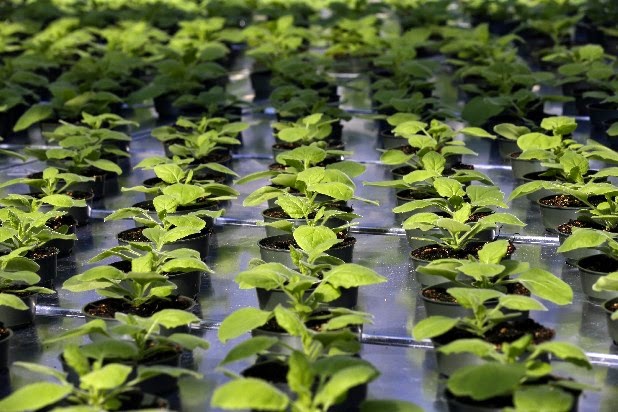
Plant-made #vaccine antigens against #malaria
REFERENCE:
Clemente M, Corigliano MG. Overview of plant-made vaccine antigens against malaria. J Biomed Biotechnol. 2012;2012:206918.
-------------------------------------------------
Sigue este Blog en Facebook y Twitter
lunes, 24 de noviembre de 2014
Algae-based oral recombinant vaccines
REFERENCE:
Specht EA and Mayfield SP. Algae-based oral recombinant vaccines. Front Microbiol. 2014; 5: 60.
-----------------------------------------------------------
Sigue este Blog en Facebook y Twitter
lunes, 3 de noviembre de 2014
Plant-derived virus-like particles as vaccines
REFERENCE:
Chen Q1, Lai H. Hum Plant-derived virus-like particles as vaccines. Vaccin Immunother. 2013 Jan;9(1):26-49.
-----------------------------------------------------------
Sigue este Blog en Facebook y Twitter
lunes, 27 de octubre de 2014
Biologically hazardous agents at work and efforts to protect workers' health: a review of recent reports
REFERENCE:
Rim KT, Lim CH. Biologically hazardous agents at work and efforts to protect workers' health: a review of recent reports. Saf Health Work. Jun 2014; 5(2): 43–52.
lunes, 13 de octubre de 2014
Día Mundial del Lavado de Manos, Octubre 15

Este 15 de Octubre, la Organización Mundial de la Salud, en conjunto con la UNICEF celebran el Día Mundial del Lavado de Manos. Esta es una oportunidad para recordar a todos la importancia del Lavado de Manos. Infórmate y distribuye la información acerca de la importancia del lavado de manos en: http://globalhandwashing.orgDescarga los posters y manuales de la campaña de la UNICEF AQUI.
This course and promotional materials review key concepts of hand hygiene and other standard precautions to prevent healthcare-associated infections.Promotional materials (Posters).
A variety of resources including guidelines for providers, patient empowerment materials, the latest technological advances in hand hygiene adherence measurement, frequently asked questions, and links to promotional and educational tools.
All health-care workers require clear and comprehensive training and education on the importance of hand hygiene, the "My 5 Moments for Hand Hygiene" approach and the correct procedures for handrubbing and handwashing.
Hygiene refers to behaviors that can improve cleanliness and lead to good health, such as frequent hand washing, face washing, and bathing with soap and water. In many areas of the world, practicing personal hygiene etiquette is difficult due to lack of clean water and soap. Many diseases can be spread if the hands, face, or body are not washed appropriately at key times.
Sigue este Blog en Facebook y Twitter
jueves, 9 de octubre de 2014
Detailed Hospital Checklist for #Ebola Preparedness
![]() |
| Lohud.com |
In order to enhance our collective preparedness and response efforts, this checklist highlights key areas for hospital staff -- especially hospital emergency management officers, infection control practitioners, and clinical practitioners -- to review in preparation for a person with Ebola arriving at a hospital for medical care. The checklist provides practical and specific suggestions to ensure your hospital is able to detect possible Ebola cases, protect your employees, and respond appropriately.
While we are not aware of any domestic Ebola cases, now is the time to prepare, as it is possible that individuals with Ebola in West Africa may travel to your city, exhibit signs and symptoms of Ebola, and present to facilities.
REFERENCES:
- CDC Detailed Hospital Checklist for Ebola Preparedness
- Ebola infection control. WHO guideline
- AIDE-MEMOIRE. For infection prevention and control in a health care facility
-----------------------------------------------------------
Sigue este Blog en Facebook y Twitter
lunes, 29 de septiembre de 2014
Efficacy of a Educational Tool to Improve Handrubbing Technique in Healthcare Workers
Methods. A controlled before-after study: subjects in Group A were exposed to the SureWash for four weeks followed by Group B for 12 weeks. Each subject's hand hygiene technique was assessed by blinded observers at baseline (T0) and following intervention periods (T1 and T2). Primary outcome was performance of a complete hand hygiene action, requiring all six poses during an action lasting ≥20 seconds. The number of poses per hand hygiene action (maximum 6) was assessed in a post-hoc analysis. SureWash's diagnostic capacity compared to human observers was assessed using ROC curve analysis.
Results. Thirty-four and 29 healthcare workers were recruited to groups A and B, respectively. No participants performed a complete action at baseline. At T1, one Group A participant and no Group B participants performed a complete action. At baseline, the median number of poses performed per action was 2.0 and 1.0 in Groups A and B, respectively (p = 0.12). At T1, the number of poses per action was greater in Group A (post-intervention) than Group B (control): median 3.8 and 2.0, respectively (p<0.001). In Group A, the number of poses performed twelve weeks post-intervention (median 3.0) remained higher than baseline (p<0.001). The area under the ROC curves for the 6 poses ranged from 0.59 to 0.88.
Discussion. While no impact on complete actions was demonstrated, SureWash significantly increased the number of poses per hand hygiene action and demonstrated good diagnostic capacity.
REFERENCE:
Stewardson AJ, et al. Efficacy of a New Educational Tool to Improve Handrubbing Technique amongst Healthcare Workers. PLoS One. 2014; 9(9): e105866.
-----------------------------------------------------------
Sigue este Blog en Facebook y Twitter
jueves, 25 de septiembre de 2014
Addressing climate change in healthcare settings
![]() |
| Publication details Number of pages: 28 Publication date: 2009 Languages: English |
This discussion draft is based on the World Health Organization’s (WHO) mandate from member states to develop “programmes for health systems that will contribute to reducing their own greenhouse gas emissions”. It also takes root in Health Care Without Harm’s (HCWH) more than 12 years of experience of working globally to transform the health sector so that it is no longer a source of harm to human health and the environment.
World Health Organization and Health Care Without Harm. Healthy hospitals, healthy planet, healthy people: Addressing climate change in healthcare settings, 2009.
------------------------------------------------
Sigue este Blog en Facebook y Twitter
viernes, 19 de septiembre de 2014
Fatal meningococcal disease in a laboratory worker - california, 2012
Occupationally acquired meningococcal disease is rare. Adherence to recommendations for safe handling of Neisseria meningitidis in the laboratory greatly reduces the risk for transmission to laboratory workers. A California microbiologist developed fatal serogroup B meningococcal disease after working with N. meningitidis patient isolates in a research laboratory (laboratory A). The California Department of Public Health (CDPH), the local health department, the California Division of Occupational Safety and Health (CalOSHA), and the federal Occupational Safety and Health Administration (OSHA) collaborated on an investigation of laboratory A, which revealed several breaches in recommended laboratory practice for safe handling of N. meningitidis, including manipulating cultures on the bench top. Additionally, laboratory workers had not been offered meningococcal vaccine in accordance with Advisory Committee on Immunization Practices (ACIP) recommendations and CalOSHA Aerosol Transmissible Diseases Standard requirements. In accordance with OSHA and CalOSHA regulations, laboratory staff members must receive laboratory biosafety training and use appropriate personal protective equipment, and those who routinely work with N. meningitidis isolates should receive meningococcal vaccine.Sheets CD, et al. Fatal meningococcal disease in a laboratory worker - california, 2012. MMWR Morb Mortal Wkly Rep. 2014 Sep 5;63(35):770-2.
----------------------------------------------------------
Sigue este Blog en Facebook y Twitter
miércoles, 3 de septiembre de 2014
Reducing Needle Stick Injuries in Healthcare Occupations
![]() |
| oasisdiscussions.ca |
REFERENCE:
Yang L, Mullan B. Reducing needle stick injuries in healthcare occupations: an integrative review of the literature. ISRN Nurs. 2011;2011:315432.
-------------------------------------------------
Sigue este Blog en Facebook y Twitter
martes, 2 de septiembre de 2014
Infection Control During Filoviral Hemorrhagic Fever Outbreaks #Ebola
- Raabea VN, Borcherta M. Infection control during filoviral hemorrhagic Fever outbreaks. J Glob Infect Dis. 2012 Jan;4(1):69-74.
- CDC Interim Guidance for Environmental Infection Control in Hospitals for Ebola Virus
- WHO Interim Infection Prevention and Control Guidance for Care of Patients with Suspected or Confirmed Filovirus Haemorrhagic Fever in Health-Care Settings, with Focus on Ebola => DESCARGA OPCIONAL
- Health Canada. Interim Biosafety Guidelines for Laboratories Handling Specimens from Patients Under Investigation for Ebola Virus Disease
Sigue este Blog en Facebook y Twitter
miércoles, 13 de agosto de 2014
Barriers to rapid containment of the #Ebola outbreak
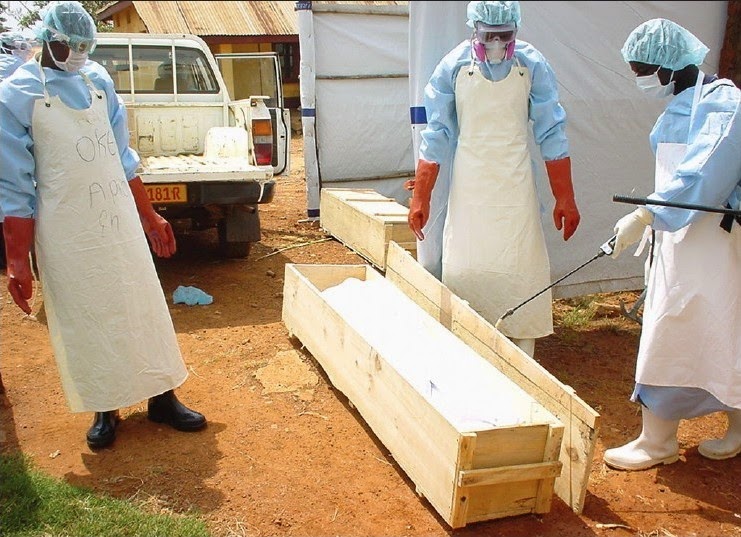
El virus del Ebola es uno de los patógenos más virulentos. El equipo de protección personal es esencial, pero escasea. Además es caliente e incómodo, y limita mucho el número de horas que el personal médico y de enfermería puede trabajar en una planta de aislamiento. Según las estimaciones actuales, un centro en el que se estén tratando 70 pacientes necesitará como mínimo 250 profesionales sanitarios.
Ahora que el brote ha cumplido 6 meses, se comprueba que el miedo es el obstáculo más difícil de vencer. El miedo hace que los contactos de los casos escapen al sistema de vigilancia, que las familias escondan a los parientes con síntomas o los lleven a curanderos tradicionales, y que los pacientes huyan de los centros terapéuticos. El miedo y la hostilidad que este puede alimentar han puesto en peligro la seguridad de los equipos de respuesta nacionales e internacionales.
El personal sanitario teme por sus vidas. Hasta la fecha se han infectado más de 170 profesionales sanitarios y al menos 81 han fallecido.
-----------------------------------------------------------
jueves, 7 de agosto de 2014
Evaluation of transmission risks associated with in vivo replication of several high containment pathogens in a biosafety level 4 laboratory #EBOLA
REFERENCE:
Alimonti J, et al. Evaluation of transmission risks associated with in vivo replication of several high containment pathogens in a biosafety level 4 laboratory. Scientific Reports 4, Article number: 5824.
-----------------------------------------------------------
Sigue este Blog en Facebook y Twitter
miércoles, 6 de agosto de 2014
Transmission of #Ebola virus from pigs to non-human primates
REFERENCE:
Weingartl HM et al. Transmission of Ebola virus from pigs to non-human primates. Scientific Reports 2 (2012), Article number: 811 doi:10.1038/srep00811
COMMENT ON:
Are we *sure* Ebola isn’t airborne?
-----------------------------------------------------------
Sigue este Blog en Facebook y Twitter
martes, 5 de agosto de 2014
Enfermedad por el virus del #Ebola
- El virus del Ebola causa en el ser humano la enfermedad homónima (antes conocida como fiebre hemorrágica del Ebola).
- Los brotes de enfermedad por el virus del Ebola (EVE) tienen una tasa de letalidad que puede llegar al 90%.
- Los brotes de EVE se producen principalmente en aldeas remotas de África central y occidental, cerca de la selva tropical.
- El virus es transmitido al ser humano por animales salvajes y se propaga en las poblaciones humanas por transmisión de persona a persona.
- Se considera que los huéspedes naturales del virus son los murciélagos frugívoros de la familia Pteropodidae.
- No hay tratamiento específico ni vacuna para las personas ni los animales.
Sigue este Blog en Facebook y Twitter
lunes, 12 de mayo de 2014
Technologies to Enable Autonomous Detection for #BioWatch
Technologies to Enable Autonomous Detection for BioWatch is the summary of a workshop hosted jointly by the Institute of Medicine and the National Research Council in June 2013 to explore alternative cost-effective systems that would meet the requirements for a BioWatch Generation 3.0 autonomous detection system, or autonomous detector, for aerosolized agents.
REFERENCE:
Institute of Medicine and National Research Council. Technologies to Enable Autonomous Detection for BioWatch: Ensuring Timely and Accurate Information for Public Health Officials : Workshop Summary. Washington, DC: The National Academies Press, 2014.
--------------------------------------------
NEWS: Homeland Security cancels plans for new BioWatch technology
--------------------------------------------
Sigue este Blog en Facebook o Twitter
viernes, 28 de marzo de 2014
Water, Sanitation, Hygiene, and Soil-Transmitted Helminth Infection: A Systematic Review and Meta-Analysis
La quimioterapia preventiva representa una estrategia de control para las helmintiasis transmitidas por el suelo de gran alcance pero a corto plazo. Dado que los humanos a menudo se vuelven a infectar rápidamente, las soluciones a largo plazo requieren mejoras en agua, saneamiento e higiene (WASH) . El propósito de este estudio fue resumir cuantitativamente la relación entre el acceso o prácticas WASH y la transmisión con helmintos del suelo (STH) .
Se realizó una revisión sistemática y meta-análisis para examinar las asociaciones de mejora de WASH en la infección por helmintos del suelo (Ascaris lumbricoides, Trichuris trichiura, ancylostoma [Ancylostoma duodenale y Necator americanus] y Strongyloides stercoralis). PubMed, Embase, Web of Science, y LILACS se buscaron desde el inicio al 28 de octubre de 2013, sin restricciones de idioma. Los estudios fueron elegibles para su inclusión si presentó una estimación del efecto del acceso o las prácticas sobre la infección por geohelmintos WASH. Se evaluó la calidad de los estudios publicados con los grados de recomendación, Evaluación, Desarrollo y Evaluación (GRADE). Un total de 94 estudios cumplieron con los criterios de elegibilidad, y cinco eran ensayos controlados aleatorios, mientras que la mayoría de los otros fueron estudios transversales. Utilizamos de efectos aleatorios meta-análisis y se analizaron sólo los presupuestos ajustados a ayudar a explicar la heterogeneidad y posibles factores de confusión, respectivamente.
REFERENCE
Strunz EC, Addiss DG, Stocks ME, et al. (2014). Water, Sanitation, Hygiene, and Soil-Transmitted Helminth Infection: A Systematic Review and Meta-Analysis. PLoS Med 11(3): e1001620. doi:10.1371/journal.pmed.1001620
--------------------------------------------
Sigue este Blog en Facebook o en Twitter.
martes, 18 de marzo de 2014
Nueva página de #Facebook para el Blog!
Buen Día..
lunes, 20 de enero de 2014
ABSL-4 Aerobiology Biosafety and Technology...
The overall threat of a viral pathogen to human populations is largely determined by the modus operandi and velocity of the pathogen that is transmitted among humans. Microorganisms that can spread by aerosol are considered a more challenging enemy than those that require direct body-to-body contact for transmission, due to the potential for infection of numerous people rather than a single individual. Additionally, disease containment is much more difficult to achieve for aerosolized viral pathogens than for pathogens that spread solely via direct person-to-person contact. Thus, aerobiology has become an increasingly necessary component for studying viral pathogens that are naturally or intentionally transmitted by aerosol. The goal of studying aerosol viral pathogens is to improve public health preparedness and medical countermeasure development. Here, we provide a brief overview of the animal biosafety level 4 Aerobiology Core at the NIH/NIAID Integrated Research Facility at Fort Detrick, Maryland, USA.REFERENCE:
Lackemeyer MG, Kok-Mercado Fd, Wada J, Bollinger L, Kindrachuk J, Wahl-Jensen V, Kuhn JH, Jahrling PB. ABSL-4 Aerobiology Biosafety and Technology at the NIH/NIAID Integrated Research Facility at Fort Detrick. Viruses. 2014 Jan 7;6(1):137-50. doi: 10.3390/v6010137. PubMed PMID: 24402304.
jueves, 21 de noviembre de 2013
#Book : People, pathogens and our planet Vol. 2
This report analyzes and assesses the benefits and the costs of control of an important group of contagious diseases. Zoonotic diseases are caused by pathogens that can infect both animals and humans, resulting in disease outbreaks, including epidemics in humans and epizootics in animals. These diseases account for 70 percent of emerging infectious diseases. In the absence of timely disease control, zoonotic pathogens can cause pandemics, with potentially catastrophic impacts that are global in scale. The report also touches on food safety, but does not cover other risks and opportunities at the interfaces between humans, animals, and the ecosystem, such as food security and pollution. Limiting its focus to this topic matter has important advantages, particularly with respect to immediate relevance and relative simplicity.
=> DESCARGAR <=