The National Institute for Occupational Safety and Health (NIOSH) and the Occupational Safety and Health Administration (OSHA) recognize that healthcare workers and responders involved with cases related to Ebola in the United States may be required to work longer or unusual shifts. This can involve extended shifts (more than 8 hours long), rotating or irregular shifts, or consecutive shifts resulting in more than the typical 40-hour work week. Long work hours may increase the risk of injuries and accidents and can contribute to poor health and worker fatigue.
Additionally, the personal protective equipment (PPE) required for working with Ebola patients can increase workers’ core body temperature, contributing significantly to fatigue. Although these guidelines are geared toward workers responding in the United States, the same concepts apply to those working in other countries.
DOWNLOAD / DESCARGA
-----------------------------------------------------------
Sigue este Blog en Facebook y Twitter
| Lista de correo. Espere su aprobación. |
| Consultar este grupo |
Mostrando las entradas con la etiqueta #ebola. Mostrar todas las entradas
jueves, 15 de enero de 2015
viernes, 28 de noviembre de 2014
Chimpanzee Adenovirus Vector #Ebola Vaccine - Preliminary Report.
Background
The unprecedented 2014 epidemic of Ebola virus disease (EVD) has prompted an international response to accelerate the availability of a preventive vaccine. A replication-defective recombinant chimpanzee adenovirus type 3-vectored ebolavirus vaccine (cAd3-EBO), encoding the glycoprotein from Zaire and Sudan species that offers protection in the nonhuman primate model, was rapidly advanced into phase 1 clinical evaluation.
Methods
We conducted a phase 1, dose-escalation, open-label trial of cAd3-EBO. Twenty healthy adults, in sequentially enrolled groups of 10 each, received vaccination intramuscularly in doses of 2×10¹⁰ particle units or 2×10¹¹ particle units. Primary and secondary end points related to safety and immunogenicity were assessed throughout the first 4 weeks after vaccination.
Results
In this small study, no safety concerns were identified; however, transient fever developed within 1 day after vaccination in two participants who had received the 2×10¹¹ particle-unit dose. Glycoprotein-specific antibodies were induced in all 20 participants; the titers were of greater magnitude in the group that received the 2×10¹¹ particle-unit dose than in the group that received the 2×10¹⁰ particle-unit dose (geometric mean titer against the Zaire antigen, 2037 vs. 331; P=0.001). Glycoprotein-specific T-cell responses were more frequent among those who received the 2x10¹¹ particle-unit dose than among those who received the 2×10¹⁰ particle-unit dose, with a CD4 response in 10 of 10 participants versus 3 of 10 participants (P=0.004) and a CD8 response in 7 of 10 participants versus 2 of 10 participants (P=0.07).
Conclusions
Reactogenicity and immune responses to cAd3-EBO vaccine were dose-dependent. At the 2×10¹¹ particle-unit dose, glycoprotein Zaire-specific antibody responses were in the range reported to be associated with vaccine-induced protective immunity in challenge studies involving nonhuman primates. Clinical trials assessing cAd3-EBO are ongoing. (Funded by the Intramural Research Program of the National Institutes of Health; VRC 207 ClinicalTrials.gov number, NCT02231866 .).
REFERENCE:
sábado, 8 de noviembre de 2014
How to conduct safe and dignified burial of a #ebola patient
Overview
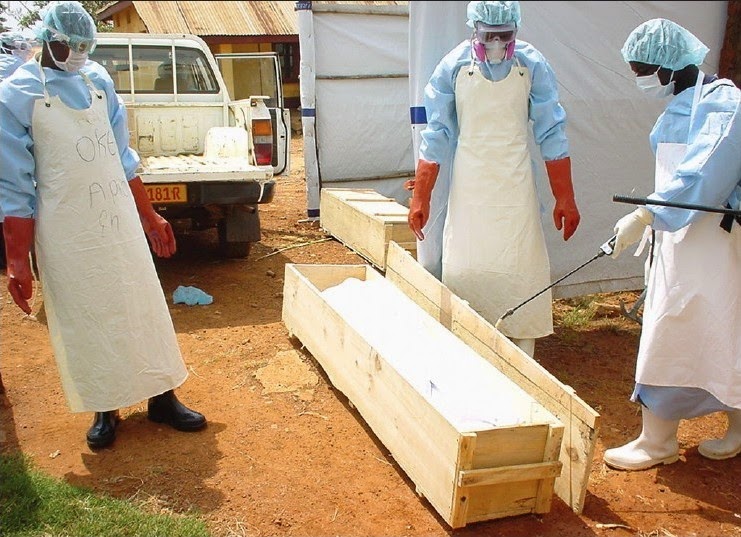
This protocol provides information on the safe management of dead bodies and burial of patients who died from suspected or confirmed Ebola virus disease. These measures should be applied not only by medical personnel but by anyone involved in the management of dead bodies and burial of suspected or confirmed Ebola patients. Twelve steps have been identified describing the different phases Burial Teams have to follow to ensure safe burials, starting from the moment the teams arrive in the village up to their return to the hospital or team headquarters after burial and disinfection procedures.
DOWNLOAD => How to conduct safe and dignified burial of a patient who has died from suspected or confirmed Ebola virus disease
Publication details
Number of pages: 17
Publication date: October 2014
Languages: English
WHO reference number: WHO/EVD/Guidance/Burials/14.2
Publication date: October 2014
Languages: English
WHO reference number: WHO/EVD/Guidance/Burials/14.2
NEWS:
W.H.O. Issues New Guidelines on Safely Burying Ebola Victims
-----------------------------------------------------------
lunes, 3 de noviembre de 2014
COURSE: Guidance for use of Personal Protective Equipment (PPE) During Management of Patients with #Ebola Virus
![]() |
| GO TO THE COURSE |
Prior to working with Ebola patients, all healthcare providers involved in the care of Ebola patients must receive training and demonstrate competency in performing all Ebola-related infection control practices and procedures, specifically in donning and doffing proper PPE.
REFERENCE:
Guidance for Donning and Doffing Personal Protective Equipment (PPE) During Management of Patients with Ebola Virus
-----------------------------------------------------------
Sigue este Blog en Facebook y Twitter
jueves, 30 de octubre de 2014
Control of #ebola virus disease - firestone district, Liberia, 2014
![]() |
| WSJ |
REFERENCE:
Reaves EJ, et al. Control of ebola virus disease - firestone district, Liberia, 2014. MMWR Morb Mortal Wkly Rep. 2014 Oct 24;63(42):959-65.
NEWS:
How Firestone Liberia’s unique approaches helped stem the spread of the ebola virus
Liberian Rubber Farm Becomes Sanctuary Against Ebola
-----------------------------------------------------------
Sigue este Blog en Facebook y Twitter
martes, 28 de octubre de 2014
Cluster of #ebola cases among liberian and u.s. Health care workers in an ebola treatment unit and adjacent hospital - Liberia, 2014
![]() |
| aljazeera |
REFERENCE:
Forrester JD et al. Cluster of Ebola Cases Among Liberian and U.S. Health Care Workers in an Ebola Treatment Unit and Adjacent Hospital — Liberia, 2014. MMWR Morb Mortal Wkly Rep. 2014 Oct 17;63(41):925-9.
-----------------------------------------------------------
Sigue este Blog en Facebook y Twitter
sábado, 18 de octubre de 2014
Consolidated #Ebola Virus Disease Preparedness Checklist
The Consolidated Checklist for Ebola Virus Disease Preparedness is based on efforts by various national and international institutions, including WHO, CDC and UN OCHA.
It identifies 10 key components and tasks for both countries and the international community that should be completed within 30, 60 and 90 days respectively from the date of issuing this list. Minimal required resources in terms of equipment and material as well as human resources are defined. Key reference documents such as guidelines, training manuals and guidance notes will help the technical experts to implement required action in the key components.
DESCARGA 1 / DESCARGA OPCIONAL
-----------------------------------------------------------
Sigue este Blog en Facebook y Twitter
It identifies 10 key components and tasks for both countries and the international community that should be completed within 30, 60 and 90 days respectively from the date of issuing this list. Minimal required resources in terms of equipment and material as well as human resources are defined. Key reference documents such as guidelines, training manuals and guidance notes will help the technical experts to implement required action in the key components.
DESCARGA 1 / DESCARGA OPCIONAL
-----------------------------------------------------------
Sigue este Blog en Facebook y Twitter
lunes, 13 de octubre de 2014
viernes, 10 de octubre de 2014
Contact tracing during an #ebola outbreak
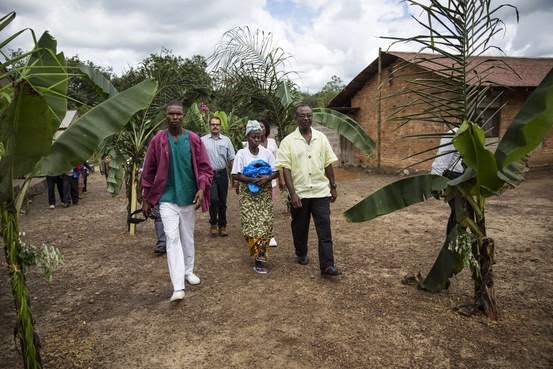
This document provides guidance for establishing and conducting contact tracing during filovirus disease outbreaks. The guidance notes are based on extensive field experience in filovirus disease outbreak response in the WHO African region. The notes are intended for frontline epidemiologists, surveillance officers, health workers and other volunteers involved in contact tracing. National and sub-national emergency management committees and rapid response teams require these guidelines to plan, implement and monitor contact tracing.National emergency management committees are advised to adapt these guidance notes to the local context in their application
REFERENCES:
Contact tracing during an #ebola outbreak
CDC poster: What is contact tracing?
Australasian Contract Tracing Manual
Development of a risk assessment tool for contact tracing people after contact with infectious patients while travelling by bus or other public ground transport: a Delphi consensus approach
-----------------------------------------------------------
Sigue este Blog en Facebook y Twitter
jueves, 9 de octubre de 2014
Detailed Hospital Checklist for #Ebola Preparedness
![]() |
| Lohud.com |
In order to enhance our collective preparedness and response efforts, this checklist highlights key areas for hospital staff -- especially hospital emergency management officers, infection control practitioners, and clinical practitioners -- to review in preparation for a person with Ebola arriving at a hospital for medical care. The checklist provides practical and specific suggestions to ensure your hospital is able to detect possible Ebola cases, protect your employees, and respond appropriately.
While we are not aware of any domestic Ebola cases, now is the time to prepare, as it is possible that individuals with Ebola in West Africa may travel to your city, exhibit signs and symptoms of Ebola, and present to facilities.
REFERENCES:
- CDC Detailed Hospital Checklist for Ebola Preparedness
- Ebola infection control. WHO guideline
- AIDE-MEMOIRE. For infection prevention and control in a health care facility
-----------------------------------------------------------
Sigue este Blog en Facebook y Twitter
lunes, 6 de octubre de 2014
Review on #Ebola vaccines
Introduction. Ebolaviruses cause severe viral hemorrhagic fever in humans and non-human primates, with case fatality rates of up to 90%. Currently, neither a specific treatment nor a vaccine licensed for use in humans is available. However, a number of vaccine candidates have been developed in the last decade that are highly protective in non-human primates, the gold standard animal model for Ebola hemorrhagic fever.
Areas covered. This review analyzes a number of scenarios for the use of ebolavirus vaccines, discusses the requirements for ebolavirus vaccines in these scenarios, and describes current ebolavirus vaccines. Among these vaccines are recombinant Adenoviruses, recombinant Vesicular Stomatitis viruses, recombinant Human Parainfluenza viruses and virus-like particles. Interestingly, one of these vaccine platforms, based on recombinant Vesicular Stomatitis viruses, has also demonstrated post-exposure protection in non-human primates.
Expert opinion. The most pressing remaining challenge is now to move these vaccine candidates forward into human trials and towards licensure. In order to achieve this, it will be necessary to establish the mechanisms and correlates of protection for these vaccines, and to continue to demonstrate their safety, particularly in potentially immunocompromised populations. However, already now there is sufficient evidence that, from a scientific perspective, a vaccine protective against ebolaviruses is possible.
REFERENCE;
Hoenen T, Groseth A & Feldmann H. Current Ebola vaccines. Expert Opin Biol Ther 2012; 12(7): 859–872.
--------------------------------------------------
Sigue este Blog en Facebook y Twitter
Areas covered. This review analyzes a number of scenarios for the use of ebolavirus vaccines, discusses the requirements for ebolavirus vaccines in these scenarios, and describes current ebolavirus vaccines. Among these vaccines are recombinant Adenoviruses, recombinant Vesicular Stomatitis viruses, recombinant Human Parainfluenza viruses and virus-like particles. Interestingly, one of these vaccine platforms, based on recombinant Vesicular Stomatitis viruses, has also demonstrated post-exposure protection in non-human primates.
Expert opinion. The most pressing remaining challenge is now to move these vaccine candidates forward into human trials and towards licensure. In order to achieve this, it will be necessary to establish the mechanisms and correlates of protection for these vaccines, and to continue to demonstrate their safety, particularly in potentially immunocompromised populations. However, already now there is sufficient evidence that, from a scientific perspective, a vaccine protective against ebolaviruses is possible.
REFERENCE;
Hoenen T, Groseth A & Feldmann H. Current Ebola vaccines. Expert Opin Biol Ther 2012; 12(7): 859–872.
--------------------------------------------------
Sigue este Blog en Facebook y Twitter
Aviso preventivo de viaje por #ebola a países africanos
La Secretaria de Salud Federal, a través del Unidad de Inteligencia Epidemiológica y Sanitaria emite el siguiente aviso preventivo de viaje ante los brotes de Enfermedad por Virus del Ébola, en GUINEA, LIBERIA, SIERRA LEONA, NIGERIA Y SENEGAL en el continente Africano, actualizado al 03 de Octubre de 2014.
La Secretaría de Salud reitera la recomendación de evitar viajes no esenciales a Guinea, Liberia, Sierra Leona, Nigeria y Senegal debido a la evolución del brote de Enfermedad por el Virus del Ébola.
-----------------------------------------------------------
Sigue este Blog en Facebook y Twitter
La Secretaría de Salud reitera la recomendación de evitar viajes no esenciales a Guinea, Liberia, Sierra Leona, Nigeria y Senegal debido a la evolución del brote de Enfermedad por el Virus del Ébola.
Sigue este Blog en Facebook y Twitter
martes, 23 de septiembre de 2014
Future Projections for #ebola outbreak
BACKGROUND. On March 23, 2014, the World Health Organization (WHO) was notified of an outbreak of Ebola virus disease (EVD) in Guinea. On August 8, the WHO declared the epidemic to be a “public health emergency of international concern.”
METHODS. By September 14, 2014, a total of 4507 probable and confirmed cases, including 2296 deaths from EVD (Zaire species) had been reported from five countries in West Africa — Guinea, Liberia, Nigeria, Senegal, and Sierra Leone. We analyzed a detailed subset of data on 3343 confirmed and 667 probable Ebola cases collected in Guinea, Liberia, Nigeria, and Sierra Leone as of September 14.
RESULTS: The majority of patients are 15 to 44 years of age (49.9% male), and we estimate that the case fatality rate is 70.8% (95% confidence interval [CI], 69 to 73) among persons with known clinical outcome of infection. The course of infection, including signs and symptoms, incubation period (11.4 days), and serial interval (15.3 days), is similar to that reported in previous outbreaks of EVD. On the basis of the initial periods of exponential growth, the estimated basic reproduction numbers (R0 ) are 1.71 (95% CI, 1.44 to 2.01) for Guinea, 1.83 (95% CI, 1.72 to 1.94) for Liberia, and 2.02 (95% CI, 1.79 to 2.26) for Sierra Leone. The estimated current reproduction numbers (R) are 1.81 (95% CI, 1.60 to 2.03) for Guinea, 1.51 (95% CI, 1.41 to 1.60) for Liberia, and 1.38 (95% CI, 1.27 to 1.51) for Sierra Leone; the corresponding doubling times are 15.7 days (95% CI, 12.9 to 20.3) for Guinea, 23.6 days (95% CI, 20.2 to 28.2) for Liberia, and 30.2 days (95% CI, 23.6 to 42.3) for Sierra Leone. Assuming no change in the control measures for this epidemic, by November 2, 2014, the cumulative reported numbers of confirmed and probable cases are predicted to be 5740 in Guinea, 9890 in Liberia, and 5000 in Sierra Leone, exceeding 20,000 in total.
CONCLUSIONS: These data indicate that without drastic improvements in control measures, the numbers of cases of and deaths from EVD are expected to continue increasing from hundreds to thousands per week in the coming months.
REFERENCES:
Ebola Virus Disease in West Africa — The First 9 Months of the Epidemic and Forward Projections. NEJM 2014
Meltzer mi, et al. Estimating the Future Number of Cases in the Ebola Epidemic — Liberia and Sierra Leone, 2014–2015. MMWR 2015. September 23, 2014 / 63(Early Release);1-14.
-----------------------------------------------------------
Sigue este Blog en Facebook y Twitter
METHODS. By September 14, 2014, a total of 4507 probable and confirmed cases, including 2296 deaths from EVD (Zaire species) had been reported from five countries in West Africa — Guinea, Liberia, Nigeria, Senegal, and Sierra Leone. We analyzed a detailed subset of data on 3343 confirmed and 667 probable Ebola cases collected in Guinea, Liberia, Nigeria, and Sierra Leone as of September 14.
RESULTS: The majority of patients are 15 to 44 years of age (49.9% male), and we estimate that the case fatality rate is 70.8% (95% confidence interval [CI], 69 to 73) among persons with known clinical outcome of infection. The course of infection, including signs and symptoms, incubation period (11.4 days), and serial interval (15.3 days), is similar to that reported in previous outbreaks of EVD. On the basis of the initial periods of exponential growth, the estimated basic reproduction numbers (R0 ) are 1.71 (95% CI, 1.44 to 2.01) for Guinea, 1.83 (95% CI, 1.72 to 1.94) for Liberia, and 2.02 (95% CI, 1.79 to 2.26) for Sierra Leone. The estimated current reproduction numbers (R) are 1.81 (95% CI, 1.60 to 2.03) for Guinea, 1.51 (95% CI, 1.41 to 1.60) for Liberia, and 1.38 (95% CI, 1.27 to 1.51) for Sierra Leone; the corresponding doubling times are 15.7 days (95% CI, 12.9 to 20.3) for Guinea, 23.6 days (95% CI, 20.2 to 28.2) for Liberia, and 30.2 days (95% CI, 23.6 to 42.3) for Sierra Leone. Assuming no change in the control measures for this epidemic, by November 2, 2014, the cumulative reported numbers of confirmed and probable cases are predicted to be 5740 in Guinea, 9890 in Liberia, and 5000 in Sierra Leone, exceeding 20,000 in total.
CONCLUSIONS: These data indicate that without drastic improvements in control measures, the numbers of cases of and deaths from EVD are expected to continue increasing from hundreds to thousands per week in the coming months.
REFERENCES:
Ebola Virus Disease in West Africa — The First 9 Months of the Epidemic and Forward Projections. NEJM 2014
Meltzer mi, et al. Estimating the Future Number of Cases in the Ebola Epidemic — Liberia and Sierra Leone, 2014–2015. MMWR 2015. September 23, 2014 / 63(Early Release);1-14.
-----------------------------------------------------------
Sigue este Blog en Facebook y Twitter
viernes, 19 de septiembre de 2014
Reporte de casos de #ébola en trabajadores de la salud en África

En el reporte publicado el día de ayer, la organización mundial de la salud actualiza los datos de la situación epidemiológica del ébola en África. En resumen, existen 5335 casos reportados (probables, confirmados y sospechosos), con 2622 muertes hasta el 14/Sep/2014. Los países afectados son Guinea (942 casos, 601 muertes), Liberia (2710 casos, 1459 muertes), Sierra Leona (1673 casos, 562 muertes), Nigeria (21 casos, 8 muertes), y Senegal (1 caso, 0 muertes).
Dentro del reporte se hace mención de los casos registrados en trabajadores de la salud, que como resultado del trabajo de atención a pacientes con ébola, han resultado infectados con ébola. En el reporte de situación por países, claramente el país mas afectado es Liberia con 85 muertes de 172 casos reportados. En total de todos los países se han reportado 151 muertes de 318 casos de ébola.
Los casos de los trabajares de la salud, es por lo tanto una de las más alarmantes, dado que son ellos quienes realizan las funciones del control de la epidemia, atención y cuidado de pacientes. Sin trabajadores de la salud, difícilmente podrá controlarse la epidemia, agravado por el hecho de que estos países cuentan con muy bajo número de médicos y enfermeras.
Tabla. Resumen de infecciones por ébola en trabajadores de la salud. 14/Sep/2014.
| PAÍS | MUERTES | CASOS |
| Guinea | 30 | 61 |
| Liberia | 85 | 172 |
| Nigeria | 5 | 11 |
| Sierra Leona | 31 | 74 |
| TOTAL | 151 | 318 |
REFERENCIA
WHO: Ebola Response Roadmap Situation Report 18 September 2014
REPORTE DE CASOS ACTUALIZADO WHO: Ebola Response Roadmap Situation Report 24 September 2014
-----------------------------------------------------------
Sigue este Blog en Facebook y Twitter
viernes, 12 de septiembre de 2014
UNICEF recruiting healthcare workers & other specialists
Ebola Crisis Response
The current crisis in West Africa is the largest Ebola outbreak ever reported, with 26 million people, including over 4.5 million children living in affected areas.
UNICEF is on the ground, working with community and religious leaders, youth organizations and others to fight widespread misconceptions about the disease and improve hygiene practices. UNICEF is also providing water and sanitation services to the affected communities, particularly through the procurement of water, sanitation and hygiene equipment and supplies -- as well as appropriate training for the health and medical partners.
As part of our drive to tackle the Ebola outbreak in West Africa, UNICEF seeks committed professionals, ready to be deployed immediately to countries in the affected area in the domains of Health and Nutrition, Communication for Development and Water and Sanitation.
Do you have the skills, competency and technical knowledge that we seek? Are you available to be deployed on short notice? UNICEF would like to hear from you.
Apply to our vacancies below and help our response to the Ebola crisis.
This page will be updated regularly to reflect our vacancies below in Ebola affected countries.
For more information, or if you have difficulties in applying, contact us at eRecruitment@unicef.org.
Check the full list of vacancies at: http://www.unicef.org/about/employ/index_75734.html
UNICEF is on the ground, working with community and religious leaders, youth organizations and others to fight widespread misconceptions about the disease and improve hygiene practices. UNICEF is also providing water and sanitation services to the affected communities, particularly through the procurement of water, sanitation and hygiene equipment and supplies -- as well as appropriate training for the health and medical partners.
As part of our drive to tackle the Ebola outbreak in West Africa, UNICEF seeks committed professionals, ready to be deployed immediately to countries in the affected area in the domains of Health and Nutrition, Communication for Development and Water and Sanitation.
Do you have the skills, competency and technical knowledge that we seek? Are you available to be deployed on short notice? UNICEF would like to hear from you.
Apply to our vacancies below and help our response to the Ebola crisis.
This page will be updated regularly to reflect our vacancies below in Ebola affected countries.
For more information, or if you have difficulties in applying, contact us at eRecruitment@unicef.org.
Check the full list of vacancies at: http://www.unicef.org/about/employ/index_75734.html
martes, 2 de septiembre de 2014
Infection Control During Filoviral Hemorrhagic Fever Outbreaks #Ebola
Breaking the human-to-human transmission cycle remains the cornerstone of infection control during filoviral (Ebola and Marburg) hemorrhagic fever outbreaks. This requires effective identification and isolation of cases, timely contact tracing and monitoring, proper usage of barrier personal protection gear by health workers, and safely conducted burials. Solely implementing these measures is insufficient for infection control; control efforts must be culturally sensitive and conducted in a transparent manner to promote the necessary trust between the community and infection control team in order to succeed. This article provides a review of the literature on infection control during filoviral hemorrhagic fever outbreaks focusing on outbreaks in a developing setting and lessons learned from previous outbreaks. The primary search database used to review the literature was PUBMED, the National Library of Medicine website.
REFERENCES:
Sigue este Blog en Facebook y Twitter
- Raabea VN, Borcherta M. Infection control during filoviral hemorrhagic Fever outbreaks. J Glob Infect Dis. 2012 Jan;4(1):69-74.
- CDC Interim Guidance for Environmental Infection Control in Hospitals for Ebola Virus
- WHO Interim Infection Prevention and Control Guidance for Care of Patients with Suspected or Confirmed Filovirus Haemorrhagic Fever in Health-Care Settings, with Focus on Ebola => DESCARGA OPCIONAL
- Health Canada. Interim Biosafety Guidelines for Laboratories Handling Specimens from Patients Under Investigation for Ebola Virus Disease
Sigue este Blog en Facebook y Twitter
Etiquetas:
#ebola,
Bioseguridad alternativa,
Desinfectantes,
Emergencias,
Equipo de protección personal,
Manejo de residuos,
Microorganismos
jueves, 28 de agosto de 2014
.@WHO & CDC Interim Guidelines for #Ebola
![]() |
| CDC ebola print resources |
- WHO Interim Infection Prevention and Control Guidance for Care of Patients with Suspected or Confirmed Filovirus Haemorrhagic Fever in Health-Care Settings, with Focus on Ebola => PDF opcional
- CDC Interim Guidance for Environmental Infection Control in Hospitals for Ebola Virus
- CDC Interim Guidance for Specimen Collection, Transport, Testing, and Submission for Persons Under Investigation for Ebola Virus Disease in the United States
- CDC Interim Guidance for Monitoring and Movement of Persons with Ebola Virus Disease Exposure
- CDC Ebola Guidance for Airlines
- CDC Guidance for Safe Handling of Human Remains of Ebola Patients in U. S. Hospitals and Mortuaries
- CDC ebola print resources
- CDC Information for Healthcare Workers
jueves, 21 de agosto de 2014
The International #Ebola Emergency
On August 8, 33 weeks into the longest, largest, and most widespread Ebola outbreak on record, the World Health Organization (WHO) declared the epidemic to be a Public Health Emergency of International Concern (PHEIC). This declaration was not made lightly. A PHEIC is an instrument of the International Health Regulations (IHR) — a legally binding agreement made by 196 countries on containment of major international health threats.
The August 8 statement made by WHO Director-General Margaret Chan followed advice from the independent IHR Emergency Committee. Reviewing all the available evidence, the committee concluded that further international spread of Ebola could have serious consequences. Their concern was based on the continuing transmission of Ebola in West African communities and health facilities, the high case fatality rate of Ebola virus disease (EVD), and the weak health services of Guinea, Liberia, Sierra Leone, Nigeria, and other neighboring countries at risk for infection.
REFERENCIA
Briand S. et al. The International Ebola Emergency. NEJM 2014.
lunes, 18 de agosto de 2014
¿Cómo ayudar al control de la epidemia de #ébola?
DESCARGAR POSTER
El virus del ébola es muy contagioso, y el 54% de las personas infectadas en la actual epidemia del ébola han muerto. Los países africanos más afectados son Guinea, Liberia y Sierra Leona. Y a pesar de los esfuerzo, la epidemia no disminuye.El principal problema es la falta de equipo de protección personal, tan básico como guantes y batas. Muchos trabajadores de la salud ha muerto por falta de equipo de protección, o han cerrado los centros de atención por miedo al virus. Pero también hace mucha falta personal médico entrenado que atienda a los pacientes enfermos, pero también que se dedique a buscar contactos de las personas.
Desafortunadamente, no podremos enviar guantes o mascarillas por correo a la gente que esta haciendo la batalla, pero si podemos ayudar a las organizaciones que día a día trabajan para el control de la epidemia. Apelo a las buenas intenciones de las personas que leen este blog, y que saben que nuestro trabajo es, ha sido y seguirá siendo sin ánimos de lucro.
Crowdfunding para el la atención de pacientes con ébola
en áreas rurales en Kono, Sierra Leona:
- Regala una caja de guantes!! Por eso, aquí una lista de las organizaciones, que enviando a su gente, intentan controlar esta epidemia, pero que necesitan fondos para ampliar su ayuda:
- Cruz Roja Británica. Está colectando fondos, que van directamente a gastos para el control de la epidemia. Si después de que la emergencia ha terminado, los fondos restantes serán utilizados en otras emergencias humanitarias.
- Médicos Sin Fronteras México y Médecins Sans Frontiers (Internacional). Los fondos son canalizados al fondo global de emergencias, pero que son usados activamente en las emergencias actuales, incluyendo la epidemia de ébola.
- UNICEF. Los donativos, cuando son otorgados como "Where most needed", van al fondo de emergencias, que además reciben fondos del Fondo Central de Respuestas de Emergencias de la ONU. Los donativos directos de México están desactivados, pero pueden hacerlo eligiendo "Otros Países".
- AFRICARE. Apoya directamente a la adquisición de equipo de protección personal (EPP) para los trabajadores de la salud en Liberia.
- DIRECT RELIEF. Apoya directamente con envíos de equipo médico y EPP en Liberia y Sierra Leona. Una de las 20 ONGs más eficientes. Hace entregas en especie.
- WELLBODY ALLIANCE. En colaboración con UCSF están realizando un Crowdfunding para el la atención de pacientes con ébola en áreas rurales en Kono, Sierra Leona. https://crowdfund.ucsf.edu/project/53e4f5e60920655b8211663c
- Otras organizaciones que están realizando actividades de apoyo al control de la epidemia incluyen: a) ActionAid (UK); b) Samaritans Purse (Asociación cristiana); c) Medical Teams International (apoyo médico in Liberia), d) Giving Global (Sierra Leona); e) CARE (imprime material informativo en Sierra Leona);
Como DIRECT RELIEF hace notar, una donación de tan sólo 6 dólares ayudan a comprar algo tan esencial como 1 caja de guantes de látex!
1,400 Are Dead From #Ebola and We Need Help, Says Doctors Without Borders President http://t.co/rOT35md4he
— Bioseguridad (@Klintsy) agosto 23, 2014
ONU y OMS prometen medios "sin precedentes" contra #ébola en Liberia http://t.co/FUXbkYU9Jf
— Bioseguridad (@Klintsy) agosto 23, 2014
REFERENCIAS:
- Wall Street Journal. Ebola Virus: For Want of Gloves, Doctors Die
- Ebola Crisis Intensifies as West Africa Struggles to Cope
- Containing Ebola: Gloves and Masks Are Needed, Not Drugs
- Ebola aid workers having to help sick without masks or gloves
-----------------------------------------------------------
Sigue este Blog en Facebook y Twitter
Suscribirse a:
Entradas (Atom)