![]() |
| Con membresía $90.- (MXP) Público en general $120.- (MXP) + gastos de envío. Adquiérelo en: www.amexbio.wildapricot.org |
| Lista de correo. Espere su aprobación. |
| Consultar este grupo |
lunes, 20 de enero de 2014
Apoyen a la #AMexBio.
ABSL-4 Aerobiology Biosafety and Technology...
The overall threat of a viral pathogen to human populations is largely determined by the modus operandi and velocity of the pathogen that is transmitted among humans. Microorganisms that can spread by aerosol are considered a more challenging enemy than those that require direct body-to-body contact for transmission, due to the potential for infection of numerous people rather than a single individual. Additionally, disease containment is much more difficult to achieve for aerosolized viral pathogens than for pathogens that spread solely via direct person-to-person contact. Thus, aerobiology has become an increasingly necessary component for studying viral pathogens that are naturally or intentionally transmitted by aerosol. The goal of studying aerosol viral pathogens is to improve public health preparedness and medical countermeasure development. Here, we provide a brief overview of the animal biosafety level 4 Aerobiology Core at the NIH/NIAID Integrated Research Facility at Fort Detrick, Maryland, USA.REFERENCE:
Lackemeyer MG, Kok-Mercado Fd, Wada J, Bollinger L, Kindrachuk J, Wahl-Jensen V, Kuhn JH, Jahrling PB. ABSL-4 Aerobiology Biosafety and Technology at the NIH/NIAID Integrated Research Facility at Fort Detrick. Viruses. 2014 Jan 7;6(1):137-50. doi: 10.3390/v6010137. PubMed PMID: 24402304.
viernes, 10 de enero de 2014
Synthetic biology and biosecurity. From low levels of awareness to a comprehensive strategy
![]() |
| Photo: Mashable |
REFERENCE:
Kelle A. Synthetic biology and biosecurity. From low levels of awareness to a comprehensive strategy. EMBO Rep. 2009 Aug;10 Suppl 1:S23-7.
martes, 7 de enero de 2014
Containing the accidental laboratory escape of potential pandemic influenza viruses.
BACKGROUND:
The recent work on the modified H5N1 has stirred an intense debate on the risk associated with the accidental release from biosafety laboratory of potential pandemic pathogens. Here, we assess the risk that the accidental escape of a novel transmissible influenza strain would not be contained in the local community.
METHODS:
We develop here a detailed agent-based model that specifically considers laboratory workers and their contacts in microsimulations of the epidemic onset. We consider the following non-pharmaceutical interventions: isolation of the laboratory, laboratory workers' household quarantine, contact tracing of cases and subsequent household quarantine of identified secondary cases, and school and workplace closure both preventive and reactive.
RESULTS:
Model simulations suggest that there is a non-negligible probability (5% to 15%), strongly dependent on reproduction number and probability of developing clinical symptoms, that the escape event is not detected at all. We find that the containment depends on the timely implementation of non-pharmaceutical interventions and contact tracing and it may be effective (>90% probability per event) only for pathogens with moderate transmissibility (reproductive number no larger than R₀ = 1.5). Containment depends on population density and structure as well, with a probability of giving rise to a global event that is three to five times lower in rural areas.
CONCLUSIONS:
Results suggest that controllability of escape events is not guaranteed and, given the rapid increase of biosafety laboratories worldwide, this poses a serious threat to human health. Our findings may be relevant to policy makers when designing adequate preparedness plans and may have important implications for determining the location of new biosafety laboratories worldwide.
REFERENCE
1: Merler S, Ajelli M, Fumanelli L, Vespignani A. Containing the accidental laboratory escape of potential pandemic influenza viruses. BMC Med. 2013 Nov 28;11:252
Oversight and Review of Clinical Gene Transfer Protocols
Gene transfer research is a rapidly advancing field that involves the introduction of a genetic sequence into a human subject for research or diagnostic purposes. Clinical gene transfer trials are subject to regulation by the U.S. Food and Drug Administration (FDA) at the federal level and to oversight by institutional review boards (IRBs) and institutional biosafety committees (IBCs) at the local level before human subjects can be enrolled. In addition, at present all researchers and institutions funded by the National Institutes of Health (NIH) are required by NIH guidelines to submit human gene transfer protocols for advisory review by the NIH Recombinant DNA Advisory Committee (RAC). Some protocols are then selected for individual review and public discussion. Oversight and Review of Clinical Gene Transfer Protocols provides an assessment of the state of existing gene transfer science and the current regulatory and policy context under which research is investigated. This report assesses whether the current oversight of individual gene transfer protocols by the RAC continues to be necessary and offers recommendations concerning the criteria the NIH should employ to determine whether individual protocols should receive public review. The focus of this report is on the standards the RAC and NIH should use in exercising its oversight function. Oversight and Review of Clinical Gene Transfer Protocols will assist not only the RAC, but also research institutions and the general public with respect to utilizing and improving existing oversight processes.
REFERENCE:
National Research Council. Oversight and Review of Clinical Gene Transfer Protocols: Assessing the Role of the Recombinant DNA Advisory Committee. Washington, DC: The National Academies Press, 2014.
martes, 31 de diciembre de 2013
viernes, 13 de diciembre de 2013
VIDEO: Películas recomendadas para estas vacaciones
jueves, 5 de diciembre de 2013
Hepatitis C Virus Maintains Infectivity for Weeks
ABSTRACT
Background: Healthcare workers may come into contact with fomites containing
infectious HCV during preparation of plasma, or following placement or removal of
venous lines. Similarly, injection drugs users may come into contact with fomites.
Hypothesizing that prolonged viability of HCV in fomites may contribute significantly to
incidence; we determined the longevity of virus infectivity and the effectiveness of
antiseptics.
Methods: We determined the volume of drops misplaced during transfer of serum or
plasma. Aliquots equivalent to the maximum drop volume of plasma spiked with 2a
HCV reporter virus were loaded into 24-well plates. Plates were stored uncovered at three
temperatures: 4°, 22°, and 37°C for up to 6 weeks before viral infectivity was determined
in a microculture assay.
Results: The mean volume of an accidental drop was 29 μl (min - max of 20 - 33 μl). At
storage temperatures 4° and 22°C, we recovered viable HCV from the low titer spots for
up to 6 weeks of storage. The rank order of HCV virucidal activity of commonly used
antiseptics was bleach (1:10) > cavicide (1:10) > ethanol (70%).
Conclusions:
The hypothesis of potential transmission from fomites was supported by the experimental
results. The anti-HCV activity of commercial antiseptics varied.
Reference
Elijah Paintsil1, Mawuena Binka2, Amisha Patel2, Brett D. Lindenbach3, and Robert Heimer2. Hepatitis C Virus Maintains Infectivity for Weeks after Drying on Inanimate Surfaces at Room Temperature: Implications for Risks of Transmission. JID 2013.
http://jid.oxfordjournals.org/content/early/2013/11/22/infdis.jit648.full.pdf
miércoles, 4 de diciembre de 2013
Global Health Risks (2009)
=> DESCARGAR <=
Global Health Risks (2009)
ISBN 978 92 4 156387 1
© World Health Organization 2009
domingo, 24 de noviembre de 2013
#REGENESIS: TV SERIES <= No se la pierdan #Feliz2014
Estas navidades, en las que tendremos mucho tiempo, les recomiento ver la serie de TV "Regenesis".
David Sandstrom es un científico, genetista, virólogo/microbiólogo, jefe de un laboratorio que se dedica a investigar las causas de diversas enfermedades misteriosas, y que originan la muerte de diversas personas. Una combinación de serie policíaca/forense con tonos de microbiología. Aunque cuenta con algunas inexactitudes científicas, pero considerando el año en que empezó a producirse, logra captar la atención del espectador. No se la pueden perder.
jueves, 21 de noviembre de 2013
Responsible life sciences research for global health security #DURC
Publication details
Publication date: 2010
Languages: English
WHO reference number: WHO/HSE/GAR/BDP/2010.2
#Book : People, pathogens and our planet Vol. 2
This report analyzes and assesses the benefits and the costs of control of an important group of contagious diseases. Zoonotic diseases are caused by pathogens that can infect both animals and humans, resulting in disease outbreaks, including epidemics in humans and epizootics in animals. These diseases account for 70 percent of emerging infectious diseases. In the absence of timely disease control, zoonotic pathogens can cause pandemics, with potentially catastrophic impacts that are global in scale. The report also touches on food safety, but does not cover other risks and opportunities at the interfaces between humans, animals, and the ecosystem, such as food security and pollution. Limiting its focus to this topic matter has important advantages, particularly with respect to immediate relevance and relative simplicity.
=> DESCARGAR <=
miércoles, 20 de noviembre de 2013
#Book : People, pathogens and our planet Vol. 1
![]() | |||||||||
DETAILS
- 2012/06/01
- Other Agricultural Study
- 69145
- 1 of 1
- World;
- The World Region;
- 2012/06/11
- People, pathogens and our planet : the economics of one health
sábado, 9 de noviembre de 2013
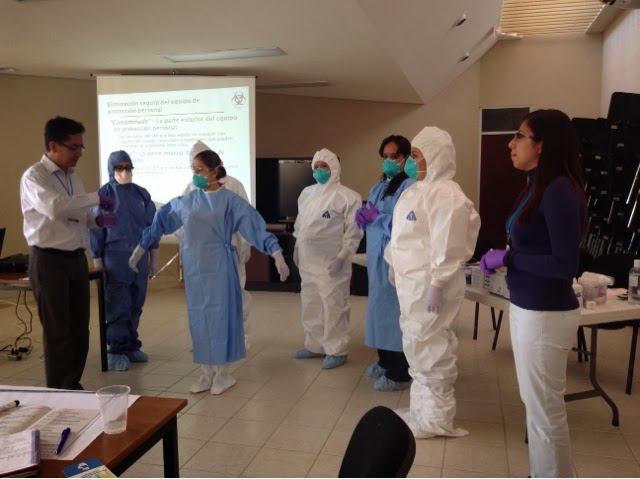
Sesión de entrenamiento en Capasits/COESIDA en #Oaxaca #bioseguridad
jueves, 7 de noviembre de 2013
Infecciones con Salmonella en laboratorio de microbiología universitario #LAI
On May 15, the Health and Environmental Testing Laboratory (HETL) determined that the clinical Salmonella isolates from stool specimens provided by outside hospital laboratories from both patients were indistinguishable by pulsed field gel electrophoresis (PFGE) analysis from a specimen used by the students during the microbiology class. The clinical isolates and laboratory class isolate all had a PFGE pattern indistinguishable from that of bacteria isolated during a national Salmonella Typhimurium outbreak in 2010 that was associated with clinical and teaching microbiology laboratories (1). No cases were reported from Maine during the 2010 outbreak. CONTINUA=>
lunes, 4 de noviembre de 2013
¡Los hospitales no se incendian!
¡Los hospitales no se incendian! Guía hospitalaria para la prevención de incendios y evacuación
Esta guía ha sido creada para poner de relieve la vulnerabilidad de los hospitales a los incendios. Es necesario que se adopten todas las medidas posibles para minimizar el riesgo de incendios en hospitales y asegurar la evacuación. El documento se puede aplicar en hospitales que han sido reforzados para mejorar la seguridad en cuanto a incendios, así como en nuevas instalaciones en proyecto.
El documento está dividido en cuatro secciones principales a considerarse en caso de incendio en hospitales, a saber, prevención, supresión, evacuación y simulacros de capacitación.
REFERENCIA:
|
lunes, 21 de octubre de 2013
Antimicrobial Resistance in the Food Chain: A Review
![]() |
| Overview of horizontal gene transfer in food products (For complete image click HERE). |
REFERENCIA:
Verraes C. Antimicrobial Resistance in the Food Chain: A Review. Int J Environ Res Public Health. 2013 July; 10(7): 2643–2669.
viernes, 18 de octubre de 2013
Influence of temperature and organic load on chemical disinfection
This study evaluated the influence of temperature and organic load on the effectiveness of domestic bleach (DB), Surface Decontamination Foam (SDF), and Virkon in inactivating Geobacillus stearothermophilus spores, which are a surrogate for Bacillus anthracis spores. The spores were suspended in light or heavy organic preparations and the suspension was applied to stainless steel carrier disks. The dried spore inoculum was covered with the disinfectants and the disks were then incubated at various temperatures. At −20°C, the 3 disinfectants caused less than a 2.0 log10 reduction of spores in both organic preparations during a 24-h test period. At 4°C, the DB caused a 4.4 log10 reduction of spores in light organic preparations within 2 h, which was about 3 log10 higher than what was achieved with SDF or Virkon. In heavy organic preparations, after 24 h at 4°C the SDF had reduced the spore count by 4.5 log10, which was about 2 log10 higher than for DB or Virkon. In general, the disinfectants were most effective at 23°C but a 24-h contact time was required for SDF and Virkon to reduce spore counts in both organic preparations by at least 5.5 log10. Comparable disinfecting activity with DB only occurred with the light organic load. In summary, at temperatures as low as 4°C, DB was the most effective disinfectant, inactivating spores within 2 h on surfaces with a light organic load, whereas SDF produced the greatest reduction of spores within 24 h on surfaces with a heavy organic load.
REFERENCE:
Jiewen Guan, Maria Chan, Brian W. Brooks, and Liz Rohonczy. Influence of temperature and organic load on chemical disinfection of Geobacillus steareothermophilus spores, a surrogate for Bacillus anthracis. Can J Vet Res. 2013 April; 77(2): 100–104.
jueves, 17 de octubre de 2013
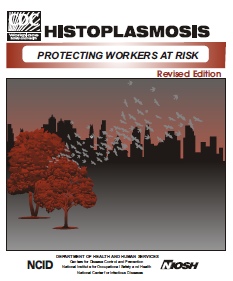
Histoplasmosis: Protecting Workers at Risk
Outbreaks of histoplasmosis have shared similar circumstances: People who did not know the health risks of breathing in the spores of H. capsulatum became ill and sometimes caused others nearby to become ill when they disturbed contaminated soil or accumulations of bird or bat manure. Because they were unaware of the hazard, they did not take protective measures that could have prevented illness.
This booklet will help prevent such exposures by serving as a guide for safety and health professionals, environmental consultants, supervisors, and others responsible for the safety and health of those working near material contaminated with H. capsulatum. Activities that pose a health risk to workers at these sites include disturbance of soil at an active or inactive bird roost or poultry house, excavation in regions where this fungus is endemic, and removal of bat or bird manure from buildings.
REFERENCE:
Histoplasmosis: Protecting Workers at Risk. NIOSH/CDC 2003
miércoles, 16 de octubre de 2013
Technologies to Enable Autonomous Detection for BioWatch
lunes, 14 de octubre de 2013
Oct 15, Día Mundial del Lavado de Manos #IWashMyHands
Referencias:
Global Hand Washing
UNICEF
viernes, 11 de octubre de 2013
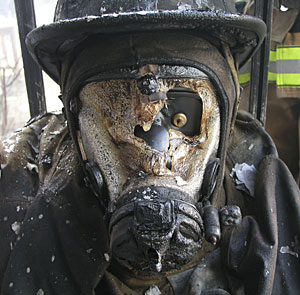
Fire Exposures of Fire Fighter Self-Contained Breathing Apparatus Facepiece Lenses
REFERENCE
Fire Exposures of Fire Fighter Self-Contained Breathing Apparatus Facepiece Lenses
National Institute of Standards and Technology Technical Note 1724
Natl. Inst. Stand. Technol. Tech. Note 1724, 45 pages (November 2011)
CODEN: NSPUE2
jueves, 10 de octubre de 2013
The Handwashing Handbook
TheHandwashingHandbook:A guide for developing a hygiene promotion programto increase handwashing with soap
miércoles, 9 de octubre de 2013
Volcanoes: Protecting the Public´s Health
REFERENCIA:
Volcanoes: Protecting the Public’s Health
lunes, 7 de octubre de 2013
Advancing infection control in dental care settings
Background and Overview. The authors set out to identify factors associated with implementation by U.S. dentists of four practices first recommended in the Centers for Disease Control and Prevention’s Guidelines for Infection Control in Dental Health-Care Settings—2003.
Methods. In 2008, the authors surveyed a stratified random sample of 6,825 U.S. dentists. The response rate was 49 percent. The authors gathered data regarding dentists’ demographic and practice characteristics, attitudes toward infection control, sources of instruction regarding the guidelines and knowledge about the need to use sterile water for surgical procedures. Then they assessed the impact of those factors on the implementation of four recommendations: having an infection control coordinator, maintaining dental unit water quality, documenting percutaneous injuries and using safer medical devices, such as safer syringes and scalpels. The authors conducted bivariate analyses and proportional odds modeling.
Results. Responding dentists in 34 percent of practices had implemented none or one of the four recommendations, 40 percent had implemented two of the recommendations and 26 percent had implemented three or four of the recommendations. The likelihood of implementation was higher among dentists who acknowledged the importance of infection control, had practiced dentistry for less than 30 years, had received more continuing dental education credits in infection control, correctly identified more surgical procedures that require the use of sterile water, worked in larger practices and had at least three sources of instruction regarding the guidelines. Dentists with practices in the South Atlantic, Middle Atlantic or East South Central U.S. Census divisions were less likely to have complied.
Conclusions. Implementation of the four recommendations varied among U.S. dentists. Strategies targeted at raising awareness of the importance of infection control, increasing continuing education requirements and developing multiple modes of instruction may increase implementation of current and future Centers for Disease Control and Prevention guidelines.
REFERENCE:
Jennifer L. Cleveland, et al. Advancing infection control in dental care settings. JADA 2012;143(10):1127-1138.
viernes, 4 de octubre de 2013
StarTalkRadio: Zombie Apocalypse (Part 2)
45 mins.
miércoles, 2 de octubre de 2013
How to choose a suit for a BSL4 laboratory
REFERENCIA:
Kümin D, Krebs C & Wick P. How to choose a suit for a BSL4 laboratory- The approach taken at Spiez Laboratory. Applied Biosafety 2011. Vol. 16, No. 2, p94-102
lunes, 30 de septiembre de 2013
Intervención de laboratorios y bancos de sangre en situaciones de desastre
![]() |
| ISBN 92 75 32380 1 OPS/HSP/HSE/08-2001 |
• La confirmación diagnóstica de las enfermedades transmisibles de alta mortalidad.
• La disponibilidad de exámenes básicos para el manejo de heridos.
• La provisión oportuna de sangre segura.
La presente guía pretende sensibilizar y orientar a las autoridades de salud, directores y técnicos de laboratorios y bancos de sangre en la identificación de responsabilidades y funciones de estos servicios ante situaciones de desastres, basándose en prioridades, necesidades y capacidad de respuesta inmediata local. La incorporación de actividades de mitigación y reducción de vulnerabilidad, rehabilitación y reorganización de los servicios en los planes de contingencia permitirá una mejor respuesta de los servicios de salud posterior a los desastres.
REFERENCIA:
Intervención de laboratorios y bancos de sangre en situaciones de desastre
viernes, 27 de septiembre de 2013
StarTalkRadio: Zombie Apocalypse (Part 1)
45 mins.
miércoles, 25 de septiembre de 2013
Evaluation of the Operator Protection Factors Offered by Positive Pressure Air Suit
REFERENCE
lunes, 23 de septiembre de 2013
EMERGENCIAS: Prácticas Sanitarias para Jeringas Desechables
![]() |
| Vacunación |
La OPS/OMS recomienda las normas siguientes:
- Las jeringas "autodestructibles" [a] son el tipo preferido de inyecciones desechables con el que se aplican vacunas y el material escogido para llevar a cabo campañas de inmunizaciones en gran cantidad de gente.
- Los trabajadores de la salud no deben rehusar las agujas.
- Las jeringas desechables usadas deben recolectarse en "Cajas de Seguridad", que son contenedores resistentes a perforaciones, diseñados para colectar equipo de inyecciones.
- Las "Cajas de Seguridad" o contenedores similares donde se recolectan equipo de inoculación contaminado, debe ser transportado con mucho cuidado a un sitio de incineración.
- Si no existen o no están en servicio las instalaciones o sitios para incineración, las "Cajas de Seguridad" se pueden quemar en una fosa o algo parecido, por ejemplo un barril metálico. Las agujas quemadas se pueden enterrar de una manera segura o eliminadas con otra basura.
- No cumplir con estas normas puede poner en riesgo la salud pública ya que el material de inoculación podría ser utilizado de nuevo exponiendo a la gente a enfermedades y a la muerte.
- Los trabajadores de la salud que rehusan agujas se arriesgan a contraer enfermedades infecciosas debido a pinchazos accidentales. El público podría pincharse accidentalmente si las agujas y jeringas no son destruidas de una manera apropiada.
Recuerde: toda inyección debe administrarse con una aguja y jeringa estéril.
a. Jeringas autodestructibles son jeringas desechables que contienen un mecanismo por el cual automáticamente no pueden ser rehusadas después de la primera vez.
REFERENCIA:
http://www.paho.org/disasters/index.php?option=com_content&task=view&id=555&Itemid=664
viernes, 20 de septiembre de 2013
VIDEO: Problemas sanitarios durante el terremoto en México - 1985
Esta producción describe los problemas sanitarios y las actividades de socorro realizadas a raíz de los terremotos del 19 y 20 de septiembre de 1985 en México. El primer sismo, de magnitud 8,1 en la escala de Richer, dejó más de 10.000 muertos o desaparecidos y miles de heridos.
miércoles, 18 de septiembre de 2013
Efficacy of disinfectants against naturally occurring and artificially cultivated bacteria.
Naturally occurring bacteria, is exist in nature, and is never cultivated on conventional culture medium. We evaluated the efficacy of disinfectants against naturally occurring bacteria in in-use cotton balls soaked in 0.02% benzalkonium chloride solution which had been used to disinfect the genital area by patients undergoing self-catheterization at home and the same bacteria subcultured on nutrient broth (artificially cultivated bacteria). The colony forming units (CFU) of naturally occurring bacteria such as Serratia marcescens, Alcaligenes xylosoxidans, and Burkholderia cepacia were not decreased after 48 h exposure to 0.025-0.1% benzalkonium chloride solution, but the same strains subcultured on nutrient broth were killed within only 10 min exposure to 0.025-0.1% benzalkonium chloride solution. In addition, the CFU of these three kinds of naturally occurring bacteria were not decreased after 48 h exposure to 0.02% chlorhexidine gluconate solution, but the same strains subcultured on nutrient broth were killed within 2 h exposure to chlorhexidine gluconate solution. The result showed that disinfectant efficacy differed markedly against naturally occurring and artificially cultivated bacteria. Therefore, it is preferable to use the naturally occurring bacteria not only artificially cultivated bacteria when examining disinfectant efficacy.
REFERENCE:
Suwa M, Oie S, Furukawa H. Efficacy of disinfectants against naturally occurring and artificially cultivated bacteria. Biol Pharm Bull. 2013;36(3):360-3. PubMed PMID: 23449324.
martes, 17 de septiembre de 2013
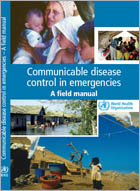
Communicable disease control in emergencies - A field manual
![]() |
| Publication details Pages: 301 Pub. date: 2005 Language : English ISBN 924154616 6 Download English |
lunes, 16 de septiembre de 2013
Sanitizer Efficacy against Murine Norovirus on Stainless Steel Surfaces
AbstractHuman noroviruses are major etiologic agents of epidemic gastroenteritis. Outbreaks are often accompanied by contamination of environmental surfaces, but since these viruses cannot be routinely propagated in laboratory cultures, their response to surface disinfectants is predicted by using surrogates, such as murine norovirus 1 (MNV-1). This study compared the virucidal efficacies of various liquid treatments (three sanitizer liquids, 5% levulinic acid plus 2% SDS [LEV/SDS], 200 ppm chlorine, and an isopropanol-based quaternary ammonium compound [Alpet D2], and two control liquids, sterile tap water and sterile tap water plus 2% SDS) when delivered to MNV-1-inoculated stainless steel surfaces by conventional hydraulic or air-assisted, induction-charged (AAIC) electrostatic spraying or by wiping with impregnated towelettes. For the spray treatments, LEV/SDS proved effective when applied with hydraulic and AAIC electrostatic spraying, providing virus reductions of 2.71 and 1.66 log PFU/ml, respectively. Alpet D2 provided a 2.23-log PFU/ml reduction with hydraulic spraying, outperforming chlorine (1.16-log PFU/ml reduction). Chlorine and LEV/SDS were equally effective as wipes, reducing the viral load by 7.05 log PFU/ml. Controls reduced the viral load by <1 log with spraying applications and by >3 log PFU/ml with wiping. Results indicated that both sanitizer type and application methods should be carefully considered when choosing a surface disinfectant to best prevent and control environmental contamination by noroviruses.
REFERENCE:
Bolton SL, Kotwal G, Harrison MA, Law SE, Harrison JA, Cannon JL. Sanitizerefficacy against murine norovirus, a surrogate for human norovirus, on stainless steel surfaces when using three application methods. Appl Environ Microbiol. 2013 Feb;79(4):1368-77. doi: 10.1128/AEM.02843-12. Epub 2012 Dec 21. PubMed PMID: 23263949; PubMed Central PMCID: PMC3568589.
viernes, 13 de septiembre de 2013
WHO: Emergency Response Framework
![]() |
| Download |
REFERENCE:
WHO: Emergency Response Framework. ISBN 978 92 4 150497 3
miércoles, 11 de septiembre de 2013
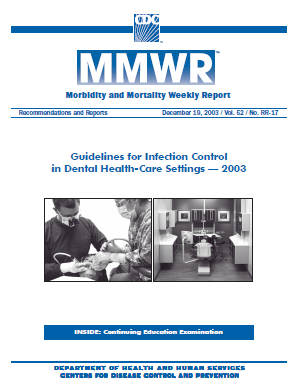
Guidelines for Infection Control in Dental Health-Care Settings
REFERENCE:
Guidelines for Infection Control in Dental Health-Care Settings, 2003. MMWR, December 19, 2003:52(RR-17).
Puede también descargarlo AQUI
Recommendations on the Transport of Dangerous Goods, Model Regulation. Book UNECE 2013
![]() |
| Published:July 2013 ST/SG/AC.10/1/Rev.18 Complete set of two volumes Sales No. 13.VIII.1 ISBN 978-92-1-139146-6 Price: US$ 155 Languages: E, F (A, C, R forthcoming) UNECE.ORG |
This eighteenth revised edition contains various new and revised provisions concerning, inter alia, classification of solid oxidizing substances; transport of adsorbed gases; lithium batteries (including damaged or defective lithium batteries, lithium batteries for disposal or recycling); asymmetric capacitors; discarded packagings; ammonium nitrate and radioactive material; testing of gas cartridges and fuel cell cartridges; marking of bundles of cylinders; and the applicability of ISO standards to the manufacture of new pressure receptacles or service equipment.
UNECE: United Nations Economic Commision for Europe
Versión 2009 en Español
lunes, 9 de septiembre de 2013
Emergency First Responder Respirator Thermal Characteristics: Workshop Proceedings
REFERENCE
NIOSH Emergency First Responder Respirator Thermal Characteristics: Workshop Proceedings
National Institute of Standards and Technology Special Publication 1123
Natl. Inst. Stand. Technol. Spec. Publ. 1123, 52 pages (June 2011)
viernes, 6 de septiembre de 2013
CLP Regulation and the transport of dangerous goods.
Regulations concerning different modes of transport of dangerous goods are well harmonized at global level: they were then looked at as a model for developing Globally Harmonized System of Classification and Labelling of Chemicals (GHS), (on which CLP Regulations is based). Transport regulations do not cover some hazard classes, such as germ cell mutagenicity, carcinogenicity, reproductive toxicity, having been evaluated that such hazards are not relevant in transport because in general, in case of accident, no repeated and prolonged exposure takes place. Other differences with CLP Regulation are related to the use of "building block approach". Transport labels, which were used as a basis for GHS, can be used, instead of CLP pictograms, on packages during transport.
REFERENCE:
Benassai S. CLP Regulation and the transport of dangerous goods. Ann Ist Super Sanita. 2011;47(2):153-6. doi: 10.4415/ANN_11_02_06. PubMed PMID: 21709384.
miércoles, 4 de septiembre de 2013
Manual de esterilización para centros de salud
![]() |
Organización Panamericana de la Salud
“Manual de esterilización para centros de salud”
Washington, D.C.: OPS, © 2008
ISBN 978-92-75-32926-9 |
El Servicio de Central de Esterilización tiene, además, la responsabilidad de recoger y recibir los objetos y equipos usados durante la atención del paciente, procesarlo, almacenarlo, y distribuirlo en todo el hospital.
Este manual ha sido elaborado con el propósito de informar al personal de salud acerca de los protocolos y procedimientos simples desarrollados para prevenir las infecciones nosocomiales dentro y desde la Central de Esterilización. Su publicación ha sido realizada por la Oficina Central de la Organización Panamericana de la Salud.
Las normas escritas en este manual orientan sobre los pasos a seguir en la limpieza, acondicionamiento, esterilización, almacenamiento y transporte del equipamiento hospitalario a fin de obtener un material estéril. Es muy importante estar consciente de esta información para proveer al paciente una práctica segura de atención de la salud.