Before medical school, Sara L., now a fourth-year resident, worked for 6 years as a microbiologist at the Centers for Disease Control and Prevention. While there, she focused on hemorrhagic fevers, and she went to West Africa several times to assist in outbreaks. Indeed, until recently, Sara was one of only a few hundred people in the United States who was trained to work in a biosafety level 4 “spacesuit” laboratory, which requires the same personal protective equipment (PPE) needed for working with Ebola. As the current Ebola epidemic exploded, and after careful deliberation, Sara sought and secured a position with an international aid organization, got approval from her residency program's leadership, found coverage for her time away, and 6 weeks later, was set to deploy. Then she got a call from her institution's risk-management department with disappointing news: the institution would not support her deployment.
Rosenbaum L. License to Serve — U.S. Trainees and the Ebola Epidemic. N Engl J Med. 2014 Dec 17.

lunes, 26 de enero de 2015


viernes, 23 de enero de 2015
The hidden face of academic researches on classified highly pathogenic microorganisms

REFERENCE:
Devaux CA. The hidden face of academic researches on classified highly pathogenic microorganisms. Infect Genet Evol. 2015 Jan;29:26-34. doi: 10.1016/j.meegid.2014.10.028. Epub 2014 Nov 7.
-----------------------------------------------------------
Sigue este Blog en Facebook y Twitter
jueves, 15 de enero de 2015
Preventing Worker Fatigue Among #Ebola Healthcare Workers #CDC

Additionally, the personal protective equipment (PPE) required for working with Ebola patients can increase workers’ core body temperature, contributing significantly to fatigue. Although these guidelines are geared toward workers responding in the United States, the same concepts apply to those working in other countries.
DOWNLOAD / DESCARGA
-----------------------------------------------------------
Sigue este Blog en Facebook y Twitter
martes, 13 de enero de 2015
A los patrocinadores de #AMexBio
 Las personas interesadas en promover sus productos en el próximo VII Simposio de Bioseguridad y Biocustodia de la Asociación Mexicana de Bioseguridad A.C. Existen amplias oportunidades para posicionar sus marcas ante este público especializado.
Mayor información con:
Cristina Wilhelm
cristina.wilhelm[at´]amexbio.org
Guillermo Wilhelm Ferriz
Nextel Id: 52*167789*3
Tel Fijo: (473) 732-4681
Tel Celular: (55) 4410-6383
guillermo_wilhelmf[at´]hotmail.com
-----------------------------------------------------------
Sigue este Blog en Facebook y Twitter
lunes, 8 de diciembre de 2014
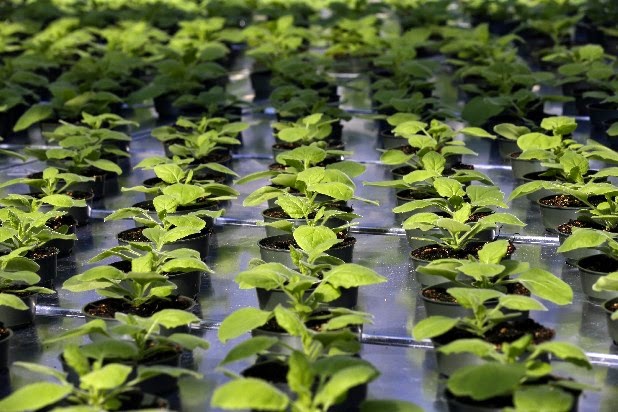
Plant-made #vaccine antigens against #malaria
REFERENCE:
Clemente M, Corigliano MG. Overview of plant-made vaccine antigens against malaria. J Biomed Biotechnol. 2012;2012:206918.
-------------------------------------------------
Sigue este Blog en Facebook y Twitter
jueves, 4 de diciembre de 2014
Conferencia: "#Ebola, panorama epidemiológico"
 Impartida por el Dr. Mario Martínez González.
Asesor de la Organización Panamericana de Salud.
Lunes 8 de diciembre del 2014
De 12:00 a 14:00 hrs.
En la sala 2 del Auditorio de la Unidad de Posgrado,
Universidad Nacional Autónoma de México
Ver MAPA
-----------------------------------------------------------
Sigue este Blog en Facebook y Twitter
martes, 2 de diciembre de 2014
Alberto Díaz Quiñonez, recibe el "IFBA Biosafety Heroes Award 2014" #AMexBio

El Dr. José Alberto Díaz Quiñonez, Miembro Fundador y Presidente del Consejo Directivo 2011-2012 de la Asociación Mexicana de Bioseguridad obtuvo el reconocimiento "IFBA Biosafety Heroes Award 2014" otorgado por la International Federation of Biosafety Associations.
Este galardón fue creado por la IFBA en 2011, con el objetivo de reconocer a los profesionales que realizan contribuciones importantes en temas de gestión del riesgo biológico en el mundo.
De acuerdo con IFBA el "Dr. Díaz Quiñonez ha demostrado ser un incansable promotor de la cultura de gestión del riesgo biológico en México".
Felicidades Alberto!
----------------------------------------------------------- Sigue este Blog en Facebook y Twitter
viernes, 28 de noviembre de 2014
Chimpanzee Adenovirus Vector #Ebola Vaccine - Preliminary Report.
 Background
The unprecedented 2014 epidemic of Ebola virus disease (EVD) has prompted an international response to accelerate the availability of a preventive vaccine. A replication-defective recombinant chimpanzee adenovirus type 3-vectored ebolavirus vaccine (cAd3-EBO), encoding the glycoprotein from Zaire and Sudan species that offers protection in the nonhuman primate model, was rapidly advanced into phase 1 clinical evaluation.
Methods
We conducted a phase 1, dose-escalation, open-label trial of cAd3-EBO. Twenty healthy adults, in sequentially enrolled groups of 10 each, received vaccination intramuscularly in doses of 2×10¹⁰ particle units or 2×10¹¹ particle units. Primary and secondary end points related to safety and immunogenicity were assessed throughout the first 4 weeks after vaccination.
Results
In this small study, no safety concerns were identified; however, transient fever developed within 1 day after vaccination in two participants who had received the 2×10¹¹ particle-unit dose. Glycoprotein-specific antibodies were induced in all 20 participants; the titers were of greater magnitude in the group that received the 2×10¹¹ particle-unit dose than in the group that received the 2×10¹⁰ particle-unit dose (geometric mean titer against the Zaire antigen, 2037 vs. 331; P=0.001). Glycoprotein-specific T-cell responses were more frequent among those who received the 2x10¹¹ particle-unit dose than among those who received the 2×10¹⁰ particle-unit dose, with a CD4 response in 10 of 10 participants versus 3 of 10 participants (P=0.004) and a CD8 response in 7 of 10 participants versus 2 of 10 participants (P=0.07).
Conclusions
Reactogenicity and immune responses to cAd3-EBO vaccine were dose-dependent. At the 2×10¹¹ particle-unit dose, glycoprotein Zaire-specific antibody responses were in the range reported to be associated with vaccine-induced protective immunity in challenge studies involving nonhuman primates. Clinical trials assessing cAd3-EBO are ongoing. (Funded by the Intramural Research Program of the National Institutes of Health; VRC 207 ClinicalTrials.gov number, NCT02231866 .).
REFERENCE:
lunes, 24 de noviembre de 2014
Algae-based oral recombinant vaccines

REFERENCE:
Specht EA and Mayfield SP. Algae-based oral recombinant vaccines. Front Microbiol. 2014; 5: 60.
-----------------------------------------------------------
Sigue este Blog en Facebook y Twitter
jueves, 20 de noviembre de 2014
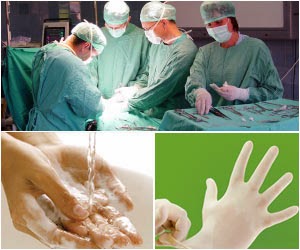
Preventing Health Care–Associated Infections
REFERENCIA:
Amy S. Collins. Chapter 41. Preventing Health Care-Associated Infections. From Patient Safety and Quality: An Evidence-Based Handbook for Nurses: Vol. 2.
-----------------------------------------------------------
Sigue este Blog en Facebook y Twitter
martes, 18 de noviembre de 2014
El virus de #Chikungunya

Algunos signos clínicos de esta enfermedad son iguales a los del dengue, con el que se puede confundir en zonas donde este es frecuente. Como no tiene tratamiento curativo, el tratamiento se centra en el alivio de los síntomas. Un factor de riesgo importante es la proximidad de las viviendas a lugares de cría de los mosquitos. La enfermedad se da en África, Asia y el subcontinente indio. En los últimos decenios los vectores de la enfermedad se han propagado a Europa y las Américas. En 2007 se notificó por vez primera la transmisión de la enfermedad en Europa, en un brote localizado en el nordeste de Italia.
REFERENCIAS:
- WHO Chikungunya factsheet ESP
- Chikungunya: un nuevo virus en la región de las Américas
- Cuidados para prevenir y tratar el chikungunya
- CHIKUNGUNYA VIRUS. PATHOGEN SAFETY DATA SHEET - INFECTIOUS SUBSTANCES
- CDC: Chikungunya
- CDC: Chikungunya. Información para el público
Sigue este Blog en Facebook y Twitter
sábado, 8 de noviembre de 2014
How to conduct safe and dignified burial of a #ebola patient
Overview
This protocol provides information on the safe management of dead bodies and burial of patients who died from suspected or confirmed Ebola virus disease. These measures should be applied not only by medical personnel but by anyone involved in the management of dead bodies and burial of suspected or confirmed Ebola patients. Twelve steps have been identified describing the different phases Burial Teams have to follow to ensure safe burials, starting from the moment the teams arrive in the village up to their return to the hospital or team headquarters after burial and disinfection procedures.
DOWNLOAD => How to conduct safe and dignified burial of a patient who has died from suspected or confirmed Ebola virus disease
Publication details
Number of pages: 17
Publication date: October 2014
Languages: English
WHO reference number: WHO/EVD/Guidance/Burials/14.2
Publication date: October 2014
Languages: English
WHO reference number: WHO/EVD/Guidance/Burials/14.2


NEWS:
W.H.O. Issues New Guidelines on Safely Burying Ebola Victims
-----------------------------------------------------------
lunes, 3 de noviembre de 2014
COURSE: Guidance for use of Personal Protective Equipment (PPE) During Management of Patients with #Ebola Virus
 |
| GO TO THE COURSE |
Prior to working with Ebola patients, all healthcare providers involved in the care of Ebola patients must receive training and demonstrate competency in performing all Ebola-related infection control practices and procedures, specifically in donning and doffing proper PPE.
REFERENCE:
Guidance for Donning and Doffing Personal Protective Equipment (PPE) During Management of Patients with Ebola Virus
-----------------------------------------------------------
Sigue este Blog en Facebook y Twitter
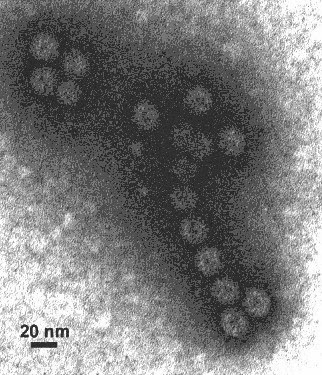
Plant-derived virus-like particles as vaccines
REFERENCE:
Chen Q1, Lai H. Hum Plant-derived virus-like particles as vaccines. Vaccin Immunother. 2013 Jan;9(1):26-49.
-----------------------------------------------------------
Sigue este Blog en Facebook y Twitter
viernes, 31 de octubre de 2014
Happy "Día de Muertos" (Day of the Deaths)
For our english-speaking visitors. Happy Halloween!. Here in México is "Día de Muertos" (Day of the Deaths), on November 1st, and 2nd. This year we will be walking around deaths. momies, vampires, and Catrinas...
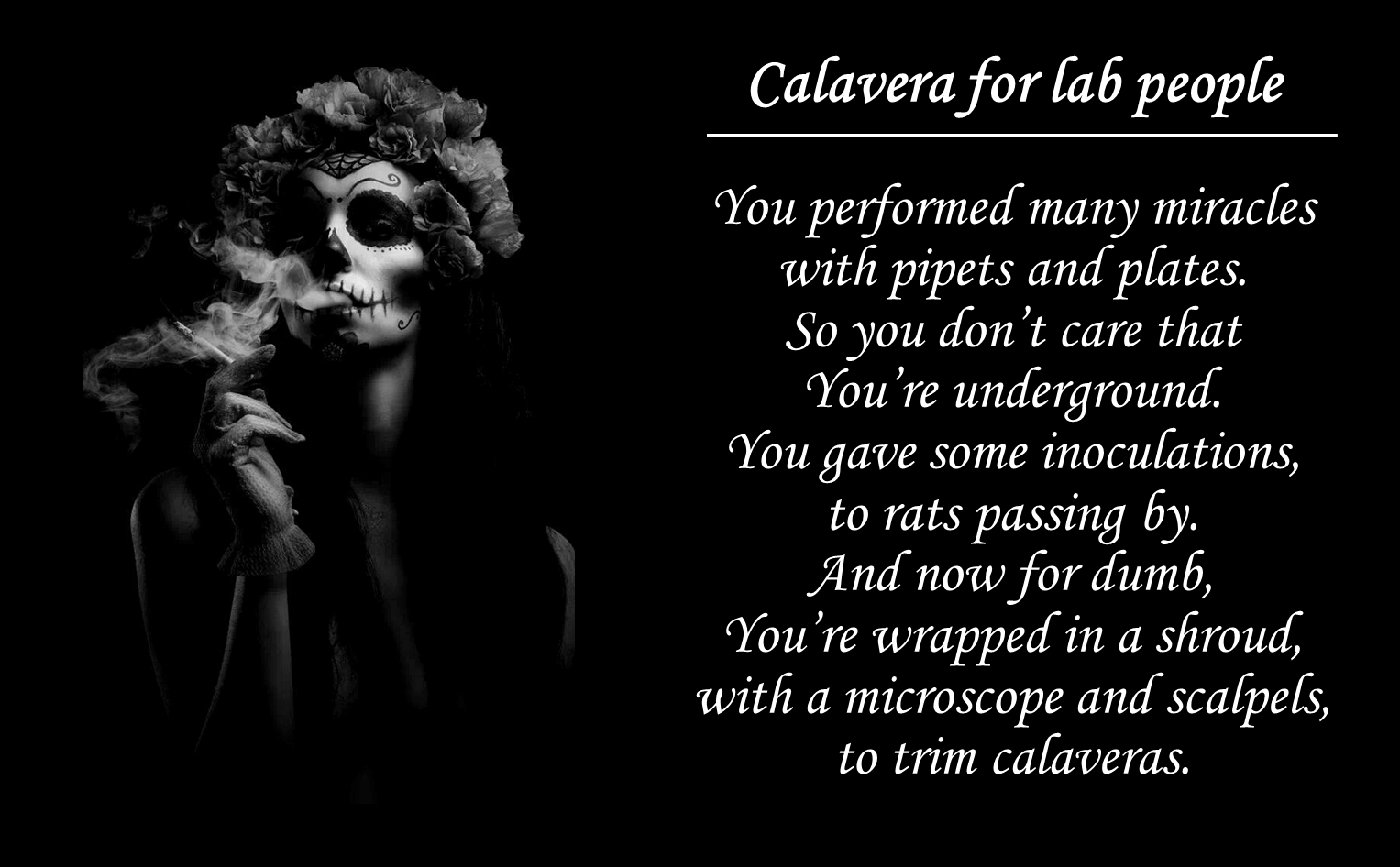
Literary Calaveras (skulls) are written as epitaphs for the living. It´s a fun way to remember the deaths. In local newspapers publish Calaveras from living politicians, also a way to make fun of them. Many calaveras were written about the individuals in a given profession. Butchers, teachers, priests, housekeepers, artists, mail carriers, and shopkeepers were all satirized by writers of calaveras. I´m giving you one... People goes to the pantheons, to sing, eat, and remember their love ones. Also they dress up, cook special food and big parties. It´s a nice time to visit México.
Literary Calaveras (skulls) are written as epitaphs for the living. It´s a fun way to remember the deaths. In local newspapers publish Calaveras from living politicians, also a way to make fun of them. Many calaveras were written about the individuals in a given profession. Butchers, teachers, priests, housekeepers, artists, mail carriers, and shopkeepers were all satirized by writers of calaveras. I´m giving you one... People goes to the pantheons, to sing, eat, and remember their love ones. Also they dress up, cook special food and big parties. It´s a nice time to visit México.
jueves, 30 de octubre de 2014
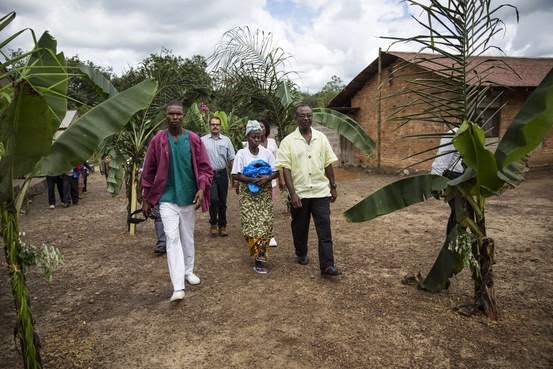
Control of #ebola virus disease - firestone district, Liberia, 2014
 |
| WSJ |
REFERENCE:
Reaves EJ, et al. Control of ebola virus disease - firestone district, Liberia, 2014. MMWR Morb Mortal Wkly Rep. 2014 Oct 24;63(42):959-65.
NEWS:
How Firestone Liberia’s unique approaches helped stem the spread of the ebola virus
Liberian Rubber Farm Becomes Sanctuary Against Ebola
-----------------------------------------------------------
Sigue este Blog en Facebook y Twitter
martes, 28 de octubre de 2014
Preguntas sobre #ébola
Cluster of #ebola cases among liberian and u.s. Health care workers in an ebola treatment unit and adjacent hospital - Liberia, 2014
 |
| aljazeera |
REFERENCE:
Forrester JD et al. Cluster of Ebola Cases Among Liberian and U.S. Health Care Workers in an Ebola Treatment Unit and Adjacent Hospital — Liberia, 2014. MMWR Morb Mortal Wkly Rep. 2014 Oct 17;63(41):925-9.
-----------------------------------------------------------
Sigue este Blog en Facebook y Twitter
lunes, 27 de octubre de 2014
Biologically hazardous agents at work and efforts to protect workers' health: a review of recent reports

REFERENCE:
Rim KT, Lim CH. Biologically hazardous agents at work and efforts to protect workers' health: a review of recent reports. Saf Health Work. Jun 2014; 5(2): 43–52.
-----------------------------------------------------------
Sigue este Blog en Facebook y Twitter
sábado, 18 de octubre de 2014
Consolidated #Ebola Virus Disease Preparedness Checklist
It identifies 10 key components and tasks for both countries and the international community that should be completed within 30, 60 and 90 days respectively from the date of issuing this list. Minimal required resources in terms of equipment and material as well as human resources are defined. Key reference documents such as guidelines, training manuals and guidance notes will help the technical experts to implement required action in the key components.
DESCARGA 1 / DESCARGA OPCIONAL
-----------------------------------------------------------
Sigue este Blog en Facebook y Twitter
viernes, 17 de octubre de 2014
OSHA: Cleaning and Decontamination of #Ebola on Surfaces

Workers tasked with cleaning surfaces that may be contaminated with Ebola virus, the virus that causes Ebola hemorrhagic fever (EHF), must be protected from exposure. Employers are responsible for ensuring that workers are protected from exposure to Ebola and that workers are not exposed to harmful levels of chemicals used for cleaning and disinfection.
DESCARGA A / DESCARGA B
----------------------------------------------------
Sigue este Blog en Facebook y Twitter
jueves, 16 de octubre de 2014
Mobile phones carry the personal microbiome of their owners

REFERENCE
Meadow JF, et al. Mobile phones carry the personal microbiome of their owners. PeerJ. 2014; 2: e447.
-----------------------------------------------------------
Sigue este Blog en Facebook y Twitter
martes, 14 de octubre de 2014
Back to basics: hand hygiene and isolation

Recent findings. Hand hygiene compliance is an accepted measure of quality and safety in many countries. The evidence for the efficacy of hand hygiene in directly reducing rates of hospital-acquired infections has strengthened in recent years, particularly in terms of reduced rates of staphylococcal sepsis. Defining the key components of effective implementation strategies and the ideal method(s) of assessing hand hygiene compliance are dependent on a range of factors associated with the healthcare system. Although patient isolation continues to be an important strategy, particularly in outbreaks, it also has some limitations and can be associated with negative effects. Recent detailed molecular epidemiology studies of key healthcare-acquired pathogens have questioned the true efficacy of isolation, alone as an effective method for the routine prevention of disease transmission.
Summary. Hand hygiene and isolation are key components of basic infection control. Recent insights into the benefits, limitations and even adverse effects of these interventions are important for their optimal implementation.
Keywords: alcohol-based hand rub, hand hygiene, hospital acquired infections, isolation, WHO
REFERENCE:
G. Khai Lin Huang, et al. Back to basics: hand hygiene and isolation. Curr Opin Infect Dis. Aug 2014; 27(4): 379–389.
-----------------------------------------------------------
Sigue este Blog en Facebook y Twitter
lunes, 13 de octubre de 2014
Día Mundial del Lavado de Manos, Octubre 15

 Este 15 de Octubre, la Organización Mundial de la Salud, en conjunto con la UNICEF celebran el Día Mundial del Lavado de Manos. Esta es una oportunidad para recordar a todos la importancia del Lavado de Manos. Infórmate y distribuye la información acerca de la importancia del lavado de manos en: http://globalhandwashing.org
Descarga los posters y manuales de la campaña de la UNICEF AQUI.
OTROS MATERIALES Y RECURSOS (INGLÉS)
 This course and promotional materials review key concepts of hand hygiene and other standard precautions to prevent healthcare-associated infections.
Promotional materials (Posters).
A variety of resources including guidelines for providers, patient empowerment materials, the latest technological advances in hand hygiene adherence measurement, frequently asked questions, and links to promotional and educational tools.
All health-care workers require clear and comprehensive training and education on the importance of hand hygiene, the "My 5 Moments for Hand Hygiene" approach and the correct procedures for handrubbing and handwashing.
Hygiene refers to behaviors that can improve cleanliness and lead to good health, such as frequent hand washing, face washing, and bathing with soap and water. In many areas of the world, practicing personal hygiene etiquette is difficult due to lack of clean water and soap. Many diseases can be spread if the hands, face, or body are not washed appropriately at key times.
Sigue este Blog en Facebook y Twitter

Suscribirse a:
Entradas (Atom)