REFERENCE
NIOSH Emergency First Responder Respirator Thermal Characteristics: Workshop Proceedings
National Institute of Standards and Technology Special Publication 1123
Natl. Inst. Stand. Technol. Spec. Publ. 1123, 52 pages (June 2011)


Benassai S. CLP Regulation and the transport of dangerous goods. Ann Ist Super
Sanita. 2011;47(2):153-6. doi: 10.4415/ANN_11_02_06. PubMed PMID: 21709384.
 |
Organización Panamericana de la Salud
“Manual de esterilización para centros de salud”
Washington, D.C.: OPS, © 2008
ISBN 978-92-75-32926-9 |
 |
| Types of respiratos usen in the study left: Drager; right: MSA |
Balkhyour MA. Evaluation of full-facepiece respirator fit on fire fighters in the municipality of Jeddah, Saudi Arabia. Int J Environ Res Public Health. 2013
Jan 14;10(1):347-60. doi: 10.3390/ijerph10010347. PubMed PMID: 23343987; PubMed
Central PMCID: PMC3564146.
 |
| ISBN: 978-9978-45-930-0 |
 |
| Biosafety precautions |
Elduma AH. Assessment of biosafety precautions in Khartoum state diagnostic laboratories, Sudan. Pan Afr Med J. 2012;11:19. Epub 2012 Feb 3. PubMed PMID:
22514753; PubMed Central PMCID: PMC3325057.
 |
| Black-light examination of the floor after the completion of study 1. |
Hickman-Davis JM, Nicolaus ML, Petty JM, Harrison DM, Bergdall VK.
Effectiveness of shoe covers for bioexclusion within an animal facility. J Am
Assoc Lab Anim Sci. 2012 Mar;51(2):181-8. PubMed PMID: 22776118; PubMed Central
PMCID: PMC3314521.

Kampf G, Ostermeyer C, Werner HP, Suchomel M. Efficacy of hand rubs with a lowalcohol concentration listed as effective by a national hospital hygiene society in Europe. Antimicrob Resist Infect Control. 2013 Jun 12;2(1):19. [Epub ahead of
print] PubMed PMID: 23759059; PubMed Central PMCID: PMC3689097.


Singh M, Sharma R, Gupta PK, Rana JK, Sharma M, Taneja N. Comparative efficacyevaluation of disinfectants routinely used in hospital practice: India. Indian J
Crit Care Med. 2012 Jul;16(3):123-9. doi: 10.4103/0972-5229.102067. PubMed PMID:
23188950; PubMed Central PMCID: PMC3506067

Oladeinde BH, Omoregie R, Odia I, Osakue EO, Imade OS. Biorisk assessment ofmedical diagnostic laboratories in Nigeria. Saf Health Work. 2013 Jun;4(2):100-4.
doi: 10.1016/j.shaw.2013.04.006. Epub 2013 Apr 25. PubMed PMID: 23961333.

 |
| Teaching microbiology laboratory www.mmg.msu.edu |
 |
| Vea imagen AQUI |
Oficiales de salud observan con horror como las bacterias llegan a ser resistente al poderoso antibiótico carbapenema, uno de los más recientes medicamentos en los estantes.Como regla, los oficiales de salud de alto rango evitan utilizar adjetivos apocalípticos. Por lo que fué preocupante escuchar a Thomas Frieden y Sally Davies advertir de la "pesadilla" que se acerca y de la "amenaza catastrófica" con pocos días de diferencia en Marzo.


 There is an increasing concern about the potential health hazards posed to workers exposed to inhalation of nanoparticles (NPs). Common sources of nanoparticles in working environments include fumes and exhausts from different processes like laser ablation and milling. Nanoparticles have potential toxic properties: a high particle surface area, number concentration, and surface reactivity. Inhalation, the most common route of nanoparticle exposure, has been shown to cause adverse effects on pulmonary functions, and the deposited particles in the lung can be translocated to the blood system by passing through the pulmonary protection barriers. Filtration is the simplest and most common method of aerosol control. It is widely used in mechanical ventilation and respiratory protection. However, concerns have been raised regarding the effectiveness of filters for capturing nanoparticles.
 Many workers are exposed to a range of particles present on a nanometric scale. In occupational hygiene, it is common to differentiate manufactured nanoparticles (NP) from ultrafine particles (UFP) coming from natural, human or industrial sources.
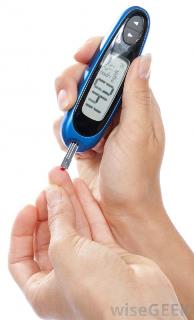
El monitoreo de los niveles de glucosa es parte integran del manejo rutinario de la diabetes. Para minimizar el riesgo de transmisión de patógenos transmisibles por la sangre, el CDC recomienta que los medidores de glucosa sean desinfectados después de cada uso, especialmente cuando es utilizado para pruebas en diferentes pacientes. El objetivo de este estudio es evaluar la compatibilidad de algunos desinfectantes comunes con ciertos sistemas de medición de glucosa en sangre.Monitoring blood glucose levels is an integral part of routine diabetes management. To minimize the risk of transmission of bloodborne pathogens during monitoring, the Centers for Disease Control and Prevention (CDC) recommends that glucose meters be disinfected after each use whenever they are used to test multiple patients. The objective of this study is to assess the compatibility of some common disinfectants with certain blood glucose meter systems.
 |
| Transportation fo Dangerous Goods Bulletin |
This Bulletin explains the requirements of the Transportation Dangerous Goods (TDG) Regulations when shipping infectious substances. It does not change, create, amend or allow deviations from the Transportation Dangerous Goods (TDG) Regulations. For specific details, consult the TDG Regulations.Las regulaciones para 2013-2014 de la Organización Mundial de la salud, fueron publicadas desde enero de este año, y pueden verlas aquí.
This publication provides information for identifying, classifying, marking, labelling, packaging, documenting and refrigerating infectious substances for transportation and ensuring their safe delivery. The document provides practical guidance to facilitate compliance with applicable international regulations for the transport of infectious substances by all modes of transport, both nationally and internationally.