Lista de correo. Espere su aprobación.
Correo electrónico:
Consultar este grupo

martes, 25 de febrero de 2014

Laboratory activities involving transmissible spongiform encephalopathy causing agents

Abstract
Since the appearance in 1986 of epidemic of bovine spongiform encephalopathy (BSE), a new form of neurological disease in cattle which also affected human beings, many diagnostic and research activities have been performed to develop detection and therapeutic tools. A lot of progress was made in better identifying, understanding and controlling the spread of the disease by appropriate monitoring and control programs in European countries. This paper reviews the recent knowledge on pathogenesis, transmission and persistence outside the host of prion, the causative agent of transmissible spongiform encephalopathies (TSE) in mammals with a particular focus on risk (re)assessment and management of biosafety measures to be implemented in diagnostic and research laboratories in Belgium. Also, in response to the need of an increasing number of European diagnostic laboratories stopping TSE diagnosis due to a decreasing number of TSE cases reported in the last years, decontamination procedures and a protocol for decommissioning TSE diagnostic laboratories is proposed.
REFERENCES:

lunes, 24 de febrero de 2014

Primera semana de salud 2014, del 22 al 28 de febrero #vacunas


Del 22 al 28 de febrero las acciones de vacunación se intensificarán a nivel nacional para aplicar vía oral la vacuna Sabin a menores de 5 años. Con esta actividad, ayudarás a mantener erradicada la Polio en nuestro país. 

No olvides llevar su Cartilla Nacional de Salud, en ella, el personal de enfermería registrará la aplicación de las vacunas.

Actividades complementarias: 

1. Aplicación de todas las vacunas para iniciar o completar esquemas de vacunación en los menores de ocho años de edad, mujeres en edad fértil y grupos poblacionales específicos.
2. Aplicación a embarazadas de la vacuna contra el tétanos, para proteger a sus bebés contra el tétanos neonatal.
3. Distribución de sobres para preparar soluciones hidratantes (Vida Suero Oral).
4. Proporcionar información a los responsables de menores de cinco años para su adecuado uso en el tratamiento de cuadro diarreico. 

Para mayor informacion visiten:

#Bioseguridad en redes sociales...

Las redes sociales nos ayudan a estar en contacto con ustedes. A continuación algunas donde pueden encontrarnos...

viernes, 21 de febrero de 2014

Convocatorias para el VI Simposio #AMexBio #SIBB14

VI Simposio Internacional de Bioseguridad y Biocustodia, 
En las instalaciones de la Universidad Autónoma de Nuevo León
Monterrey, Nuevo León, México.

CONVOCATORIA PARA IMPARTIR CURSOS PRESIMPOSIO 
Para propuestas de cursos presimposio a impartirse los días 4 y/o 5 de junio de 2014. Las propuestas serán recibidas del hasta el 1° de marzo de 2014.

Para presentar trabajos libres los días 6 al 7 de junio de 2014. Los resúmenes serán recibidos hasta el 10 de abril de 2014

Descargar en => http://amexbio.org/

viernes, 14 de febrero de 2014

Productos #AMexBio #sibb2014

Miembros AMexBio $130.- (MXP)
Público en general $180.- (MXP)
+ gastos de envío.
Adquiérelo en:
 www.amexbio.wildapricot.org
Podrán registrarse a los cursos del simposio, registrar su membresía, obtener información, adquirir productos de la AMexBio, y otros a través de la página: http://amexbio.wildapricot.org/
Además, podrán recibir información directa de la AMexBio, en su correo electrónico.

Este año 2014, festejamos el quinto aniversario de la Asociación Mexicana de Bioseguridad A.C.  www.amexbio.org

PRÓXIMAMENTE:
VI Simposio Internacional de Bioseguridad y Biocustodia
4 - 7 junio 2014
Monterrey, Nuevo León, México
Invitan: Asociación Mexicana de Bioseguridad y Universidad Autónoma de Nuevo León.

viernes, 7 de febrero de 2014

LIBRO: Preparación y repuesta a la entrada de virus #chikungunya en lasAméricas

La fiebre chikungunya (CHIK) es una enfermedad emergente transmitida por mosquitos y causada por un alfavirus, el virus chikungunya (CHIKV). Esta enfermedad es transmitida principalmente por los mosquitos Aedes aegypti y Ae. albopictus, las mismas especies involucradas en la transmisión del dengue. Estas guías fueron concebidas para ser adaptadas por cada País Miembro. Están diseñadas para mejorar los conocimientos sobre esta amenaza y para brindar las herramientas necesarias que permitan establecer las estrategias más adecuadas para prevenir la importación de CHIKV a la Región, o para su control en caso de introducción. Proporcionan orientación sobre cómo detectar un brote de la enfermedad, desarrollar las investigaciones epidemiológicas pertinentes y prevenir o mitigar la diseminación de la enfermedad en la Región. 

viernes, 31 de enero de 2014

#VIDEOS: Toma de muestras para diagnóstico de #influenza #EPP #Transporte

EQUIPO DE PROTECCIÓN PERSONAL PARA 
TOMA DE MUESTRAS NASOFARÍNGEAS  

 TOMA DE MUESTRAS NASOFARINGEAS  

 EMPAQUE DE MUESTRAS

Curso: Capacitación en prevención de infecciones respiratorias #Influenza

Cómo utilizar los módulos de capacitación
Los módulos de capacitación están divididos en 6 presentaciones, complementarias más independientes. Se espera que el comité de control de infecciones o equipo responsable por educación del personal en salud utilicen estas presentaciones para la actualización del personal de salud y comunidad en el tema de medidas de prevención y control de infecciones con enfoque en las enfermedades respiratorias.
Se sugiere también que antes y después de la capacitación los participantes sean evaluados con la "Evaluación de la capacitación" para que se pueda saber cuál es el impacto de la capacitación en el conocimiento del personal de salud sobre el tema.
REFERENCIA:
Curso: Capacitación en prevención de infecciones en los servicios de salud con enfoque en las enfermedades respiratorias

lunes, 27 de enero de 2014

jueves, 23 de enero de 2014

Tuberculosis Laboratory #Biosafety Manual


Overview
Laboratory biosafety is the process of applying a combination of administrative controls, containment principles, practices and procedures, safety equipment, emergency preparedness, and facilities to enable laboratory staff to work safely with potentially infectious microorganisms; biosafety also aims at preventing unintentional exposure to pathogens or their accidental release. This manual describes the minimum biosafety measures that should be implemented at the different levels of tuberculosis (TB) testing laboratories to reduce the risk of a laboratory-acquired infection.
Contents
Introduction
1. Risk assessment and the classification of TB laboratories
2. Essential biosafety measures for TB laboratories
3. Low-risk TB laboratories
4. Moderate-risk TB laboratories
5. High-risk TB laboratories (TB-containment laboratories)
6. Safety equipment
7. Personal protective equipment and clothing
8. Plans for emergency preparedness and response
9. References

Tuberculosis Laboratory Biosafety Manual
Geneva: World Health Organization; 2012.
ISBN-13: 978-92-4-150463-8
Copyright and Permissions

PDF version of this title (929K)

lunes, 20 de enero de 2014

Apoyen a la #AMexBio.

Con membresía $90.- (MXP)
Público en general $120.- (MXP)
+ gastos de envío.
Adquiérelo en:
www.amexbio.wildapricot.org
Podrán registrarse a los cursos del simposio, registrar su membresía, obtener información, adquirir productos de la AMexBio, y otros a través de la página:
Además, podrán recibir información directa de la AMexBio, en su correo electrónico.

Este año 2014, festejamos el quinto aniversario de la Asociación Mexicana de Bioseguridad A.C.

PRÓXIMAMENTE:
VI Simposio Internacional de Bioseguridad y Biocustodia
4 - 7 junio 2014
Monterrey, Nuevo León, México
Invitan: Asociación Mexicana de Bioseguridad y Universidad Autónoma de Nuevo León.

ABSL-4 Aerobiology Biosafety and Technology...

Abstract
The overall threat of a viral pathogen to human populations is largely determined by the modus operandi and velocity of the pathogen that is transmitted among humans. Microorganisms that can spread by aerosol are considered a more challenging enemy than those that require direct body-to-body contact for transmission, due to the potential for infection of numerous people rather than a single individual. Additionally, disease containment is much more difficult to achieve for aerosolized viral pathogens than for pathogens that spread solely via direct person-to-person contact. Thus, aerobiology has become an increasingly necessary component for studying viral pathogens that are naturally or intentionally transmitted by aerosol. The goal of studying aerosol viral pathogens is to improve public health preparedness and medical countermeasure development. Here, we provide a brief overview of the animal biosafety level 4 Aerobiology Core at the NIH/NIAID Integrated Research Facility at Fort Detrick, Maryland, USA.
REFERENCE:
Lackemeyer MG, Kok-Mercado Fd, Wada J, Bollinger L, Kindrachuk J, Wahl-Jensen V, Kuhn JH, Jahrling PB. ABSL-4 Aerobiology Biosafety and Technology at the NIH/NIAID Integrated Research Facility at Fort Detrick. Viruses. 2014 Jan 7;6(1):137-50. doi: 10.3390/v6010137. PubMed PMID: 24402304.

viernes, 10 de enero de 2014

Synthetic biology and biosecurity. From low levels of awareness to a comprehensive strategy

Photo: Mashable
Synthetic biology has become one of the most dynamic research fields in the life sciences. In reality, though, the term is used to cover a host of different approaches rather than a single defined discipline; these range from the large-scale assembly of DNA segments to the development of new tools and technology platforms, and to the search for the minimal cell and the origins of life. The evolution of the field has also been accompanied by the recognition that the concomitant shift in biology from a descriptive to a predictive science, and the technologies that will ensue, bring with them a range of potential societal implications and dangers.
REFERENCE:
Kelle A. Synthetic biology and biosecurity. From low levels of awareness to a comprehensive strategy. EMBO Rep. 2009 Aug;10 Suppl 1:S23-7.

martes, 7 de enero de 2014

Containing the accidental laboratory escape of potential pandemic influenza viruses.

Abstract
BACKGROUND:
The recent work on the modified H5N1 has stirred an intense debate on the risk associated with the accidental release from biosafety laboratory of potential pandemic pathogens. Here, we assess the risk that the accidental escape of a novel transmissible influenza strain would not be contained in the local community.
METHODS:
We develop here a detailed agent-based model that specifically considers laboratory workers and their contacts in microsimulations of the epidemic onset. We consider the following non-pharmaceutical interventions: isolation of the laboratory, laboratory workers' household quarantine, contact tracing of cases and subsequent household quarantine of identified secondary cases, and school and workplace closure both preventive and reactive.
RESULTS:
Model simulations suggest that there is a non-negligible probability (5% to 15%), strongly dependent on reproduction number and probability of developing clinical symptoms, that the escape event is not detected at all. We find that the containment depends on the timely implementation of non-pharmaceutical interventions and contact tracing and it may be effective (>90% probability per event) only for pathogens with moderate transmissibility (reproductive number no larger than R₀ = 1.5). Containment depends on population density and structure as well, with a probability of giving rise to a global event that is three to five times lower in rural areas.
CONCLUSIONS:
Results suggest that controllability of escape events is not guaranteed and, given the rapid increase of biosafety laboratories worldwide, this poses a serious threat to human health. Our findings may be relevant to policy makers when designing adequate preparedness plans and may have important implications for determining the location of new biosafety laboratories worldwide.

REFERENCE
1: Merler S, Ajelli M, Fumanelli L, Vespignani A. Containing the accidental laboratory escape of potential pandemic influenza viruses. BMC Med. 2013 Nov
28;11:252

Oversight and Review of Clinical Gene Transfer Protocols

Excerpt
Gene transfer research is a rapidly advancing field that involves the introduction of a genetic sequence into a human subject for research or diagnostic purposes. Clinical gene transfer trials are subject to regulation by the U.S. Food and Drug Administration (FDA) at the federal level and to oversight by institutional review boards (IRBs) and institutional biosafety committees (IBCs) at the local level before human subjects can be enrolled. In addition, at present all researchers and institutions funded by the National Institutes of Health (NIH) are required by NIH guidelines to submit human gene transfer protocols for advisory review by the NIH Recombinant DNA Advisory Committee (RAC). Some protocols are then selected for individual review and public discussion. Oversight and Review of Clinical Gene Transfer Protocols provides an assessment of the state of existing gene transfer science and the current regulatory and policy context under which research is investigated. This report assesses whether the current oversight of individual gene transfer protocols by the RAC continues to be necessary and offers recommendations concerning the criteria the NIH should employ to determine whether individual protocols should receive public review. The focus of this report is on the standards the RAC and NIH should use in exercising its oversight function. Oversight and Review of Clinical Gene Transfer Protocols will assist not only the RAC, but also research institutions and the general public with respect to utilizing and improving existing oversight processes.
REFERENCE:
National Research Council. Oversight and Review of Clinical Gene Transfer Protocols: Assessing the Role of the Recombinant DNA Advisory Committee. Washington, DC: The National Academies Press, 2014.

viernes, 13 de diciembre de 2013

VIDEO: Películas recomendadas para estas vacaciones

1. World War Z (2013)

2. How to survive a Plague (2012)


3. Perfect Sense (2012)


4. Antiviral (2012)


5. Contagion (2011)


6. Carriers (2009)


7. Andromeda Strain (2008)


8. 28 days later (2002)

jueves, 5 de diciembre de 2013

Hepatitis C Virus Maintains Infectivity for Weeks

ABSTRACT
Background:
Healthcare workers may come into contact with fomites containing infectious HCV during preparation of plasma, or following placement or removal of venous lines. Similarly, injection drugs users may come into contact with fomites. Hypothesizing that prolonged viability of HCV in fomites may contribute significantly to incidence; we determined the longevity of virus infectivity and the effectiveness of antiseptics.
Methods: We determined the volume of drops misplaced during transfer of serum or plasma. Aliquots equivalent to the maximum drop volume of plasma spiked with 2a HCV reporter virus were loaded into 24-well plates. Plates were stored uncovered at three temperatures: 4°, 22°, and 37°C for up to 6 weeks before viral infectivity was determined in a microculture assay.
Results: The mean volume of an accidental drop was 29 μl (min - max of 20 - 33 μl). At storage temperatures 4° and 22°C, we recovered viable HCV from the low titer spots for up to 6 weeks of storage. The rank order of HCV virucidal activity of commonly used antiseptics was bleach (1:10) > cavicide (1:10) > ethanol (70%).
Conclusions:
The hypothesis of potential transmission from fomites was supported by the experimental results. The anti-HCV activity of commercial antiseptics varied. 

Reference

Elijah Paintsil1, Mawuena Binka2, Amisha Patel2, Brett D. Lindenbach3, and Robert Heimer2. Hepatitis C Virus Maintains Infectivity for Weeks after Drying on Inanimate Surfaces at Room Temperature: Implications for Risks of Transmission. JID 2013.

http://jid.oxfordjournals.org/content/early/2013/11/22/infdis.jit648.full.pdf

miércoles, 4 de diciembre de 2013

Global Health Risks (2009)

Una descripción de las enfermedades y lesiones, así como los factores de riesgo que los causan, que son vitales para las decisiones de salud y planeación.

=> DESCARGAR <=
Global Health Risks (2009)
ISBN 978 92 4 156387 1
© World Health Organization 2009

domingo, 24 de noviembre de 2013

#REGENESIS: TV SERIES <= No se la pierdan #Feliz2014

Recomendaciones para fin de año.
Estas navidades, en las que tendremos mucho tiempo, les recomiento ver la serie de TV "Regenesis".
Esta serie canadiense se estrenó el 2004, con 4 temporadas, y se canceló en 2007. Se puedo ver por la cadena FX Latin America y en Science Discovery. Pueden ver la lista completa de capítulos aquí. Desafortunadamente es dificil verla ahora por cable, pero pueden comprarla. Pueden ver algunos clips aquí. En USA puede verse en hulu.com.
David Sandstrom es un científico, genetista, virólogo/microbiólogo, jefe de un laboratorio que se dedica a investigar las causas de diversas enfermedades misteriosas, y que originan la muerte de diversas personas. Una combinación de serie policíaca/forense con tonos de microbiología. Aunque cuenta con algunas inexactitudes científicas, pero considerando el año en que empezó a producirse, logra captar la atención del espectador. No se la pueden perder.


jueves, 21 de noviembre de 2013

Responsible life sciences research for global health security #DURC

"Dual use research of concern (DURC)", es el término en inglés que hace referencia a aquella investigación científica que aunque se realiza con fines benéficos, podría utilizarse para hacer daño. 
La posibilidad de le la investigación con doble uso pueda ser utilizada equivocadamente, intencional o no intencionalmente, es una preocupación a largo plazo en la ciencia. Los temas son amplios y en concordancia no sólo con la investigación y la salud pública, sino también con la seguridad, las publicaciones científicas y la comunicación al público, por lo que la biotecnología, la ética son temas muy amplios.
DESCARGAR =>

Responsible life sciences research for global health security #DURC


Publication details

Publication date2010
LanguagesEnglish
WHO reference numberWHO/HSE/GAR/BDP/2010.2


#Book : People, pathogens and our planet Vol. 2

People, pathogens and our planet Vol. 2
This report analyzes and assesses the benefits and the costs of control of an important group of contagious diseases. Zoonotic diseases are caused by pathogens that can infect both animals and humans, resulting in disease outbreaks, including epidemics in humans and epizootics in animals. These diseases account for 70 percent of emerging infectious  diseases. In the absence of timely disease control, zoonotic pathogens can cause pandemics, with potentially catastrophic impacts that are global in scale. The report also touches on food safety, but does not cover other risks and opportunities at the interfaces between humans, animals, and the ecosystem, such as food security and pollution. Limiting its focus to this topic matter has important advantages, particularly with respect to immediate relevance and relative simplicity.

=> DESCARGAR <=

miércoles, 20 de noviembre de 2013

#Book : People, pathogens and our planet Vol. 1


People, pathogens and our planet : the economics of one health (English) Vol. 1
This study aims to build on the findings from the previously mentioned studies, and seeks to provide more detailed information on the costs of the various functions and categories of expenditure involved in the establishment and operation of system for the prevention and control of emerging zoonotic diseases at country and global level. It will also seek to provide information on efficiency and effectiveness gains that will result from the introduction of a One Health approach. With these aims, the study has two target audiences: (a) project planners, who will benefit from the information of the costs of setting up surveillance and control systems to be used as benchmarks when planning preparedness and control operations; and (b) policy planners at the decision-making level, who would use the information on the efficiency and effectiveness gains to guide them in the decision-making process regarding the eventual introduction of One Health. This report disaggregates costs by task, making explicit those activities that are critical for effectiveness and identifying scope for efficiencies. The analysis draws on a range of data sources and earlier work, including integrated national action plans for, and World Bank staff appraisal reports on, avian and pandemic influenzas responses, a survey of the directors of wildlife services, assessments of veterinary systems in developing countries, and OIE (Office International des Epizooties - World Organization for Animal Health) analyses of disease prevention systems. 

DETAILS

  • 2012/06/01
  • Other Agricultural Study
  • 69145
  • 1 of 1
  • World
  • The World Region
  • 2012/06/11
  • People, pathogens and our planet : the economics of one health
=> DESCARGAR <= 

sábado, 9 de noviembre de 2013

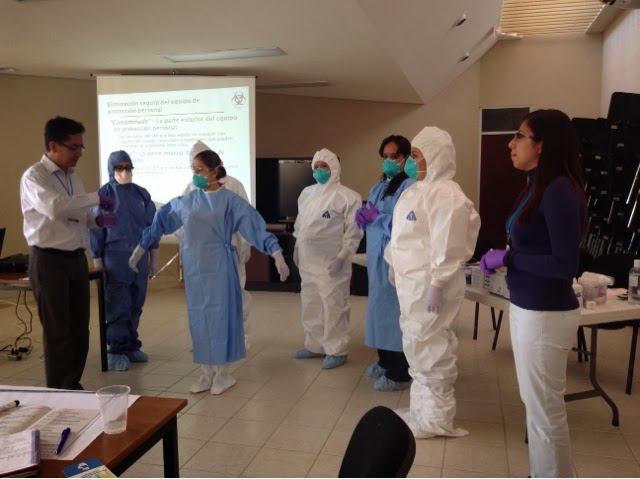
Sesión de entrenamiento en Capasits/COESIDA en #Oaxaca #bioseguridad

Sesión de entrenamiento básico en equipo de proteción personal...
Capasits/COESIDA en Oaxaca 
Noviembre 6, 2013.
Gracias por participar