Lista de correo. Espere su aprobación.
Correo electrónico:
Consultar este grupo

viernes, 31 de enero de 2014

#VIDEOS: Toma de muestras para diagnóstico de #influenza #EPP #Transporte

EQUIPO DE PROTECCIÓN PERSONAL PARA 
TOMA DE MUESTRAS NASOFARÍNGEAS  

 TOMA DE MUESTRAS NASOFARINGEAS  

 EMPAQUE DE MUESTRAS

Curso: Capacitación en prevención de infecciones respiratorias #Influenza

Cómo utilizar los módulos de capacitación
Los módulos de capacitación están divididos en 6 presentaciones, complementarias más independientes. Se espera que el comité de control de infecciones o equipo responsable por educación del personal en salud utilicen estas presentaciones para la actualización del personal de salud y comunidad en el tema de medidas de prevención y control de infecciones con enfoque en las enfermedades respiratorias.
Se sugiere también que antes y después de la capacitación los participantes sean evaluados con la "Evaluación de la capacitación" para que se pueda saber cuál es el impacto de la capacitación en el conocimiento del personal de salud sobre el tema.
REFERENCIA:
Curso: Capacitación en prevención de infecciones en los servicios de salud con enfoque en las enfermedades respiratorias

lunes, 27 de enero de 2014

jueves, 23 de enero de 2014

Tuberculosis Laboratory #Biosafety Manual


Overview
Laboratory biosafety is the process of applying a combination of administrative controls, containment principles, practices and procedures, safety equipment, emergency preparedness, and facilities to enable laboratory staff to work safely with potentially infectious microorganisms; biosafety also aims at preventing unintentional exposure to pathogens or their accidental release. This manual describes the minimum biosafety measures that should be implemented at the different levels of tuberculosis (TB) testing laboratories to reduce the risk of a laboratory-acquired infection.
Contents
Introduction
1. Risk assessment and the classification of TB laboratories
2. Essential biosafety measures for TB laboratories
3. Low-risk TB laboratories
4. Moderate-risk TB laboratories
5. High-risk TB laboratories (TB-containment laboratories)
6. Safety equipment
7. Personal protective equipment and clothing
8. Plans for emergency preparedness and response
9. References

Tuberculosis Laboratory Biosafety Manual
Geneva: World Health Organization; 2012.
ISBN-13: 978-92-4-150463-8
Copyright and Permissions

PDF version of this title (929K)

lunes, 20 de enero de 2014

Apoyen a la #AMexBio.

Con membresía $90.- (MXP)
Público en general $120.- (MXP)
+ gastos de envío.
Adquiérelo en:
www.amexbio.wildapricot.org
Podrán registrarse a los cursos del simposio, registrar su membresía, obtener información, adquirir productos de la AMexBio, y otros a través de la página:
Además, podrán recibir información directa de la AMexBio, en su correo electrónico.

Este año 2014, festejamos el quinto aniversario de la Asociación Mexicana de Bioseguridad A.C.

PRÓXIMAMENTE:
VI Simposio Internacional de Bioseguridad y Biocustodia
4 - 7 junio 2014
Monterrey, Nuevo León, México
Invitan: Asociación Mexicana de Bioseguridad y Universidad Autónoma de Nuevo León.

ABSL-4 Aerobiology Biosafety and Technology...

Abstract
The overall threat of a viral pathogen to human populations is largely determined by the modus operandi and velocity of the pathogen that is transmitted among humans. Microorganisms that can spread by aerosol are considered a more challenging enemy than those that require direct body-to-body contact for transmission, due to the potential for infection of numerous people rather than a single individual. Additionally, disease containment is much more difficult to achieve for aerosolized viral pathogens than for pathogens that spread solely via direct person-to-person contact. Thus, aerobiology has become an increasingly necessary component for studying viral pathogens that are naturally or intentionally transmitted by aerosol. The goal of studying aerosol viral pathogens is to improve public health preparedness and medical countermeasure development. Here, we provide a brief overview of the animal biosafety level 4 Aerobiology Core at the NIH/NIAID Integrated Research Facility at Fort Detrick, Maryland, USA.
REFERENCE:
Lackemeyer MG, Kok-Mercado Fd, Wada J, Bollinger L, Kindrachuk J, Wahl-Jensen V, Kuhn JH, Jahrling PB. ABSL-4 Aerobiology Biosafety and Technology at the NIH/NIAID Integrated Research Facility at Fort Detrick. Viruses. 2014 Jan 7;6(1):137-50. doi: 10.3390/v6010137. PubMed PMID: 24402304.

viernes, 10 de enero de 2014

Synthetic biology and biosecurity. From low levels of awareness to a comprehensive strategy

Photo: Mashable
Synthetic biology has become one of the most dynamic research fields in the life sciences. In reality, though, the term is used to cover a host of different approaches rather than a single defined discipline; these range from the large-scale assembly of DNA segments to the development of new tools and technology platforms, and to the search for the minimal cell and the origins of life. The evolution of the field has also been accompanied by the recognition that the concomitant shift in biology from a descriptive to a predictive science, and the technologies that will ensue, bring with them a range of potential societal implications and dangers.
REFERENCE:
Kelle A. Synthetic biology and biosecurity. From low levels of awareness to a comprehensive strategy. EMBO Rep. 2009 Aug;10 Suppl 1:S23-7.

martes, 7 de enero de 2014

Containing the accidental laboratory escape of potential pandemic influenza viruses.

Abstract
BACKGROUND:
The recent work on the modified H5N1 has stirred an intense debate on the risk associated with the accidental release from biosafety laboratory of potential pandemic pathogens. Here, we assess the risk that the accidental escape of a novel transmissible influenza strain would not be contained in the local community.
METHODS:
We develop here a detailed agent-based model that specifically considers laboratory workers and their contacts in microsimulations of the epidemic onset. We consider the following non-pharmaceutical interventions: isolation of the laboratory, laboratory workers' household quarantine, contact tracing of cases and subsequent household quarantine of identified secondary cases, and school and workplace closure both preventive and reactive.
RESULTS:
Model simulations suggest that there is a non-negligible probability (5% to 15%), strongly dependent on reproduction number and probability of developing clinical symptoms, that the escape event is not detected at all. We find that the containment depends on the timely implementation of non-pharmaceutical interventions and contact tracing and it may be effective (>90% probability per event) only for pathogens with moderate transmissibility (reproductive number no larger than R₀ = 1.5). Containment depends on population density and structure as well, with a probability of giving rise to a global event that is three to five times lower in rural areas.
CONCLUSIONS:
Results suggest that controllability of escape events is not guaranteed and, given the rapid increase of biosafety laboratories worldwide, this poses a serious threat to human health. Our findings may be relevant to policy makers when designing adequate preparedness plans and may have important implications for determining the location of new biosafety laboratories worldwide.

REFERENCE
1: Merler S, Ajelli M, Fumanelli L, Vespignani A. Containing the accidental laboratory escape of potential pandemic influenza viruses. BMC Med. 2013 Nov
28;11:252

Oversight and Review of Clinical Gene Transfer Protocols

Excerpt
Gene transfer research is a rapidly advancing field that involves the introduction of a genetic sequence into a human subject for research or diagnostic purposes. Clinical gene transfer trials are subject to regulation by the U.S. Food and Drug Administration (FDA) at the federal level and to oversight by institutional review boards (IRBs) and institutional biosafety committees (IBCs) at the local level before human subjects can be enrolled. In addition, at present all researchers and institutions funded by the National Institutes of Health (NIH) are required by NIH guidelines to submit human gene transfer protocols for advisory review by the NIH Recombinant DNA Advisory Committee (RAC). Some protocols are then selected for individual review and public discussion. Oversight and Review of Clinical Gene Transfer Protocols provides an assessment of the state of existing gene transfer science and the current regulatory and policy context under which research is investigated. This report assesses whether the current oversight of individual gene transfer protocols by the RAC continues to be necessary and offers recommendations concerning the criteria the NIH should employ to determine whether individual protocols should receive public review. The focus of this report is on the standards the RAC and NIH should use in exercising its oversight function. Oversight and Review of Clinical Gene Transfer Protocols will assist not only the RAC, but also research institutions and the general public with respect to utilizing and improving existing oversight processes.
REFERENCE:
National Research Council. Oversight and Review of Clinical Gene Transfer Protocols: Assessing the Role of the Recombinant DNA Advisory Committee. Washington, DC: The National Academies Press, 2014.

viernes, 13 de diciembre de 2013

VIDEO: Películas recomendadas para estas vacaciones

1. World War Z (2013)

2. How to survive a Plague (2012)


3. Perfect Sense (2012)


4. Antiviral (2012)


5. Contagion (2011)


6. Carriers (2009)


7. Andromeda Strain (2008)


8. 28 days later (2002)

jueves, 5 de diciembre de 2013

Hepatitis C Virus Maintains Infectivity for Weeks

ABSTRACT
Background:
Healthcare workers may come into contact with fomites containing infectious HCV during preparation of plasma, or following placement or removal of venous lines. Similarly, injection drugs users may come into contact with fomites. Hypothesizing that prolonged viability of HCV in fomites may contribute significantly to incidence; we determined the longevity of virus infectivity and the effectiveness of antiseptics.
Methods: We determined the volume of drops misplaced during transfer of serum or plasma. Aliquots equivalent to the maximum drop volume of plasma spiked with 2a HCV reporter virus were loaded into 24-well plates. Plates were stored uncovered at three temperatures: 4°, 22°, and 37°C for up to 6 weeks before viral infectivity was determined in a microculture assay.
Results: The mean volume of an accidental drop was 29 μl (min - max of 20 - 33 μl). At storage temperatures 4° and 22°C, we recovered viable HCV from the low titer spots for up to 6 weeks of storage. The rank order of HCV virucidal activity of commonly used antiseptics was bleach (1:10) > cavicide (1:10) > ethanol (70%).
Conclusions:
The hypothesis of potential transmission from fomites was supported by the experimental results. The anti-HCV activity of commercial antiseptics varied. 

Reference

Elijah Paintsil1, Mawuena Binka2, Amisha Patel2, Brett D. Lindenbach3, and Robert Heimer2. Hepatitis C Virus Maintains Infectivity for Weeks after Drying on Inanimate Surfaces at Room Temperature: Implications for Risks of Transmission. JID 2013.

http://jid.oxfordjournals.org/content/early/2013/11/22/infdis.jit648.full.pdf
miércoles, 4 de diciembre de 2013

Global Health Risks (2009)

Una descripción de las enfermedades y lesiones, así como los factores de riesgo que los causan, que son vitales para las decisiones de salud y planeación.

=> DESCARGAR <=
Global Health Risks (2009)
ISBN 978 92 4 156387 1
© World Health Organization 2009

domingo, 24 de noviembre de 2013

#REGENESIS: TV SERIES <= No se la pierdan #Feliz2014

Recomendaciones para fin de año.
Estas navidades, en las que tendremos mucho tiempo, les recomiento ver la serie de TV "Regenesis".
Esta serie canadiense se estrenó el 2004, con 4 temporadas, y se canceló en 2007. Se puedo ver por la cadena FX Latin America y en Science Discovery. Pueden ver la lista completa de capítulos aquí. Desafortunadamente es dificil verla ahora por cable, pero pueden comprarla. Pueden ver algunos clips aquí. En USA puede verse en hulu.com.
David Sandstrom es un científico, genetista, virólogo/microbiólogo, jefe de un laboratorio que se dedica a investigar las causas de diversas enfermedades misteriosas, y que originan la muerte de diversas personas. Una combinación de serie policíaca/forense con tonos de microbiología. Aunque cuenta con algunas inexactitudes científicas, pero considerando el año en que empezó a producirse, logra captar la atención del espectador. No se la pueden perder.


jueves, 21 de noviembre de 2013

Responsible life sciences research for global health security #DURC

"Dual use research of concern (DURC)", es el término en inglés que hace referencia a aquella investigación científica que aunque se realiza con fines benéficos, podría utilizarse para hacer daño. 
La posibilidad de le la investigación con doble uso pueda ser utilizada equivocadamente, intencional o no intencionalmente, es una preocupación a largo plazo en la ciencia. Los temas son amplios y en concordancia no sólo con la investigación y la salud pública, sino también con la seguridad, las publicaciones científicas y la comunicación al público, por lo que la biotecnología, la ética son temas muy amplios.
DESCARGAR =>

Responsible life sciences research for global health security #DURC


Publication details

Publication date2010
LanguagesEnglish
WHO reference numberWHO/HSE/GAR/BDP/2010.2


#Book : People, pathogens and our planet Vol. 2

People, pathogens and our planet Vol. 2
This report analyzes and assesses the benefits and the costs of control of an important group of contagious diseases. Zoonotic diseases are caused by pathogens that can infect both animals and humans, resulting in disease outbreaks, including epidemics in humans and epizootics in animals. These diseases account for 70 percent of emerging infectious  diseases. In the absence of timely disease control, zoonotic pathogens can cause pandemics, with potentially catastrophic impacts that are global in scale. The report also touches on food safety, but does not cover other risks and opportunities at the interfaces between humans, animals, and the ecosystem, such as food security and pollution. Limiting its focus to this topic matter has important advantages, particularly with respect to immediate relevance and relative simplicity.

=> DESCARGAR <=

miércoles, 20 de noviembre de 2013

#Book : People, pathogens and our planet Vol. 1


People, pathogens and our planet : the economics of one health (English) Vol. 1
This study aims to build on the findings from the previously mentioned studies, and seeks to provide more detailed information on the costs of the various functions and categories of expenditure involved in the establishment and operation of system for the prevention and control of emerging zoonotic diseases at country and global level. It will also seek to provide information on efficiency and effectiveness gains that will result from the introduction of a One Health approach. With these aims, the study has two target audiences: (a) project planners, who will benefit from the information of the costs of setting up surveillance and control systems to be used as benchmarks when planning preparedness and control operations; and (b) policy planners at the decision-making level, who would use the information on the efficiency and effectiveness gains to guide them in the decision-making process regarding the eventual introduction of One Health. This report disaggregates costs by task, making explicit those activities that are critical for effectiveness and identifying scope for efficiencies. The analysis draws on a range of data sources and earlier work, including integrated national action plans for, and World Bank staff appraisal reports on, avian and pandemic influenzas responses, a survey of the directors of wildlife services, assessments of veterinary systems in developing countries, and OIE (Office International des Epizooties - World Organization for Animal Health) analyses of disease prevention systems. 

DETAILS

  • 2012/06/01
  • Other Agricultural Study
  • 69145
  • 1 of 1
  • World
  • The World Region
  • 2012/06/11
  • People, pathogens and our planet : the economics of one health
=> DESCARGAR <= 

sábado, 9 de noviembre de 2013

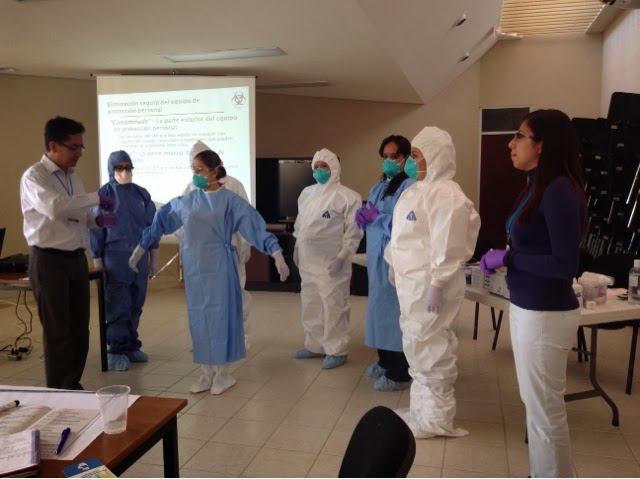
Sesión de entrenamiento en Capasits/COESIDA en #Oaxaca #bioseguridad

Sesión de entrenamiento básico en equipo de proteción personal...
Capasits/COESIDA en Oaxaca 
Noviembre 6, 2013.
Gracias por participar

jueves, 7 de noviembre de 2013

Infecciones con Salmonella en laboratorio de microbiología universitario #LAI

On May 2, 2013, a case of salmonellosis was reported to the Maine Center for Disease Control and Prevention. The patient reported symptoms of diarrhea, fever, abdominal pain, and nausea, after attending a community college microbiology laboratory class. A second case was reported on May 8. Epidemiologic interviews conducted with both patients indicated common exposure at a community college, including one patient specifically naming the other patient.
On May 15, the Health and Environmental Testing Laboratory (HETL) determined that the clinical Salmonella isolates from stool specimens provided by outside hospital laboratories from both patients were indistinguishable by pulsed field gel electrophoresis (PFGE) analysis from a specimen used by the students during the microbiology class. The clinical isolates and laboratory class isolate all had a PFGE pattern indistinguishable from that of bacteria isolated during a national Salmonella Typhimurium outbreak in 2010 that was associated with clinical and teaching microbiology laboratories (1). No cases were reported from Maine during the 2010 outbreak. CONTINUA=>

lunes, 4 de noviembre de 2013

¡Los hospitales no se incendian!

¡Los hospitales no se incendian! Guía hospitalaria para la prevención de incendios y evacuación

Esta guía ha sido creada para poner de relieve la vulnerabilidad de los hospitales a los incendios. Es necesario que se adopten todas las medidas posibles para minimizar el riesgo de incendios en hospitales y asegurar la evacuación. El documento se puede aplicar en hospitales que han sido reforzados para mejorar la seguridad en cuanto a incendios, así como en nuevas instalaciones en proyecto.
El documento está dividido en cuatro secciones principales a considerarse en caso de incendio en hospitales, a saber, prevención, supresión, evacuación y simulacros de capacitación.
REFERENCIA:

lunes, 21 de octubre de 2013

Antimicrobial Resistance in the Food Chain: A Review

Overview of horizontal gene transfer in food products
(For complete image click HERE).
Antimicrobial resistant zoonotic pathogens present on food constitute a direct risk to public health. Antimicrobial resistance genes in commensal or pathogenic strains form an indirect risk to public health, as they increase the gene pool from which pathogenic bacteria can pick up resistance traits. Food can be contaminated with antimicrobial resistant bacteria and/or antimicrobial resistance genes in several ways. A first way is the presence of antibiotic resistant bacteria on food selected by the use of antibiotics during agricultural production. A second route is the possible presence of resistance genes in bacteria that are intentionally added during the processing of food (starter cultures, probiotics, bioconserving microorganisms and bacteriophages). A last way is through cross-contamination with antimicrobial resistant bacteria during food processing. Raw food products can be consumed without having undergone prior processing or preservation and therefore hold a substantial risk for transfer of antimicrobial resistance to humans, as the eventually present resistant bacteria are not killed. As a consequence, transfer of antimicrobial resistance genes between bacteria after ingestion by humans may occur. Under minimal processing or preservation treatment conditions, sublethally damaged or stressed cells can be maintained in the food, inducing antimicrobial resistance build-up and enhancing the risk of resistance transfer. Food processes that kill bacteria in food products, decrease the risk of transmission of antimicrobial resistance.
REFERENCIA:
Verraes C. Antimicrobial Resistance in the Food Chain: A Review. Int J Environ Res Public Health. 2013 July; 10(7): 2643–2669.

viernes, 18 de octubre de 2013

Influence of temperature and organic load on chemical disinfection

ABSTRACT:
This study evaluated the influence of temperature and organic load on the effectiveness of domestic bleach (DB), Surface Decontamination Foam (SDF), and Virkon in inactivating Geobacillus stearothermophilus spores, which are a surrogate for Bacillus anthracis spores. The spores were suspended in light or heavy organic preparations and the suspension was applied to stainless steel carrier disks. The dried spore inoculum was covered with the disinfectants and the disks were then incubated at various temperatures. At −20°C, the 3 disinfectants caused less than a 2.0 log10 reduction of spores in both organic preparations during a 24-h test period. At 4°C, the DB caused a 4.4 log10 reduction of spores in light organic preparations within 2 h, which was about 3 log10 higher than what was achieved with SDF or Virkon. In heavy organic preparations, after 24 h at 4°C the SDF had reduced the spore count by 4.5 log10, which was about 2 log10 higher than for DB or Virkon. In general, the disinfectants were most effective at 23°C but a 24-h contact time was required for SDF and Virkon to reduce spore counts in both organic preparations by at least 5.5 log10. Comparable disinfecting activity with DB only occurred with the light organic load. In summary, at temperatures as low as 4°C, DB was the most effective disinfectant, inactivating spores within 2 h on surfaces with a light organic load, whereas SDF produced the greatest reduction of spores within 24 h on surfaces with a heavy organic load.
REFERENCE:
Jiewen Guan, Maria Chan, Brian W. Brooks, and Liz Rohonczy. Influence of temperature and organic load on chemical disinfection of Geobacillus steareothermophilus spores, a surrogate for Bacillus anthracis. Can J Vet Res. 2013 April; 77(2): 100–104.

jueves, 17 de octubre de 2013

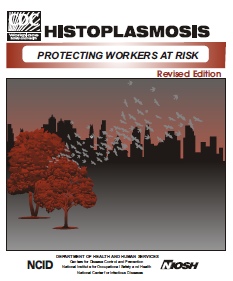
Histoplasmosis: Protecting Workers at Risk

This booklet is a revised edition of the NIOSH document Histoplasmosis: Protecting Workers at Risk, which was originally published in September 1997. The updated information in this booklet will help readers under­ stand what histoplasmosis is and recognize activities that may expose workers to the disease-causing fungus  Histoplasma capsulatum. The booklet also informs readers about methods they can use to protect themselves and others from exposure.
Outbreaks of histoplasmosis have shared similar circumstances: People who did not know the health risks of  breathing in the spores of H. capsulatum became ill and sometimes caused others nearby to become ill when they disturbed contaminated soil or accumulations of bird or bat manure. Because they were unaware of the hazard, they did not take protective measures that could have prevented illness.
This booklet will help prevent such exposures by serving as a guide for safety and health professionals, environmental consultants, supervisors, and others responsible for the safety and health of those working near material contaminated with H. capsulatum. Activities that pose a health risk to workers at these sites include disturbance of soil at an active or inactive bird roost or poultry house, excavation in regions where this  fungus is endemic, and removal of bat or bird manure from buildings.
REFERENCE:
Histoplasmosis: Protecting Workers at Risk. NIOSH/CDC 2003

miércoles, 16 de octubre de 2013

Technologies to Enable Autonomous Detection for BioWatch


Technologies to Enable Autonomous Detection for BioWatch is the summary of a workshop hosted jointly by the Institute of Medicine and the National Research Council in June 2013 to explore alternative cost-effective systems that would meet the requirements for a BioWatch Generation 3.0 autonomous detection system, or autonomous detector, for aerosolized agents . The workshop discussions and presentations focused on examination of the use of four classes of technologies--nucleic acid signatures, protein signatures, genomic sequencing, and mass spectrometry--that could reach Technology Readiness Level (TRL) 6-plus in which the technology has been validated and is ready to be tested in a relevant environment over three different tiers of temporal timeframes: those technologies that could be TRL 6-plus ready as part of an integrated system by 2016, those that are likely to be ready in the period 2016 to 2020, and those are not likely to be ready until after 2020. Technologies to Enable Autonomous Detection for BioWatch discusses the history of the BioWatch program, the role of public health officials and laboratorians in the interpretation of BioWatch data and the information that is needed from a system for effective decision making, and the current state of the art of four families of technology for the BioWatch program. This report explores how the technologies discussed might be strategically combined or deployed to optimize their contributions to an effective environmental detection capability.
Paperback
300 pages | 6 x 9 
ISBN 978-0-309-29251-1

lunes, 14 de octubre de 2013

Oct 15, Día Mundial del Lavado de Manos #IWashMyHands

Un gesto tan simple como lavarse las manos con agua y jabón puede ser clave para la supervivencia de millones de personas, sobre todo de los más pequeños. Los niños y niñas son especialmente vulnerables a los efectos de la diarrea y de las infecciones respiratorias, enfermedades que se pueden prevenir fácilmente y de forma barata con un poco de agua y jabón. Este día quiere servir como recordatorio de la importancia de esta práctica
El Día Mundial del Lavado de Manos es un llamamiento para concientizar a la población de que un poco de agua y jabón pueden salvar muchas vidas. Este día se celebra por primera vez este 15 de octubre en 70 países de los cinco contienentes. Es la primera vez en la historia en la que una campaña mundial pide a millones de personas que laven sus manos con agua y jabón
Referencias:
Global Hand Washing
UNICEF