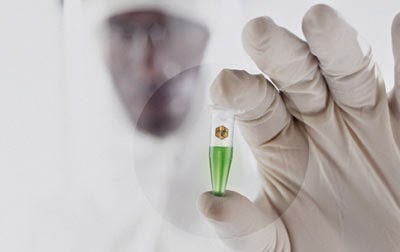
Flow cytometric cell sorting of biological specimens has become prevalent in basic and clinical research laboratories. These specimens may contain known or unknown infectious agents, necessitating precautions to protect instrument operators and the environment from biohazards arising from the use of sorters. To this end the International Society of Analytical Cytology (ISAC) was proactive in establishing biosafety guidelines in 1997 (Schmid et al., Cytometry 1997;28:99–117) and subsequently published revised biosafety standards for cell sorting of unfixed samples in 2007 (Schmid et al., Cytometry Part A J Int Soc Anal Cytol 2007;71A:414–437). Since their publication, these documents have become recognized worldwide as the standard of practice and safety precautions for laboratories performing cell sorting experiments. However, the field of cytometry has progressed since 2007, and the document requires an update. The new Standards provides guidance: (1) for laboratory design for cell sorter laboratories; (2) for the creation of laboratory or instrument specific Standard Operating Procedures (SOP); and (3) on procedures for the safe operation of cell sorters, including personal protective equipment (PPE) and validation of aerosol containment. REFERENCE: Kevin L. Holmes, et al. International Society for the Advancement of Cytometry Cell Sorter Biosafety Standards. Cytometry A. 2014 May; 85(5): 434–453.
-----------------------------------------------------------
Sigue este Blog en Facebook y Twitter
Lo que vio aquel día, es el comienzo de esta historia. El era un observador maniático; pero ¿a quién, sino a un hombre tan singular se le habría ocurrido observar algo tan poco interesante: una de las millones de gotas de agua que caen del cielo? Su hija María, de 19 años, que cuidaba cariñosamente a su extravagante padre, lo contemplaba, mientras él, completamente abstraído, cogía un tubito de cristal, lo calentaba al rojo vivo y lo estiraba hasta darle el grosor de un cabello... María adoraba a su padre. ¡Ay del vecino que se permitiera burlarse de él! Pero, ¿qué demonios se proponía hacer con ese tubito capilar?
Ahora, nuestro distraído hombre, con ojos dilatados, rompe el tubo en pedacitos, sale al jardín y se inclina sobre una vasija de barro que hay allí para medir la cantidad de lluvia caída. Regresa al laboratorio, enfila el tubito de cristal en la aguja del microscopio...
De pronto se oye su agitada voz :
—¡Ven aquí! ¡Rápido! ¡En el agua de lluvia hay unos bichitos! ¡Nadan! ¡Dan vueltas! ¡Son mil veces más pequeños que cualquiera de los bichos que podemos ver a simple vista! ¡Mira lo que he descubierto!
El 28 de julio de cada año, la OMS y sus asociados conmemoran el Día Mundial contra la Hepatitis con el objetivo de acrecentar la sensibilización y la comprensión de la hepatitis viral y las enfermedades que provoca. La hepatitis viral – un grupo de enfermedades infecciosas que comprende las hepatitis A, B, C, D y E – afecta a millones de personas en todo el mundo, puesto que provoca hepatopatías agudas y crónicas y causa la muerte de cerca de 1,4 millones de personas cada año. A pesar de ello, la hepatitis sigue siendo una enfermedad en gran medida olvidada o desconocida.
El Día Mundial contra la Hepatitis ofrece una oportunidad para centrar la atención en medidas específicas tales como:
fortalecer las actividades de prevención, detección y control de la hepatitis viral y sus enfermedades conexas;
aumentar la cobertura vacunal contra la hepatitis B e incorporar la vacuna en los programas nacionales de inmunización;
coordinar una respuesta mundial contra la hepatitis viral.
El Día Mundial contra la Hepatitis se fijó el 28 de julio en honor del descubridor del virus de la hepatitis B, Profesor Baruch Samuel Blumberg, galardonado con el Premio Nobel, nacido ese día.
REFERENCIAS:
=> Más información (OMS) <=
=> Información de la OPS <=
--------------------------------------------
Sigue este Blog en Facebook y Twitter
The APHIS/CDC Form 3, Report of Theft, Loss or Release of Select Agents and Toxins(TLR incident report) is the mechanism by which the theft, loss or release of a biological select agent and toxin (BSAT) is reported to the United States Department of Agriculture (USDA)/Animal and Plant Health Inspection Service (APHIS) or Health and Human Services (HHS)/ Center for Disease Control and Prevention (CDC). A total of seven hundred and twenty seven (727) TLR Incident Reports were received by CDC between 2004 and 2010.
The U.S. Army's Special Immunizations Program is an important component of an overall biosafety program for laboratory workers at risk of exposure to hazardous pathogens. The program provides immunizations to scientists, laboratory technicians and other support staff who work with certain hazardous pathogens and toxins. Although first established to serve military personnel, the program was expanded through a cost-sharing agreement in 2004 to include other government and civilian workers, reflecting the expansion in biodefense research in recent years. Protecting the Frontline in Biodefense Research examines issues related to the expansion of the Special Immunizations Program, considering the regulatory frameworks under which the vaccines are administered, how additional vaccines might be considered for inclusion in the Program, and factors that might influence the development and manufacturing of vaccines for the Special Immunizations Program. REFERENCE:
National Research Council. Protecting the Frontline in Biodefense Research: The Special Immunizations Program. Washington, DC: The National Academies Press, 2011.
-----------------------------------------------------------
Sigue este Blog en Facebook y Twitter
Biological agents pose a serious threat to human health, economic development, social stability and even national security. The classification of biological agents is a basic requirement for both biosafety and biodefense. We compared and analyzed the Biological Agent Laboratory Biosafety Category list and the defining criteria according to the World Health Organization (WHO), the National Institutes of Health (NIH), the European Union (EU) and China. We also compared and analyzed the Biological Agent Biodefense Category list and the defining criteria according to the Centers for Disease Control and Prevention (CDC) of the United States, the EU and Russia. The results show some inconsistencies among or between the two types of category lists and criteria. We suggest that the classification of biological agents based on laboratory biosafety should reduce the number of inconsistencies and contradictions. Developing countries should also produce lists of biological agents to direct their development of biodefense capabilities.To develop a suitable biological agent list should also strengthen international collaboration and cooperation.
REFERENCE:
Tian D, Zheng T. Comparison and analysis of biological agent category lists based on biosafety and biodefense. PLoS One. 2014 Jun 30;9(6):e101163.
-----------------------------------------------------------
Sigue este Blog en Facebook y Twitter
La fiebre chikungunya es una enfermedad vírica transmitida al ser humano por mosquitos infectados. Además de fiebre y fuertes dolores articulares, produce otros síntomas, tales como dolores musculares, dolores de cabeza, náuseas, cansancio y erupciones cutáneas. Algunos signos clínicos de esta enfermedad son iguales a los del dengue, con el que se puede confundir en zonas donde este es frecuente. Como no tiene tratamiento curativo, el tratamiento se centra en el alivio de los síntomas. Un factor de riesgo importante es la proximidad de las viviendas a lugares de cría de los mosquitos. A partir de 2004 la fiebre chikungunya ha alcanzado proporciones epidémicas, y es causa de considerables sufrimientos y morbilidad. La enfermedad se da en África, Asia y el subcontinente indio. En los últimos decenios los vectores de la enfermedad se han propagado a Europa y las Américas. En 2007 se notificó por vez primera la transmisión de la enfermedad en Europa, en un brote localizado en el nordeste de Italia.
En México, se ha reportado el primer caso en Junio de 2014.
REFERENCIAS:
ABSTRACT (partial). Background. We determined the efficacy of several SDCs against clinically relevant bacterial species with and without common types of multidrug resistance. Methods. Bacteria species used were ATCC strains; clinical isolates classified as antibiotic-susceptible; and multi-resistant clinical isolates. The five evaluated SDCs were based on alcohol and an amphoteric substance (AAS), an oxygen-releaser (OR), surface-active substances (SAS), or surface-active-substances plus aldehydes (SASA; two formulations). Bactericidal concentrations of SDCs were determined at two different contact times. Efficacy was defined as a log10 ≥ 5 reduction in bacterial cell count. Results. SDCs based on AAS, OR, and SAS were effective against all six species irrespective of the degree of multi-resistance. The SASA formulations were effective against the bacteria irrespective of degree of multi-resistance except for one of the four P. aeruginosa isolates (VIM-1). We found no general correlation between SDC efficacy and degree of antibiotic resistance. Conclusions. SDCs were generally effective against gram-negative bacteria with and without multidrug resistance. SDCs are therefore suitable for surface disinfection in the immediate proximity of patients. Single bacterial isolates, however, might have reduced susceptibility to selected biocidal agents.
Global biosecurity engagement programs designed to prevent misuse of biological agents and pathogens internationally have increased dramatically under the National Strategy for Countering Biological Threats (NSCBT), which outlined the commitment of the United States Government towards advancing health security.
But it is difficult to measure the effectiveness of these programs in improving biosecurity given that there have been relatively few attempts to misuse the life sciences. Current metrics that focus on outputs (what was done) as opposed to outcomes (the impact of what was done) have not been helpful in determining how these efforts might be improved in the future. With these metrics in mind, the goals of the programs have traditionally been more quantitative in nature – for example, increasing the number of agents secured and number of scientists engaged. Broadening the scope of biosecurity engagement metrics can help align program goals with a more qualitative approach that prioritizes the international partner’s global health security. Such an approach will be more efficient and successful in improving global and U.S. national biosecurity.
Esta nueva edición de Conceptos básicos de control de infecciones de IFIC, se elaboró sobre la base de las versiones anteriores. Con un enfoque científico, profundiza y actualiza los conocimientos necesarios para sostener el desarrollo de políticas y procedimientos locales. Este libro está enfocado a las áreas hospitalarias.
Un panel internacional de expertos revisó y actualizó la mayoría de los capítulos. Además se incorporaron secciones nuevas, con el fin de asegurar que esta edición ofrecería un completo y sólido caudal de conocimientos.
REFERENCE:
IFIC’s Basic Concepts of Infection Control, 2nd Edition, 2011
La ciencia y la tecnología avanzan vertiginosamente. El derecho no es indiferente a ese progreso. Temas como la modificación genética y la biotecnología deben ser analizados cuidadosamente, no sólo desde el punto de vista legal, sino también científico. Por esa razón, es importante conocer a través de especialistas los conceptos básicos que nos permitan entender el fenómeno. En tal sentido, con el ánimo de contribuir a la actualización de los miembros del Poder Judicial de la Federación y de quienes aspiran pertenecer a él, en temas de novedad e importancia significativa, se delineó el presente Ciclo de Conferencias
sobre Biotecnología y Derecho.
Al finalizar el ciclo de conferencias, el alumno:
1. Distinguirá en qué consisten los organismos genéticamente modificados.
2. Conocerá el marco jurídico aplicable en materia de bioseguridad y organismos genéticamente modificados.
3. Contará con un panorama general sobre Biotecnología e innovación científica.
Dirigido al público en general interesado en el tema. CONVOCATORIA - REGISTRO
AVISO 1: el día 1 de junio se cerrará el sistema de registro en línea. Si desea registrarse le pedimos que lo haga directamente en sede, pero por favor considere la disponibilidad de espacios. AVISO 2. Quedan POCOS lugares para los cursos presimposio de: - Planificación, Diseño y Construcción de laboratorios de Contención - Cabinas de Seguridad Biológica - Regulación para Organismos Genéticamente Modificados
Ya están CERRADOS (llenos) los cursos presimposio de: - Evaluación de Riesgos desde la perspectiva de Bioseguridad - Comités de bioseguridad institucionales - Desarrollo de Manuales de Bioseguridad y Biocustodia para laboratorios
Diferentes organizaciones de salud emitieronrecomendaciones de salud para los viajeros a la copa del mundo en Brasil en Junio. Estas recomendaciones incluyen:
Contratar un seguro médico del viajero, en caso de emergencias. Pregunte en su agencia de viajes.
Preparar un kit de salud del viajero. Incluir medicamentos que pueden ser de utilidad en caso de emergencia, como por ejemplo: anti-histamínicos, anti-ácidos, antisépticos, repelente de mosquitos, etc.
VACUNAS recomendadas:
Varicela
Poliomelitis
Influenza
Sarampión, paperas, rubéola (MMR)
Difteria, tétanos, pertusis
Fiebre amarilla
Rabia
Hepatitis A y hepatitis B
VEAel resto de las recomendaciones en las siguientes páginas:
In this study, we aimed to determine knowledge levels regarding Crimean-Congo hemorrhagic fever (CCHF) among emergency healthcare workers (HCWs) in an endemic region. A questionnaire form consisting of questions about CCHF was applied to the participants. The mean age was 29.6 ± 6.5 years (range 19 - 45). Fifty-four (49.5%) participants were physicians, 39 (35.8%) were nurses and 16 (14.7%) were paramedics. All of the participants were aware of CCHF, and 48 (44%) of them had previously followed CCHF patients. Rates of the use of protective equipment (masks and gloves) during interventions for patients who were admitted to the emergency service with active hemorrhage were 100% among paramedics, 76.9% among nurses and 61.1% among physicians (P = 0.003). Among 86 (78.9%) HCWs who believed that their knowledge regarding CCHF was adequate, 62 (56.9%) declared that they would prefer not to care for patients with CCHF (P = 0.608). The use of techniques to prevent transmission of this disease, including gloves, face masks, face visors and box coats, should be explained to emergency room HCWs, and encouragement should be provided for using these techniques.
REFERENCE
Yolcu S. et. al. Knowledge Levels Regarding Crimean-Congo Hemorrhagic Fever Among Emergency Healthcare Workers in an Endemic Region. J Clin Med Res. Jun 2014; 6(3): 197–204.
--------------------------------------------
Sigue este Blog en Facebook and Twitter
The history of the investigation of standardized mycobactericidal activity of disinfectants and antiseptics is not very long. There is growing interest among the manufacturers of disinfectants in carrying out research on the antimicrobial activities in accordance with European standards (EN). This research could facilitate the introduction of high-quality disinfectants to the market. The aim of this study was to evaluate the mycobactericidal activity of selected chemical disinfectants and antiseptics used in the medical and veterinary fields.
REFERENCE:
Bocian E. et al. Evaluation of mycobactericidal activity of selected chemical disinfectants and antiseptics according to European standards. Med Sci Monit. 2014; 20: 666–673.
--------------------------------------------
Sigue este Blog en Facebook y Twitter
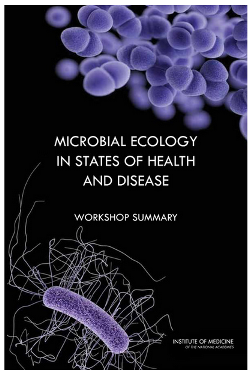
Individually and collectively, resident microbes play important roles in host health and survival. Shaping and shaped by their host environments, these microorganisms form intricate communities that are in a state of dynamic equilibrium. This ecologic and dynamic view of host-microbe interactions is rapidly redefining our view of health and disease. It is now accepted that the vast majority of microbes are, for the most part, not intrinsically harmful, but rather become established as persistent, co-adapted colonists in equilibrium with their environment, providing useful goods and services to their hosts while deriving benefits from these host associations. Disruption of such alliances may have consequences for host health, and investigations in a wide variety of organisms have begun to illuminate the complex and dynamic network of interaction - across the spectrum of hosts, microbes, and environmental niches - that influence the formation, function, and stability of host-associated microbial communities.
Microbial Ecology in States of Health and Disease is the summary of a workshop convened by the Institute of Medicine's Forum on Microbial Threats in March 2013 to explore the scientific and therapeutic implications of microbial ecology in states of health and disease. Participants explored host-microbe interactions in humans, animals, and plants; emerging insights into how microbes may influence the development and maintenance of states of health and disease; the effects of environmental change(s) on the formation, function, and stability of microbial communities; and research challenges and opportunities for this emerging field of inquiry.
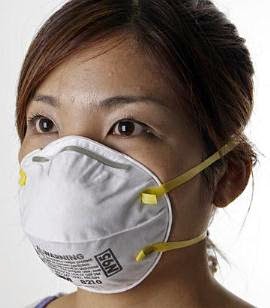
Millions of people rely on N95 filtering facepiece respirators to reduce the risk of airborne particles and prevent them from respiratory infections. However, there are no respirator fit testing and training regulations in China. Meanwhile, no study has been conducted to investigate the fit of various respirators. The objective of this study was to investigate whether people obtained adequate fit when wearing N95 filtering facepiece respirators (FFRs) used widely in China. Fifty adult participants selected using the Chinese respirator fit test panel donned 10 common models of N95 FFRs. Fit factors (FF) and inward leakage were measured using the TSI PortaCount Plus. Each subject was tested with three replications for each model. A subject was considered to pass the fit test when at least two of the three FFs were greater than 100. Two models were conducted fit tests before and after training to assess the role of training.
REFERENCE:
Yu et al. Fitting Characteristics of N95 Filtering-Facepiece Respirators Used Widely in China. PLoS One. 2014; 9(1): e85299.
--------------------------------------------
Sigue este Blog en Facebook y Twitter.
Coronaviruses are a large family of viruses that cause a range of illnesses in humans, from the common cold to the Severe Acute Respiratory Syndrome (SARS). Viruses in this family also cause a number of animal diseases. Middle East respiratory syndrome coronavirus (MERS-CoV).
This strain of coronavirus that causes MERS was first identified in 2012 in Saudi Arabia. Our understanding of the virus and the disease it causes is continuing to evolve. UPDATE: May 15th, 2014. The cases of laboratory confirmed MERS-CoV have been reported from Jordan, Lebanon, the Netherlands, the United Arab Emirates, and the United States.
--------------------------------------------
Sigue este Blog en Facebook y Twitter.
Sustainable and effective control of dengue is hampered due to a number of factors, including the lack of evidence-based, locally relevant interventions; insufficient information regarding key components of virus transmission and vector ecology; failure to implement precise and efficient surveillance systems; inefficient healthcare systems; ineffective health promotion and outreach resulting in lack of community dialogue and participation; and a paucity of efficient diagnostic strategies and clinical attention. Increased research efforts in response to the complexity of this problem have focused on the development of novel technologies that would enhance existing tools for vector-borne disease prevention. Genetic strategies to reduce or replace mosquito populations and thereby interrupt transmission of dengue viruses are among the new approaches being considered. Many of these approaches take advantage of molecular genetic tools to engineer traits that cause lethal phenotypes or confer resistance to the pathogen in the mosquito.
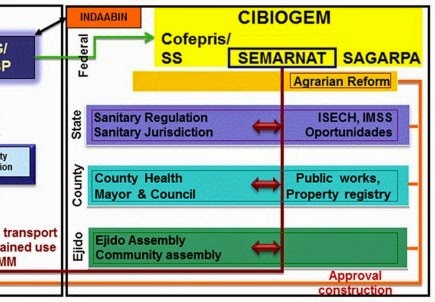
We addressed the regulatory challenges associated with testing a strain of Aedes aegypti engineered to result in population suppression in contained field trials in southwestern Mexico.
REFERENCE:
Ramsey JM et. al. A Regulatory Structure for Working with Genetically Modified Mosquitoes: Lessons from Mexico. PLoS Negl Trop Dis. Mar 2014; 8(3): e2623.
--------------------------------------------
Sigue este Blog en Facebook and Twitter.
Complete Middle East respiratory syndrome coronavirus (MERS-CoV) genome sequences were obtained from nasal swabs of dromedary camels sampled in the Kingdom of Saudi Arabia through direct analysis of nucleic acid extracts or following virus isolation in cell culture. Consensus dromedary MERS-CoV genome sequences were the same with either template source and identical to published human MERS-CoV sequences. However, in contrast to individual human cases, where only clonal genomic sequences are reported, detailed population analyses revealed the presence of more than one genomic variant in individual dromedaries. If humans are truly infected only with clonal virus populations, we must entertain a model for interspecies transmission of MERS-CoV wherein only specific genotypes are capable of passing bottleneck selection.
REFERENCIA:
Briese T, et al. 2014. Middle East respiratory syndrome coronavirus quasispecies that include homologues of human isolates revealed through whole-genome analysis and virus cultured from dromedary camels in Saudi Arabia. mBio 5(3):e01146-14. doi:10.1128/mBio.01146-14.
--------------------------------------------
Sigue este Blog en Facebooky Twitter.