¡Los hospitales no se incendian! Guía hospitalaria para la prevención de incendios y evacuación
Esta guía ha sido creada para poner de relieve la vulnerabilidad de los hospitales a los incendios. Es necesario que se adopten todas las medidas posibles para minimizar el riesgo de incendios en hospitales y asegurar la evacuación. El documento se puede aplicar en hospitales que han sido reforzados para mejorar la seguridad en cuanto a incendios, así como en nuevas instalaciones en proyecto.
El documento está dividido en cuatro secciones principales a considerarse en caso de incendio en hospitales, a saber, prevención, supresión, evacuación y simulacros de capacitación.
REFERENCIA:
|
lunes, 4 de noviembre de 2013
¡Los hospitales no se incendian!

lunes, 21 de octubre de 2013
Antimicrobial Resistance in the Food Chain: A Review
 |
| Overview of horizontal gene transfer in food products (For complete image click HERE). |
REFERENCIA:
Verraes C. Antimicrobial Resistance in the Food Chain: A Review. Int J Environ Res Public Health. 2013 July; 10(7): 2643–2669.
viernes, 18 de octubre de 2013
Influence of temperature and organic load on chemical disinfection

This study evaluated the influence of temperature and organic load on the effectiveness of domestic bleach (DB), Surface Decontamination Foam (SDF), and Virkon in inactivating Geobacillus stearothermophilus spores, which are a surrogate for Bacillus anthracis spores. The spores were suspended in light or heavy organic preparations and the suspension was applied to stainless steel carrier disks. The dried spore inoculum was covered with the disinfectants and the disks were then incubated at various temperatures. At −20°C, the 3 disinfectants caused less than a 2.0 log10 reduction of spores in both organic preparations during a 24-h test period. At 4°C, the DB caused a 4.4 log10 reduction of spores in light organic preparations within 2 h, which was about 3 log10 higher than what was achieved with SDF or Virkon. In heavy organic preparations, after 24 h at 4°C the SDF had reduced the spore count by 4.5 log10, which was about 2 log10 higher than for DB or Virkon. In general, the disinfectants were most effective at 23°C but a 24-h contact time was required for SDF and Virkon to reduce spore counts in both organic preparations by at least 5.5 log10. Comparable disinfecting activity with DB only occurred with the light organic load. In summary, at temperatures as low as 4°C, DB was the most effective disinfectant, inactivating spores within 2 h on surfaces with a light organic load, whereas SDF produced the greatest reduction of spores within 24 h on surfaces with a heavy organic load.
REFERENCE:
Jiewen Guan, Maria Chan, Brian W. Brooks, and Liz Rohonczy. Influence of temperature and organic load on chemical disinfection of Geobacillus steareothermophilus spores, a surrogate for Bacillus anthracis. Can J Vet Res. 2013 April; 77(2): 100–104.
jueves, 17 de octubre de 2013
Histoplasmosis: Protecting Workers at Risk
Outbreaks of histoplasmosis have shared similar circumstances: People who did not know the health risks of breathing in the spores of H. capsulatum became ill and sometimes caused others nearby to become ill when they disturbed contaminated soil or accumulations of bird or bat manure. Because they were unaware of the hazard, they did not take protective measures that could have prevented illness.
This booklet will help prevent such exposures by serving as a guide for safety and health professionals, environmental consultants, supervisors, and others responsible for the safety and health of those working near material contaminated with H. capsulatum. Activities that pose a health risk to workers at these sites include disturbance of soil at an active or inactive bird roost or poultry house, excavation in regions where this fungus is endemic, and removal of bat or bird manure from buildings.
REFERENCE:
Histoplasmosis: Protecting Workers at Risk. NIOSH/CDC 2003
miércoles, 16 de octubre de 2013
Technologies to Enable Autonomous Detection for BioWatch
Technologies to Enable Autonomous Detection for BioWatch is the summary of a workshop hosted jointly by the Institute of Medicine and the National Research Council in June 2013 to explore alternative cost-effective systems that would meet the requirements for a BioWatch Generation 3.0 autonomous detection system, or autonomous detector, for aerosolized agents . The workshop discussions and presentations focused on examination of the use of four classes of technologies--nucleic acid signatures, protein signatures, genomic sequencing, and mass spectrometry--that could reach Technology Readiness Level (TRL) 6-plus in which the technology has been validated and is ready to be tested in a relevant environment over three different tiers of temporal timeframes: those technologies that could be TRL 6-plus ready as part of an integrated system by 2016, those that are likely to be ready in the period 2016 to 2020, and those are not likely to be ready until after 2020. Technologies to Enable Autonomous Detection for BioWatch discusses the history of the BioWatch program, the role of public health officials and laboratorians in the interpretation of BioWatch data and the information that is needed from a system for effective decision making, and the current state of the art of four families of technology for the BioWatch program. This report explores how the technologies discussed might be strategically combined or deployed to optimize their contributions to an effective environmental detection capability.
Paperback
300 pages | 6 x 9
ISBN 978-0-309-29251-1
lunes, 14 de octubre de 2013
Oct 15, Día Mundial del Lavado de Manos #IWashMyHands

El Día Mundial del Lavado de Manos es un llamamiento para concientizar a la población de que un poco de agua y jabón pueden salvar muchas vidas. Este día se celebra por primera vez este 15 de octubre en 70 países de los cinco contienentes. Es la primera vez en la historia en la que una campaña mundial pide a millones de personas que laven sus manos con agua y jabón
Referencias:
Global Hand Washing
UNICEF
Referencias:
Global Hand Washing
UNICEF
viernes, 11 de octubre de 2013
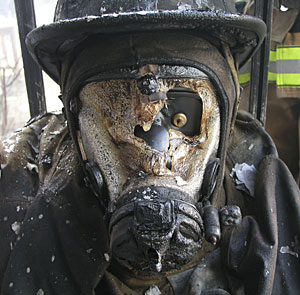
Fire Exposures of Fire Fighter Self-Contained Breathing Apparatus Facepiece Lenses
REFERENCE
Fire Exposures of Fire Fighter Self-Contained Breathing Apparatus Facepiece Lenses
National Institute of Standards and Technology Technical Note 1724
Natl. Inst. Stand. Technol. Tech. Note 1724, 45 pages (November 2011)
CODEN: NSPUE2
jueves, 10 de octubre de 2013
The Handwashing Handbook

TheHandwashingHandbook:A guide for developing a hygiene promotion programto increase handwashing with soap
miércoles, 9 de octubre de 2013
Volcanoes: Protecting the Public´s Health

REFERENCIA:
Volcanoes: Protecting the Public’s Health
lunes, 7 de octubre de 2013
Advancing infection control in dental care settings

Background and Overview. The authors set out to identify factors associated with implementation by U.S. dentists of four practices first recommended in the Centers for Disease Control and Prevention’s Guidelines for Infection Control in Dental Health-Care Settings—2003.
Methods. In 2008, the authors surveyed a stratified random sample of 6,825 U.S. dentists. The response rate was 49 percent. The authors gathered data regarding dentists’ demographic and practice characteristics, attitudes toward infection control, sources of instruction regarding the guidelines and knowledge about the need to use sterile water for surgical procedures. Then they assessed the impact of those factors on the implementation of four recommendations: having an infection control coordinator, maintaining dental unit water quality, documenting percutaneous injuries and using safer medical devices, such as safer syringes and scalpels. The authors conducted bivariate analyses and proportional odds modeling.
Results. Responding dentists in 34 percent of practices had implemented none or one of the four recommendations, 40 percent had implemented two of the recommendations and 26 percent had implemented three or four of the recommendations. The likelihood of implementation was higher among dentists who acknowledged the importance of infection control, had practiced dentistry for less than 30 years, had received more continuing dental education credits in infection control, correctly identified more surgical procedures that require the use of sterile water, worked in larger practices and had at least three sources of instruction regarding the guidelines. Dentists with practices in the South Atlantic, Middle Atlantic or East South Central U.S. Census divisions were less likely to have complied.
Conclusions. Implementation of the four recommendations varied among U.S. dentists. Strategies targeted at raising awareness of the importance of infection control, increasing continuing education requirements and developing multiple modes of instruction may increase implementation of current and future Centers for Disease Control and Prevention guidelines.
REFERENCE:
Jennifer L. Cleveland, et al. Advancing infection control in dental care settings. JADA 2012;143(10):1127-1138.
viernes, 4 de octubre de 2013
StarTalkRadio: Zombie Apocalypse (Part 2)
PART 2: The Zombie Apocalypse rages on as Neil deGrasse Tyson hunts for the truth with World War Z author Max Brooks and Pulitzer Prize winning journalist and virus expert Laurie Garrett.
45 mins.
45 mins.
miércoles, 2 de octubre de 2013
How to choose a suit for a BSL4 laboratory

REFERENCIA:
Kümin D, Krebs C & Wick P. How to choose a suit for a BSL4 laboratory- The approach taken at Spiez Laboratory. Applied Biosafety 2011. Vol. 16, No. 2, p94-102
lunes, 30 de septiembre de 2013
Intervención de laboratorios y bancos de sangre en situaciones de desastre
 |
| ISBN 92 75 32380 1 OPS/HSP/HSE/08-2001 |
• La confirmación diagnóstica de las enfermedades transmisibles de alta mortalidad.
• La disponibilidad de exámenes básicos para el manejo de heridos.
• La provisión oportuna de sangre segura.
La presente guía pretende sensibilizar y orientar a las autoridades de salud, directores y técnicos de laboratorios y bancos de sangre en la identificación de responsabilidades y funciones de estos servicios ante situaciones de desastres, basándose en prioridades, necesidades y capacidad de respuesta inmediata local. La incorporación de actividades de mitigación y reducción de vulnerabilidad, rehabilitación y reorganización de los servicios en los planes de contingencia permitirá una mejor respuesta de los servicios de salud posterior a los desastres.
REFERENCIA:
Intervención de laboratorios y bancos de sangre en situaciones de desastre
viernes, 27 de septiembre de 2013
StarTalkRadio: Zombie Apocalypse (Part 1)
PART 1: There’s no escaping the Zombie Apocalypse when Neil deGrasse Tyson interviews Max Brooks, author of World War Z and the world’s leading “authority” on these nonexistent killers.
45 mins.
45 mins.
miércoles, 25 de septiembre de 2013
Evaluation of the Operator Protection Factors Offered by Positive Pressure Air Suit

REFERENCE
Jackie A. Steward * and Mark S. Lever. Evaluation of the Operator Protection Factors Offered by Positive Pressure Air Suits against Airborne Microbiological Challenge.
Viruses. 2012 August; 4(8): 1202–1211. PMCID: PMC3446757
Suscribirse a:
Entradas (Atom)