Lista de correo. Espere su aprobación.
Correo electrónico:
Consultar este grupo

viernes, 18 de octubre de 2019

Certificaciones IFBA en Manejo de Riesgo Biológico

Los exámenes de la IFBA son una medida estandarizada del conocimiento y las habilidades que se esperan de los profesionales en disciplinas técnicas específicas relacionadas con la gestión de riesgos biológicos. La IFBA publica el resumen del contenido de cada examen que describe los dominios, las tareas y las declaraciones de conocimiento específicas de cada disciplina técnica. Se recomienda encarecidamente a los candidatos que se familiaricen a fondo con este contenido como parte de su preparación. También se han proporcionado ejemplos de preguntas y referencias para ayudar a los candidatos a prepararse para el examen.
La certificación básica es en "Biorisk Management", y es necesaria obtenerla antes de aplicar a las otras certificaciones. La aplicación del examen tiene un costo aproximado de $200 USD, y puede realizarse en cualquier época del año, pero debe programarse con anticipación.
Para más información, visite: https://internationalbiosafety.org/

-----------------------------------------------------------
Sigue este Blog en Facebook y Twitter
-----------------------------------------------------------

miércoles, 16 de octubre de 2019

Health Security (Journal, Vol. 17) Biosafety

Health Security
Editor-in-Chief: Thomas V. Inglesby, MD
ISSN: 2326-5094 
Online ISSN: 2326-5108 
Published Bimonthly
Current Volume: 17
Free access through October 30, 2019   /   Acceso libre hasta el 30 de Octubre de 2019. 
Building Biosafety Capacity in Our Nation's LaboratoriesChristina L. Chung, Kimberly Spencer Bellis, Amy Pullman, Angelica O'Connor, Alvin Shultz  Read Now
The 2014 Ebola outbreak revealed biosafety vulnerabilities across the United States. We distributed $24.1 million to health departments to support public health laboratories (PHLs) and sentinel clinical laboratory partners to improve biosafety practices. We used 9 indicators to evaluate PHLs and associated clinical laboratories from March 2015 through April 2018 using descriptive statistics. On average, over 6 reporting periods, 59 awardee PHLs and 4,040 clinical laboratories responded. 
During the 2014-15 domestic Ebola response, US states developed monitoring and movement restriction policies for potentially exposed individuals. We describe decision-making processes and factors in the development of these policies. Results may help health officials anticipate potential concerns and policy influencers in future infectious disease responses. Thirty individuals with knowledge of state-level Ebola policy development participated in semi-structured interviews conducted from January to May 2017. Interviewees represented 18 jurisdictions from diverse census regions, state political affiliations, and public health governance structures as well as the US Centers for Disease Control and Prevention (CDC).
Sarah Carter, Diane DiEuliis  Read Now
Industrial biotechnology has harnessed the tools of genetic engineering for many years to produce valued chemicals and products. As newer synthetic biology tools and capabilities make biology increasingly easier to engineer, a broader, more diverse synthetic biology industry is emerging in support of many industrial sectors. While this industry is still nascent, it is growing each year with accelerating investment.1,2 Some of its novel products and services include advanced protein engineering, organism design and construction, genome editing constructs and vectors, lab sensors and robotics, and scale-up services.

-----------------------------------------------------------
Sigue este Blog en Facebook y Twitter
-----------------------------------------------------------

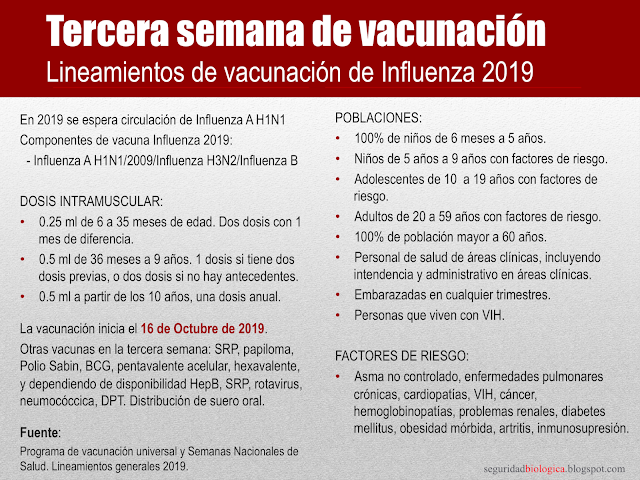
#INFLUENZA: Inicia tercera semana nacional de vacunación #México


REFERENCIAS:
VIDEO: La secretaría de salud aplicará 34 millones de dosis de vacuna de Influenza en México.
https://www.pscp.tv/w/1RDxlNkENZgGL

Programa de vacunación universal y semanas nacionales de salud. Lineamientos generales 2019. Subsecretaría de Prevención y Promoción de la Salud. Secretaría de Salud.
https://www.gob.mx/cms/uploads/attachment/file/416064/Lineamientos_Generales_PVU_y_SNS_2019.pdf

-----------------------------------------------------------
Sigue este Blog en Facebook y Twitter
-----------------------------------------------------------

The respiratory microbiota: new insights into pulmonary tuberculosis

Background: Previous studies demonstrated that the diversity and composition of respiratory microbiota in TB patients were different from healthy individuals. Therefore, the aim of the present analysis was to estimate the relative proportion of respiratory microbiota at phylum and genus levels among TB cases and healthy controls.
Methods: The PubMed and Google Scholar online databases were searched to retrieve relevant studies for the analysis. The statistical analysis was done using STATA version 11, pooled estimates are presented using graphs. The summary of findings in included studies is also presented in Table 1.
Results: The phylum level analysis shows that the pooled proportions of Firmicutes, Proteobacteria, Bacteroidetes, Actinobacteria, and Crenarchaeota were determined among tuberculosis patients and healthy controls. In brief, Firmicutes, and Proteobacteria were the most abundant bacterial phyla in both TB cases and healthy controls, composing 39.9 and 22.7% in TB cases and 39.4 and 19.5% in healthy controls, respectively. The genus level analysis noted that Streptococcus (35.01%), Neisseria (27.1%), Prevotella (9.02%) and Veillonella (7.8%) were abundant in TB patients. The Prevotella (36.9%), Gammaproteobacteria (22%), Streptococcus (19.2%) and Haemophilus (15.4%) were largely seen in healthy controls. Interestingly, Veillonella, Rothia, Leuconostoc were unique to TB cases, whereas Lactobacillus, and Gammaproteobacteria, Haemophilus, and Actinobacillus were identified only in healthy controls.
Conclusion: The composition of the respiratory microbiota in TB patients and healthy controls were quite different. More deep sequencing studies are needed to explore the microbial variation in the respiratory system in connection with TB.
REFERENCE:
Eshetie S, van Soolingen D. The respiratory microbiota: new insights into pulmonary tuberculosis. BMC Infect Dis. 2019;19(1):92. Published 2019 Jan 25. doi:10.1186/s12879-019-3712-1

-----------------------------------------------------------
Sigue este Blog en Facebook y Twitter
-----------------------------------------------------------

martes, 15 de octubre de 2019

#KeepHandsClean Life is Better with Clean Hands Campaign, Promotion Posters


-----------------------------------------------------------
Sigue este Blog en Facebook y Twitter
-----------------------------------------------------------

15 de octubre Día Global del lavado de manos

MANOS LIMPIAS PARA TODOS
15 de octubre Día Global del lavado de manos, un día de promoción global dedicada a aumentar el conocimiento y la comprensión de la importancia del lavado de manos con jabón como una forma eficaz y asequible para prevenir enfermedades y salvar vidas.
DÍA MUNDIAL DEL LAVADO DE MANOS ES UNA OPORTUNIDAD PARA DISEÑAR, PROBAR Y REPLICAR FORMAS CREATIVAS PARA ANIMAR A LA GENTE A LAVARSE LAS MANOS CON JABÓN EN LOS MOMENTOS CRÍTICOS.
Este año, el tema de las “manos limpias para todos” sigue la presión para no dejar a nadie atrás en el programa de desarrollo sostenible. Las desigualdades en las instalaciones de lavado de manos y los programas de promoción del lavado de manos eficaz puede poner individuos con mayor riesgo para las enfermedades que afectan a su salud, educación, y los resultados económicos.
El tema nos recuerda que debemos ser incluido cuando frente a las disparidades de lavado de manos. Independientemente de su función, puede celebrar el Día Mundial del Lavado!

https://globalhandwashing.org/global-handwashing-day/

-----------------------------------------------------------
Sigue este Blog en Facebook y Twitter
-----------------------------------------------------------

Animal Health Laboratory, New Zealand

The AHL is a high-containment facility with specialised equipment and procedures that enable us to work safely with exotic or zoonotic organisms and exotic disease investigation samples. Our staff are highly qualified and experienced in the science disciplines of pathology, virology, bacteriology, immunology, molecular biology and bioinformatics, with specialist knowledge of exotic and emerging pathogens. The AHL maintains international best practice operations, with accreditation and certification to ISO/IEC 17025, AS.NZS 2243.3 and MPI Registered Laboratory Programme and Transitional and Containment Facility regulations.
REFERENCE:
McDonald W. Animal Health Laboratory. Surveillance, Volume 46, Issue 3 Annual Report, pp 12-17, Sep 2019
-----------------------------------------------------------
Sigue este Blog en Facebook y Twitter
-----------------------------------------------------------

lunes, 14 de octubre de 2019

Impacts of Glutaraldehyde on Microbial Community Structure

The environmental impacts of hydraulic fracturing, particularly those of surface spills in aquatic ecosystems, are not fully understood. The goals of this study were to (1) understand the effect of previous exposure to hydraulic fracturing fluids on aquatic microbial community structure and (2) examine the impacts exposure has on biodegradation potential of the biocide glutaraldehyde. Microcosms were constructed from hydraulic fracturing-impacted and nonhydraulic fracturing-impacted streamwater within the Marcellus shale region in Pennsylvania. Microcosms were amended with glutaraldehyde and incubated aerobically for 56 days. Microbial community adaptation to glutaraldehyde was monitored using 16S rRNA gene amplicon sequencing and quantification by qPCR. Abiotic and biotic glutaraldehyde degradation was measured using ultra-performance liquid chromatography - high resolution mass spectrometry and total organic carbon. It was found that nonhydraulic fracturing-impacted microcosms biodegraded glutaraldehyde faster than the hydraulic fracturing-impacted microcosms, showing a decrease in degradation potential after exposure to hydraulic fracturing activity. Hydraulic fracturing-impacted microcosms showed higher richness after glutaraldehyde exposure compared to unimpacted streams, indicating an increased tolerance to glutaraldehyde in hydraulic fracturing impacted streams. Beta diversity and differential abundance analysis of sequence count data showed different bacterial enrichment for hydraulic fracturing-impacted and nonhydraulic fracturing-impacted microcosms after glutaraldehyde addition. These findings demonstrated a lasting effect on microbial community structure and glutaraldehyde degradation potential in streams impacted by hydraulic fracturing operations. © 2018 American Chemical Society.
REFERENCE:
Campa MF, et al. Impacts of Glutaraldehyde on Microbial Community Structure and Degradation Potential in Streams Impacted by Hydraulic Fracturing. Environ Sci Technol. 2018 May 15;52(10):5989-5999. doi: 10.1021/acs.est.8b00239. Epub 2018 Apr 30. PubMed PMID: 29683652.


-----------------------------------------------------------
Sigue este Blog en Facebook y Twitter
-----------------------------------------------------------

sábado, 12 de octubre de 2019

Cyberbiosecurity Implications for the Laboratory of the Future

Technological innovation has become an integral and inescapable aspect of our daily existence as almost everything of significance in our world now has a cyber (i.e., relating to, or involving computers, computer networks, information technology, and virtual reality) component associated with it. Every facet of our lives is now touched by technology. As such, we're experiencing a digital transformation. Unfortunately, both as individuals and as a society, we're inadequately prepared to embrace the myriad of vulnerabilities presented by cybertechnologies. Unintended cyber vulnerabilities present significant risks to individuals, organizations, governments and economies. Here, we identify current cybersecurity vulnerabilities found in the life science enterprise and discuss the many ways in which these vulnerabilities present risk to laboratory workers in these facilities, the surrounding community and the environment. We also consider the cyberbiosecurity benefits associated with numerous innovations likely to be present in the laboratory of the future. The challenges associated with cyberbiosecurity vulnerabilities are not insurmountable; they simply require thoughtful consideration by equipment designers, software and control systems developers, and by end users. Organizations and the individuals that comprise them must respect, value, and protect their data. End users must train themselves to look at every piece of laboratory equipment and every process from a cyberbiosecurity perspective. With this approach, cyberbiosecurity vulnerabilities can be minimized or eliminated to the benefit of workers, life science organizations, and national security.
REFERENCE:
Reed JC, Dunaway N. Cyberbiosecurity Implications for the Laboratory of the Future. Front Bioeng Biotechnol. 2019 Aug 21;7:182. doi: 10.3389/fbioe.2019.00182. eCollection 2019. Review. PubMed PMID: 31497596; PubMed Central PMCID: PMC6712584.

-----------------------------------------------------------
Sigue este Blog en Facebook y Twitter
-----------------------------------------------------------

viernes, 11 de octubre de 2019

Recognition of aerosol transmission of infectious agents

Although short-range large-droplet transmission is possible for most respiratory infectious agents, deciding on whether the same agent is also airborne has a potentially huge impact on the types (and costs) of infection control interventions that are required. The concept and definition of aerosols is also discussed, as is the concept of large droplet transmission, and airborne transmission which is meant by most authors to be synonymous with aerosol transmission, although some use the term to mean either large droplet or aerosol transmission. However, these terms are often used confusingly when discussing specific infection control interventions for individual pathogens that are accepted to be mostly transmitted by the airborne (aerosol) route (e.g. tuberculosis, measles and chickenpox). It is therefore important to clarify such terminology, where a particular intervention, like the type of personal protective equipment (PPE) to be used, is deemed adequate to intervene for this potential mode of transmission, i.e. at an N95 rather than surgical mask level requirement. With this in mind, this review considers the commonly used term of ‘aerosol transmission’ in the context of some infectious agents that are well-recognized to be transmissible via the airborne route. It also discusses other agents, like influenza virus, where the potential for airborne transmission is much more dependent on various host, viral and environmental factors, and where its potential for aerosol transmission may be underestimated.
REFERENCE:
Tellier, Raymond et al. Recognition of aerosol transmission of infectious agents: a commentary. BMC infectious diseases vol. 19,1 101. 31 Jan. 2019, doi:10.1186/s12879-019-3707-y

-----------------------------------------------------------
Sigue este Blog en Facebook y Twitter
-----------------------------------------------------------

jueves, 10 de octubre de 2019

Effects of Wipe and Spray-based Decontamination of Gloves and Gowns

We conducted a laboratory simulation to evaluate the contamination of environmental surfaces when using wipe vs spray methods of personal protective equipment (PPE) decontamination. We did not observe any environmental contamination with the bacteriophage MS-2 when bleach solution spray or wipes were used for PPE disinfection.
REFERENCE:
Robinson GL, et al. Preventing Viral Contamination: Effects of Wipe and Spray-based Decontamination of Gloves and Gowns. Clin Infect Dis. 2019;69(Supplement_3):S228–S230. doi:10.1093/cid/ciz622
-----------------------------------------------------------
Sigue este Blog en Facebook y Twitter
-----------------------------------------------------------

miércoles, 9 de octubre de 2019

CID Supplement: Personal Protective Equipment for Preventing Contact Transmission of Pathogens

https://academic.oup.com/cid/issue/69/Supplement_3
CONTENT:

  1. Improving the Use of Personal Protective Equipment: Applying Lessons Learned 
  2. Optimizing Contact Precautions to Curb the Spread of Antibiotic-resistant Bacteria in Hospitals 
  3. Environmental Contact and Self-contact Patterns of Healthcare Workers: Implications for Infection Prevention and Control 
  4. Understanding Workflow and Personal Protective Equipment Challenges Across Different Healthcare Personnel Roles 
  5. Healthcare Workers’ Strategies for Doffing Personal Protective Equipment 
  6. Evaluation of a Redesigned Personal Protective Equipment Gown
  7. Model-based Assessment of the Effect of Contact Precautions Applied to Surveillance-detected Carriers of Carbapenemase-producing Enterobacteriaceae in Long-term Acute Care Hospitals
  8. Common Behaviors and Faults When Doffing Personal Protective Equipment for Patients With Serious Communicable Diseases 
  9. Variability in the Duration and Thoroughness of Hand Hygiene
  10. Effect of Glove Decontamination on Bacterial Contamination of Healthcare Personnel Hands 
  11. Preventing Viral Contamination: Effects of Wipe and Spray-based Decontamination of Gloves and Gowns
  12. Potential Skin and Inhalational Exposure to Pathogens During Personal Protective Equipment Doffing
  13. Design Strategies for Biocontainment Units to Reduce Risk During Doffing of High-level Personal Protective Equipment
  14. Effect of an Intervention Package and Teamwork Training to Prevent Healthcare Personnel Self-contamination During Personal Protective Equipment Doffing

-----------------------------------------------------------
Sigue este Blog en Facebook y Twitter
-----------------------------------------------------------

Inactivation of chronic wasting disease prions using sodium hypochlorite

Chronic wasting disease (CWD) is a fatal prion disease that can infect deer, elk and moose. CWD has now been detected in 26 states of the USA, 3 Canadian provinces, South Korea, Norway, Sweden and Finland. CWD continues to spread from endemic areas, and new foci of infections are frequently detected. As increasing numbers of cervids become infected, the likelihood for human exposure increases. To date, no cases of CWD infection in humans have been confirmed, but experience with the BSE zoonosis in the United Kingdom suggests exposure to CWD should be minimized. Specifically, hunters, meat processors and others in contact with tissues from potentially CWD-infected cervids need a practical method to decontaminate knives, saws and other equipment. Prions are notoriously difficult to inactivate, and most effective methods require chemicals or sterilization processes that are either dangerous, caustic, expensive or not readily available. Although corrosive, sodium hypochlorite (bleach) is widely available and affordable and has been shown to inactivate prion agents including those that cause scrapie, bovine spongiform encephalopathy and Creutzfeldt-Jakob disease. In the current study, we confirm that bleach is an effective disinfectant for CWD prions and establish minimum times and bleach concentrations to eliminate prion seeding activity from stainless steel and infected brain homogenate solutions. We found that a five-minute treatment with a 40% dilution (20,000 ppm) of household bleach was effective at inactivating CWD seeding activity from stainless-steel wires and CWD-infected brain homogenates. However, bleach was not able to inactivate CWD seeding activity from solid tissues in our studies.
REFERENCE:
Williams K, et al (2019). Inactivation of chronic wasting disease prions using sodium hypochlorite. PLoS ONE 14(10): e0223659. https://doi.org/10.1371/journal.pone.0223659

-----------------------------------------------------------
Sigue este Blog en Facebook y Twitter
-----------------------------------------------------------

martes, 8 de octubre de 2019

Factores que motivan el uso de protección respiratoria contra cenizas volcánicas

Las comunidades que viven cerca de volcanes activos pueden estar expuestas a riesgos respiratorios por cenizas volcánicas. Comprender su percepción de los riesgos y las acciones que toman para mitigar esos riesgos es importante para desarrollar estrategias de comunicación efectivas. Para investigar este problema, el primer estudio comparativo de las percepciones de riesgo y el uso de protección respiratoria se realizó en 2003 residentes afectados por volcanes activos de tres países: Japón (volcán Sakurajima), Indonesia (volcanes Merapi y Kelud) y México (volcán Popocatépetl). El estudio fue diseñado para evaluar el valor explicativo de un marco teórico que planteaba la hipótesis de que el uso de la protección respiratoria (es decir, la máscara facial) estaría motivado por dos construcciones cognitivas de la teoría de la motivación de protección: la evaluación de amenazas (es decir, las percepciones de daño / preocupación por la inhalación de cenizas). ) y evaluación de afrontamiento (es decir, creencias sobre la eficacia de la máscara). Utilizando el modelo de ecuaciones estructurales (SEM), se encontraron diferencias importantes en la capacidad predictiva de los constructos entre países. Por ejemplo, las percepciones de daño / preocupación fueron predictores más fuertes del uso de mascarillas en Japón e Indonesia que en México, donde las creencias sobre la eficacia de las mascarillas eran más importantes. El SEM también identificó diferencias en las variantes demográficas del uso de máscaras en cada país y cómo fueron mediadas por las construcciones cognitivas. Hallazgos como estos resaltan la importancia de contextualizar nuestra comprensión de la motivación de protección y, por lo tanto, el valor de desarrollar enfoques específicos para promover el comportamiento precautorio.
REFERENCIA:
Covey J,  et al. Factors motivating the use of respiratory protection against volcanic ashfall: A comparative analysis of communities in Japan, Indonesia and Mexico. Int J Disaster Risk Reduct. 2019;35:101066. doi:10.1016/j.ijdrr.2019.101066

-----------------------------------------------------------
Sigue este Blog en Facebook y Twitter
-----------------------------------------------------------

lunes, 7 de octubre de 2019

Risk Assessment Technical Guidance

El propósito de este documento es dar orientación técnica a todo el personal que trabaja en un laboratorio biológico y que maneja o maneja activamente agentes biológicos y toxinas, así como otros materiales de laboratorio valiosos. Este documento también está destinado a gerentes de instalaciones, apoyo administrativo, fuerzas de seguridad, partes interesadas de la comunidad, organismos de supervisión y formuladores de políticas, que desean obtener más información sobre la evaluación de riesgos y los riesgos de seguridad que están presentes en sus laboratorios.
El documento describe un proceso generalizado de evaluación de riesgos, un proceso que debe usarse en todos los entornos de laboratorio biológico, independientemente de la capacidad económica u organizativa. Debido a que el riesgo es una función de la probabilidad y las consecuencias y una evaluación de riesgos es específica de los peligros, amenazas y prácticas de trabajo de un laboratorio, los resultados de una evaluación indudablemente variarán dramáticamente entre los entornos de laboratorio. Además, el proceso de evaluación de riesgos no proporciona recomendaciones específicas sobre cómo reducir los riesgos identificados, sino que puede usarse para ayudar o guiar a las personas en el laboratorio, la instalación y la comunidad para tomar decisiones informadas sobre cómo mitigar el riesgo.
El propósito de este documento es triple:

  1. describir el proceso de evaluación de riesgos de bioseguridad y bioseguridad del laboratorio y su marco conceptual;
  2. proporcionar orientación detallada y metodologías sugeridas sobre cómo realizar una evaluación de riesgos; y
  3. presentar algunas estrategias prácticas de proceso de evaluación de riesgos utilizando escenarios de laboratorio realistas.

REFERENCE:
Laboratory Biosafety and Biosecurity Risk Assessment Technical Guidance Document


-----------------------------------------------------------
Sigue este Blog en Facebook y Twitter
-----------------------------------------------------------

viernes, 4 de octubre de 2019

Bat Coronaviruses in China

During the past two decades, three zoonotic coronaviruses have been identified as the cause of large-scale disease outbreaks–Severe Acute Respiratory Syndrome (SARS), Middle East Respiratory Syndrome (MERS), and Swine Acute Diarrhea Syndrome (SADS). SARS and MERS emerged in 2003 and 2012, respectively, and caused a worldwide pandemic that claimed thousands of human lives, while SADS struck the swine industry in 2017. They have common characteristics, such as they are all highly pathogenic to humans or livestock, their agents originated from bats, and two of them originated in China. Thus, it is highly likely that future SARS- or MERS-like coronavirus outbreaks will originate from bats, and there is an increased probability that this will occur in China. Therefore, the investigation of bat coronaviruses becomes an urgent issue for the detection of early warning signs, which in turn minimizes the impact of such future outbreaks in China. The purpose of the review is to summarize the current knowledge on viral diversity, reservoir hosts, and the geographical distributions of bat coronaviruses in China, and eventually we aim to predict virus hotspots and their cross-species transmission potential.
REFERENCE:
Fan, Yi et al. Bat Coronaviruses in China. Viruses vol. 11,3 210. 2 Mar. 2019, doi:10.3390/v11030210

-----------------------------------------------------------
Sigue este Blog en Facebook y Twitter
-----------------------------------------------------------

jueves, 3 de octubre de 2019

Octubre, mes de la bioseguridad #biosafety_biosecuritymonth

Este tema para este año es:
Más allá del laboratorio: Incrementando de la visibilidad de la bioseguridad y la biocustodia
Los objetivos del tema de este año incluyen los siguientes:
  • Promover la visibilidad de los profesionales de bioseguridad y bioseguridad en nuestro lugar de trabajo y comunidad.
  • Destacar la naturaleza multidimensional de la profesión de bioseguridad y bioseguridad;
  • Defina cómo los profesionales de bioseguridad y bioseguridad son más que personas de cumplimiento.
  • Abogar por la educación, capacitación y apoyo de los campos de Ciencia, Tecnología, Ingeniería y Matemáticas (STEM);
  • Reconocer la bioseguridad como disciplina científica;
  • Apoye la conciencia e interés de los estudiantes de STEM en la profesión a través del alcance y las interacciones en todos los niveles educativos.
  • Fomentar el diálogo, la transparencia y la educación en el trabajo con materiales biológicos con todos los interesados.

Visite la página web regularmente para descargar materiales promocionales para usar en su institución y obtener más información sobre lo que puede hacer para aumentar su visibilidad. Las actualizaciones y materiales adicionales para el evento se publicarán periódicamente en esta página a medida que estén disponibles. Además, considere usar el hashtag "#biosafety_biosecuritymonth" en los esfuerzos de las redes sociales.

-----------------------------------------------------------
Sigue este Blog en Facebook y Twitter
-----------------------------------------------------------

miércoles, 2 de octubre de 2019

Sodium hydroxide treatment effectively inhibits #prion replication in farm soil

Tribble-like amyloid plaques of variant Creutzfeldt-Jakob Disease
acquired from eating prion-infected beef.
Credit: 
Sherif Zaki; MD; PhD and Wun-Ju Shieh; MD; PhD; MPH CDC
Chronic wasting disease (CWD) agents are shed into biological samples, facilitating their horizontal transmission between cervid species. Once prions enter the environment, binding of PrPCWD by soil particles may maintain them near the soil surface, posing a challenge for decontamination. A 2 N sodium hydroxide (NaOH) or 2% sodium hypochlorite (NaClO) solution is traditionally recommended for prion decontamination of equipment and surfaces. Using protein misfolding cyclic amplification with beads and a bioassay with TgElk mice, we compared the effects of these disinfectants in CWD-contaminated soil for 1 or 16 h to those of controls of known infectious titres. Our results suggest that 2 N NaOH in a 1/5 farm soil volume provides a large decrease (>102-fold) in prion infectivity.
REFERENCES:


-----------------------------------------------------------
Sigue este Blog en Facebook y Twitter
-----------------------------------------------------------

lunes, 30 de septiembre de 2019

Combating bacterial biofilms: agents and mechanisms of action

Biofilm refers to the complex, sessile communities of microbes found either attached to a surface or buried firmly in an extracellular matrix as aggregates. The biofilm matrix surrounding bacteria makes them tolerant to harsh conditions and resistant to antibacterial treatments. Moreover, the biofilms are responsible for causing a broad range of chronic diseases and due to the emergence of antibiotic resistance in bacteria it has really become difficult to treat them with efficacy. Furthermore, the antibiotics available till date are ineffective for treating these biofilm related infections due to their higher values of minimum inhibitory concentration (MIC) and minimum bactericidal concentration (MBC), which may result in in-vivo toxicity. Hence, it is critically important to design or screen anti-biofilm molecules that can effectively minimize and eradicate biofilm related infections. In the present article, we have highlighted the mechanism of biofilm formation with reference to different models and various methods used for biofilm detection. A major focus has been put on various anti-biofilm molecules discovered or tested till date which may include herbal active compounds, chelating agents, peptide antibiotics, lantibiotics and synthetic chemical compounds along with their structures, mechanism of action and their respective MICs, MBCs, minimum biofilm inhibitory concentrations (MBICs) as well as the half maximal inhibitory concentration (IC50) values available in the literature so far. Different mode of action of anti biofilm molecules addressed here are inhibition via interference in the quorum sensing pathways, adhesion mechanism, disruption of extracellular DNA, protein, lipopolysaccharides, exopolysaccharides and secondary messengers involved in various signaling pathways. From this study, we conclude that the molecules considered here might be used to treat biofilm-associated infections after significant structural modifications, thereby investigating its effective delivery in the host. It should also be ensured that minimum effective concentration of these molecules must be capable of eradicating biofilm infections with maximum potency without posing any adverse side effects on the host.
REFERENCE:
Roy, Ranita et al. “Strategies for combating bacterial biofilms: A focus on anti-biofilm agents and their mechanisms of action.” Virulence vol. 9,1 (2018): 522-554. doi:10.1080/21505594.2017.1313372

-----------------------------------------------------------
Sigue este Blog en Facebook y Twitter
-----------------------------------------------------------

jueves, 26 de septiembre de 2019

Principles of Laboratory Biosafety e-Learning Course


This portal is your entry into the biosafety learning and knowledge services offered by the Centre for Biosecurity of the Public Health Agency of Canada and the Office of Biohazard Containment and Safety of the Canadian Food Inspection Agency. Here you will find tools for you to promote safer biosafety practices in your facility.
Whether you are a biosafety professional, a containment facility user or manager, an engineer, architect or otherwise involved in designing or managing containment facilities, or even if you simply have an interest in biosafety, there are materials here for you. The materials on this portal are provided to be used as part of a biosafety training program specific to your facility. Working together we can promote the importance of biosafety and its application in Canadian facilities.
The portal currently contains a variety of courses and resources, including:
Principles of Laboratory Biosafety e-Learning Course
This modular course has been developed by the Public Health Agency of Canada and the Canadian Food Inspection Agency to help strengthen biosafety and biosecurity principles.
Instructional videos on biosafety which can be viewed for free online:
  • Biosafety 101
  • Containment Level 1 Laboratory: Operational Practices
  • Containment Level 2 Laboratory: Operational Practices
  • Containment Level 3 Laboratories: Operational Practices
https://training-formation.phac-aspc.gc.ca/course/index.php?categoryid=2

-----------------------------------------------------------
Sigue este Blog en Facebook y Twitter
-----------------------------------------------------------

miércoles, 25 de septiembre de 2019

Canadian Biosafety HANDBOOK, 2nd Ed.

The Government of Canada's Canadian Biosafety Handbook (CBH), 2nd Edition, 2016, is a national guidance document for the safe handling and storing of human and terrestrial animal pathogens and toxins in Canada. It is a companion document to the Canadian Biosafety Standard (CBS), 2nd Edition, 2015 in which the physical containment, operational practice, and performance and verification testing requirements are set out to ensure the safe handling and storing of human and terrestrial animal pathogens and toxins. Activities in Canada involving human and animal pathogens and toxins are regulated by the Public Health Agency of Canada (PHAC) and the Canadian Food Inspection Agency (CFIA) in accordance with the Human Pathogens and Toxins Act, Human Pathogens and Toxins Regulations, Health of Animals Act, and Health of Animals Regulations. The CBH provides the core information and guidance on how to achieve the biosafety and biosecurity requirements specified in the CBS. The CBH systematically addresses the concepts required for the development and maintenance of a comprehensive risk-based biosafety management program.
REFERENCE:
© Her Majesty the Queen in Right of Canada, as represented by the
Minister of Health and the Minister of Agriculture and Agri-Food, 2016
https://www.canada.ca/en/public-health/services/canadian-biosafety-standards-guidelines/handbook-second-edition.html#pr
Publication date: March 2016
This publication may be reproduced for personal or internal use only without permission
provided the source is fully acknowledged.
Print Cat.: HP45-9/2015E PDF Cat.: HP45-9/2015E-PDF
ISBN: 978-1-100-25773-0 ISBN: 978-1-100-25774-7
Publication Number: 140469

The CBS Biosafety App v2.0 is currently available as a free download for the following devices:

-----------------------------------------------------------
Sigue este Blog en Facebook y Twitter
-----------------------------------------------------------

lunes, 23 de septiembre de 2019

Canadian Biosafety STANDARD, 2nd Ed.

The Government of Canada's Canadian Biosafety Standard (CBS), 2nd Edition, 2015, is a harmonized national standard for the handling or storing of human and terrestrial animal pathogens and toxins in Canada. Activities in Canada involving human and animal pathogens and toxins are regulated by the Public Health Agency of Canada (PHAC) and the Canadian Food Inspection Agency (CFIA) in accordance with the Human Pathogens and Toxins Act (HPTA), the Human Pathogens and Toxins Regulations (HPTR), the Health of Animals Act, and the Health of Animals Regulations.
The CBS sets out the physical containment, operational practice, and performance and verification testing requirements for the safe handling or storing of human and terrestrial animal pathogens and toxins. The CBS updates many requirements to be more risk-, evidence-, and performance-based, as well as incorporating new information in the field of biocontainment engineering. In addition, the CBS includes several new requirements and information to support the full implementation of the HPTA and the HPTR. On December 1st, 2015, the HPTR comes into force and the CBS will come into effect and supersede the CBSG. The CBS will be used by the PHAC and the CFIA to verify the ongoing compliance of regulated facilities with the applicable legislation. This will support licence applications, renewals, animal pathogen import permit applications, and, where applicable, the facility certification (and recertification) of containment zones.
It has a companion document: Canadian Biosafety Handbook, 2nd. Ed. 
REFERENCE:
© Her Majesty the Queen in Right of Canada, as represented by the Minister of Health
and the Minister of Agriculture and Agri-Food, 2015
https://www.canada.ca/en/public-health/services/canadian-biosafety-standards-guidelines/second-edition.html
Publication date: March 2015
This publication may be reproduced for personal or internal use only without permission
provided the source is fully acknowledged.
Print Cat.: HP45-7/2015E PDF Cat.: HP45-7/2015E-PDF
ISBN: 978-1-100-25771-6 ISBN: 978-1-100-25772-3
Publication Number: 140467

The CBS Biosafety App v2.0 is currently available as a free download for the following devices:

-----------------------------------------------------------
Sigue este Blog en Facebook y Twitter
-----------------------------------------------------------

viernes, 20 de septiembre de 2019

Quaternary Ammonium Leucine-Based Surfactants

Quaternary ammonium amphiphiles are a class of compounds with a wide range of commercial and industrial uses. In the pharmaceutical field, the most common quaternary ammonium surfactant is benzalkonium chloride (BAC), which is employed as a preservative in several topical formulations for ocular, skin, or nasal application. Despite the broad antimicrobial activity against Gram-positive and Gram-negative bacteria, as well as fungi and small enveloped viruses, safety concerns regarding its irritant and cytotoxic effect on epithelial cells still remain. In this work, quaternary ammonium derivatives of leucine esters (C10, C12 and C14) were synthesised as BAC analogues. These cationic surfactants were characterised in terms of critical micelle concentration (CMC, by tensiometry), cytotoxicity (MTS and LDH assays on the Caco-2 and Calu-3 cell lines) and antimicrobial activity on the bacterial species Staphylococcus aureus and Enterococcus faecalis among the Gram-positives, Escherichia coli and Pseudomonas aeruginosa among the Gram-negatives and the yeast Candida albicans. They showed satisfactory surface-active properties, and a cytotoxic effect that was dependent on the length of the hydrophobic chain. Lower minimum inhibiting concentration (MIC) values were calculated for C14-derivatives, which were comparable to those calculated for BAC toward Gram-positive bacteria and slightly higher for Gram-negative bacteria and C. albicans. Thus, the synthesised leucine-based quaternary ammonium cationic surfactants can potentially find application as promising surface-active compounds with antimicrobial activity.
REFERENCE:
Perinelli DR, Petrelli D, Vitali LA, et al. Quaternary Ammonium Leucine-Based Surfactants: The Effect of a Benzyl Group on Physicochemical Properties and Antimicrobial Activity. Pharmaceutics. 2019;11(6):287. Published 2019 Jun 19. doi:10.3390/pharmaceutics11060287

-----------------------------------------------------------
Sigue este Blog en Facebook y Twitter
-----------------------------------------------------------

miércoles, 18 de septiembre de 2019

2020 CDC Yellow book: Traveler's health

ISBN:
978-0-19-092893-3  paperback
978-0-19-006597-3  hardback
CDC's Yellow Book (Health Information for International Travel) is published every two years as a resource for health professionals providing care to international travelers. The fully revised and updated CDC Yellow Book 2020 compiles the US government’s most current travel health guidelines, including pretravel vaccine recommendations, destination-specific health advice, and easy-to-reference maps, tables, and charts. The 2020 Yellow Book includes important travel medicine updates:
  • Recommendations for providing travel health care remotely via telemedicine
  • Discussion of legal issues facing clinicians providing travel health care
  • Cutting-edge rapid diagnostic tests for infectious diseases
  • Introduction of new FDA-approved antimalarial drugs
  • Road traffic safety advice for travelers
  • Recommendations for treating infectious diseases in the face of increasing antimicrobial resistance
CHAPTERS:
  1. Introduction
  2. Preparing International Travelers
  3. Environmental Hazards & Other Noninfectious Health Risks
  4. Travel-Related Infectious Diseases
  5. Travelers with Additional Considerations
  6. Health Care Abroad
  7. Family Travel
  8. Travel by Air, Land & Sea
  9. Travel for Work & Other Reasons
  10. Popular Itineraries
  11. Posttravel Evaluation
  12. Appendices
REFERENCES:
https://wwwnc.cdc.gov/travel/yellowbook/2020/table-of-contents
https://wwwnc.cdc.gov/travel/yellowbook/2020/updates

-----------------------------------------------------------
Sigue este Blog en Facebook y Twitter
-----------------------------------------------------------

martes, 17 de septiembre de 2019

100 Years of Respiratory Protection History


In 1919, the U.S. Bureau of Mines (USBM) initiated the first respirator certification program. Several months later, on January 15, 1920, this federal body certified the first respirator. To recognize the important milestones of the past 100 years, this webpage documents a general historical overview of respiratory protection research and the evolution of the certification program as undertaken by the U.S. federal government.
Read the full history at:
https://www.cdc.gov/niosh/npptl/Respiratory-Protection-history.html

-----------------------------------------------------------
Sigue este Blog en Facebook y Twitter
-----------------------------------------------------------