| Lista de correo. Espere su aprobación. |
| Consultar este grupo |
viernes, 20 de marzo de 2015
Negotiating the dynamics of uncomfortable knowledge: The case of dual use and synthetic biology
REFERENCE:
Marris C, Jefferson C, Lentzos F. Negotiating the dynamics of uncomfortable knowledge: The case of dual use and synthetic biology. Biosocieties. 2014;9(4):393-420. doi:10.1057/biosoc.2014.32.
-----------------------------------------------------------
Sigue este Blog en Facebook y Twitter
miércoles, 18 de marzo de 2015
Evolution of #Ebola Virus Disease, Liberia, Mid-2014
![]() |
| Figure 1. Counties in Liberia reporting Ebola virus disease cases as of August 15, 2014. Star indicates the capital city, Monrovia. |
REFERENCE:
Arwady MA, et al. Evolution of Ebola virus disease from exotic infection to global health priority, Liberia, mid-2014. Emerg Infect Dis. 2015 Apr
-----------------------------------------------------------
Sigue este Blog en Facebook y Twitter
lunes, 16 de marzo de 2015
Prions - Not Your Immunologist’s Pathogen.
Prions are remarkable, enigmatic pathogens that are quite different than most disease-causing entities. According to the prion hypothesis, prions are infectious agents devoid of instructional nucleic acid [1]. They propagate themselves without a genetic code, instead enciphering their infectious nature structurally, within the protein conformation itself. Mounting evidence supports the prion hypothesis, including the generation of infectious prions from purified recombinant protein [2]. Soon after Prusiner coined the term “prion,” his and Charles Weissmann’s labs discovered that a cellular gene encodes the prion agent [3]. Strangely, though, Prusiner had already demonstrated that infectious prions did not include nucleic acid, suggesting that prions infect without transmitting the gene encoding them. So attention turned to the host, in which this gene also encodes a normal form of the agent, called cellular prion protein (PrPC), that was later shown to be absolutely required to generate both genetic and acquired prion diseases [4]. And so, all the armchair immunologists reading this article right now pause and say, “Wait a minute…” while Anne chimes in with “prion immunology.” Here we go.
REFERENCE:
Zabel MD, Avery AC (2015) Prions—Not Your Immunologist’s Pathogen. PLoS Pathog 11(2): e1004624. doi:10.1371/journal.ppat.1004624
-----------------------------------------------------------
Sigue este Blog en Facebook y Twitter
jueves, 12 de marzo de 2015
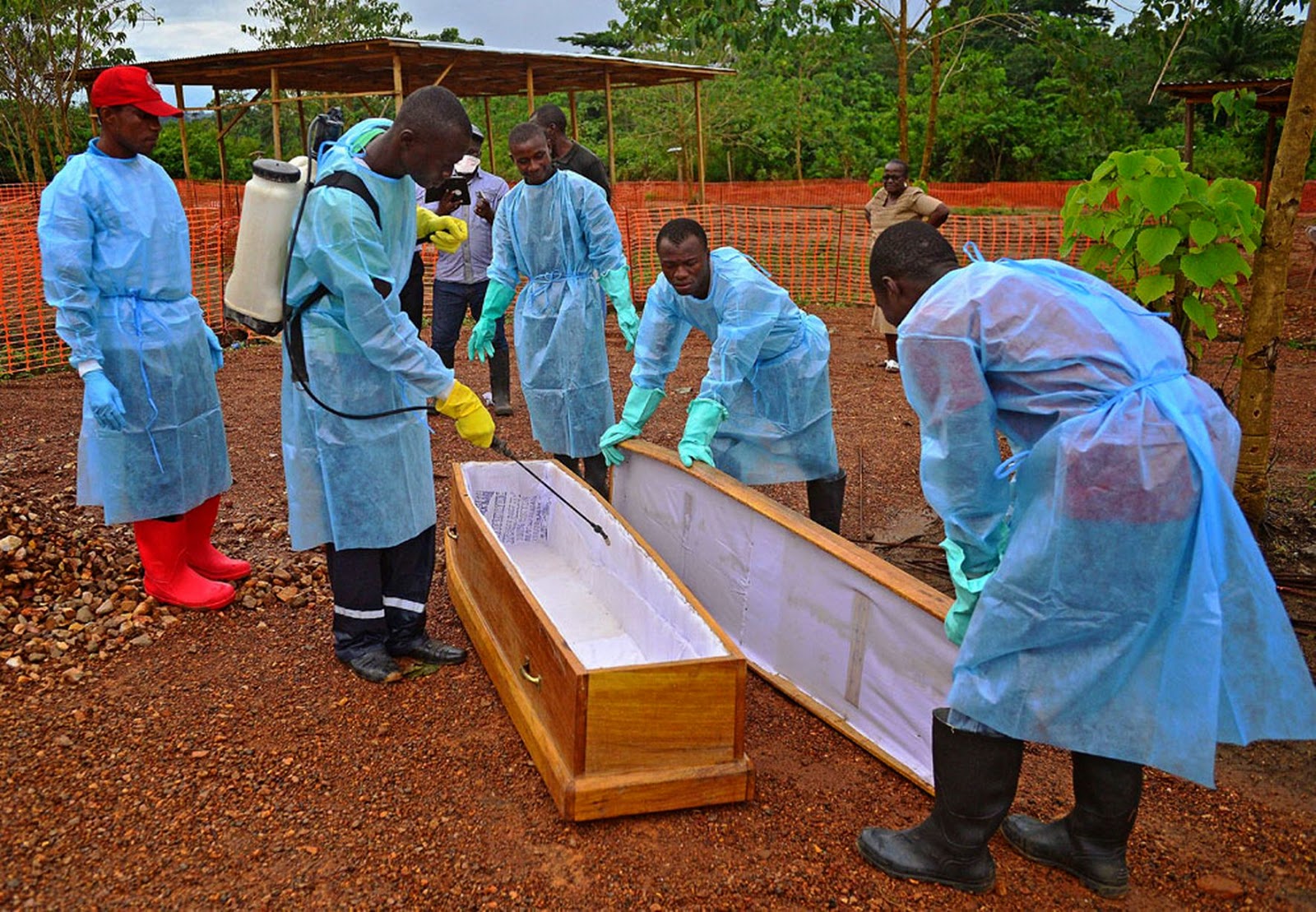
Guidance for Safe Handling of Human Remains of Ebola Patients in U.S.
NIOSH Releases New Ebola Guidance
Given the systems currently in place to identify people with Ebola virus disease (EVD), any Ebola-related deaths in the United States would likely occur within a hospital setting. The Ebola virus can be detected throughout the bodies of patients who die of the disease. Ebola can be transmitted in postmortem care settings by laceration and puncture with contaminated instruments used during postmortem care, through direct handling of human remains without recommended PPE, and through splashes of blood or other body fluids such as urine, saliva, feces, or vomit to unprotected mucosa such as eyes, nose, or mouth during postmortem care.Page Summary
- Who this is for: Personnel who perform postmortem care in U.S. hospitals and mortuaries.
- What this is for: To protect against the postmortem spread of Ebola infection at the site of death, prior to transport, during transport, at the mortuary, and during final disposition of remains
- How to use: To guide staff in the safe handling of human remains that may contain Ebola virus by properly using personal protective equipment (PPE) and following decontamination measures at every step of the process.
-----------------------------------------------------------
Sigue este Blog en Facebook y Twitter
miércoles, 11 de marzo de 2015
Ya se abrieron las inscripciones al 7º Simposio de #Bioseguridad #AMexBio
INFORMES:
http://amexbio.wildapricot.org/SIBB
-----------------------------------------------------------
Sigue este Blog en Facebook y Twitter
lunes, 9 de marzo de 2015
Non-Manual Techniques for Room Disinfection in Healthcare Facilities: A Review of Clinical Effectiveness and Guidelines
REFERENCE:
Non-Manual Techniques for Room Disinfection in Healthcare Facilities: A Review of Clinical Effectiveness and Guidelines. Ottawa (ON): Canadian Agency for Drugs and Technologies in Health; 2014 Apr 30.
-----------------------------------------------------------
Sigue este Blog en Facebook y Twitter
viernes, 6 de marzo de 2015
Invitación para presentar trabajos libres en el Simposio de #Bioseguridad #AMexBio #SIBB15
Informes para la presentación de trabajos visite: http://amexbio.wildapricot.org/Trabajos
Descargue la convocatoria y registre su trabajo en línea.
FECHA LÍMITE DE RECEPCIÓN DE TRABAJOS: 08 de mayo de 2015
-----------------------------------------------------------
Sigue este Blog en Facebook y Twitter
jueves, 5 de marzo de 2015
Evaluation of disinfectants to prevent mechanical transmission of viruses and a viroid in greenhouse tomato production
REFERENCE:
Li R, et al. Evaluation of disinfectants to prevent mechanical transmission of viruses and a viroid in greenhouse tomato production. Virol J. 2015 Jan 27;12(1):5.
-----------------------------------------------------------
Sigue este Blog en Facebook y Twitter
lunes, 2 de marzo de 2015
Pathogen Security-Help or Hindrance?
REFERENCE:
Morse SA. Pathogen security-help or hindrance? Front Bioeng Biotechnol. 2015 Jan 6;2:83.
-----------------------------------------------------------
Sigue este Blog en Facebook y Twitter
viernes, 27 de febrero de 2015
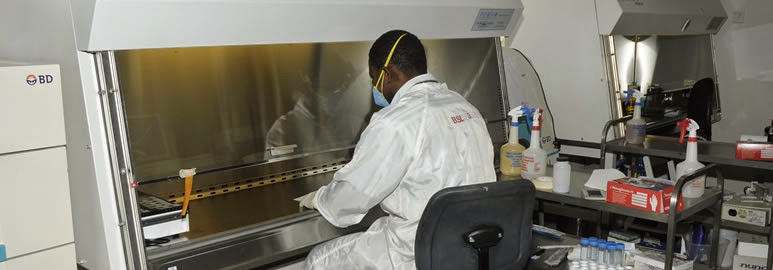
Laboratory Test Support for #Ebola Patients Within a High-Containment Facility
Two adult United States (US) nationals contracted the Ebola virus while on a humanitarian mission in Africa amidst a large Ebola outbreak there. They were admitted to our medical center (Emory University Hospital in Atlanta, GA) during the first week of August 2014 for treatment. Both survived their illness and were released after approximately 3 weeks of inpatient care. We received approximately 3 days’ advance notice that the first patient would be transported from Africa to our medical center; the second patient arrived 3 days after the first. The diagnosis in each case had been confirmed virologically by detecting Ebola-specific nucleic acid in blood specimens sent to a World Health Organization laboratory in Europe; however, few details of either patient’s condition had been available to us before their arrival. Herein, we summarize the approach we used to plan for and provide laboratory diagnostic testing during their treatment.REFERENCE:
Hill CE, et al. Laboratory test support for ebola patients within a high-containment facility. Lab Med. 2014 Summer;45(3):e109-11.
-----------------------------------------------------------
Sigue este Blog en Facebook y Twitter
miércoles, 25 de febrero de 2015
Transmission of #Ebola Viruses
Available evidence demonstrates that direct patient contact and contact with infectious body fluids are the primary modes for Ebola virus transmission, but this is based on a limited number of studies. Key areas requiring further study include (i) the role of aerosol transmission (either via large droplets or small particles in the vicinity of source patients), (ii) the role of environmental contamination and fomite transmission, (iii) the degree to which minimally or mildly ill persons transmit infection, (iv) how long clinically relevant infectiousness persists, (v) the role that “superspreading events” may play in driving transmission dynamics, (vi) whether strain differences or repeated serial passage in outbreak settings can impact virus transmission, and (vii) what role sylvatic or domestic animals could play in outbreak propagation, particularly during major epidemics such as the 2013–2015 West Africa situation. In this review, we address what we know and what we do not know about Ebola virus transmission. We also hypothesize that Ebola viruses have the potential to be respiratory pathogens with primary respiratory spread. REFERENCE:
Osterholm MT, et al. Transmission of ebola viruses: what we know and what we do not know. MBio. 2015 Feb 19;6(2).
-----------------------------------------------------------
Sigue este Blog en Facebook y Twitter

lunes, 23 de febrero de 2015
#Ebola outbreak in Western Africa 2014: what is going on with Ebola virus?
REFERENCE:
Na W, et al. Ebola outbreak in Western Africa 2014: what isgoing on with Ebola virus? Clin Exp Vaccine Res. 2015 Jan;4(1):17-22. Review.
-----------------------------------------------------------
Sigue este Blog en Facebook y Twitter
jueves, 19 de febrero de 2015
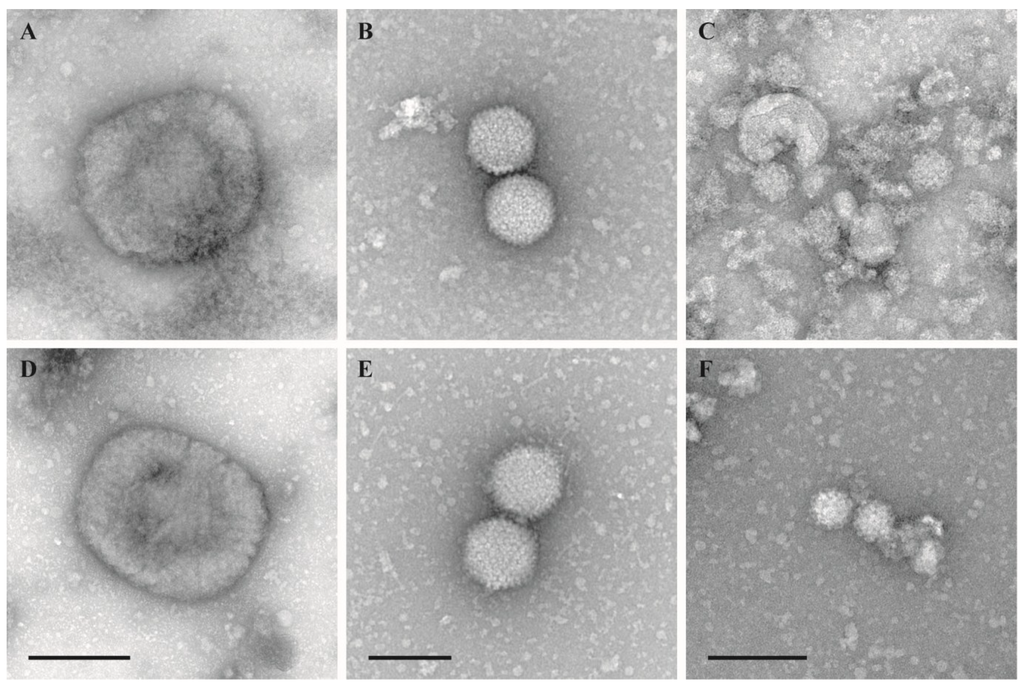
Evaluation of Virus Inactivation by Formaldehyde to Enhance Biosafety
REFERENCE:
Möller L, Schünadel L, Nitsche A, Schwebke I, Hanisch M, Laue M. Evaluation of Virus Inactivation by Formaldehyde to Enhance Biosafety of Diagnostic Electron Microscopy. Viruses. 2015 Feb 10;7(2):666-679.
-----------------------------------------------------------
Sigue este Blog en Facebook y Twitter
martes, 3 de febrero de 2015
Guidance on regulations for the Transport of Infectious Substances 2015-2016
Applicable as from 1 January 2015
Publication details
Number of pages: 38
Publication date: 2015
Languages: English
WHO reference number: WHO/HSE/GCR/2015.2
Downloads
Overview
This publication provides information for identifying, classifying, marking, labelling, packaging, documenting and refrigerating infectious substances for transportation and ensuring their safe delivery.
The document provides practical guidance to facilitate compliance with applicable international regulations for the transport of infectious substances by all modes of transport, both nationally and internationally, and include the changes that apply from 1 January 2015. The current revision replaces the document issued by the World Health Organization (WHO) in 2012 (document WHO/CDS/EPR/2012.12). This publication, however, does not replace national and international transport regulation.
Descarga http://apps.who.int/iris/bitstream/10665/149288/1/WHO_HSE_GCR_2015.2_eng.pdf?ua=1&ua=1
lunes, 2 de febrero de 2015
Survey of Safety Practices Among Hospital Laboratories in Ethiopia
METHOD:
RESULT:
CONCLUSION:
REFERENCIA:
Sewunet T et al. Survey of Safety Practices Among Hospital Laboratories in Oromia Regional State, Ethiopia. Ethiop J Health Sci. Oct 2014; 24(4): 307–310.
-----------------------------------------------------------
Sigue este Blog en Facebook y Twitter
jueves, 29 de enero de 2015
Feasibility of establishing a BSL3 tuberculosis culture lab in a resource-limited setting
Methods: Between September 2008 and April 2009, the laboratory was set-up with financial support from external partners. After an initial procedure validation phase in parallel with the National TB Reference Laboratory (NTRL) and legal approvals, the laboratory registered for external quality assessment (EQA) from the NTRL, WHO, National Health Laboratories Services (NHLS), and the College of American Pathologists (CAP). The laboratory also instituted a functional quality management system (QMS). Pioneer funding ended in 2012 and the laboratory remained in self-sustainability mode.
Results: The laboratory achieved internationally acceptable standards in both structural and biosafety requirements. Of the 14 patient samples analyzed in the procedural validation phase, agreement for all tests with NTRL was 90% (P <0.01). It started full operations in October 2009 performing smear microscopy, culture, identification, and drug susceptibility testing (DST). The annual culture workload was 7,636, 10,242, and 2,712 inoculations for the years 2010, 2011, and 2012, respectively. Other performance indicators of TB culture laboratories were also monitored. Scores from EQA panels included smear microscopy >80% in all years from NTRL, CAP, and NHLS, and culture was 100% for CAP panels and above regional average scores for all years with NHLS. Quarterly DST scores from WHO-EQA ranged from 78% to 100% in 2010, 80% to 100% in 2011, and 90 to 100% in 2012.
Conclusions: From our experience, it is feasible to set-up a BSL-3 TB culture laboratory with acceptable quality performance standards in resource-limited countries. With the demonstrated quality of work, the laboratory attracted more research groups and post-pioneer funding, which helped to ensure sustainability. The high skilled experts in this research laboratory also continue to provide an excellent resource for the needed national discussion of the laboratory and quality management systems.
REFERENCIA:
Ssengooba, W., et al. Feasibility of establishing a biosafety level 3 tuberculosis culture laboratory of acceptable quality standards in a resource-limited setting: an experience from Uganda. Health Research Policy and Systems 2015, 13:4
-----------------------------------------------------------
Sigue este Blog en Facebook y Twitter
lunes, 26 de enero de 2015
License to Serve - U.S. Trainees and the #Ebola Epidemic
Rosenbaum L. License to Serve — U.S. Trainees and the Ebola Epidemic. N Engl J Med. 2014 Dec 17.
viernes, 23 de enero de 2015
The hidden face of academic researches on classified highly pathogenic microorganisms
REFERENCE:
Devaux CA. The hidden face of academic researches on classified highly pathogenic microorganisms. Infect Genet Evol. 2015 Jan;29:26-34. doi: 10.1016/j.meegid.2014.10.028. Epub 2014 Nov 7.
-----------------------------------------------------------
Sigue este Blog en Facebook y Twitter
jueves, 15 de enero de 2015
Preventing Worker Fatigue Among #Ebola Healthcare Workers #CDC
Additionally, the personal protective equipment (PPE) required for working with Ebola patients can increase workers’ core body temperature, contributing significantly to fatigue. Although these guidelines are geared toward workers responding in the United States, the same concepts apply to those working in other countries.
DOWNLOAD / DESCARGA
-----------------------------------------------------------
Sigue este Blog en Facebook y Twitter
martes, 13 de enero de 2015
A los patrocinadores de #AMexBio
Las personas interesadas en promover sus productos en el próximo VII Simposio de Bioseguridad y Biocustodia de la Asociación Mexicana de Bioseguridad A.C. Existen amplias oportunidades para posicionar sus marcas ante este público especializado.Mayor información con:
Cristina Wilhelm
cristina.wilhelm[at´]amexbio.org
Guillermo Wilhelm Ferriz
Nextel Id: 52*167789*3
Tel Fijo: (473) 732-4681
Tel Celular: (55) 4410-6383
guillermo_wilhelmf[at´]hotmail.com
-----------------------------------------------------------
Sigue este Blog en Facebook y Twitter
lunes, 8 de diciembre de 2014
Plant-made #vaccine antigens against #malaria
REFERENCE:
Clemente M, Corigliano MG. Overview of plant-made vaccine antigens against malaria. J Biomed Biotechnol. 2012;2012:206918.
-------------------------------------------------
Sigue este Blog en Facebook y Twitter
jueves, 4 de diciembre de 2014
Conferencia: "#Ebola, panorama epidemiológico"
Impartida por el Dr. Mario Martínez González.Asesor de la Organización Panamericana de Salud.
Lunes 8 de diciembre del 2014
De 12:00 a 14:00 hrs.
En la sala 2 del Auditorio de la Unidad de Posgrado,
Universidad Nacional Autónoma de México
Ver MAPA
-----------------------------------------------------------
Sigue este Blog en Facebook y Twitter
martes, 2 de diciembre de 2014
Alberto Díaz Quiñonez, recibe el "IFBA Biosafety Heroes Award 2014" #AMexBio
Sigue este Blog en Facebook y Twitter
viernes, 28 de noviembre de 2014
Chimpanzee Adenovirus Vector #Ebola Vaccine - Preliminary Report.
Background lunes, 24 de noviembre de 2014
Algae-based oral recombinant vaccines
REFERENCE:
Specht EA and Mayfield SP. Algae-based oral recombinant vaccines. Front Microbiol. 2014; 5: 60.
-----------------------------------------------------------
Sigue este Blog en Facebook y Twitter