Ver este documental en Inglés en PBS FRONTLINE
-----------------------------------------------


 Diferentes organizaciones de salud emitieron recomendaciones de salud para los viajeros a la copa del mundo en Brasil en Junio. Estas recomendaciones incluyen:

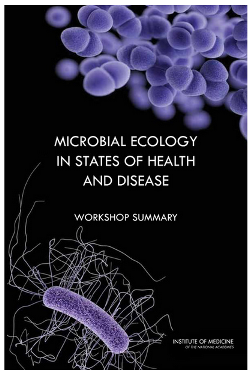 Individually and collectively, resident microbes play important roles in host health and survival. Shaping and shaped by their host environments, these microorganisms form intricate communities that are in a state of dynamic equilibrium. This ecologic and dynamic view of host-microbe interactions is rapidly redefining our view of health and disease. It is now accepted that the vast majority of microbes are, for the most part, not intrinsically harmful, but rather become established as persistent, co-adapted colonists in equilibrium with their environment, providing useful goods and services to their hosts while deriving benefits from these host associations. Disruption of such alliances may have consequences for host health, and investigations in a wide variety of organisms have begun to illuminate the complex and dynamic network of interaction - across the spectrum of hosts, microbes, and environmental niches - that influence the formation, function, and stability of host-associated microbial communities.

 Sustainable and effective control of dengue is hampered due to a number of factors, including the lack of evidence-based, locally relevant interventions; insufficient information regarding key components of virus transmission and vector ecology; failure to implement precise and efficient surveillance systems; inefficient healthcare systems; ineffective health promotion and outreach resulting in lack of community dialogue and participation; and a paucity of efficient diagnostic strategies and clinical attention. Increased research efforts in response to the complexity of this problem have focused on the development of novel technologies that would enhance existing tools for vector-borne disease prevention. Genetic strategies to reduce or replace mosquito populations and thereby interrupt transmission of dengue viruses are among the new approaches being considered. Many of these approaches take advantage of molecular genetic tools to engineer traits that cause lethal phenotypes or confer resistance to the pathogen in the mosquito.



+(1).png)

Para más información sobre programa, inscripción, becas, envío de resúmenes de trabajos libres y otros, favor de visitar:Exposición Comercial
www.sibb.info


 |
| Map of Guinea Showing Initial Locations of the Outbreak of Ebola Virus Disease |

