 |
| www.amexbio.org |

sábado, 7 de junio de 2014

jueves, 29 de mayo de 2014
Conferencias sobre Biotecnología y Derecho

sobre Biotecnología y Derecho.
Al finalizar el ciclo de conferencias, el alumno:
1. Distinguirá en qué consisten los organismos genéticamente modificados.
2. Conocerá el marco jurídico aplicable en materia de bioseguridad y organismos genéticamente modificados.
3. Contará con un panorama general sobre Biotecnología e innovación científica.
Dirigido al público en general interesado en el tema.
CONVOCATORIA - REGISTRO
INVITA:
Instituto de la Judicatura Federal
Escuela Judicial
martes, 27 de mayo de 2014
AVISOS #AMEXBIO Sobre el simposio #SIBB14

AVISO 2. Quedan POCOS lugares para los cursos presimposio de:
- Planificación, Diseño y Construcción de laboratorios de Contención
- Cabinas de Seguridad Biológica
- Regulación para Organismos Genéticamente Modificados
Ya están CERRADOS (llenos) los cursos presimposio de:
- Evaluación de Riesgos desde la perspectiva de Bioseguridad
- Comités de bioseguridad institucionales
- Desarrollo de Manuales de Bioseguridad y Biocustodia para laboratorios
Aún hay lugares en el resto de los cursos.
lunes, 26 de mayo de 2014
Recomendaciones de salud para el Mundial Brasil 2014
 Diferentes organizaciones de salud emitieron recomendaciones de salud para los viajeros a la copa del mundo en Brasil en Junio. Estas recomendaciones incluyen:
- Contratar un seguro médico del viajero, en caso de emergencias. Pregunte en su agencia de viajes.
- Preparar un kit de salud del viajero. Incluir medicamentos que pueden ser de utilidad en caso de emergencia, como por ejemplo: anti-histamínicos, anti-ácidos, antisépticos, repelente de mosquitos, etc.
- VACUNAS recomendadas:
- Varicela
- Poliomelitis
- Influenza
- Sarampión, paperas, rubéola (MMR)
- Difteria, tétanos, pertusis
- Fiebre amarilla
- Rabia
- Hepatitis A y hepatitis B
Sigue este Blog en Facebook y Twitter
Knowledge Levels Regarding Crimean-Congo Hemorrhagic Fever Among Emergency Healthcare Workers in an Endemic Region

REFERENCE
Yolcu S. et. al. Knowledge Levels Regarding Crimean-Congo Hemorrhagic Fever Among Emergency Healthcare Workers in an Endemic Region. J Clin Med Res. Jun 2014; 6(3): 197–204.
--------------------------------------------
Sigue este Blog en Facebook and Twitter
viernes, 23 de mayo de 2014
miércoles, 21 de mayo de 2014
Convocatoria para miembros #AMexBio

Aproveche los descuentos en cursos y congreso.
PERIODO DE RECEPCIÓN DE DOCUMENTOS:
ENERO A MAYO DE CADA AÑO.
=> CONVOCATORIA <=
-----------------------------------------------------
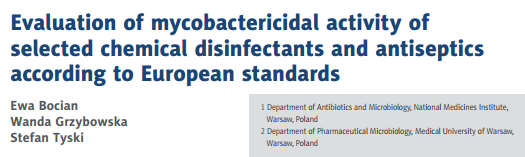
Evaluation of mycobactericidal activity of #disinfectants
REFERENCE:
Bocian E. et al. Evaluation of mycobactericidal activity of selected chemical disinfectants and antiseptics according to European standards. Med Sci Monit. 2014; 20: 666–673.
--------------------------------------------
Sigue este Blog en Facebook y Twitter
lunes, 19 de mayo de 2014
Microbial Ecology in States of Health and Disease
 Individually and collectively, resident microbes play important roles in host health and survival. Shaping and shaped by their host environments, these microorganisms form intricate communities that are in a state of dynamic equilibrium. This ecologic and dynamic view of host-microbe interactions is rapidly redefining our view of health and disease. It is now accepted that the vast majority of microbes are, for the most part, not intrinsically harmful, but rather become established as persistent, co-adapted colonists in equilibrium with their environment, providing useful goods and services to their hosts while deriving benefits from these host associations. Disruption of such alliances may have consequences for host health, and investigations in a wide variety of organisms have begun to illuminate the complex and dynamic network of interaction - across the spectrum of hosts, microbes, and environmental niches - that influence the formation, function, and stability of host-associated microbial communities.
Microbial Ecology in States of Health and Disease is the summary of a workshop convened by the Institute of Medicine's Forum on Microbial Threats in March 2013 to explore the scientific and therapeutic implications of microbial ecology in states of health and disease. Participants explored host-microbe interactions in humans, animals, and plants; emerging insights into how microbes may influence the development and maintenance of states of health and disease; the effects of environmental change(s) on the formation, function, and stability of microbial communities; and research challenges and opportunities for this emerging field of inquiry.
REFERENCE:
Institute of Medicine. Microbial Ecology in States of Health and Disease: Workshop Summary. Washington, DC: The National Academies Press, 2014.
--------------------------------------------
Sigue este Blog en Facebook o Twitter.
viernes, 16 de mayo de 2014
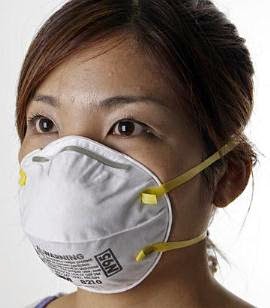
Fitting Characteristics of #N95 Filtering-Facepiece #Respirators Used Widely in China
REFERENCE:
Yu et al. Fitting Characteristics of N95 Filtering-Facepiece Respirators Used Widely in China. PLoS One. 2014; 9(1): e85299.
--------------------------------------------
Sigue este Blog en Facebook y Twitter.
jueves, 15 de mayo de 2014
Middle East respiratory syndrome coronavirus, #MERS -CoV

Middle East respiratory syndrome coronavirus (MERS-CoV).
This strain of coronavirus that causes MERS was first identified in 2012 in Saudi Arabia. Our understanding of the virus and the disease it causes is continuing to evolve.
UPDATE: May 15th, 2014. The cases of laboratory confirmed MERS-CoV have been reported from Jordan, Lebanon, the Netherlands, the United Arab Emirates, and the United States.
--------------------------------------------
Sigue este Blog en Facebook y Twitter.
miércoles, 14 de mayo de 2014
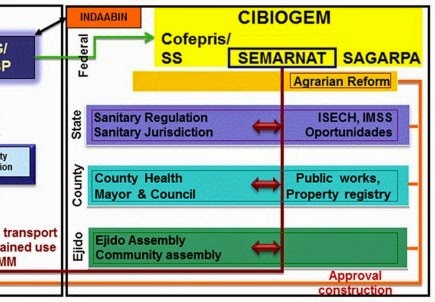
#México: A Regulatory Structure for Working with Genetically Modified Mosquitoes
 Sustainable and effective control of dengue is hampered due to a number of factors, including the lack of evidence-based, locally relevant interventions; insufficient information regarding key components of virus transmission and vector ecology; failure to implement precise and efficient surveillance systems; inefficient healthcare systems; ineffective health promotion and outreach resulting in lack of community dialogue and participation; and a paucity of efficient diagnostic strategies and clinical attention. Increased research efforts in response to the complexity of this problem have focused on the development of novel technologies that would enhance existing tools for vector-borne disease prevention. Genetic strategies to reduce or replace mosquito populations and thereby interrupt transmission of dengue viruses are among the new approaches being considered. Many of these approaches take advantage of molecular genetic tools to engineer traits that cause lethal phenotypes or confer resistance to the pathogen in the mosquito.
We addressed the regulatory challenges associated with testing a strain of Aedes aegypti engineered to result in population suppression in contained field trials in southwestern Mexico.
REFERENCE:
Ramsey JM et. al. A Regulatory Structure for Working with Genetically Modified Mosquitoes: Lessons from Mexico. PLoS Negl Trop Dis. Mar 2014; 8(3): e2623.
--------------------------------------------
Sigue este Blog en Facebook and Twitter.
lunes, 12 de mayo de 2014
#MERS -CoV sequenced and cultured from Dromedary Camels in Saudi Arabia

REFERENCIA:
Briese T, et al. 2014. Middle East respiratory syndrome coronavirus quasispecies that include homologues of human isolates revealed through whole-genome analysis and virus cultured from dromedary camels in Saudi Arabia. mBio 5(3):e01146-14. doi:10.1128/mBio.01146-14.
--------------------------------------------
Sigue este Blog en Facebook y Twitter.
Technologies to Enable Autonomous Detection for #BioWatch

Technologies to Enable Autonomous Detection for BioWatch is the summary of a workshop hosted jointly by the Institute of Medicine and the National Research Council in June 2013 to explore alternative cost-effective systems that would meet the requirements for a BioWatch Generation 3.0 autonomous detection system, or autonomous detector, for aerosolized agents.
REFERENCE:
Institute of Medicine and National Research Council. Technologies to Enable Autonomous Detection for BioWatch: Ensuring Timely and Accurate Information for Public Health Officials : Workshop Summary. Washington, DC: The National Academies Press, 2014.
--------------------------------------------
NEWS: Homeland Security cancels plans for new BioWatch technology
--------------------------------------------
Sigue este Blog en Facebook o Twitter
viernes, 9 de mayo de 2014
Acute Exposure Guideline Levels for Selected Airborne Chemicals
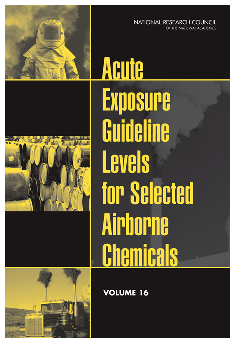
Acute Exposure Guideline Levels for Selected Airborne Chemicals, Volume 16 identifies, reviews, and interprets relevant toxicologic and other scientific data for selected aliphatic nitriles, benzonitrile, methacrylonitrile, allyl alcohol, hydrogen selenide, ketene, and tear gasin order to develop acute exposure guideline levels (AEGLs) for these high-priority, acutely toxic chemicals.
REFERENCE:
National Research Council. Acute Exposure Guideline Levels for Selected Airborne Chemicals: Volume 16. Washington, DC: The National Academies Press, 2014. Free by registering.
--------------------------------------------
Sigue este Blog en Facebook o Twitter.
viernes, 2 de mayo de 2014
5 de Mayo. Salve vidas: lávese las manos @who @pahowho @opsoms


=> Campaña mundial anual de la OMS. 5 de mayo de 2014 <=
Está preparado para evitar la propagación de microorganismos resistentes a los antimicrobianos?
La OMS le pide que el 5 de mayo de 2014 se nos una en una campaña sobre el papel de la higiene de las manos en la lucha contra la resistencia a los antimicrobianos.
Si no actuamos hoy no habrá curación mañana: asegúrese de que los 5 Momentos de la OMS para la higiene de las manos se integran en la protección de sus pacientes frente a los microorganismos resistentes.
El mundo ha sufrido un cambio irreversible: los patógenos multirresistentes han venido para quedarse. Para combatirlos son esenciales las medidas de prevención de las infecciones. La OMS presentará en breve un llamamiento a la acción para el 5 de mayo de 2014. Pronto podrá ver cómo participar en las actividades de este año, dedicado al tema de la resistencia a los antimicrobianos y la higiene de las manos.
REFERENCIAS:
- Material y documentos sobre la higiene de manos
- SALVE VIDAS: Lávese las manos
- => WHO Guidelines on Hand Hygiene in Health Care (revised Aug 2009) <=
- Tools and resources
--------------------------------------------
Sigue este Blog en Facebook y Twitter
miércoles, 30 de abril de 2014
#FelizDiaDelNiño: 28 dias después, el #cómic en México por @kamite5


Para este puente y día del niño aquí en México, les traigo algo cool! Pues nada, que esta semana andaba fisgoneando en una de esas librerías del restaurante de los buhitos, buscando una revistilla para entretenerme, y en la sección de comics veo unos grandes símbolos de riesgo biológico. Con la obviedad de que eran cómics, sólo decían "28 días después", y como pueden ver en la foto, sin introducción ni nada. Hábilmente, la editorial (Kamite) las vende empaquetadas, así que eso de hojearlas, olvídenlo! Así, que al revisar las portadas de los números disponibles (12 hasta el momento), pude deducir: a) zombies; b) la pelicula "Exterminio"; c) seguro es un virus.
Me puse a investigar, y Sector Cómic Mx nos cuenta la historia de este cómic en español. El cómic Cuenta la historia de que pasa con Selena, después de la primer película. La calidad es en estilo de los cómics americanos, de 24 páginas/número. $30 pesos por número. De acuerdo a Sector Cómic Mx, la serie estará limitada a 35 números. Así que no me he podido resistir, y tengo los primeros 5 números!
lunes, 28 de abril de 2014
Development and Performance Evaluation of an Exhaled-Breath #Bioaerosol Collector for #Influenza Virus
Abstract
 The importance of the aerosol mode for transmission of influenza is unknown. Understanding the role of aerosols is essential to developing public health interventions such as the use of surgical masks as a source control to prevent the release of infectious aerosols. Little information is available on the number and size of particles generated by infected persons, which is partly due to the limitations of conventional air samplers, which do not efficiently capture fine particles or maintain microorganism viability. We designed and built a new sampler, called the G-II, that collects exhaled breath particles that can be used in infectivity analyses. The G-II allows test subjects to perform various respiratory maneuvers (i.e. tidal breathing, coughing, and talking) and allows subjects to wear a mask or respirator during testing. A conventional slit impactor collects particles > 5.0 μm. Condensation of water vapor is used to grow remaining particles, including fine particles, to a size large enough to be efficiently collected by a 1.0 μm slit impactor and be deposited into a buffer-containing collector. We evaluated the G-II for fine particle collection efficiency with inert particle aerosols and evaluated infective virus collection using influenza A virus aerosols. Testing results showed greater than 85% collection efficiency for particles greater than 50nm and influenza virus collection comparable with a reference SKC BioSampler®. The new design will enable determination of exhaled infectious virus generation rate and evaluate control strategies such as wearing a surgical type mask to prevent the release of viruses from infected persons.
REFERENCE:
McDevitt JJ, Koutrakis P, Ferguson ST, et al. Development and Performance Evaluation of an Exhaled-Breath Bioaerosol Collector for Influenza Virus. Aerosol Sci Technol. 2013 January 1; 47(4): 444–451.
REFERENCE:
McDevitt JJ, Koutrakis P, Ferguson ST, et al. Development and Performance Evaluation of an Exhaled-Breath Bioaerosol Collector for Influenza Virus. Aerosol Sci Technol. 2013 January 1; 47(4): 444–451.
miércoles, 23 de abril de 2014
Programa del VI Simposio Internacional de #Bioseguridad y #Biocustodia #SIBB14 #Amexbio
+(1).png)
Fechas: 4 al 7 de junio de 2014
Lugar: Instalaciones de la UANL, en Monterrey, Nuevo León, México

Cursos y talleres a escoger (4 y 5 de junio)
- Bioseguridad en hospitales e instituciones de salud
- Bioseguridad en animalarios- Bioseguridad en granjas y durante emergencias agropecuarias
- Embalaje y envío de materiales biológico-infecciosos
- Evaluación de riesgo biológico
- Comité institucional de bioseguridad para investigación
- Cabinas de seguridad biológica
- Desarrollo de manuales de bioseguridad y biocustodia
- Ingeniería para el profesional en bioseguridad
- Planeación, diseño y construcción de laboratorios de contención
- Regulación de organismos genéticamente modificados
- Bioseguridad (curso básico)
Simposio (6 y 7 de junio): Bioseguridad y Globalización.
- Mesas redondas
- Bio-cineclub
- Trabajos libres en cartel
- Expo comercial
Para más información sobre programa, inscripción, becas, envío de resúmenes de trabajos libres y otros, favor de visitar:Exposición Comercial
www.sibb.info
Conozca los nuevos productos y servicios para la gestión del riesgo biológico así como las barreras para el manejo de materiales biológico infecciosos.
--------------------------------------------
© 2014 Asociación Mexicana de Bioseguridad A.C.
Av. Mazatlán 97. Col. Condesa. Del Cuauhtémoc. México D.F. 06140.
http://amexbio.org
Sigue este Blog en Facebook y Twitter.
lunes, 21 de abril de 2014
Día Mundial contra el #Paludismo #malaria - 25 de Abril


- El paludismo, o malaria, es una enfermedad potencialmente mortal causada por parásitos que se transmiten al ser humano por la picadura de mosquitos infectados.
- En 2012, el paludismo causó cerca de 627 000 muertes (con un margen de incertidumbre que oscila entre 473 000 y 789 000), sobre todo en niños africanos.
- El paludismo es prevenible y curable.
- Gracias al aumento de las medidas de prevención y control la carga de la enfermedad se está reduciendo notablemente en muchos lugares.
- Los viajeros no inmunes procedentes de zonas sin paludismo que contraen la infección son muy vulnerables a la enfermedad
REFERENCIAS:
--------------------------------------------
viernes, 18 de abril de 2014
Emergence of Zaire Ebola Virus Disease in Guinea — Preliminary Report
 |
| Map of Guinea Showing Initial Locations of the Outbreak of Ebola Virus Disease |
In March 2014, the World Health Organization was notified of an outbreak of a communicable disease characterized by fever, severe diarrhea, vomiting, and a high fatality rate in Guinea. Virologic investigation identified Zaire ebolavirus (EBOV) as the causative agent. Full-length genome sequencing and phylogenetic analysis showed that EBOV from Guinea forms a separate clade in relationship to the known EBOV strains from the Democratic Republic of Congo and Gabon. Epidemiologic investigation linked the laboratory-confirmed cases with the presumed first fatality of the outbreak in December 2013. This study demonstrates the emergence of a new EBOV strain in Guinea.
REFERENCIAS:
Baize S. et al. Emergence of Zaire Ebola Virus Disease in Guinea — Preliminary Report. NEJM 2014, April 16, 2014DOI: 10.1056/NEJMoa1404505
--------------------------------------------
Sigue este Blog en Facebook y Twitter.
miércoles, 9 de abril de 2014
AUDIO: WHO press conference on #Ebola outbreak 08/APR/2014
Conferencia de prensa 08/APR/2014.
Por Keiji Fukuda, MD, WHO's assistant director-general for health security and environment.
Stephane Hugonnet, MD, WHO medical officer who returned from Guinea this past weekend
RESUMEN:
Este es una de las epidemias de ébola más desafiantes y difíciles enfrentadas. El trabajo de WHO ha sido en colaboración y apoyo con diversas instituciones (Médicos sin fronteras, Instituto Pasteur, CDC, Cruz Roja, UNICEF, Samaritan Purse, World Food Program y la Universidad de Tulane) y de diversos países, incluyendo Canadá, DR Congo, Unión Europea, Italia, Gabón, Alemania, Korea del Sur, Uganda.
Ébola es una enfermedad severa, pero que conocemos como se transmite, por lo que puede ser controlada. Si las personas tomas las medidas adecuadas, la enfermedad puede controlarse, especialmente identificando a las personas enfermas y contactos cercanos. Debido al miedo que esta enfermedad produce, es absolutamente crítico proveer a las personas los datos y hechos, para que las personas sepan cómo trabajar.
CASOS:
GUINEA LIBERIA SIERRA LEONA GHANA MALI
157 casos 23 probables 2 probables No confirmados No confirmados
101 muertos 7 muertos No confirmados
5 confirmados
TRABAJO PARA EL CONTROL DE LA EPIDEMIA
- Epidemiología y vigilancia, para identificar casos y contactos.
- Control de infecciones, para evitar transmisión pacientes-personal de salud o pacientes-familiares, mediante el envío de equipo de protección personal a las áreas afectadas, y la implementación de medidas sanitarias.
- Gestión médica, tratamiento sintomático que es de gran importancia. No hay tratamiento específico.
- Laboratorios móviles (2), para la confirmación de los casos
- Comunicación, para evitar rumores, transmitiendo información.
- Movilización social, para facilitar el transporte de pacientes a los hospitales.
- Personal con experiencia de Gabón y Congo se encuentra en Guinea.
Aún hay trasmisión de casos, por lo que la epidemia se encuentra aún en curso.
Al momento hay detección pasiva, es decir que los pacientes llegan a los hospitales. No se ha implementado detección activa, que es buscar casos en casas de áreas afectadas.
AUDIO:
------------------------------------
Sigue este Blog en Facebook y Twitter.
Por Keiji Fukuda, MD, WHO's assistant director-general for health security and environment.
Stephane Hugonnet, MD, WHO medical officer who returned from Guinea this past weekend
RESUMEN:
Este es una de las epidemias de ébola más desafiantes y difíciles enfrentadas. El trabajo de WHO ha sido en colaboración y apoyo con diversas instituciones (Médicos sin fronteras, Instituto Pasteur, CDC, Cruz Roja, UNICEF, Samaritan Purse, World Food Program y la Universidad de Tulane) y de diversos países, incluyendo Canadá, DR Congo, Unión Europea, Italia, Gabón, Alemania, Korea del Sur, Uganda.
Ébola es una enfermedad severa, pero que conocemos como se transmite, por lo que puede ser controlada. Si las personas tomas las medidas adecuadas, la enfermedad puede controlarse, especialmente identificando a las personas enfermas y contactos cercanos. Debido al miedo que esta enfermedad produce, es absolutamente crítico proveer a las personas los datos y hechos, para que las personas sepan cómo trabajar.
CASOS:
GUINEA LIBERIA SIERRA LEONA GHANA MALI
157 casos 23 probables 2 probables No confirmados No confirmados
101 muertos 7 muertos No confirmados
5 confirmados
TRABAJO PARA EL CONTROL DE LA EPIDEMIA
- Epidemiología y vigilancia, para identificar casos y contactos.
- Control de infecciones, para evitar transmisión pacientes-personal de salud o pacientes-familiares, mediante el envío de equipo de protección personal a las áreas afectadas, y la implementación de medidas sanitarias.
- Gestión médica, tratamiento sintomático que es de gran importancia. No hay tratamiento específico.
- Laboratorios móviles (2), para la confirmación de los casos
- Comunicación, para evitar rumores, transmitiendo información.
- Movilización social, para facilitar el transporte de pacientes a los hospitales.
- Personal con experiencia de Gabón y Congo se encuentra en Guinea.
Aún hay trasmisión de casos, por lo que la epidemia se encuentra aún en curso.
Al momento hay detección pasiva, es decir que los pacientes llegan a los hospitales. No se ha implementado detección activa, que es buscar casos en casas de áreas afectadas.
AUDIO:
------------------------------------
Sigue este Blog en Facebook y Twitter.
AUDIO (inglés): Tres semanas de la epidemia de #ébola.
La historia completa de NPR aquí.
--------------------------------------------
Sigue este Blog en Facebook y Twitter
--------------------------------------------
Sigue este Blog en Facebook y Twitter
lunes, 7 de abril de 2014
miércoles, 2 de abril de 2014
Exposure of Laboratory Animal Care Workers to Airborne Mouse and Rat Allergens

Urine of rats and mice is the main source of allergenic proteins that can enter the respiratory tract of laboratory animal care workers. Little is known about the levels and determinants of these exposures in the United States. We investigated the relationship between activities in animal facilities and levels of personal exposure to allergen by collecting personal breathing zone dust samples from 7 caretakers during full workdays for 1 wk. Mice and rat urinary allergens in inhalable dust were quantified via immunoassay. The activities of the sampled workers were observed, and the methods of preventing exposure to allergens were recorded. Mouse urinary allergen was detected in 20 of 39 measurements, yielding a geometric mean of 0.8 ng/m(3) with a maximum of 24 ng/m(3). Washing and cleaning cages and the number of mice handled daily were the most important determinants of personal exposure to mouse urinary allergen, as identified by using multiple linear regressions that explained 51% of total variance. Personal exposures to mouse urinary allergen were associated with day-to-day variation of tasks rather than characteristics of workers. Where potential for personal exposure is the highest, protective measures (N95 masks and cage dumping stations) appeared to be used, as is appropriate. Rat urinary allergen was detected in 4 of 39 measurements; detectable concentrations were between 0.8 and 39 ng/m(3). Only persons who handled rats were exposed to rat urinary allergen. The current findings are valuable for establishing exposure levels against which comparisons of improvement or deterioration of personal exposures can be made.
REFERENCE:
Glueck JT, Huneke RB, Perez H, Burstyn I. Exposure of laboratory animal care workers to airborne mouse and rat allergens. J Am Assoc Lab Anim Sci. 2012;51(5):554-60.
Suscribirse a:
Entradas (Atom)