Lista de correo. Espere su aprobación.
Correo electrónico:
Consultar este grupo

lunes, 28 de julio de 2014

Día Mundial contra la Hepatitis, 28 de julio de 2014

DESCARGA DE POSTERS

Piénselo de nuevo

El 28 de julio de cada año, la OMS y sus asociados conmemoran el Día Mundial contra la Hepatitis con el objetivo de acrecentar la sensibilización y la comprensión de la hepatitis viral y las enfermedades que provoca. La hepatitis viral – un grupo de enfermedades infecciosas que comprende las hepatitis A, B, C, D y E – afecta a millones de personas en todo el mundo, puesto que provoca hepatopatías agudas y crónicas y causa la muerte de cerca de 1,4 millones de personas cada año. A pesar de ello, la hepatitis sigue siendo una enfermedad en gran medida olvidada o desconocida.
El Día Mundial contra la Hepatitis ofrece una oportunidad para centrar la atención en medidas específicas tales como:
  • fortalecer las actividades de prevención, detección y control de la hepatitis viral y sus enfermedades conexas;
  • aumentar la cobertura vacunal contra la hepatitis B e incorporar la vacuna en los programas nacionales de inmunización;
  • coordinar una respuesta mundial contra la hepatitis viral.
El Día Mundial contra la Hepatitis se fijó el 28 de julio en honor del descubridor del virus de la hepatitis B, Profesor Baruch Samuel Blumberg, galardonado con el Premio Nobel, nacido ese día.
REFERENCIAS:
=> Más información (OMS) <=
=> Información de la OPS <=
--------------------------------------------
Sigue este Blog en Facebook y Twitter

miércoles, 16 de julio de 2014

Monitoring #SelectAgent Theft, Loss and Release Reports in USA

cdc.gov
The APHIS/CDC Form 3, Report of Theft, Loss or Release of Select Agents and Toxins (TLR incident report) is the mechanism by which the theft, loss or release of a biological select agent and toxin (BSAT) is reported to the United States Department of Agriculture (USDA)/Animal and Plant Health Inspection Service (APHIS) or Health and Human Services (HHS)/ Center for Disease Control and Prevention (CDC). A total of seven hundred and twenty seven (727) TLR Incident Reports were received by CDC between 2004 and 2010.

REFERENCES:
Henkel RD, et al. Monitoring Select Agent Theft, Loss and Release Reports in the United States—2004-2010. Applied Biosafety Vol. 17, No. 4, 2012:171-180.
-------------------------------------------
Sigue este Blog en Facebook y Twitter 

lunes, 14 de julio de 2014

#LIBRO: Special Immunizations Program

The U.S. Army's Special Immunizations Program is an important component of an overall biosafety program for laboratory workers at risk of exposure to hazardous pathogens. The program provides immunizations to scientists, laboratory technicians and other support staff who work with certain hazardous pathogens and toxins. Although first established to serve military personnel, the program was expanded through a cost-sharing agreement in 2004 to include other government and civilian workers, reflecting the expansion in biodefense research in recent years. Protecting the Frontline in Biodefense Research examines issues related to the expansion of the Special Immunizations Program, considering the regulatory frameworks under which the vaccines are administered, how additional vaccines might be considered for inclusion in the Program, and factors that might influence the development and manufacturing of vaccines for the Special Immunizations Program.
REFERENCE:
National Research Council. Protecting the Frontline in Biodefense Research: The Special Immunizations Program. Washington, DC: The National Academies Press, 2011.
-----------------------------------------------------------
Sigue este Blog en Facebook y Twitter
jueves, 10 de julio de 2014

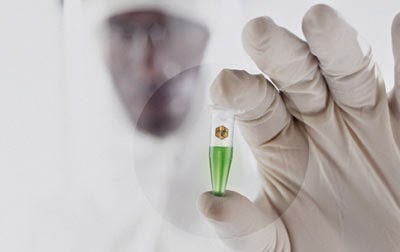
Comparison and analysis of biological agent category lists

the-scientist.com
Biological agents pose a serious threat to human health, economic development, social stability and even national security. The classification of biological agents is a basic requirement for both biosafety and biodefense. We compared and analyzed the Biological Agent Laboratory Biosafety Category list and the defining criteria according to the World Health Organization (WHO), the National Institutes of Health (NIH), the European Union (EU) and China. We also compared and analyzed the Biological Agent Biodefense Category list and the defining criteria according to the Centers for Disease Control and Prevention (CDC) of the United States, the EU and Russia. The results show some inconsistencies among or between the two types of category lists and criteria. We suggest that the classification of biological agents based on laboratory biosafety should reduce the number of inconsistencies and contradictions. Developing countries should also produce lists of biological agents to direct their development of biodefense capabilities.To develop a suitable biological agent list should also strengthen international collaboration and cooperation.
REFERENCE:
Tian D, Zheng T. Comparison and analysis of biological agent category lists based on biosafety and biodefense. PLoS One. 2014 Jun 30;9(6):e101163.
-----------------------------------------------------------
Sigue este Blog en Facebook y Twitter 

jueves, 26 de junio de 2014

El virus de #Chikungunya

La fiebre chikungunya es una enfermedad vírica transmitida al ser humano por mosquitos infectados. Además de fiebre y fuertes dolores articulares, produce otros síntomas, tales como dolores musculares, dolores de cabeza, náuseas, cansancio y erupciones cutáneas. Algunos signos clínicos de esta enfermedad son iguales a los del dengue, con el que se puede confundir en zonas donde este es frecuente. Como no tiene tratamiento curativo, el tratamiento se centra en el alivio de los síntomas. Un factor de riesgo importante es la proximidad de las viviendas a lugares de cría de los mosquitos.  A partir de 2004 la fiebre chikungunya ha alcanzado proporciones epidémicas, y es causa de considerables sufrimientos y morbilidad. La enfermedad se da en África, Asia y el subcontinente indio. En los últimos decenios los vectores de la enfermedad se han propagado a Europa y las Américas. En 2007 se notificó por vez primera la transmisión de la enfermedad en Europa, en un brote localizado en el nordeste de Italia.
En México, se ha reportado el primer caso en Junio de 2014.
REFERENCIAS:
  1. Hoja informativa OMS sobre el virus chikungunya
  2. Hoja informativa OPS sobre el virus chikungunya
  3. Hoja de seguridad del virus de #Chikungunya
------------------------------------------
Sigue este Blog en Facebook y Twitter

lunes, 23 de junio de 2014

Efficacy of surface #disinfectant against gram-negative #bacteria

ABSTRACT (partial).
Background. We determined the efficacy of several SDCs against clinically relevant bacterial species with and without common types of multidrug resistance.
Methods. Bacteria species used were ATCC strains; clinical isolates classified as antibiotic-susceptible; and multi-resistant clinical isolates. The five evaluated SDCs were based on alcohol and an amphoteric substance (AAS), an oxygen-releaser (OR), surface-active substances (SAS), or surface-active-substances plus aldehydes (SASA; two formulations). Bactericidal concentrations of SDCs were determined at two different contact times. Efficacy was defined as a log10 ≥ 5 reduction in bacterial cell count.
Results. SDCs based on AAS, OR, and SAS were effective against all six species irrespective of the degree of multi-resistance. The SASA formulations were effective against the bacteria irrespective of degree of multi-resistance except for one of the four P. aeruginosa isolates (VIM-1). We found no general correlation between SDC efficacy and degree of antibiotic resistance.
Conclusions. SDCs were generally effective against gram-negative bacteria with and without multidrug resistance. SDCs are therefore suitable for surface disinfection in the immediate proximity of patients. Single bacterial isolates, however, might have reduced susceptibility to selected biocidal agents.

REFERENCE:
Reichel M et al. Efficacy of surface disinfectant cleaners against emerging highly resistant gram-negative bacteria. BMC Infect Dis. 2014; 14: 292.
----------------------------------------------
Sigue este Blog en Facebook y Twitter

lunes, 16 de junio de 2014

Placing Global #Biosecurity Engagement Programs under the Umbrella of Global Health Security

Download 1
Download 2
Global biosecurity engagement programs designed to prevent misuse of biological agents and pathogens internationally have increased dramatically under the National Strategy for Countering  Biological Threats (NSCBT), which outlined the commitment of the United States Government towards advancing health security.
But it is difficult to measure the effectiveness of these programs in improving biosecurity given that there have been relatively few attempts to misuse the life sciences. Current metrics that focus on outputs (what was done) as opposed to outcomes (the impact of what was done) have not been helpful in determining how these efforts might be improved in the future. With these metrics in mind, the goals of the programs have traditionally been more quantitative in nature – for example, increasing the number of agents secured and number of scientists engaged. Broadening the scope of biosecurity engagement metrics can help align program goals with a more qualitative approach that prioritizes the international partner’s global health security. Such an approach will be more efficient and successful in improving global and U.S. national biosecurity.
Rozo M. 2014 Placing Global Biosecurity Engagement Programs under the Umbrella of Global Health Security. Federation of American Scientists (FAS).
--------------------------------------------
Sigue este Blog en Facebook y Twitter

viernes, 13 de junio de 2014

miércoles, 11 de junio de 2014

#LIBRO: Conceptos Básicos del Control de Infecciones 2011, ahora en Español!

Esta nueva edición de Conceptos básicos de control de infecciones de IFIC, se elaboró sobre la base de las versiones anteriores. Con un enfoque científico, profundiza y actualiza los conocimientos necesarios para sostener el desarrollo de políticas y procedimientos locales. Este libro está enfocado a las áreas hospitalarias.
Un panel internacional de expertos revisó y actualizó la mayoría de los capítulos. Además se incorporaron secciones nuevas, con el fin de asegurar que esta edición ofrecería un completo y sólido caudal de conocimientos.
REFERENCE:
IFIC’s Basic Concepts of Infection Control, 2nd Edition, 2011

PDF Download:
Español. Descarga 1             Español. Descarga 2
English1                               English2
--------------------------------------------
Sigue este Blog en Facebook y Twitter

jueves, 29 de mayo de 2014

Conferencias sobre Biotecnología y Derecho

La ciencia y la tecnología avanzan vertiginosamente. El derecho no es indiferente a ese progreso. Temas como la modificación genética y la biotecnología deben ser analizados cuidadosamente, no sólo desde el punto de vista legal, sino también científico. Por esa razón, es importante conocer a través de especialistas los conceptos básicos que nos permitan entender el fenómeno. En tal sentido, con el ánimo de contribuir a la actualización de los miembros del Poder Judicial de la Federación y de quienes aspiran pertenecer a él, en temas de novedad e importancia significativa, se delineó el presente Ciclo de Conferencias
sobre Biotecnología y Derecho.
Al finalizar el ciclo de conferencias, el alumno:
1. Distinguirá en qué consisten los organismos genéticamente modificados.
2. Conocerá el marco jurídico aplicable en materia de bioseguridad y organismos genéticamente modificados.
3. Contará con un panorama general sobre Biotecnología e innovación científica.
Dirigido al público en general interesado en el tema.
CONVOCATORIA    -    REGISTRO

INVITA:
Instituto de la Judicatura Federal 
Escuela Judicial

martes, 27 de mayo de 2014

AVISOS #AMEXBIO Sobre el simposio #SIBB14

AVISO 1: el día 1 de junio se cerrará el sistema de registro en línea. Si desea registrarse le pedimos que lo haga directamente en sede, pero por favor considere la disponibilidad de espacios.

AVISO 2. Quedan POCOS lugares para los cursos presimposio de:
- Planificación, Diseño y Construcción de laboratorios de Contención
- Cabinas de Seguridad Biológica
- Regulación para Organismos Genéticamente Modificados

Ya están CERRADOS (llenos) los cursos presimposio de: 
- Evaluación de Riesgos desde la perspectiva de Bioseguridad
- Comités de bioseguridad institucionales
- Desarrollo de Manuales de Bioseguridad y Biocustodia para laboratorios

Aún hay lugares en el resto de los cursos.

lunes, 26 de mayo de 2014

Recomendaciones de salud para el Mundial Brasil 2014

Diferentes organizaciones de salud emitieron recomendaciones de salud para los viajeros a la copa del mundo en Brasil en Junio. Estas recomendaciones incluyen:
  1. Contratar un seguro médico del viajero, en caso de emergencias. Pregunte en su agencia de viajes. 
  2. Preparar un kit de salud del viajero. Incluir medicamentos que pueden ser de utilidad en caso de emergencia, como por ejemplo: anti-histamínicos, anti-ácidos, antisépticos, repelente de mosquitos, etc.
  3. VACUNAS recomendadas:
  • Varicela
  • Poliomelitis
  • Influenza
  • Sarampión, paperas, rubéola (MMR)
  • Difteria, tétanos, pertusis
  • Fiebre amarilla
  • Rabia
  • Hepatitis A y hepatitis B
VEA el resto de las recomendaciones en las siguientes páginas:
--------------------------------------------
Sigue este Blog en Facebook y Twitter 

Knowledge Levels Regarding Crimean-Congo Hemorrhagic Fever Among Emergency Healthcare Workers in an Endemic Region

In this study, we aimed to determine knowledge levels regarding Crimean-Congo hemorrhagic fever (CCHF) among emergency healthcare workers (HCWs) in an endemic region. A questionnaire form consisting of questions about CCHF was applied to the participants. The mean age was 29.6 ± 6.5 years (range 19 - 45). Fifty-four (49.5%) participants were physicians, 39 (35.8%) were nurses and 16 (14.7%) were paramedics. All of the participants were aware of CCHF, and 48 (44%) of them had previously followed CCHF patients. Rates of the use of protective equipment (masks and gloves) during interventions for patients who were admitted to the emergency service with active hemorrhage were 100% among paramedics, 76.9% among nurses and 61.1% among physicians (P = 0.003). Among 86 (78.9%) HCWs who believed that their knowledge regarding CCHF was adequate, 62 (56.9%) declared that they would prefer not to care for patients with CCHF (P = 0.608). The use of techniques to prevent transmission of this disease, including gloves, face masks, face visors and box coats, should be explained to emergency room HCWs, and encouragement should be provided for using these techniques.
REFERENCE
Yolcu S. et. al. Knowledge Levels Regarding Crimean-Congo Hemorrhagic Fever Among Emergency Healthcare Workers in an Endemic Region. J Clin Med Res. Jun 2014; 6(3): 197–204.
--------------------------------------------
Sigue este Blog en Facebook and Twitter