Lista de correo. Espere su aprobación.
Correo electrónico:
Consultar este grupo

jueves, 5 de julio de 2018

Transmisión iatrogénica de priones

Iatrogenic Creutzfeldt-Jakob disease (CJD): recognized causes and worldwide occurrence.

FRAGMENTO:
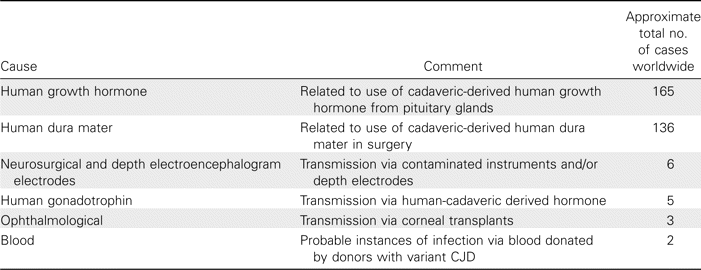
Iatrogenic Creutzfeldt-Jakob Disease (CJD) is simply CJD (most likely sporadic CJD) that is transmitted from one person to another by medical or surgical treatment (table 2) [20]. It is important to note that all forms of prion disease are potentially transmissible, even, remarkably, autosomal dominantly inherited genetic diseases. In addition, there are increasing concerns that variant CJD will lead to significant secondary transmission, with 2 reported cases of probable blood transmission [2122].
REFERENCE:
Richard Knight; Creutzfeldt-Jakob Disease: A Rare Cause of Dementia in Elderly Persons, Clinical Infectious Diseases, Volume 43, Issue 3, 1 August 2006, Pages 340–346,

-----------------------------------------------------------
Sigue este Blog en Facebook y Twitter
Ayúdanos a traducir las fichas de seguridad de microorganismos. www.seguridadbiologica.blogspot.com

#Prions: Beyond a Single Protein

Since the term protein was first coined in 1838 and protein was discovered to be the essential component of fibrin and albumin, all cellular proteins were presumed to play beneficial roles in plants and mammals. However, in 1967, Griffith proposed that proteins could be infectious pathogens and postulated their involvement in scrapie, a universally fatal transmissible spongiform encephalopathy in goats and sheep. Nevertheless, this novel hypothesis had not been evidenced until 1982, when Prusiner and coworkers purified infectious particles from scrapie-infected hamster brains and demonstrated that they consisted of a specific protein that he called a “prion.” Unprecedentedly, the infectious prion pathogen is actually derived from its endogenous cellular form in the central nervous system. Unlike other infectious agents, such as bacteria, viruses, and fungi, prions do not contain genetic materials such as DNA or RNA. The unique traits and genetic information of prions are believed to be encoded within the conformational structure and posttranslational modifications of the proteins. Remarkably, prion-like behavior has been recently observed in other cellular proteins—not only in pathogenic roles but also serving physiological functions. The significance of these fascinating developments in prion biology is far beyond the scope of a single cellular protein and its related disease.
REFERENCIA:
Das AS, Zou W-Q. Prions: Beyond a Single Protein. Clinical Microbiology Reviews. 2016;29(3):633-658.

-----------------------------------------------------------
Sigue este Blog en Facebook y Twitter
Ayúdanos a traducir las fichas de seguridad de microorganismos. www.seguridadbiologica.blogspot.com
lunes, 2 de julio de 2018

The Characterization of #Surgical Smoke from Various Tissues and Its Implications for #Occupational #Safety

Electrosurgery produces surgical smoke. Different tissues produce different quantities and types of smoke, so we studied the particle characteristics of this surgical smoke in order to analyze the implications for the occupational health of the operation room personnel. We estimated the deposition of particulate matter (PM) from surgical smoke on the respiratory tract of operation room personnel using clinically relevant tissues from Finnish landrace porcine tissues including skeletal muscle, liver, subcutaneous fat, renal pelvis, renal cortex, lung, bronchus, cerebral gray and white matter, and skin. In order to standardize the electrosurgical cuts and smoke concentrations, we built a customized computer-controlled platform. The smoke particles were analyzed with an electrical low pressure impactor (ELPI), which measures the concentration and aerodynamic size distribution of particles with a diameter between 7 nm and 10 μm. There were significant differences in the mass concentration and size distribution of the surgical smoke particles depending on the electrocauterized tissue. Of the various tissues tested, liver yielded the highest number of particles. In order to better estimate the health hazard, we propose that the tissues can be divided into three distinct classes according to their surgical smoke production: 1) high-PM tissue for liver; 2) medium-PM tissues for renal cortex, renal pelvis, and skeletal muscle; and 3) low-PM tissues for skin, gray matter, white matter, bronchus, and subcutaneous fat.
REFERENCE:
Karjalainen, Markus et al. “The Characterization of Surgical Smoke from Various Tissues and Its Implications for Occupational Safety.” Ed. Sachiko Matsuzaki. PLoS ONE 13.4 (2018): e0195274. PMC. Web. 4 June 2018.

-----------------------------------------------------------
Sigue este Blog en Facebook y Twitter
Ayúdanos a traducir las fichas de seguridad de microorganismos.

miércoles, 27 de junio de 2018

Potential Impact of a 2-Person Security Rule on #BioSafety Level 4 #Laboratory Workers

Directors of all major BioSafety Level 4 (BSL-4) laboratories in the United States met in 2008 to review the current status of biocontainment laboratory operations and to discuss the potential impact of a proposed 2-person security rule on maximum-containment laboratory operations. Special attention was paid to the value and risks that would result from a requirement that 2 persons be physically present in the laboratory at all times. A consensus emerged indicating that a video monitoring system represents a more efficient, economical standard; provides greater assurance that pathogens are properly manipulated; and offers an increased margin of employee safety and institutional security. The 2-person security rule (1 to work and 1 to observe) may decrease compliance with dual responsibilities of safety and security by placing undue pressure on the person being observed to quickly finish the work, and by placing the observer in the containment environment unnecessarily.
REFERENCE:
LeDuc, James W. et al. “Potential Impact of a 2-Person Security Rule on BioSafety Level 4 Laboratory Workers.” Emerging Infectious Diseases 15.7 (2009): e081523. PMC. Web. 4 June 2018.

-----------------------------------------------------------
Sigue este Blog en Facebook y Twitter
Ayúdanos a traducir las fichas de seguridad de microorganismos.

lunes, 25 de junio de 2018

Surveillance of #laboratory exposures to human #pathogens and toxins: #Canada 2016

BACKGROUND: Canada recently enacted legislation to authorize the collection of data on laboratory incidents involving a biological agent. This is done by the Public Health Agency of Canada (PHAC) as part of a comprehensive national program that protects Canadians from the health and safety risks posed by human and terrestrial animal pathogens and toxins.
OBJECTIVE: To describe the first year of data on laboratory exposure incidents and/or laboratory-acquired infections in Canada since the Human Pathogens and Toxins Regulations came into effect.
METHODS: Incidents that occurred between January 1 and December 31, 2016 were self-reported by federally-regulated parties across Canada using a standardized form from the Laboratory Incident Notification Canada (LINC) surveillance system. Exposure incidents were described by sector, frequency of occurrence, timeliness of reporting, number of affected persons, human pathogens and toxins involved, causes and corrective actions taken. Microsoft Excel 2010 was used for basic descriptive analyses.
RESULTS: In 2016, 46 exposure incidents were reported by holders of 835 active licences in Canada representing 1,352 physical areas approved for work involving a biological agent, for an overall incidence of 3.4%. The number of incidents was highest in the academic (n=16; 34.8%) and hospital (n=12; 26.1%) sectors, while the number of reported incidents was relatively low in the private industry sector. An average of four to five incidents occurred each month; the month of September presented as an outlier with 10 incidents.​: A total of 100 people were exposed, with no reports of secondary exposure. Four incidents led to suspected (n=3) or confirmed (n=1) cases of laboratory-acquired infection. Most incidents involved pathogens classified at a risk group 2 level that were manipulated in a containment level 2 laboratory (91.3%). Over 22 different species of human pathogens and toxins were implicated, with bacteria the most frequent (34.8%), followed by viruses (26.1%). Eleven (23.9%) incidents involved a security sensitive biologic agent. Procedure breaches (n=15) and sharps-related incidents (n=14) were the most common antecedents to an exposure. In 10 (21.7%) cases, inadvertent possession (i.e., isolation of an unexpected biological agent during routine work) played a role. Possible improvements to standard operating procedures were cited in 71.7% of incidents. Improvements were also indicated for communication (26.1%) and management (23.9%).
CONCLUSIONS: The Laboratory Incident Notification Canada is one of the first surveillance systems in the world to gather comprehensive data on laboratory incidents involving human pathogens and toxins. Exposure incidents reported in the first year were relatively rare, occurring in less than 4% of containment zones within laboratory settings.

REFERENCE:
Bienek, A, M Heisz, and M Su. “Surveillance of Laboratory Exposures to Human Pathogens and Toxins: Canada 2016.” Canada Communicable Disease Report 43.11 (2017): 228–235. Print.

-----------------------------------------------------------
Sigue este Blog en Facebook y Twitter
Ayúdanos a traducir las fichas de seguridad de microorganismos.

miércoles, 20 de junio de 2018

Coltivirus-related virus isolated from bats infect human cells in vitro

BACKGROUND: Zoonotic transmission events play a major role in the emergence of novel diseases. While such events are virtually impossible to predict, wildlife screening for potential emerging pathogens can be a first step. Driven by recent disease epidemics like severe acute respiratory syndrome (SARS), Middle East respiratory syndrome (MERS), and Ebola, bats have gained special interest as reservoirs of emerging viruses.
METHODS: As part of a bigger study investigating pathogens in African bats we screened animals for the presence of known and unknown viruses.
RESULTS: We isolated and characterised a novel reovirus from blood of free-tailed bats (Chaereophon aloysiisabaudiae) captured in 2006 in Côte d'Ivoire. The virus showed closest relationship with two human pathogenic viruses, Colorado tick fever virus and Eyach virus, and was able to infect various human cell lines in vitro.
CONCLUSION: The study shows the presence of a coltivirus-related virus in bats from Sub-Sahara Africa. Serological studies could help to assess its impact on humans or wildlife health.
REFERENCE:
Weiss S, et al. A novel Coltivirus-related virus isolated from free-tailed bats from Côte d'Ivoire is able to infect human cells in vitro. Virol J. 2017 Sep 18;14(1):181.


-----------------------------------------------------------
Sigue este Blog en Facebook y Twitter
Ayúdanos a traducir las fichas de seguridad de microorganismos.

lunes, 18 de junio de 2018

Regulatory oversight of human pathogens and toxins in Canada

From 1994 to 2009, federal oversight of human pathogens and toxins was limited to facilities importing human pathogens and toxins into Canada under the Human Pathogens Importation Regulations (HPIR). This narrow focus of authority restricted the Government of Canada’s ability to regulate and monitor a full range of activities, including those involving human pathogens and toxins acquired from domestic sources. In 2009, the Human Pathogens and Toxins Act (the Act) received Royal Assent to establish a national safety and security regime and expand oversight through a national, standardized process to verify safe and secure use of human pathogens and toxins in Canada. The Act and the Human Pathogens and Toxins Regulations (the Regulations), in full force since December 1, 2015, provides legislative and statutory requirements for the comprehensive oversight of the control of human pathogens and toxins in Canada. Expanded regulation and monitoring program activities aim to reduce the risks posed by human pathogens and toxins and strengthen biosafety management systems that serve to protect the health of Canadians.
REFERENCE:
Labrie, C, and S Lecordier. “Regulatory Oversight of Human Pathogens and Toxins in Canada.” Canada Communicable Disease Report 41.Suppl 6 (2015): 14–18. Print.

-----------------------------------------------------------
Sigue este Blog en Facebook y Twitter
Ayúdanos a traducir las fichas de seguridad de microorganismos.

viernes, 15 de junio de 2018

Epidemiology, Pathogenesis, and Control of a Tick-Borne Disease Kyasanur Forest Disease


In South Asia, Haemaphysalis spinigera tick transmits Kyasanur Forest Disease Virus (KFDV), a flavivirus that causes severe hemorrhagic fever with neurological manifestations such as mental disturbances, severe headache, tremors, and vision deficits in infected human beings with a fatality rate of 3-10%. The disease was first reported in March 1957 from Kyasanur forest of Karnataka (India) from sick and dying monkeys. Since then, between 400 and 500 humans cases per year have been recorded; monkeys and small mammals are common hosts of this virus. KFDV can cause epizootics with high fatality in primates and is a level-4 virus according to the international biosafety rules. The density of tick vectors in a given year correlates with the incidence of human disease. The virus is a positive strand RNA virus and its genome was discovered to code for one polyprotein that is cleaved post-translationally into 3 structural proteins (Capsid protein, Envelope Glycoprotein M and Envelope Glycoprotein E) and 7 non-structural proteins (NS1, NS2A, NS2B, NS3, NS4A, NS4B, and NS5). KFDV has a high degree of sequence homology with most members of the TBEV serocomplex. Alkhurma virus is a KFDV variant sharing a sequence similarity of 97%. KFDV is classified as a NIAID Category C priority pathogen due to its extreme pathogenicity and lack of US FDA approved vaccines and therapeutics; also, the infectious dose is currently unknown for KFD. In India, formalin-inactivated KFDV vaccine produced in chick embryo fibroblast is being used. Nevertheless, further efforts are required to enhance its long-term efficacy. KFDV remains an understudied virus and there remains a lack of insight into its pathogenesis; moreover, specific treatment to the disease is not available to date. Environmental and climatic factors involved in disseminating Kyasanur Forest Disease are required to be fully explored. There should be a mapping of endemic areas and cross-border veterinary surveillance needs to be developed in high-risk regions. The involvement of both animal and health sector is pivotal for circumscribing the spread of this disease to new areas.
REFERENCE:
Shah, Syed Z. et al. “Epidemiology, Pathogenesis, and Control of a Tick-Borne Disease- Kyasanur Forest Disease: Current Status and Future Directions.” Frontiers in Cellular and Infection Microbiology 8 (2018): 149. PMC. Web. 11 June 2018.
-----------------------------------------------------------
Sigue este Blog en Facebook y Twitter
Ayúdanos a traducir las fichas de seguridad de microorganismos.

jueves, 14 de junio de 2018

Routes of influenza transmission

Remarkably little is known definitively about the modes of influenza transmission. Thus, important health policy and infection control issues remain unresolved. These shortcomings have been exposed in national and international pandemic preparedness activities over recent years. Indeed, WHO, CDC, ECDC and the U.S. Institute of Medicine have prioritised understanding the modes of influenza transmission as a critical need for pandemic planning. Studying influenza transmission is difficult; seasonality, unpredictable attack rates, role of environmental parameters such as temperature and humidity, numbers of participants required and confounding variables all present considerable obstacles to the execution of definitive studies. A range of investigations performed to date have failed to provide definitive answers and key questions remain. Reasons for this include the fact that many studies have not sought to investigate routes of transmission as a primary objective (instead, they have evaluated specific interventions) and that fieldwork in natural settings, specifically assessing the dynamics and determinants of transmission between humans, has been limited. The available evidence suggests that all routes of transmission (droplet, aerosol and contact) have a role to play; their relative significance will depend on the set of circumstances acting at a given time. Dictating the process are factors related to the virus itself, the host and the environment.
REFERENCES:
Killingley, Ben, and Jonathan Nguyen‐Van‐Tam. “Routes of Influenza Transmission.” Influenza and Other Respiratory Viruses 7.Suppl Suppl 2 (2013): 42–51. PMC. Web. 18 May 2018.

-----------------------------------------------------------
Sigue este Blog en Facebook y Twitter
Ayúdanos a traducir las fichas de seguridad de microorganismos.

lunes, 11 de junio de 2018

Assessment of a respiratory face mask for capturing air pollutants and pathogens including human influenza and rhinoviruses

Background. Prevention of infection with airborne pathogens and exposure to airborne particulates and aerosols (environmental pollutants and allergens) can be facilitated through use of disposable face masks. The effectiveness of such masks for excluding pathogens and pollutants is dependent on the intrinsic ability of the masks to resist penetration by airborne contaminants. This study evaluated the relative contributions of a mask, valve, and Micro Ventilator on aerosol filtration efficiency of a new N95 respiratory face mask.
Methods. The test mask was challenged, using standardized methods, with influenza A and rhinovirus type 14, bacteriophage ΦΧ174, Staphylococcus aureus (S. aureus), and model pollutants. The statistical significance of results obtained for different challenge microbial agents and for different mask configurations (masks with operational or nonoperational ventilation fans and masks with sealed Smart Valves) was assessed.
Results. The results demonstrate >99.7% efficiency of each test mask configuration for exclusion of influenza A virus, rhinovirus 14, and S. aureus and >99.3% efficiency for paraffin oil and sodium chloride (surrogates for PM2.5). Statistically significant differences in effectiveness of the different mask configurations were not identified. The efficiencies of the masks for excluding smaller-size (i.e., rhinovirus and bacteriophage ΦΧ174) vs. larger-size microbial agents (influenza virus, S. aureus) were not significantly different.
Conclusions. The masks, with or without features intended for enhancing comfort, provide protection against both small- and large-size pathogens. Importantly, the mask appears to be highly efficient for filtration of pathogens, including influenza and rhinoviruses, as well as the fine particulates (PM2.5) present in aerosols that represent a greater challenge for many types of dental and surgical masks. This renders this individual-use N95 respiratory mask an improvement over the former types of masks for protection against a variety of environmental contaminants including PM2.5 and pathogens such as influenza and rhinoviruses.
REFERENCES:
Zhou, S. Steve et al. “Assessment of a Respiratory Face Mask for Capturing Air Pollutants and Pathogens Including Human Influenza and Rhinoviruses.” Journal of Thoracic Disease 10.3 (2018): 2059–2069. PMC. Web. 18 May 2018.

-----------------------------------------------------------
Sigue este Blog en Facebook y Twitter
Ayúdanos a traducir las fichas de seguridad de microorganismos.

viernes, 8 de junio de 2018

Effectiveness of control measures to prevent occupational tuberculosis infection in health care workers: a systematic review

Background: A number of guideline documents have been published over the past decades on preventing occupational transmission of tuberculosis (TB) infection in health care workers (HCWs). However, direct evidence for the effectiveness of these controls is limited particularly in low-and middle-income (LMIC) countries. Thus, we sought to evaluate whether recommended administrative, environmental and personal protective measures are effective in preventing tuberculin skin test conversion among HCWs, and whether there has been recent research appropriate to LMIC needs.
Methods: Using inclusion criteria that included tuberculin skin test (TST) conversion as the outcome and longitudinal study design, we searched a number of electronic databases, complemented by hand-searching of reference lists and contacting experts. Reviewers independently selected studies, extracted data and assessed study quality using recommended criteria and overall evidence quality using GRADE criteria.
Results: Ten before-after studies were found, including two from upper middle income countries. All reported a decline in TST conversion frequency after the intervention. Among five studies that provided rates, the size of the decline varied, ranging from 35 to 100%. Since all were observational studies assessed as having high or unclear risk of bias on at least some criteria, the overall quality of evidence was rated as low using GRADE criteria.
Conclusion: We found consistent but low quality of evidence for the effectiveness of combined control measures in reducing TB infection transmission in HCWs in both high-income and upper-middle income country settings. However, research is needed in low-income high TB burden, including non-hospital, settings, and on contextual factors determining implementation of recommended control measures. Explicit attention to the reporting of methodological quality is recommended.
REFERENCE:
Bey-Marrié Schmidt, et al. Effectiveness of control measures to prevent occupational tuberculosis infection in health care workers: a systematic review. BMC Public Health. 2018; 18: 661. Published online 2018 May 25.
-----------------------------------------------------------
Sigue este Blog en Facebook y Twitter
Ayúdanos a traducir las fichas de seguridad de microorganismos.

miércoles, 6 de junio de 2018

Fluorescent Nanomaterials for the Development of Latent Fingerprints in Forensic Sciences

This review presents an overview on the application of latent fingerprint development techniques in forensic sciences. At present, traditional developing methods such as powder dusting, cyanoacrylate fuming, chemical method, and small particle reagent method, have all been gradually compromised given their emerging drawbacks such as low contrast, sensitivity, and selectivity, as well as high toxicity. Recently, much attention has been paid to the use of fluorescent nanomaterials including quantum dots (QDs) and rare earth upconversion fluorescent nanomaterials (UCNMs) due to their unique optical and chemical properties. Thus, this review lays emphasis on latent fingerprint development based on QDs and UCNMs. Compared to latent fingerprint development by traditional methods, the new methods using fluorescent nanomaterials can achieve high contrast, sensitivity, and selectivity while showing reduced toxicity. Overall, this review provides a systematic overview on such methods.
REFERENCE:
Wang, Meng et al. “Fluorescent Nanomaterials for the Development of Latent Fingerprints in Forensic Sciences.” Advanced functional materials 27.14 (2017): 1606243. PMC. Web. 18 May 2018.

-----------------------------------------------------------
Sigue este Blog en Facebook y Twitter
Ayúdanos a traducir las fichas de seguridad de microorganismos.

lunes, 4 de junio de 2018

Contact among healthcare workers in the hospital setting: developing the evidence base for innovative approaches to infection control

Background. Nosocomial, or healthcare-associated infections (HAI), exact a high medical and financial toll on patients, healthcare workers, caretakers, and the health system. Interpersonal contact patterns play a large role in infectious disease spread, but little is known about the relationship between health care workers’ (HCW) movements and contact patterns within a heath care facility and HAI. Quantitatively capturing these patterns will aid in understanding the dynamics of HAI and may lead to more targeted and effective control strategies in the hospital setting.
Methods. Staff at 3 urban university-based tertiary care hospitals in Canada completed a detailed questionnaire on demographics, interpersonal contacts, in-hospital movement, and infection prevention and control practices. Staff were divided into categories of administrative/support, nurses, physicians, and “Other HCWs” - a fourth distinct category, which excludes physicians and nurses. Using quantitative network modeling tools, we constructed the resulting HCW “co-location network” to illustrate contacts among different occupations and with locations in hospital settings.
Results. Among 3048 respondents (response rate 38%) an average of 3.79, 3.69 and 3.88 floors were visited by each HCW each week in the 3 hospitals, with a standard deviation of 2.63, 1.74 and 2.08, respectively. Physicians reported the highest rate of direct patient contacts (> 20 patients/day) but the lowest rate of contacts with other HCWs; nurses had the most extended (> 20 min) periods of direct patient contact. “Other HCWs” had the most direct daily contact with all other HCWs. Physicians also reported significantly more locations visited per week than nurses, other HCW, or administrators; nurses visited the fewest. Public spaces such as the cafeteria had the most staff visits per week, but the least mean hours spent per visit. Inpatient settings had significantly more HCW interactions per week than outpatient settings.
Conclusions. HCW contact patterns and spatial movement demonstrate significant heterogeneity by occupation. Control strategies that address this diversity among health care workers may be more effective than “one-strategy-fits-all” HAI prevention and control programs.
REFERENCE:
English, Krista M. et al. “Contact among Healthcare Workers in the Hospital Setting: Developing the Evidence Base for Innovative Approaches to Infection Control.” BMC Infectious Diseases 18 (2018): 184. PMC. Web. 18 May 2018.

-----------------------------------------------------------
Sigue este Blog en Facebook y Twitter
Ayúdanos a traducir las fichas de seguridad de microorganismos.

viernes, 1 de junio de 2018

Managing Husbandry Programs Involving Experimental Hazards

Performing husbandry for animals exposed to potential hazards presents many unique challenges to creating and maintaining a safe work environment. While this chapter focuses largely on hazards of biological origin, it also discusses hazards of a nonbiological origin that can be common in an animal research environment, or may be of new or recent interest. For the purpose of consistency, the terms biosafety and containment may be used when discussing these nonbiological hazards, with the understanding that they are referring to the provision of safe practices and the containment of hazards to prevent inadvertent exposure to people or the environment.
REFERENCE:
Swearengen JR, Holt RK, Bowman RL. Managing Husbandry Programs Involving Experimental Hazards. In: Weichbrod RH, Thompson GAH, Norton JN, editors. Management of Animal Care and Use Programs in Research, Education, and Testing. 2nd edition. Boca Raton (FL): CRC Press/Taylor & Francis; 2018. Chapter 30. PubMed PMID: 29787222.

-----------------------------------------------------------
Sigue este Blog en Facebook y Twitter
Ayúdanos a traducir las fichas de seguridad de microorganismos.

miércoles, 30 de mayo de 2018

Agents of Change: The Role of Healthcare Workers in the Prevention of Nosocomial and Occupational Tuberculosis

Healthcare workers (HCWs) play a central role in global tuberculosis (TB) elimination efforts but their contributions are undermined by occupational TB. HCWs have higher rates of latent and active TB than the general population due to persistent occupational TB exposure, particularly in settings where there is a high prevalence of undiagnosed TB in healthcare facilities and TB infection control (TB-IC) programmes are absent or poorly implemented. Occupational health programmes in high TB burden settings are often weak or non-existent and thus data that record the extent of the increased risk of occupational TB globally are scarce. HCWs represent a limited resource in high TB burden settings and occupational TB can lead to workforce attrition. Stigma plays a role in delayed diagnosis, poor treatment outcomes and impaired wellbeing in HCWs who develop TB. Ensuring the prioritization and implementation of TB-IC interventions and occupational health programmes, which include robust monitoring and evaluation, is critical to reduce nosocomial TB transmission to patients and HCWs. The provision of preventive therapy for HCWs with latent TB infection can also prevent progression to active TB. Unlike other patient groups, HCWs are in a unique position to serve as agents of change to raise awareness, advocate for necessary resource allocation and implement TB-IC interventions, with appropriate support from dedicated TB-IC officers at the facility and national TB programme level. Students and community health workers (CHWs) must be engaged and involved in these efforts. Nosocomial TB transmission is an urgent public health problem and adopting rights-based approaches can be helpful. However, these efforts cannot succeed without increased political will, supportive legal frameworks and financial investments to support HCWs in efforts to decrease TB transmission.
REFERENCE:
Nathavitharana RR, et al. Agents of Change: The Role of Healthcare Workers in the Prevention of Nosocomial and Occupational Tuberculosis. Presse Med. 2017 Mar; 46(2 Pt 2): e53–e62.

-----------------------------------------------------------
Sigue este Blog en Facebook y Twitter
Ayúdanos a traducir las fichas de seguridad de microorganismos.

lunes, 28 de mayo de 2018

A Curriculum-Based Approach to Teaching Biosafety Through eLearning

Anyone working in biosafety capacity enhancement faces the challenge of ensuring that the impact of a capacity enhancing activity continues and becomes sustainable beyond the depletion of funding. Many training efforts face the limitation of one-off events: they only reach those people present at the time. It becomes incumbent upon the trainees to pass on the training to colleagues as best they can, whilst the demand for the training never appears to diminish. However, beyond the initial effort to establish the basic content, repeating capacity enhancement events in different locations is usually not economically feasible. Also, the lack of infrastructure and other resources needed to support a robust training programme hinder operationalizing a “train-the-trainer” approach to biosafety training. One way to address these challenges is through the use of eLearning modules that can be delivered online, globally, continuously, at low cost, and on an as-needed basis to multiple audiences. Once the modules are developed and peer-reviewed, they can be maintained on a remote server and made available to various audiences through a password-protected portal that delivers the programme content, administers preliminary and final exams, and provides the administrative infrastructure to register users and track their progress through the modules. Crucial to the implementation of such an eLearning programme is an approach in which the modules are intentionally developed together as a cohesive curriculum. Once developed, such a curriculum can be released as a stand-alone programme for the training of governmental risk assessors and regulators or used as accredited components in post-graduate degree programmes in biosafety, at minimal cost to the government or university. Examples from the portfolio of eLearning modules developed by the International Centre for Genetic Engineering and Biotechnology (ICGEB) are provided to demonstrate these key features.
REFERENCE:
NDOLO DO, et al. A Curriculum-Based Approach to Teaching Biosafety Through eLearning. Bioeng Biotechnol. 2018; 6: 42.

-----------------------------------------------------------
Sigue este Blog en Facebook y Twitter
Ayúdanos a traducir las fichas de seguridad de microorganismos.
jueves, 24 de mayo de 2018

#WebinarAMEXBIO: Un viaje al SIBB18. Temas y perfiles del 10° Simposio

#WebinarAMEXBIO
Un viaje al SIBB18: Temas y perfiles del  10° Simposio
Viernes 25 de mayo de 2018
13:00 hrs., Cd. de México  
Registro gratuito. Cupo limitado. No se emiten constancias
Registro por internet en: https://goo.gl/JzmSjN 
Descargue la App para escuchar este webinar AQUI.
-----------------------------------------------------------
Sigue este Blog en Facebook y Twitter
Ayúdanos a traducir las fichas de seguridad de microorganismos.

Defining the sizes of airborne particles that mediate influenza transmission in ferrets

Epidemics and pandemics of influenza are characterized by rapid global spread mediated by non-mutually exclusive transmission modes. The relative significance between contact, droplet, and airborne transmission is yet to be defined, a knowledge gap for implementing evidence-based infection control measures. We devised a transmission chamber that separates virus-laden particles by size and determined the particle sizes mediating transmission of influenza among ferrets through the air. Ferret-to-ferret transmission was mediated by airborne particles larger than 1.5 µm, consistent with the quantity and size of virus-laden particles released by the donors. Onward transmission by donors was most efficient before fever onset and may continue for 5 days after inoculation. Multiple virus gene segments enhanced the transmissibility of a swine influenza virus among ferrets by increasing the release of virus-laden particles into the air. We provide direct experimental evidence of influenza transmission via droplets and fine droplet nuclei, albeit at different efficiency.
REFERENCE:
Zhou, Jie et al. “Defining the Sizes of Airborne Particles That Mediate Influenza Transmission in Ferrets.” Proceedings of the National Academy of Sciences of the United States of America 115.10 (2018): E2386–E2392. PMC. Web. 18 May 2018.

-----------------------------------------------------------
Sigue este Blog en Facebook y Twitter
Ayúdanos a traducir las fichas de seguridad de microorganismos.

miércoles, 23 de mayo de 2018

Hospital-acquired malaria infections in the European Union

Executive summary:
Between January 2016 and April 2018, six sporadic hospital transmissions of malaria were identified in the European Union (EU). Although uncommon, hospital transmission of malaria has been described previously. While the countries reporting these six cases (i.e. Germany, Greece, Italy and Spain) have not observed an increase in the number of sporadic hospital-acquired cases of malaria since January 2016, the concomitant occurrence of these cases in four countries makes the overall event unusual. The mode(s) of transmission have not been determined for any of the cases. This rapid risk assessment presents the context, details investigations into the cases and offers options for prevention and control. 
According to the scientific literature, the following modes of transmission should be taken into account in the investigation of hospital-acquired malaria:

  • Parenteral introduction of blood that contains parasite-infected erythrocytes from one infectious individual to another patient during healthcare procedures;
  • Blood transfusion, or bone marrow or organ transplant from a malaria-infected patient;
  • Accidental contact of blood containing parasite-infected erythrocytes with an open wound.

Malaria transmission in a hospital can also be vector-borne, when a malaria-infected mosquito bites a hospitalised patient. According to the literature, investigations are not always conclusive and entomological investigations may fail to identify rare events of vector-borne transmission such as transmission in hospital settings, airport malaria or luggage malaria.
Clinicians must be aware of the possibility of hospital-acquired malaria in hospitalised or recently discharged patients who develop an unexplained fever or a malaria-like clinical syndrome, especially if their hospital admission coincided with that of another patient admitted with malaria.
Healthcare providers should be aware that hospital transmission of malaria is rare but possible, irrespective of the Plasmodium species involved. However, hospital transmission has almost always been associated with P. falciparum . Patients with malaria should always be considered infectious by the parenteral route.
Prevention of transmission in hospitals requires that standard precautions are strictly implemented, including safe injection practices that prevent the sharing of patient care devices or equipment which may be contaminated by patient blood. Transmission of blood-borne pathogens is linked to the sharing of glucose monitoring, capillary blood sampling or insulin administration devices, multi-dose vials, or single-use ampoules among patients and the failure to change gloves after handling intravascular catheters or performing capillary blood testing. Reusable patient care equipment should be cleaned and disinfected between patients in accordance with manufacturer’s instructions. The sharing of multi-dose vials among patients should be avoided. If it is necessary to share, a sterile syringe and sterile needle must be used each time the multi-dose vial is accessed.

REFERENCE:
Hospital-acquired malaria infections in the European Union – 30 April 2018, Stockholm, 2018.


-----------------------------------------------------------
Sigue este Blog en Facebook y Twitter
Ayúdanos a traducir las fichas de seguridad de microorganismos.

martes, 22 de mayo de 2018

Characteristics of Pandemic Pathogens

The Johns Hopkins Center for Health Security conducted this study to elucidate the characteristics of naturally occurring microorganisms that constitute a global catastrophic biological risk (GCBR). GCBRs are defined as “those events in which biological agents—whether naturally emerging or reemerging, deliberately created and released, or laboratory engineered and escaped—could lead to sudden, extraordinary, widespread disaster beyond the collective capability of national and international governments and the private sector to control. If unchecked, GCBRs would lead to great suffering, loss of life, and sustained damage to national governments, international relationships, economies, societal stability, or global security.” The overarching aim of the study was to provide an inductive, microbe-agnostic analysis of the microbial world to identify fundamental principles that underlie this special category of microorganisms that have potential to cause global catastrophe. Such principles could refine pandemic preparedness by providing a new framework or lens through which to survey the threat landscape of infectious diseases in order to better anticipate, prepare for, and respond to GCBR threats.
REFERENCE:
Adalja AA, Watson M, Toner ES, Cicero A, Inglesby TV. The Characteristics of Pandemic Pathogens. Baltimore, MD: Johns Hopkins Center for Health Security; 2018. http://www.centerforhealthsecurity.org/our-work/pubs_archive/pubs-pdfs/2018/180510-pandemic-pathogens-report.pdf. Accessed May 21, 2018.

-----------------------------------------------------------
Sigue este Blog en Facebook y Twitter
Ayúdanos a traducir las fichas de seguridad de microorganismos.

lunes, 21 de mayo de 2018

Quality of Candidate Strains of Transgenic Mosquitoes for Studies in Containment Facilities

Transgenic mosquitoes are being developed as novel components of area-wide approaches to vector-borne disease control. Best practice is to develop these in phases, beginning with laboratory studies, before moving to field testing and inclusion in control programs, to ensure safety and prevent costly field testing of unsuitable strains. The process of identifying and developing good candidate strains requires maintenance of transgenic colonies over many generations in containment facilities. By working in disease endemic countries with target vector populations, laboratory strains may be developed and selected for properties that will enhance intended control efficacy in the next phase, while avoiding traits that introduce unnecessary risks. Candidate strains aiming toward field use must consistently achieve established performance criteria, throughout the process of scaling up from small study colonies to production of sufficient numbers for field testing and possible open release. Maintenance of a consistent quality can be demonstrated by a set of insect quality and insectary operating indicators, measured over time at predetermined intervals. These indicators: inform comparability of studies using various candidate strains at different times and locations; provide evidence of conformity relevant to compliance with terms of approval for regulated use; and can be used to validate some assumptions related to risk assessments covering the contained phase and for release into the environment.
REFERENCE:
Mumford JD, et al. Maintaining Quality of Candidate Strains of Transgenic Mosquitoes for Studies in Containment Facilities in Disease Endemic Countries. Vector Borne Zoonotic Dis. 2018 Jan;18(1):31-38.


-----------------------------------------------------------
Sigue este Blog en Facebook y Twitter
Ayúdanos a traducir las fichas de seguridad de microorganismos.

miércoles, 16 de mayo de 2018

Antimicrobial Efficacy of Disinfecting Solutions of Contact Lenses

OBJECTIVE: The aim of this study was to use antimicrobial efficacy endpoint methodology to determine compatibility of multipurpose disinfecting solutions (MPSs), lens cases, and hydrogel lenses for disinfection (AEEMC) against International Organization for Standardization (ISO)-specified microorganisms and clinical ocular isolates of Stenotrophomonas maltophilia.
METHODS: Six MPSs (PQ/Aldox 1, 2, and 3; PQ/Alexidine; PQ/PHMB; and PHMB) were challenged against ISO-specified microorganisms and S. maltophilia using the AEEMC test. AEEMC tests were performed with and without balafilcon A, etafilcon A, and senofilcon A lenses in lens cases with organic soil. Exposure times included disinfection time (DT) and 24 hr. Additionally, all six MPSs were challenged with two strains of S. maltophilia, based on the ISO Stand-alone test.
RESULTS: The efficacy against bacteria for PQ/Aldox and PQ/Alexidine MPSs was not diminished by the presence of lenses. The efficacy of PQ/PHMB and PHMB MPSs against Serratia marcescens was significantly reduced compared with the no-lens control at DT for at least one lens type. The PHMB MPS with lenses present also demonstrated reduced efficacy against Staphylococcus aureus at DT versus the control. PQ/Aldox MPSs retained activity against Fusarium solani with lenses present; however, all other test MPSs demonstrated reduced F. solani efficacy at DT with lenses present. With lenses, all MPSs showed reduced efficacy against Candida albicans.
CONCLUSIONS: AEEMC antimicrobial efficacy test results vary based on challenge microorganism, contact lenses, and MPS biocide systems. This study highlights the importance of evaluating MPSs for compatibility with lenses and lens cases.
REFERENCE:

Gabriel MM, McAnally C, Bartell J. Antimicrobial Efficacy of Multipurpose Disinfecting Solutions in the Presence of Contact Lenses and Lens Cases. Eye Contact Lens. 2018 Mar;44(2):125-131.

-----------------------------------------------------------
Sigue este Blog en Facebook y Twitter
Ayúdanos a traducir las fichas de seguridad de microorganismos.

viernes, 11 de mayo de 2018

¡¡ OFERTA ESPECIAL HASTA EL 18 DE MAYO** !!


10° Simposio Internacional de Bioseguirdad y Biocustodia

del 5 al 8 de Junio 2018
Puerto Vallarta, Jalisco
México D.F. a Mayo 2018
¡¡ OFERTA ESPECIAL HASTA EL 18 DE MAYO** !!

OFERTA 1. PASE POR DÍA SIN HOSPEDAJE
Incluye: Inscripción a Curso/Simposio por día de las 8:00 am a las 6:00 pm del mismo día, Impuestos.
Desde: $ 1,500 Miembros, 
        $ 1,900 NO Miembros

OFERTA 2. PAQUETE TODO INCLUIDO
Incluye: Inscripción a Curso/Simposio por día, noche de hospedaje (habitación doble compartiendo), en el Hotel Sede Fiesta Americana, Puerto Vallarta, alimentos y bebidas de las 3:00 pm a las 12:00 pm del día siguiente, Impuestos.
Desde: $ 3,500 Miembros, 
        $ 4,100 NO Miembros
** Registro pagado


MESES SIN INTERESES
con tarjeta de crédito


-----------------------------------------------------------
Sigue este Blog en Facebook y Twitter
Ayúdanos a traducir las fichas de seguridad de microorganismos.

miércoles, 25 de abril de 2018

‘Cyclical Bias’ in Microbiome Research Revealed by A Portable Germ-Free Housing System Using Nested Isolation

Germ-Free (GF) research has required highly technical pressurized HEPA-ventilation anchored systems for decades. Herein, we validated a GF system that can be easily implemented and portable using Nested Isolation (NesTiso). GF-standards can be achieved housing mice in non-HEPA-static cages, which only need to be nested ‘one-cage-inside-another’ resembling ‘Russian dolls’. After 2 years of monitoring ~100,000 GF-mouse-days, NesTiso showed mice can be maintained GF for life (>1.3 years), with low animal daily-contamination-probability risk (1 every 867 days), allowing the expansion of GF research with unprecedented freedom and mobility. At the cage level, with 23,360 GF cage-days, the probability of having a cage contamination in NesTiso cages opened in biosafety hoods was statistically identical to that of opening cages inside (the ‘gold standard’) multi-cage pressurized GF isolators. When validating the benefits of using NesTiso in mouse microbiome research, our experiments unexpectedly revealed that the mouse fecal microbiota composition within the ‘bedding material’ of conventional SPF-cages suffers cyclical selection bias as moist/feces/diet/organic content (‘soiledness’) increases over time (e.g., favoring microbiome abundances of Bacillales, Burkholderiales, Pseudomonadales; and cultivable Enterococcus faecalis over Lactobacillus murinus and Escherichia coli), which in turn cyclically influences the gut microbiome dynamics of caged mice. Culture ‘co-streaking’ assays showed that cohoused mice exhibiting different fecal microbiota/hemolytic profiles in clean bedding (high-within-cage individual diversity) ‘cyclically and transiently appear identical’ (less diverse) as bedding soiledness increases, and recurs. Strategies are proposed to minimize this novel functional form of cyclical bedding-dependent microbiome selection bias.
REFERENCE:
Rodriguez-Palacios, Alexander et al. “‘Cyclical Bias’ in Microbiome Research Revealed by A Portable Germ-Free Housing System Using Nested Isolation.” Scientific Reports 8 (2018): 3801. PMC. Web. 2 Apr. 2018.


-----------------------------------------------------------
Sigue este Blog en Facebook y Twitter
Ayúdanos a traducir las fichas de seguridad de microorganismos.