Lista de correo. Espere su aprobación.
Correo electrónico:
Consultar este grupo

lunes, 9 de octubre de 2017

Virus detection in Human and Other Primate Cell Lines

The high prevalence of contaminated cell cultures suggests that viral contaminations might be distributed among cultures. We investigated more than 460 primate cell lines for Epstein-Barr (EBV), hepatitis B (HBV), hepatitis C (HCV), human immunodeficiency virus type 1 (HIV-1), human T-cell leukemia/lymphoma virus I and II (HTLV-I/-II), and squirrel monkey retrovirus (SMRV) infections for risk assessment. None of the cell lines were infected with HCV, HIV-1, or HTLV-I/-II. However, one cell line displayed reverse transcriptase activity. Thirty-nine cell lines harbored EBV DNA sequences. Studies on the lytic phase of EBV revealed that five cell lines produce EBV particles and six further cell lines produced EBV upon stimulation. One cell line contained an integrated HBV genome fragment but showed no virus production. Six cell lines were SMRV-infected. Newly established cell lines should be tested for EBV infections to detect B-lymphoblastoid cell lines (B-LCL). B-LCLs established with EBV from cell line B95-8 should be tested for SMRV infections.
REFERENCE:
Uphoff, Cord C. et al. “Detection of EBV, HBV, HCV, HIV-1, HTLV-I and -II, and SMRV in Human and Other Primate Cell Lines.” Journal of Biomedicine and Biotechnology 2010 (2010): 904767. PMC. Web. 8 Sept. 2017.
-----------------------------------------------------------
Sigue este Blog en Facebook y Twitter

jueves, 5 de octubre de 2017

The Effects of Workplace Hazards on Female Reproductive Health

Many factors can affect a woman’s reproductive health and her ability to produce healthy children. We know that the health of an unborn child can suffer if a woman fails to eat right, smokes, or drinks alcohol during pregnancy. However, we know very little about the cause of most reproductive health problems such as infertility, miscarriage, and birth defects. We do know that some workplace hazards can affect a woman’s reproductive health, her ability to become pregnant, or the health of her unborn children. This document answers the following questions:

  1. What are reproductive hazards for female workers?
  2. How does the female reproductive system work?
  3. What reproductive problems might be caused by workplace exposures?
  4. How are workers and their babies exposed?
  5. How are families exposed?
  6. How can exposures be prevented?
  7. What additional information is available?
REFERENCE:
The Effects of Workplace Hazards on Female Reproductive Health. National Institute for Occupational Safety and Health. DHHS (NIOSH) Publication No. 99–104.

-----------------------------------------------------------
Sigue este Blog en Facebook y Twitter

miércoles, 4 de octubre de 2017

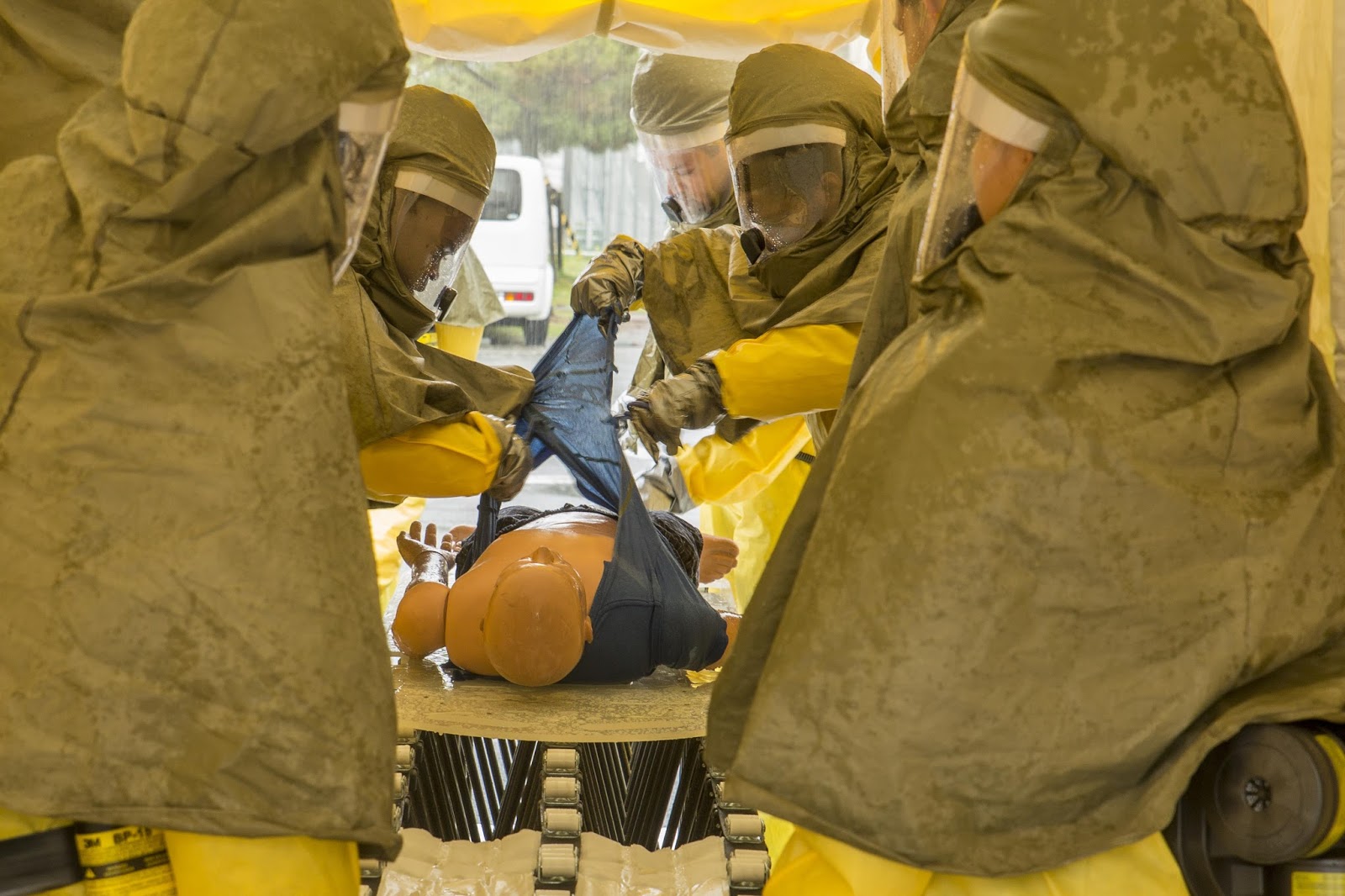
Hospital Decontamination Self-Assessment Tool

In 2011, through a contract with the Massachusetts Department of Public Health, the Harvard School of Public Health Emergency Preparedness and Response Exercise Program (HSPH EPREP) engaged Massachusetts’ hospitals in a series of regional tabletop exercises focused on response to a hazardous materials incident. The exercise series highlighted a significant degree of heterogeneity among hospital decontamination programs and capabilities. Subsequent on-site assessments of hospital decontamination systems conducted at a representative sample of facilities throughout the Commonwealth confirmed this finding. To begin to address this issue of heterogeneity, HSPH-EPREP developed structured tools and guides to assist hospitals develop, maintain, and augment their decontamination programs. The Hospital Decontamination Self Assessment Tool was developed to provide hospitals with a means of evaluating decontamination plans and capabilities against current regulatory standards, recommendations from subject matter experts, and national and international healthcare decontamination best practices. This tool provides scalable considerations based upon presently available guidance to assist hospitals plan for and respond to small and large-scale incidents requiring the decontamination of patients contaminated by and/or exposed to chemical, biological, radiological, and/or nuclear agents.
REFERENCE:
Hospital Decontamination Self-Assessment Tool. A resource to assist hospitals evaluate decontamination plans and capabilities. Harvard School of Public Health.  2014

-----------------------------------------------------------
Sigue este Blog en Facebook y Twitter

martes, 3 de octubre de 2017

Best Practices for Hospital-Based First Receivers

Employers are responsible for providing a safe and healthful workplace for their employees. OSHA’s role is to assure the safety and health of America’s workers by setting and enforcing standards; providing training, outreach and education; establishing partnerships; and encouraging continual improvement in workplace safety and health. This handbook provides a general overview of a particular topic related to OSHA standards. It does not alter or determine compliance responsibilities in OSHA standards or the Occupational Safety and Health Act of 1970. Because interpretations and enforcement policy may change over time, you should consult current OSHA administrative interpretations and decisions by the Occupational Safety and Health Review Commission and the Courts for additional guidance on OSHA compliance requirements.
REFERENCE:
Best Practices for Hospital-Based First Receivers of Victims from Mass Casualty Incidents Involving the Release of Hazardous Substances. Occupational Safety and Health Administration. U.S. Department of Labor. OSHA 3249-08N.  2005
-----------------------------------------------------------
Sigue este Blog en Facebook y Twitter

lunes, 2 de octubre de 2017

INFECTION RISKS to new and expectant mothers in the workplace

Pregnancy is part of everyday life. Being pregnant does not mean that you are ill, but some infections, if they are contracted in pregnancy, can affect the health of the mother and baby. In very rare cases, the baby may suffer serious harm and this may result in permanent disability or even death. This publication is a guide for employers on protecting the health and safety of employees who are new or expectant mothers. It deals with the risk of infections in the workplace.

REFERENCE:
Advisory Committee on Dangerous Pathogens. INFECTION RISKS to new and expectant mothers in the workplace. A guide for employers. HSE BOOKS.

-----------------------------------------------------------
Sigue este Blog en Facebook y Twitter

jueves, 28 de septiembre de 2017

Herramientas para la gestión del riesgo químico

Este documento pretende dar a conocer algunos de los métodos y modelos que se encuentran disponibles, sus características básicas, las variables que consideran, la revisión bibliográfica de los mismos, el marco normativo en el que se desarrollan y ver dónde y cómo encajan estas herramientas en nuestro sistema de prevención de riesgos laborales, principalmente en el marco de la higiene industrial (ver figura 1) y en particular en la gestión de los riesgos derivados de la exposición a agentes químicos.
REFERENCIA:
HERRAMIENTAS PARA LA GESTIÓN DEL RIESGO QUÍMICO: Métodos de evaluación cualitativa y modelos de estimación de la exposición. Ministerio de empleo y seguridad social. Gobierno de España.

-----------------------------------------------------------
Sigue este Blog en Facebook y Twitter

lunes, 25 de septiembre de 2017

Recomendaciones del @CDC en caso de terremotos. #fuertemexico #fuerzamexico

El sobrevivir a un terremoto y reducir el impacto en la salud requiere de preparación, planificación y práctica. Con mucha anticipación, usted puede acumular suministros de emergencia, identificar y disminuir los posibles riesgos en su hogar y practicar lo que debe hacer durante y después de un terremoto. Aprender qué medidas se deben tomar puede ayudarle a usted y a su familia a permanecer sanos y salvos en caso de un terremoto.
Esta guía contiene información general de que hacer antes, durante y después de un terremoto.
REFERENCIAS:
https://www.cdc.gov/es/disasters/earthquakes/index.html

-----------------------------------------------------------
Sigue este Blog en Facebook y Twitter

Unintended spread of a #biosafety level 2 recombinant retrovirus

Background: Contamination of vertebrate cell lines with animal retroviruses has been documented repeatedly before. Although such viral contaminants can be easily identified with high sensitivity by PCR, it is impossible to screen for all potential contaminants. Therefore, we explored two novel methods to identify viral contaminations in cell lines without prior knowledge of the kind of contaminant.
Results: The first hint for the presence of contaminating retroviruses in one of our cell lines was obtained by electron microscopy of exosome-like vesicles released from the supernatants of transfected 293T cells. Random amplification of particle associated RNAs (PAN-PCR) from supernatant of contaminated 293T cells and sequencing of the amplicons revealed several nucleotide sequences showing highest similarity to either murine leukemia virus (MuLV) or squirrel monkey retrovirus (SMRV). Subsequent mass spectrometry analysis confirmed our findings, since we could identify several peptide sequences originating from monkey and murine retroviral proteins. Quantitative PCRs were established for both viruses to test currently cultured cell lines as well as liquid nitrogen frozen cell stocks. Gene fragments for both viruses could be detected in a broad range of permissive cell lines from multiple species. Furthermore, experimental infections of cells negative for these viruses showed that both viruses replicate rapidly to high loads. We decided to further analyze the genomic sequence of the MuLV-like contaminant virus. Surprisingly it was neither identical to MuLV nor to the novel xenotropic MuLV related retrovirus (XMRV) but showed 99% identity to a synthetic retrovirus which was engineered in the 1980s.
Conclusion: The high degree of nucleotide identity suggests unintended spread of a biosafety level 2 recombinant virus, which could also affect the risk assessment of gene-modified organisms released from contaminated cell cultures. The study further indicates that both mass spectrometry and PAN-PCR are powerful methods to identify viral contaminations in cell lines without prior knowledge of the kind of contaminant. Both methods might be useful tools for testing cell lines before using them for critical purposes.
REFERENCE:
Stang, Alexander et al. “Unintended Spread of a Biosafety Level 2 Recombinant Retrovirus.” Retrovirology 6 (2009): 86. PMC. Web. 8 Sept. 2017.
https://www.ncbi.nlm.nih.gov/pmc/articles/PMC2760500/

-----------------------------------------------------------
Sigue este Blog en Facebook y Twitter

lunes, 18 de septiembre de 2017

#WebinarAMEXBIO Transporte de Sustancias Infecciosas entre Instituciones

Registro por internet en:


-----------------------------------------------------------
Sigue este Blog en Facebook y Twitter

Detection of viral proteins in human cells lines by xeno-proteomics

Cell cultures used routinely in proteomic experiments may contain proteins from other species because of infection, transfection or just contamination. Since infection or contamination may affect the results of a biological experiment, it is important to test the samples for the presence of “alien” proteins. Usually cells are tested only for the most common infections, and most of the existing tests are targeting specific contaminations. Here we describe a three-step procedure for reliable untargeted detection of viral proteins using proteomics data, and recommend this or similar procedure to be applied to every proteomics dataset submitted for publication.
REFERENCE:
Chernobrovkin AL, Zubarev RA. Detection of viral proteins in human cells lines by xeno-proteomics: elimination of the last valid excuse for not testing every cellular proteome dataset for viral proteins. PLoS One. 2014 Mar 11;9(3):e91433.  doi: 10.1371/journal.pone.0091433. eCollection 2014. PubMed PMID: 24618588; PubMed Central PMCID: PMC3950186

-----------------------------------------------------------
Sigue este Blog en Facebook y Twitter

miércoles, 13 de septiembre de 2017

Selecting Protective Clothing for Protection against Microorganisms in Blood and Body Fluids

Healthcare workers can be exposed to biological fluids that are capable of transmitting diseases. Those diseases, which are caused by a variety of microorganisms such as, Hepatitis B virus (HBV), Hepatitis C virus (HCV), Ebola Virus, and Human Immunodeficiency Virus (HIV) can pose significant risks to life and health. Healthcare workers wear protective clothing (e.g., surgical gowns, isolation gowns, and coveralls) to protect both patients and themselves from the transfer of microorganisms by blood and body fluids. A common misunderstanding among many end-users is that they are protected from blood, body fluids, and other potentially infectious materials when they wear any type of fluid-resistant garment. This document provides an overview of scientific evidence and information on national and international standards, test methods, and specifications for fluid-resistant and impermeable gowns and coveralls used in healthcare. This document focuses on selecting protective clothing primarily on the basis of their barrier properties; it does not address all aspects of garments related to their design, integrity, durability, comfort, and functionality.

REFERENCE
Considerations for Selecting Protective Clothing used in Healthcare for Protection against Microorganisms in Blood and Body Fluids
Download PDF HERE or HERE

-----------------------------------------------------------
Sigue este Blog en Facebook y Twitter

lunes, 11 de septiembre de 2017

Guidance for Donning and Doffing Personal Protective Equipment (PPE) for #Ebola

The following informational materials demonstrate the procedures described in CDC guidance for donning and doffing (i.e., putting on and removing) personal protective equipment (PPE) for all healthcare providers entering the room of a patient hospitalized with known or suspected Ebola virus disease (Ebola). These informational materials are intended to promote patient safety and increase the safety of the healthcare provider.
Prior to working with Ebola patients, all healthcare providers involved in the care of Ebola patients must receive training and demonstrate competency in performing all Ebola-related infection control practices and procedures, specifically in donning and doffing proper PPE.

REFERENCE:
Guidance for Donning and Doffing Personal Protective Equipment (PPE) During Management of Patients with Ebola Virus Disease in U.S. Hospitals. CDC 2014.

-----------------------------------------------------------
Sigue este Blog en Facebook y Twitter
jueves, 7 de septiembre de 2017

Acerca de las batas médicas

FRAGMENTO:
Las batas son ejemplos de equipos de protección personal utilizados en los entornos de atención médica. Se utilizan para proteger al usuario de la propagación de una infección o enfermedad si el usuario entra en contacto con material líquido y sólido potencialmente infeccioso. También pueden usarse para ayudar a evitar que el usuario del vestido pueda contaminar a pacientes vulnerables, como aquellos con sistemas inmunológicos debilitados. Las batas son una parte de una estrategia de control de infecciones. Algunos de los muchos términos que se han utilizado para referirse a las batas destinados a ser utilizados en los entornos de atención médica, incluyen batas quirúrgicas, ropa de aislamiento, ropa de aislamiento quirúrgico, batas no quirúrgicos, batas de procedimiento y batas sala de operaciones.
 En 2004, la FDA reconoció el estándar de consensodel  American National Standards Institute/Association of the Advancement of Medical Instrumentation (ANSI/AAMI) PB70:2003, “Liquid barrier performance and classification of protective apparel and drapes intended for use in health care facilities.”. La nueva terminología de la norma describe los niveles de protección de barrera de batas y otras prendas de protección destinadas a ser utilizadas en instalaciones de atención médica y especifica métodos de prueba y resultados de desempeño necesarios para verificar y validar los niveles de protección recientemente definidos:
  • Nivel 1: Riesgo mínimo, para ser utilizado, por ejemplo, durante la atención básica, aislamiento estándar, vestido de cubierta para los visitantes, o en una unidad médica estándar 
  • Nivel 2: Bajo riesgo, que se utilizará, por ejemplo, durante la extracción de sangre, sutura, en la Unidad de Cuidados Intensivos (UCI), o un laboratorio de patología 
  • Nivel 3: Riesgo moderado, que se utilizará, por ejemplo, durante la extracción de sangre arterial, inserción de una vía intravenosa (IV), en la sala de emergencias o en casos de traumatismos 
  • Nivel 4: Alto riesgo, para ser utilizado, por ejemplo, durante largos procedimientos intensivos en líquidos, cirugía, cuando se necesita resistencia a patógenos o se sospecha de enfermedades infecciosas (no aerotransportadas)
REFERENCIAS (INGLES)
-----------------------------------------------------------
Sigue este Blog en Facebook y Twitter

miércoles, 6 de septiembre de 2017

lunes, 4 de septiembre de 2017

Eye Safety in Dentistry and Associated Liability

The first objective of this article is to expressan experimental-work-supported opinion ofits authors regarding the inadequacy of thepresent dental mask and regular eyewearcombination for protecting dental care practitioners. Its second objective is to suggestamending OSHA Standard 1910.133(a)(1) tomandate effective eye protection for dentalcare practitioners by requiring the use ofeffective means for closing the bottom gapsbetween the lower rims of the lenses of theprotective eyewear and the upper edge ofthe mask worn by the practitioner.The various types and sources of dentalpractice eye occupational hazards and thepossible entry routes of dental debris towarddental practitioners'eyes are discussed.Experimental work, confirming theinadequacy of the present dental mask andeyewear combination for protecting dentalcare practitioners, is presented.
REFERENCE:
Arsenault P, Tayebi A. Eye Safety in Dentistry and Associated Liability. J Mass Dent Soc. 2016 Winter;64(4):12-6. PubMed PMID: 27197360.

-----------------------------------------------------------
Sigue este Blog en Facebook y Twitter

lunes, 28 de agosto de 2017

Cost-effectiveness analysis of N95 respirators and medical masks to protect healthcare workers in China

Background: There are substantial differences between the costs of medical masks and N95 respirators. Cost-effectiveness analysis is required to assist decision-makers evaluating alternative healthcare worker (HCW) mask/respirator strategies. This study aims to compare the cost-effectiveness of N95 respirators and medical masks for protecting HCWs in Beijing, China.
Methods: We developed a cost-effectiveness analysis model utilising efficacy and resource use data from two cluster randomised clinical trials assessing various mask/respirator strategies conducted in HCWs in Level 2 and 3 Beijing hospitals for the 2008–09 and 2009–10 influenza seasons. The main outcome measure was the incremental cost-effectiveness ratio (ICER) per clinical respiratory illness (CRI) case prevented. We used a societal perspective which included intervention costs, the healthcare costs of CRI in HCWs and absenteeism costs.
Results: The incremental cost to prevent a CRI case with continuous use of N95 respirators when compared to medical masks ranged from US $490–$1230 (approx. 3000-7600 RMB). One-way sensitivity analysis indicated that the CRI attack rate and intervention effectiveness had the greatest impact on cost-effectiveness.
Conclusions: The determination of cost-effectiveness for mask/respirator strategies will depend on the willingness to pay to prevent a CRI case in a HCW, which will vary between countries. In the case of a highly pathogenic pandemic, respirator use in HCWs would likely be a cost-effective intervention.
Keywords: Cost-effectiveness, Economic evaluation, N95 respirator, Mask, Healthcare worker

REFERENCE:
Mukerji, Shohini et al. “Cost-Effectiveness Analysis of N95 Respirators and Medical Masks to Protect Healthcare Workers in China from Respiratory Infections.” BMC Infectious Diseases 17 (2017): 464. PMC. Web. 7 Aug. 2017.

-----------------------------------------------------------
Sigue este Blog en Facebook y Twitter

lunes, 21 de agosto de 2017

Respirator Performance against Nanoparticles under Simulated Workplace Activities

FFRS      /      EHRS
Filtering facepiece respirators (FFRs) and elastomeric half-mask respirators (EHRs) are commonly used by workers for protection against potentially hazardous particles, including engineered nanoparticles. The purpose of this study was to evaluate the performance of these types of respirators against 10–400 nm particles using human subjects exposed to NaCl aerosols under simulated workplace activities. Simulated workplace protection factors (SWPFs) were measured for eight combinations of respirator models (2 N95 FFRs, 2 P100 FFRs, 2 N95 EHRs, and 2 P100 EHRs) worn by 25 healthy test subjects (13 females and 12 males) with varying face sizes. Before beginning a SWPF test for a given respirator model, each subject had to pass a quantitative fit test. Each SWPF test was performed using a protocol of six exercises for 3 min each: (i) normal breathing, (ii) deep breathing, (iii) moving head side to side, (iv) moving head up and down, (v) bending at the waist, and (vi) a simulated laboratory-vessel cleaning motion. Two scanning mobility particle sizers were used simultaneously to measure the upstream (outside the respirator) and downstream (inside the respirator) test aerosol; SWPF was then calculated as a ratio of the upstream and downstream particle concentrations. In general, geometric mean SWPF (GM-SWPF) was highest for the P100 EHRs, followed by P100 FFRs, N95 EHRs, and N95 FFRs. This trend holds true for nanoparticles (10–100 nm), larger size particles (100–400 nm), and the ‘all size’ range (10–400 nm). All respirators provided better or similar performance levels for 10–100 nm particles as compared to larger 100–400 nm particles. This study found that class P100 respirators provided higher SWPFs compared to class N95 respirators (P<0.05) for both FFR and EHR types. All respirators provided expected performance (i.e. fifth percentile SWPF > 10) against all particle size ranges tested.
REFERENCE:
Vo, Evanly et al. “Respirator Performance against Nanoparticles under Simulated Workplace Activities.” The Annals of occupational hygiene 59.8 (2015): 1012–1021. PMC. Web. 7 Aug. 2017.

-----------------------------------------------------------
Sigue este Blog en Facebook y Twitter

jueves, 17 de agosto de 2017

#WEBINAR: Contención biológica: barreras primarias y secundarias

REGISTRO:  https://goo.gl/9AbpFT


----------------------------------------------------------- 
Sigue este Blog en Facebook y Twitter 

Does #influenza pandemic preparedness and mitigation require gain‐of‐function research?

The risk and benefits of gain‐of‐function studies on influenza A have been widely debated since 2012 when the methods to create two respiratory transmissible H5N1 mutant isolates were published. Opponents of gain‐of‐function studies argue the biosecurity risk is unacceptable, while proponents cite potential uses for pandemic surveillance, preparedness and mitigation. In this commentary, we provide an overview of the background and applications of gain‐of‐function research and argue that the anticipated benefits have yet to materialize while the significant risks remain.
REFERENCE:
Adam, Dillon C. et al. “Does Influenza Pandemic Preparedness and Mitigation Require Gain‐of‐function Research?” Influenza and Other Respiratory Viruses 11.4 (2017): 306–310.

-----------------------------------------------------------
Sigue este Blog en Facebook y Twitter

jueves, 10 de agosto de 2017

Liquid Stressed Protective Materials and Environmental Persistence of #Ebola Virus

After the largest Ebola virus outbreak in history, experts have attempted to answer how the Zaire ebolavirus species emerged in West Africa and caused chains of human-to-human transmission. The widespread and untimely infection of Health Care Workers (HCW) in the affected countries accelerated spread of the virus within the community. Among the reasons attributed to this trend, it must be considered that HCW were exposed to the virus in their occupational environment. The contribution of environmental conditions to the spread of Ebola in West Africa was examined by investigating the effect of temperature/humidity on the virus’s environmental persistence and by modeling if saturation (liquid stress) allows for penetration of Ebola virus through personal protective equipment (PPE). Ebola-Makona virus persisted on PPE and materials found in outbreak settings for less than 72 hours at 27 °C and 80% relative humidity (RH). A difference in virus penetration was observed between dry (5%, 1/21 tests) and saturated (33%, 7/21 tests) samples of PPE. Infectious virus particles penetrated through saturated coupons of Tyvek Micro Clean, Tychem QC, whole surgical masks and N95 respirators. These findings suggest inclusion of saturation or similar liquid stress simulation in protective equipment testing standards.
REFERENCE:
Nikiforuk, Aidan M. et al. “Challenge of Liquid Stressed Protective Materials and Environmental Persistence of Ebola Virus.” Scientific Reports 7 (2017): 4388.

-----------------------------------------------------------
Sigue este Blog en Facebook y Twitter

lunes, 7 de agosto de 2017

A Modular High #Biosafety Field Laboratory in Sierra Leona for #Ebola

In response to Ebola virus disease outbreak in West Africa, the National Institute for Communicable Diseases in South Africa established a modular high-biosafety field Ebola diagnostic laboratory (FEDL) near Freetown, Sierra Leone. This was the sole diagnostic capacity available to respond to the overwhelming demand for Ebola diagnosis for several weeks in the Western Area of Sierra Leone. The deployment of the FEDL capacity contributed to the overall international efforts in bringing the Ebola outbreak in West Africa under control.

REFERENCE:
Paweska, Janusz T. et al.South African Ebola Diagnostic Response in Sierra Leone: A Modular High Biosafety Field Laboratory.Ed. Manuel Schibler. PLoS Neglected Tropical Diseases 11.6 (2017): e0005665. PMC. Web. 7 Aug. 2017.

-----------------------------------------------------------
Sigue este Blog en Facebook y Twitter

lunes, 31 de julio de 2017

Characterisation of clinically relevant bacteria isolated from dental waste and waste workers' hands, mucosas and coats

Infectious wastes are potential sources of pathogenic microorganisms, which may represent a risk to the professionals who manage them. In this study we aimed to characterize the infectious bacteria present in dental waste and waste workers. The dental waste produced over 24 hours was collected and waste workers were sampled by swabbing. Isolate resistance profiles were characterized by Vitek® and PCR and biofilm formation by Congo Red agar, string test and microtiter assay. To assess similarity between the waste and the workers' samples, a random amplified polymorphic DNA test was used. Twenty-eight bacteria were identified as clinically relevant. The most frequent gene was blaTEM present in five Gram-negative microorganisms, and one blaSHV in K. pneumoniae. All P. aeruginosa were positive to extracellular polymeric substances formation, except one isolated from a worker. K. pneumoniae had negative results for the string test. P. aeruginosa showed better adherence at 25°C after 48-hour incubation and K. pneumonia had the best biofilm formation at the same temperature, after24 hours. The similarity between P. aeruginosa recovered from dental waste and from workers was low, however, it is important to note that a pathogen was found on worker's hands and that improvements in biosafety are required. This article is protected by copyright. All rights reserved.
REFERENCE:
Payment lock: Tagliaferri TL, et al. Phenotypic and genotypic characterisation of clinically relevant bacteria isolated from dental waste and waste workers' hands, mucosas and coats. Lett Appl Microbiol. 2017 Jul 16. doi: 10.1111/lam.12775. [Epub ahead of print] PubMed PMID: 28712134.

-----------------------------------------------------------
Sigue este Blog en Facebook y Twitter

jueves, 20 de julio de 2017

Guidelines on viral inactivation of human blood plasma products

FRAGMENT:
The present WHO Guidelines on viral inactivation and removal procedures intended to assure the viral safety of human blood plasma products were developed to complement the WHO Requirements for the collection, processing and quality control of blood, blood components and plasma derivatives”(1), in response to the above requests.
These Guidelines pertain to the validation and assessment of the steps for viral inactivation and removal employed in the manufacture of human blood plasma derivatives and virally inactivated plasma for transfusion, prepared either from plasma pools or from individual donations.It is hoped that this document, by summarizing current experience with well recognized methods, will help set expectations, serve as a guide to speed implementation, and ensure that implementation is appropriate.
Inevitably, individual countries may formulate different policies, not only in relation to procedures for validation and control, but also regarding donor selection and methods of blood screening. These Guidelines do not replace the requirements of regulatory authorities in various parts of the world (2–4); rather, they are primarily intended to assist those national regulatory authorities and manufacturers that are less familiar with viral decontamination processes.
The document does not address products of animal origin or those manufactured by recombinant techniques.
REFERENCE:
Guidelines on viral inactivation and removal procedures intended to assure the viral safety of human blood plasma products. World Health Organization, WHO Technical Report, Series No. 924, 2004.

-----------------------------------------------------------
Sigue este Blog en Facebook y Twitter

lunes, 10 de julio de 2017

DOUBLE GLOVING: Gloves, extra gloves or special types of gloves for preventing percutaneous exposure injuries in healthcare personnel

BACKGROUND: Healthcare workers are at risk of acquiring viral diseases such as hepatitis B, hepatitis C and HIV through exposure to contaminated blood and body fluids at work. Most often infection occurs when a healthcare worker inadvertently punctures the skin of their hand with a sharp implement that has been used in the treatment of an infected patient, thus bringing the patient's blood into contact with their own. Such occurrences are commonly known as percutaneous exposure incidents.
OBJECTIVES: To determine the benefits and harms of extra gloves for preventing percutaneous exposure incidents among healthcare workers versus no intervention or alternative interventions.
SEARCH METHODS: We searched CENTRAL, MEDLINE, EMBASE, NHSEED, Science Citation Index Expanded, CINAHL, NIOSHTIC, CISDOC, PsycINFO and LILACS until 26 June 2013.
SELECTION CRITERIA: Randomised controlled trials (RCTs) with healthcare workers as the majority of participants, extra gloves or special types of gloves as the intervention, and exposure to blood or bodily fluids as the outcome.
DATA COLLECTION AND ANALYSIS: Two authors independently assessed study eligibility and risk of bias, and extracted data. We performed meta-analyses for seven different comparisons.
MAIN RESULTS: We found 34 RCTs that included 6890 person-operations as participating units and reported on 46 intervention-control group comparisons. We grouped interventions as follows: increased layers of standard gloves, gloves manufactured with special protective materials or thicker gloves, and gloves with puncture indicator systems. Indicator gloves show a coloured spot when they are perforated. Participants were surgeons in all studies and they used at least one pair of standard gloves as the control intervention. Twenty-seven studies also included other surgical staff (e.g. nurses). All but one study used perforations in gloves as an indication of exposure. The median control group rate was 18.5 perforations per 100 person-operations. Seven studies reported blood stains on the skin and two studies reported self reported needlestick injuries. Six studies reported dexterity as visual analogue scale scores for the comparison double versus single gloves, 13 studies reported outer glove perforations. We judged the included studies to have a moderate to high risk of bias.We found moderate-quality evidence that double gloves compared to single gloves reduce the risk of glove perforation (rate ratio (RR) 0.29, 95% confidence interval (CI) 0.23 to 0.37) and the risk of blood stains on the skin (RR 0.35, 95% CI 0.17 to 0.70). Two studies with a high risk of bias also reported the effect of double compared to single gloves on needlestick injuries (RR 0.58, 95% CI 0.21 to 1.62).We found low-quality evidence in one small study that the use of three gloves compared to two gloves reduces the risk of perforation further (RR 0.03, 95% CI 0.00 to 0.52). There was similar low-quality evidence that the use of one fabric glove over one normal glove reduces perforations compared to two normal gloves (RR 0.24, 95% CI 0.06 to 0.93). There was moderate-quality evidence that this effect was similar for the use of one special material glove between two normal material gloves. Thicker gloves did not perform better than thinner gloves.There was moderate to low-quality evidence in two studies that an indicator system does not reduce the total number of perforations during an operation even though it reduces the number of perforations per glove used.There was moderate-quality evidence that double gloves have a similar number of outer glove perforations as single gloves, indicating that there is no loss of dexterity with double gloves (RR 1.10, 95% CI 0.93 to 1.31).
AUTHORS' CONCLUSIONS: There is moderate-quality evidence that double gloving compared to single gloving during surgery reduces perforations and blood stains on the skin, indicating a decrease in percutaneous exposure incidents. There is low-quality evidence that triple gloving and the use of special gloves can further reduce the risk of glove perforations compared to double gloving with normal material gloves. The preventive effect of double gloves on percutaneous exposure incidents in surgery does not need further research. Further studies are needed to evaluate the effectiveness and cost-effectiveness of special material gloves and triple gloves, and of gloves in other occupational groups.

FREE REFERENCE:
Mischke C, Verbeek JH, Saarto A, Lavoie MC, Pahwa M, Ijaz S. Gloves, extra gloves or special types of gloves for preventing percutaneous exposure injuries in healthcare personnel. Cochrane Database Syst Rev. 2014 Mar 7;(3):CD009573. doi: 10.1002/14651858.CD009573.pub2. Review. PubMed PMID: 24610769.
http://onlinelibrary.wiley.com/doi/10.1002/14651858.CD009573.pub2/full

-----------------------------------------------------------
Sigue este Blog en Facebook y Twitter