The hospital environment harbors bacteria that may cause health care-associated infections. Microorganisms, such as multiresistant bacteria, can spread around the patient's inanimate environment. Some recently introduced biodecontamination approaches in hospitals have significant limitations due to the toxic nature of the gases and the length of time required for aeration. This study evaluated the in vitrouse of cold air plasma as an efficient alternative to traditional methods of biodecontamination of hospital surfaces. Cultures of methicillin-resistant Staphylococcus aureus (MRSA), vancomycin-resistant enterococci (VRE), extended-spectrum-β-lactamase (ESBL)-producing Escherichia coli, and Acinetobacter baumannii were applied to different materials similar to those found in the hospital environment. Artificially contaminated sections of marmoleum, mattress, polypropylene, powder-coated mild steel, and stainless steel were then exposed to a cold air pressure plasma single jet for 30 s, 60 s, and 90 s, operating at approximately 25 W and 12 liters/min flow rate. Direct plasma exposure successfully reduced the bacterial load by log 3 for MRSA, log 2.7 for VRE, log 2 for ESBL-producing E. coli, and log 1.7 for A. baumannii. The present report confirms the efficient antibacterial activity of a cold air plasma single-jet plume on nosocomial bacterially contaminated surfaces over a short period of time and highlights its potential for routine biodecontamination in the clinical environment.
Reference:
Cahill, Orla J. et al. “Cold Air Plasma To Decontaminate Inanimate Surfaces of the Hospital Environment.” Ed. C. A. Elkins. Applied and Environmental Microbiology 80.6 (2014): 2004–2010. PMC. Web. 20 June 2015.
-----------------------------------------------------------
Sigue este Blog en Facebook y Twitter
| Lista de correo. Espere su aprobación. |
| Consultar este grupo |
sábado, 20 de junio de 2015
jueves, 21 de mayo de 2015
Examen de certificación de profesionales en bioseguridad
English version, scroll down
Publicado el 7/Mayo/2015
La Asociación Mexicana de Bioseguridad (AMEXBIO) se complace en colaborar con la Federación Internacional de Asociaciones de Bioseguridad (IFBA) en la aplicación de su Examen para la Certificación Profesional en Gestión de Riesgo Biológico durante nuestra próxima conferencia de junio de 2015. Más detalles sobre el 7o Simposio Internacional de Bioseguridad y Biocustodia de AMEXBIO se pueden encontrar en http://www.amexbio.wildapricot.org/SIBB
Publicado el 7/Mayo/2015
Asegura tu lugar.
Inscríbete antes del 25 de Mayo!
La Asociación Mexicana de Bioseguridad (AMEXBIO) se complace en colaborar con la Federación Internacional de Asociaciones de Bioseguridad (IFBA) en la aplicación de su Examen para la Certificación Profesional en Gestión de Riesgo Biológico durante nuestra próxima conferencia de junio de 2015. Más detalles sobre el 7o Simposio Internacional de Bioseguridad y Biocustodia de AMEXBIO se pueden encontrar en http://www.amexbio.wildapricot.org/SIBB
La certificación profesional
de la IFBA identifica a individuos con competencias demostradas en los
principios y prácticas fundamentales en la gestión de riesgos biológicos. Esta
es una gran oportunidad para que nuestros colegas puedan avanzar en su carrera
y lograr reconocimiento internacional. Más detalles sobre el programa de
certificación se pueden encontrar aquí. Pueden presentar el examen personas de cualquier país que cumplan los requisitos y se registren en línea.
Las preguntas del examen y
todos sus materiales están en idioma Inglés. El examen se llevará a cabo el
sábado 06 de junio de 2015 de 7-9 am en el aula UNAM1 del Instituto Nacional de
Enfermedades Respiratorias en la Ciudad de México. El examen requiere de
registro previo. Todas las solicitudes deben ser ingresadas a través del
sistema Certifior en https://ifba.certifior.com.
En estas instrucciones (PDF) se explica el
proceso de solicitud. Para obtener información sobre la guía de estudio, el
contenido del examen y el tipo de preguntas, haga clic aquí (PDF).
Los usuarios de computadoras Mac, se recomienda utilizar navegador Chrome o Firefox durante el registro.
Para más información y
consultas sobre esta sesión por favor póngase en contacto (en inglés) con la Secretaría
de IFBA por correo electrónico a secretariat@internationalbiosafety.org.
ENGLISH
The Mexican Biosafety Association (AMEXBIO) is pleased
to collaborate with the International Federation of Biosafety Associations in the
delivery of the IFBA’s Professional Certification in Biorisk Management examination
during our upcoming June conference. Further details on the AMEXBIO’s 7th
International Symposium can be found at http://www.amexbio.wildapricot.org/SIBB
The IFBA’s professional certification identifies
individuals with demonstrated competencies in the fundamental principles &
practices of biorisk management. This
is an exciting opportunity for our members to advance their careers and achieve
international recognition among colleagues. Further details on the
certification program can be found here.
The exam questions and all
its materials are in English language. The exam session will be held on
Saturday June 6th from 7:00am to 9:00am in Room UNAM1 at the
National Institute of Respiratory Disease in Mexico City. All applications must
be processed through the on-line Certifior system at https://ifba.certifior.com.
These
instructions(PDF) will guide individuals through the application process. For
information on the exam content and sample questions, click here(PDF).
For
further details and enquiries on this session please contact the IFBA
Secretariat by email at secretariat@internationalbiosafety.org.
-----------------------------------------------------------
Sigue este Blog en Facebook y Twitter
miércoles, 20 de mayo de 2015
Avisos generales sobre el Simposio de Bioseguridad
Acercándose la fecha del 7º Simposio de Bioseguridad y Biocustodia, la AMexBio desea realizar algunos avisos generales para que disfruten mejor sus actividades durante el mismo y tengan el menor número de inconvenientes:
MAPA SEDE
https://www.google.com/maps/d/edit?mid=zMDDWQr8qUh4.k4yiOudOubwI&usp=sharing
-----------------------------------------------------------
Sigue este Blog en Facebook y Twitter
- REGISTRO: La fecha límite para el registro en línea es el día 27 de Mayo de 2015. Las personas que después de esa fecha deseen registrarse tendrán que realizar el pago-depósito en el banco, y entregar la ficha de depósito en el evento. POR SEGURIDAD, NO SE RECIBEN PAGOS EN EFECTIVO DURANTE EL SIMPOSIO. Vean esa información AQUI. Por favor lleguen con anticipación para realizar el trámite de registro y gafetes. Para ver los costos de los eventos visiten la siguiente PÁGINA.
- FACTURACIÓN: Todas las facturas se realizan dentro del mes que se realiza el pago. Por favor, no olviden llevar la información fiscal completa (dirección, RFC), para emitirles la factura durante el simposio. AMexBio regularmente no envía documentación por correo normal o mensajería.
- AULAS: Todos los cursos y eventos se realizarán dentro de las Instalaciones del INER. Las aulas de la UNAM a las que hace referencia el programa se encuentran dentro del INER,
- ESTACIONAMIENTOS: El INER no cuenta con estacionamiento para el público en general. Recomendamos usar los estacionamientos que se encuentran en las inmediaciones del INER. Por favor revisen el mapa de la sede, con las direcciones para que los localicen. El robo de coches o autopartes en la vía pública es un problema en toda la Cd. de México. Estacionamiento 1: Calle Sillón de Mendoza No. 24. Col. Toriella Guerra. Costo: $ 50.00 x día. Estacionamiento 2: Chimalcoyotl No. 13. Col. Tlalpan. Costo: $ 35.00 x día.
- HOTEL: Las personas que se hospeden en el "Hotel Holiday Inn & Suites Médica Sur", que se encuentra a algunas cuadras del INER. Dirección: Puente De Piedra : 150 Col. Toriello Guerra, México 14050. Dentro del Hospital Médica Sur. Torre 3, 5º Piso. Entrada por estacionamiento techado.
- Lleguen con anticipación, 15 a 20 minutos mínimo, por que las distancias a caminar son largas.
MAPA SEDE
https://www.google.com/maps/d/edit?mid=zMDDWQr8qUh4.k4yiOudOubwI&usp=sharing
-----------------------------------------------------------
Sigue este Blog en Facebook y Twitter
jueves, 7 de mayo de 2015
Membresías AMEXBIO 2015

Publicado en Diciembre 2014. Modificada Marzo 2015.
Para apoyar el cumplimiento de los objetivos de la Asociación Mexicana de Bioseguirdad A.C. se está llevando a cabo la campaña de renovación y actualización de membresía 2014 - 2015, la cual nos permitirá desarrollar distintos proyectos como asambleas, simposio, cursos en línea, seminarios, talleres, y otorgar un mayor número de becas para los asistentes. Una de las fuentes de ingreso de AMEXBIO son las aportaciones de los miembros, por lo que invitamos a actualizar su membresía o unirse como miembro activo.
Los BENEFICIOS que obtendrás al pagar tu membresía de 2015 son:
- Cuotas preferenciales para el Simposio Anual, cursos en línea, eventos, seminarios y productos que organice y promueva AMEXBIO.
- Accesos a la biblioteca de videos y cursos en nuestro portal de Formación Académica, a través de clave personalizada que te llegará al pagar tu membresía.
- Poder conocer las diferentes convocatorias de las instituciones que apoyan con recursos o descuentos para participar en eventos nacionales e internacionales sobre temas de bioseguridad.
- Contar con su perfil académico y poder participar como profesor en nuestros cursos en línea o cursos presenciales.
- Participar activamente en todos los eventos académicos que organice nuestra Asociación.
- Constancia de miembro activo.
A partir de 01-Febrero-2015, el costo de la Membresía se incrementó a $900.- MXN.
- Nuevos miembros. Si no eres miembro (Estatus visitante o en blanco): Los profesores o investigadores de nuevo ingreso deberán enviar el pago de $ 900.00, y actualizar su perfil en la página de miembros: www.amexbio.wildapricot.org y enviar la documentación solicitada, al correo electrónico de tesoreria(arroba)amexbio.org. Por favor revisen la convocatoria en: http://amexbio.org/docs/convocatoriaM.pdf.
- Renovaciones miembros activos. Si ya eres miembro y estas al corriente (Estatus Active): A partir del 01 de Febrero de 2015, incrementa a $ 900.- MXN
- Renovaciones vencidas, pagos pendientes. Si ya eres miembro pero no estás al corriente (Estatus Pending Renewal o Lapsed): $ 900.- MXN
Depósito bancario a nombre de:Cliente: ASOCIACION MEXICANA DE BIOSEGURIDAD A.C.
Banco: BANAMEX
CLABE interbancaria: 002180024179950244
Sucursal: 0241
Cuenta: 7995024
Referencia: (nombre del miembro)
Enviar el comprobante de depósito escaneado y datos de facturación (si es necesario) y en el caso de nuevo ingreso, los documentos solicitados, al siguiente correo electrónico: tesoreria(arroba)amexbio.org. Se emitirá la factura correspondiente, la emisión de la clave de acceso para el portal de Formación Académica, así como la constancia de membresía, que se enviarán por correo electrónico.
Por favor ayúdanos a distribuir esta información entre tus contactos que les pueda interesar en participar en AMEXBIO.
Atentamente
Dr. José Luis Sandoval.
Presidente
Consejo Directivo AMEXBIO
-----------------------------------------------------------
Sigue este Blog en Facebook y Twitter
Banco: BANAMEX
CLABE interbancaria: 002180024179950244
Sucursal: 0241
Cuenta: 7995024
Referencia: (nombre del miembro)
Enviar el comprobante de depósito escaneado y datos de facturación (si es necesario) y en el caso de nuevo ingreso, los documentos solicitados, al siguiente correo electrónico: tesoreria(arroba)amexbio.org. Se emitirá la factura correspondiente, la emisión de la clave de acceso para el portal de Formación Académica, así como la constancia de membresía, que se enviarán por correo electrónico.
Por favor ayúdanos a distribuir esta información entre tus contactos que les pueda interesar en participar en AMEXBIO.
Atentamente
Dr. José Luis Sandoval.
Presidente
Consejo Directivo AMEXBIO
-----------------------------------------------------------
Sigue este Blog en Facebook y Twitter
7º Simposio Internacional de Bioseguridad y Biocustodia #SIBB15
![]() |
| DESCARGAR |
En su 7a. edición, el Simposio Internacional de Bioseguridad y Biocustodia 2015 (#SIBB15), la Asociación Mexicana de Bioseguridad A.C. en colaboración con el Instituto Nacional de Enfermedades Respiratorias se realizará del 3 al 6 de Junio de 2015. En este VII Simposio se presentan un programa de cursos presimposio, pláticas magistrales, mesas de discusión, seminarios y exposición comercial que congregarán a expertos e interesados de México y el extranjero.
¿Quién debe asistir?
Profesionales de la salud humana, ámbito agropecuario e industrial involucrados en temas de bioseguridad, biocontención, gestión de riesgos biológicos y biotecnológicos, involucrados en manejo de materiales biológico infecciosos. Este simposio de bioseguridad (SIBB) es una reunión especializada en el entrenamiento, análisis, discusión y planteamiento de propuestas alrededor de la seguridad biológica y los materiales biológico infecciosos en México y nuestro entorno. El SIBB es organizado por la Asociación Mexicana de Bioseguridad A.C. desde 2009.
Por favor consulten toda la información en la Página del VII Simposio
-----------------------------------------------------------Sigue este Blog en Facebook y Twitter
lunes, 4 de mayo de 2015
Nitrile versus Latex for Glove Juice Sampling
The objective of this study was to explore the utility of nitrile gloves as a replacement for latex surgical gloves in recovering bacteria from the hands. Two types of nitrile gloves were compared to latex gloves using the parallel streak method. Streaks of Klebsiella pneumoniae and Staphylococcus aureus were made on tryptic soy agar plates, and the zones of inhibition were measured around pieces of glove material placed on the plates. Latex gloves produced a mean zone of inhibition of 0.28 mm, compared to 0.002 mm for nitrile gloves (p<.001). While the parallel streak method is not intended as a quantitative estimate of antimicrobial properties, these results suggest that nitrile may be a viable alternative to latex in glove juice sampling methods, since nitrile avoids the risk of latex exposure.
REFERENCIA
Landers TF, Dent A. Nitrile versus Latex for Glove Juice Sampling. PLoS One. 2014 Oct 15;9(10):e110686.
-----------------------------------------------------------
Sigue este Blog en Facebook y Twitter
REFERENCIA
Landers TF, Dent A. Nitrile versus Latex for Glove Juice Sampling. PLoS One. 2014 Oct 15;9(10):e110686.
-----------------------------------------------------------
Sigue este Blog en Facebook y Twitter
lunes, 27 de abril de 2015
REVIEW: Outbreaks Associated with Contaminated Antiseptics and Disinfectants
Multiple nosocomial outbreaks have resulted from inadequate antisepsis or disinfection. Inadequate skin antisepsis may result from a lack of intrinsic antimicrobial activity of the antiseptic, a resistant pathogen, overdilution of the antiseptic, or the use of a contaminated antiseptic. The inadequate disinfection of medical devices or environmental surfaces may result from a lack of intrinsic antimicrobial activity of the disinfectant, an incorrect choice of a disinfectant, a resistant pathogen, overdilution of the disinfectant, an inadequate duration of disinfection, a lack of contact between the disinfectant and the microbes, or the use of a contaminated disinfectant. Editorials have noted that contaminated antiseptics and disinfectants have been the occasional vehicles of hospital infections for more than 50 years. This paper concisely reviews nosocomial outbreaks associated with the use of a microbiologically contaminated germicide and focuses on the currently recommended germicides.
REFERENCIA:
Weber D.J. et al. Outbreaks Associated with Contaminated Antiseptics and Disinfectants. Antimicrob. Agents Chemother. December 2007 vol. 51 no. 12 4217-4224
-----------------------------------------------------------
Sigue este Blog en Facebook y Twitter
REFERENCIA:
Weber D.J. et al. Outbreaks Associated with Contaminated Antiseptics and Disinfectants. Antimicrob. Agents Chemother. December 2007 vol. 51 no. 12 4217-4224
-----------------------------------------------------------
Sigue este Blog en Facebook y Twitter
lunes, 13 de abril de 2015
Evaluating Environmental Persistence and Disinfection of the #Ebola Virus Makona Variant.
Background: The current disease outbreak caused by the Ebola virus Makona variant (EBOV/Mak) has led to unprecedented morbidity and lethality given its geographic reach and sustained transmission. Sodium hypochlorite and ethanol are well-accepted decontamination agents, however little published evidence supports the selection of appropriate concentrations and contact times. The present study addresses the environmental robustness of EBOV/Mak and evaluates the effectiveness of sodium hypochlorite and ethanol as disinfectants.
Methods: EBOV/Mak was suspended in a simulated organic soil load and dried onto surfaces. Viability was measured at 1 hour, 24 hours, 72 hours, and 192 hours. For the evaluation of disinfectants, EBOV/Mak in a simulated organic soil was dried onto stainless steel carriers and disinfected with 0.01% (v/v), 0.1% (v/v), 0.5% (v/v) and 1% (v/v) sodium hypochlorite solutions or 67% (v/v) ethanol at contact times of 1, 5 or 10 minutes.
Results: EBOV/Mak persisted longer on steel and plastic surfaces (192 hours) than cotton (<24 hours). Dilute sodium hypochlorite (0.01% and 0.1%) showed little antiviral action, whereas 0.5% and 1% sodium hypochlorite solutions demonstrated recoverable virus at one minute but sterilized surfaces in five minutes. Disinfection with 67% ethanol did not fully clear infectious virions from 3/9 carriers at 1 minute but sterilized all carriers at 5 and 10 minutes.
Conclusions: Sodium hypochlorite and ethanol effectively decontaminate EBOV/Mak suspended in a simulated organic load; however, selection of concentration and contact time proves critical.
REFERENCIA:
Cook BWM, et al. Evaluating Environmental Persistence and Disinfection of the Ebola Virus Makona Variant. Viruses. 2015; 7(4):1975-1986.
------------------------------------------------------------
Sigue este Blog en Facebook y Twitter
Methods: EBOV/Mak was suspended in a simulated organic soil load and dried onto surfaces. Viability was measured at 1 hour, 24 hours, 72 hours, and 192 hours. For the evaluation of disinfectants, EBOV/Mak in a simulated organic soil was dried onto stainless steel carriers and disinfected with 0.01% (v/v), 0.1% (v/v), 0.5% (v/v) and 1% (v/v) sodium hypochlorite solutions or 67% (v/v) ethanol at contact times of 1, 5 or 10 minutes.
Results: EBOV/Mak persisted longer on steel and plastic surfaces (192 hours) than cotton (<24 hours). Dilute sodium hypochlorite (0.01% and 0.1%) showed little antiviral action, whereas 0.5% and 1% sodium hypochlorite solutions demonstrated recoverable virus at one minute but sterilized surfaces in five minutes. Disinfection with 67% ethanol did not fully clear infectious virions from 3/9 carriers at 1 minute but sterilized all carriers at 5 and 10 minutes.
Conclusions: Sodium hypochlorite and ethanol effectively decontaminate EBOV/Mak suspended in a simulated organic load; however, selection of concentration and contact time proves critical.
REFERENCIA:
Cook BWM, et al. Evaluating Environmental Persistence and Disinfection of the Ebola Virus Makona Variant. Viruses. 2015; 7(4):1975-1986.
------------------------------------------------------------
Sigue este Blog en Facebook y Twitter
Biorisk management: Laboratory biosecurity guidance #WHO
The present document aims to expand the laboratory biosecurity concepts introduced in Laboratory Safety Manual 2004 (LBM3), and to strike a balance between the long-known biosafety procedures and
practices described in LBM3 and the more recently introduced and broader biosecurity
concepts. It further introduces the overarching "biorisk management" approach that has
resulted from careful thinking, comprehensive study of prevailing practices and
recommendations, review of international norms and standards, and relevant ethical
considerations Shortcomings currently observed in a number of settings are discussed,
and practical solutions are proposed.
The document is intended for the use of relevant national regulatory authorities, laboratory directors (laboratory managers) and laboratory workers, all of whom play key roles in the field of biosciences and in public health in general.
-----------------------------------------------------------
Sigue este Blog en Facebook y Twitter
Manual de #bioseguridad en el laboratorio de #tuberculosis
Laboratory biosafety is the process of applying a combination of administrative controls, containment principles, practices and procedures, safety equipment, emergency preparedness, and facilities to enable laboratory staff to work safely with potentially infectious microorganisms; biosafety also aims at preventing unintentional exposure to pathogens or their accidental release. This manual describes the minimum biosafety measures that should be implemented at the different levels of tuberculosis (TB) testing laboratories to reduce the risk of a laboratory-acquired infection.
MANUAL EN ESPAÑOL
ENGLISH MANUAL
-----------------------------------------------------------
Sigue este Blog en Facebook y Twitter
MANUAL EN ESPAÑOL
ENGLISH MANUAL
-----------------------------------------------------------
Sigue este Blog en Facebook y Twitter
jueves, 2 de abril de 2015
BSL-3 Laboratory User Training Program at NUITM-KEMRI
Pathogens handled in a Biosafety Level 3 (BSL-3) containment laboratory pose significant risks to laboratory staff and the environment. It is therefore necessary to develop competency and proficiency among laboratory workers and to promote appropriate behavior and practices that enhance safety through biosafety training. Following the installation of our BSL-3 laboratory at the Center for Microbiology Research-Kenya Medical Research Institute in 2006, a biosafety training program was developed to provide training on BSL-3 safety practices and procedures. The training program was developed based on World Health Organization specifications, with adjustments to fit our research activities and biosafety needs. The program is composed of three phases, namely initial assessment, a training phase including theory and a practicum, and a final assessment. This article reports the content of our training program.
REFERENCE:
Bundi M, et al. BSL-3 Laboratory User Training Program at NUITM-KEMRI. Trop Med Health. 2014 Dec;42(4):171-6.
-----------------------------------------------------------
Sigue este Blog en Facebook y Twitter
REFERENCE:
Bundi M, et al. BSL-3 Laboratory User Training Program at NUITM-KEMRI. Trop Med Health. 2014 Dec;42(4):171-6.
-----------------------------------------------------------
Sigue este Blog en Facebook y Twitter
lunes, 30 de marzo de 2015
Curso nuevo: "Introducción a la biología sintética"
Realizamos algunas modificaciones al programa.
Por favor, visiten la página:
http://www.amexbio.wildapricot.org/Programa
Curso nuevo de 8 horas: "Introducción a la biología sintética"
Ponentes: David Gillum, Juan Maldonado Ortíz, Irene Mendoza, de la Universidad Estatal de Arizona.
Miércoles 3 de Junio, 2015.
Registro en los próximos días
-----------------------------------------------------------
Sigue este Blog en Facebook y Twitter
Por favor, visiten la página:
http://www.amexbio.wildapricot.org/Programa
Curso nuevo de 8 horas: "Introducción a la biología sintética"
Ponentes: David Gillum, Juan Maldonado Ortíz, Irene Mendoza, de la Universidad Estatal de Arizona.
Miércoles 3 de Junio, 2015.
Registro en los próximos días
Descripción del curso
La biología sintética es una disciplina emergente en la interfaz entre la biología de sistemas, la ingeniería, la computación y la biología molecular clásica. El objetivo de esta disciplina es la construcción de sistemas biológicos nuevos y el establecimiento de principios para su diseño racional. Con esta nueva disciplina se han desarrollado diversas herramientas biotecnológicas, así como estrategias para corroborar principios de diseño de sistemas biológicos. También se han generado potentes aplicaciones biotecnológicas y biomédicas. El propósito de este curso es introducir a los participantes a esta nueva disciplina ya que el campo de la biología sintética desarollará un papel cada vez mayor en la investigación y la industria farmacéutica.
Objectivos del Curso
- Tendrán conocimiento de los principios de la biología sintética y estarán familiarizados con el vocabulario común de la biología sintética.
- Entenderán los conceptos fundamentales y las herramientas que se usan en la biología sintética.
- Entenderán las tecnologías fundamentales de la biología sintética e identificarán los aspectos de la biotecnología que permiten la reprogramacción de sistemas naturales.
- Entenderán las técnicas de laboratorio que se usan para las aplicaciones de biología sintética.
- Entenderán las precauciones de bioseguridad y biocustodia que se deben tomar para trabajar con biología sintética.
- Discutirán cuestiones éticas, ecológicas y del medio ambiente que se deben tomar en cuenta cuando se trabaja con biología sintética. También se discutiran las leyes que gobiernan a la biología sintética.
- Entenderán y discutirán las aplicaciones de la biología sintética en el futuro.
-----------------------------------------------------------
Sigue este Blog en Facebook y Twitter
Annual European Biosafety Association (EBSA) Meeting 2015
18th Annual Meeting of the European Biosafety Association:
"Orchestrating a (bio)safe world"
21 - 22 April 2015: Pre-conference Courses
23 - 24 April 2015: Annual Conference
at the Austria Vienna Center
=> INFORMATION <=
=> PROGRAM <=
-----------------------------------------------------------
Sigue este Blog en Facebook y Twitter
jueves, 26 de marzo de 2015
European do-it-yourself (DIY) biology: Beyond the hope, hype and horror
![]() |
| Fig. Kitchen-style equipment for amateur biology experiments |
REFERENCE:
Seyfried G, Pei L, Schmidt M. European do-it-yourself (DIY) biology: Beyond the hope, hype and horror. Bioessays. 2014;36(6):548-551. doi:10.1002/bies.201300149.
-----------------------------------------------------------
Sigue este Blog en Facebook y Twitter
lunes, 23 de marzo de 2015
Intrinsic biocontainment: Multiplex genome safeguards combine transcriptional and recombinational control of essential yeast genes
The advance of biotechnology opens up greater possibilities of bioterror and bioerror. Here, we propose multiplexed safeguard switches rooted in the development of foundational genomic, regulatory, and metabolic technologies. Safeguard switches can be regulated by submicromolar small molecule(s) and combined in a modular fashion. The resulting safeguard strains show high fitness and low reversion rates. Moreover, two distinct classes of safeguard switches are orthogonal, providing a potential fail-safe mechanism. The safeguard technologies provide a practical and generic approach to containing engineered microbes within defined laboratory and/or industrial environments, and can in principle be used in the field as well.
REFERENCE:
Cai Y, Agmon N, Choi WJ, et al. Intrinsic biocontainment: Multiplex genome safeguards combine transcriptional and recombinational control of essential yeast genes. PNAS 2015;112(6):1803-1808.
-----------------------------------------------------------
Sigue este Blog en Facebook y Twitter
REFERENCE:
Cai Y, Agmon N, Choi WJ, et al. Intrinsic biocontainment: Multiplex genome safeguards combine transcriptional and recombinational control of essential yeast genes. PNAS 2015;112(6):1803-1808.
-----------------------------------------------------------
Sigue este Blog en Facebook y Twitter

viernes, 20 de marzo de 2015
Negotiating the dynamics of uncomfortable knowledge: The case of dual use and synthetic biology
Institutions need to ignore some knowledge in order to function. This is “uncomfortable knowledge” because it undermines the ability of those institutions to pursue their goals (Rayner, 2012). We identify three bodies of knowledge that are relevant to understandings of the dual use threat posed by synthetic biology but are excluded from related policy discussions. We demonstrate how these “unknown knowns” constitute uncomfortable knowledge because they disrupt the simplified worldview that underpins contemporary discourse on the potential misuse of synthetic biology by malign actors. We describe how these inconvenient truths have been systematically ignored and argue that this is because they are perceived as a threat by organisations involved in the promotion of synthetic biology as well as by those involved in managing biosecurity risks. This has led to a situation where concerns about the biosecurity threat posed by synthetic biology are not only exaggerated, but are, more importantly, misplaced. This, in turn, means that related policies are misdirected and unlikely to have much impact. We focus on the dynamics of discussions about synthetic biology and dual use to demonstrate how the same “knowns” that are denied or dismissed as “unknown knowns” in certain circumstances are sometimes mobilised as “known knowns” by the same category of actors in a different context, when this serves to sustain the goals of the individuals and institutions involved. Based on our own experience, we argue that negotiating the dynamics of uncomfortable knowledge is a difficult, but necessary, component of meaningful transdisciplinary collaborations.
REFERENCE:
Marris C, Jefferson C, Lentzos F. Negotiating the dynamics of uncomfortable knowledge: The case of dual use and synthetic biology. Biosocieties. 2014;9(4):393-420. doi:10.1057/biosoc.2014.32.
-----------------------------------------------------------
Sigue este Blog en Facebook y Twitter
REFERENCE:
Marris C, Jefferson C, Lentzos F. Negotiating the dynamics of uncomfortable knowledge: The case of dual use and synthetic biology. Biosocieties. 2014;9(4):393-420. doi:10.1057/biosoc.2014.32.
-----------------------------------------------------------
Sigue este Blog en Facebook y Twitter
miércoles, 18 de marzo de 2015
Evolution of #Ebola Virus Disease, Liberia, Mid-2014
![]() |
| Figure 1. Counties in Liberia reporting Ebola virus disease cases as of August 15, 2014. Star indicates the capital city, Monrovia. |
REFERENCE:
Arwady MA, et al. Evolution of Ebola virus disease from exotic infection to global health priority, Liberia, mid-2014. Emerg Infect Dis. 2015 Apr
-----------------------------------------------------------
Sigue este Blog en Facebook y Twitter
lunes, 16 de marzo de 2015
Prions - Not Your Immunologist’s Pathogen.
A colleague and fellow immunologist, we will call her “Anne,” lifts her index and middle fingers on each hand and bows them in “air quotes” as she says prion “immunology” during my student’s thesis committee meeting. Anne says she works on “malaria, a real pathogen that elicits a real immune response.” Now, I am pretty sure Anne believes prions exist, but does she have a point about the immune response they elicit? The answer may surprise you.
Prions are remarkable, enigmatic pathogens that are quite different than most disease-causing entities. According to the prion hypothesis, prions are infectious agents devoid of instructional nucleic acid [1]. They propagate themselves without a genetic code, instead enciphering their infectious nature structurally, within the protein conformation itself. Mounting evidence supports the prion hypothesis, including the generation of infectious prions from purified recombinant protein [2]. Soon after Prusiner coined the term “prion,” his and Charles Weissmann’s labs discovered that a cellular gene encodes the prion agent [3]. Strangely, though, Prusiner had already demonstrated that infectious prions did not include nucleic acid, suggesting that prions infect without transmitting the gene encoding them. So attention turned to the host, in which this gene also encodes a normal form of the agent, called cellular prion protein (PrPC), that was later shown to be absolutely required to generate both genetic and acquired prion diseases [4]. And so, all the armchair immunologists reading this article right now pause and say, “Wait a minute…” while Anne chimes in with “prion immunology.” Here we go.
REFERENCE:
Zabel MD, Avery AC (2015) Prions—Not Your Immunologist’s Pathogen. PLoS Pathog 11(2): e1004624. doi:10.1371/journal.ppat.1004624
-----------------------------------------------------------
Sigue este Blog en Facebook y Twitter
Prions are remarkable, enigmatic pathogens that are quite different than most disease-causing entities. According to the prion hypothesis, prions are infectious agents devoid of instructional nucleic acid [1]. They propagate themselves without a genetic code, instead enciphering their infectious nature structurally, within the protein conformation itself. Mounting evidence supports the prion hypothesis, including the generation of infectious prions from purified recombinant protein [2]. Soon after Prusiner coined the term “prion,” his and Charles Weissmann’s labs discovered that a cellular gene encodes the prion agent [3]. Strangely, though, Prusiner had already demonstrated that infectious prions did not include nucleic acid, suggesting that prions infect without transmitting the gene encoding them. So attention turned to the host, in which this gene also encodes a normal form of the agent, called cellular prion protein (PrPC), that was later shown to be absolutely required to generate both genetic and acquired prion diseases [4]. And so, all the armchair immunologists reading this article right now pause and say, “Wait a minute…” while Anne chimes in with “prion immunology.” Here we go.
REFERENCE:
Zabel MD, Avery AC (2015) Prions—Not Your Immunologist’s Pathogen. PLoS Pathog 11(2): e1004624. doi:10.1371/journal.ppat.1004624
-----------------------------------------------------------
Sigue este Blog en Facebook y Twitter
jueves, 12 de marzo de 2015
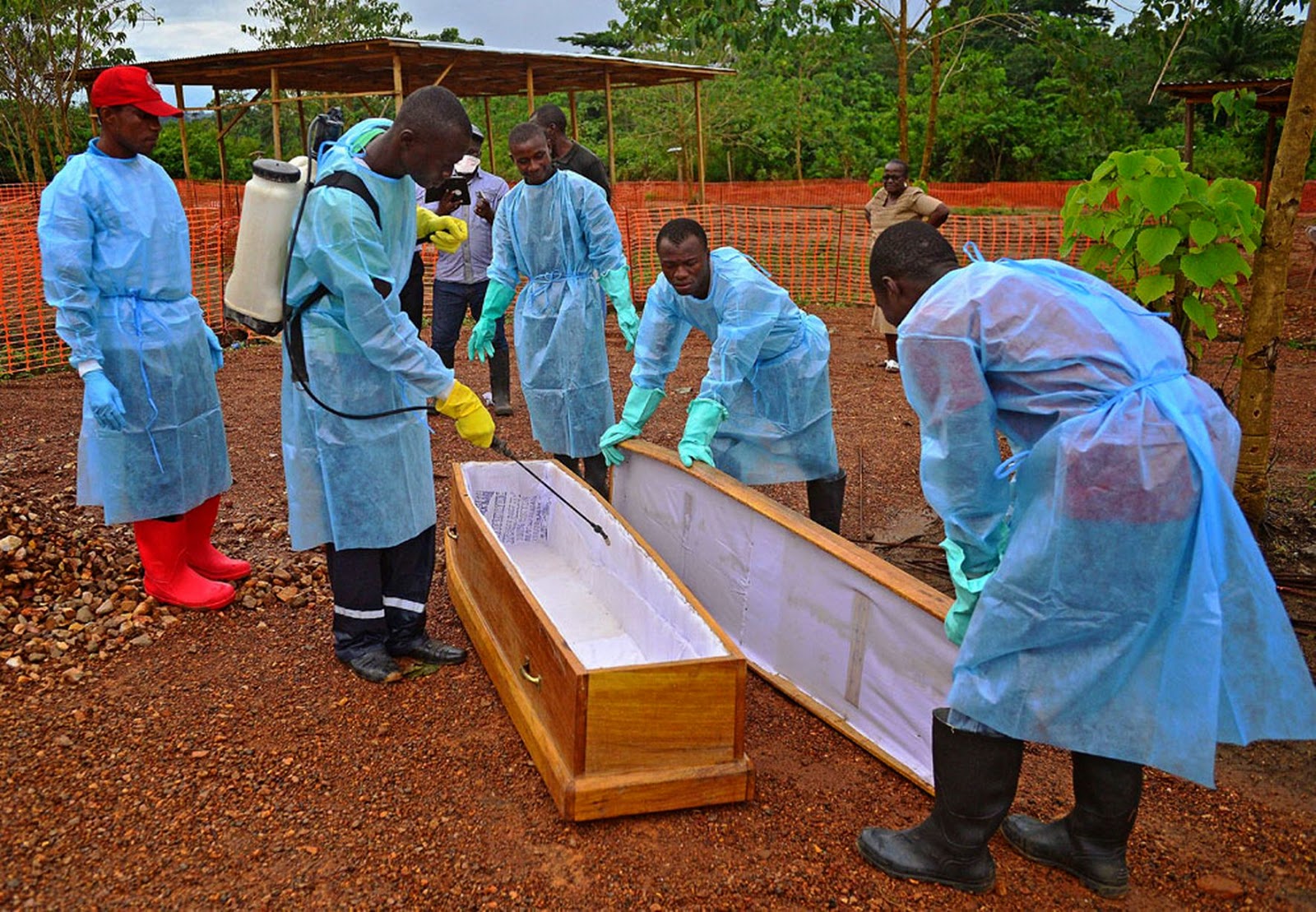
Guidance for Safe Handling of Human Remains of Ebola Patients in U.S.
NIOSH Releases New Ebola Guidance
Given the systems currently in place to identify people with Ebola virus disease (EVD), any Ebola-related deaths in the United States would likely occur within a hospital setting. The Ebola virus can be detected throughout the bodies of patients who die of the disease. Ebola can be transmitted in postmortem care settings by laceration and puncture with contaminated instruments used during postmortem care, through direct handling of human remains without recommended PPE, and through splashes of blood or other body fluids such as urine, saliva, feces, or vomit to unprotected mucosa such as eyes, nose, or mouth during postmortem care.Page Summary
- Who this is for: Personnel who perform postmortem care in U.S. hospitals and mortuaries.
- What this is for: To protect against the postmortem spread of Ebola infection at the site of death, prior to transport, during transport, at the mortuary, and during final disposition of remains
- How to use: To guide staff in the safe handling of human remains that may contain Ebola virus by properly using personal protective equipment (PPE) and following decontamination measures at every step of the process.
-----------------------------------------------------------
Sigue este Blog en Facebook y Twitter
miércoles, 11 de marzo de 2015
Ya se abrieron las inscripciones al 7º Simposio de #Bioseguridad #AMexBio
Ya se abrieron las inscripciones para 7º Simposio de Bioseguridad y Biocustodia 2015, organizado por la Asociación Mexicana de Bioseguridad A.C. Las inscripciones con descuentos son hasta el día 9 de Abril de 2015. Consulta el programa, y da click en cada uno de los cursos para inscribirte. Recuerda que la inscripción al Simposio es independiente de la inscripción a cada uno de los cursos.
INFORMES:
http://amexbio.wildapricot.org/SIBB
-----------------------------------------------------------
Sigue este Blog en Facebook y Twitter
INFORMES:
http://amexbio.wildapricot.org/SIBB
-----------------------------------------------------------
Sigue este Blog en Facebook y Twitter
lunes, 9 de marzo de 2015
Non-Manual Techniques for Room Disinfection in Healthcare Facilities: A Review of Clinical Effectiveness and Guidelines
Contaminated surfaces in healthcare facilities may contribute to the transmission of pathogens implicated in nosocomial infections, such as Clostridium difficile, methicillin resistant Staphylococcus aureus (MRSA), vancomycin resistant Enterococci (VRE), gram-negative rods (Acinetobacter spp. and Enterobacteriaceae) and Norovirus. While patient rooms are regularly cleaned and disinfected using manual techniques, evidence suggests that the adequacy of cleaning is often suboptimal, particularly when the focus is only on those surfaces perceived to be high-risk or frequently contacted (high-touch). As well, when cleaning, sufficient wet contact time between the surface and disinfectant is needed to ensure adequate disinfection, but is not always achieved. Wiping of all surfaces where there is hand contact, not just those that are considered to be high risk or high-touch areas, and ensuring adequate wet contact time is required for adequate disinfection of the patient environment. Inadequate cleaning using manual techniques prompted the development of no-touch systems that can decontaminate objects and surfaces in the patient environment. These technologies employ the use of ultraviolet (UV) light or hydrogen peroxide. There are two systems that use vaporized hydrogen peroxide (VHP) in a dry or wet aerosol and one that uses a hydrogen peroxide mist (HPM), which has a larger particle size. VHP or HPM is produced using a portable generator that quickly increases the concentration of hydrogen peroxide in the room during a decontamination phase which is repeated several times. The process takes approximately two to six hours per room. The UV light systems emit UV light from portable automated units at a wave-length that is germicidal. The unit is placed in a vacant patient room in the centre and can be piloted with a remote to ensure all surfaces are reached as they must be in the line of site to be decontaminated. The units have sensors which stop the irradiation should the door be opened. The process of decontamination takes approximately 45 minutes. One application of these cleaning systems is in terminal or discharge decontamination of vacated patient rooms. They supplement, but do not replace manual cleaning of patient rooms, as surfaces must first be free of dirt and debris prior to their use. Vaporized hydrogen peroxide and UV light systems provide a higher level disinfection or decontamination of all exposed surfaces and equipment in patient rooms, and are not a standalone means of cleaning. Vaporized hydrogen peroxide has also been used for decontamination of rooms and ward spaces in an attempt to terminate outbreaks. This report will review the evidence of clinical effectiveness of non-manual systems that use UV light or vaporized hydrogen peroxide for hospital room disinfection and identify guidelines that address the use of these techniques in healthcare facilities.
REFERENCE:
Non-Manual Techniques for Room Disinfection in Healthcare Facilities: A Review of Clinical Effectiveness and Guidelines. Ottawa (ON): Canadian Agency for Drugs and Technologies in Health; 2014 Apr 30.
-----------------------------------------------------------
Sigue este Blog en Facebook y Twitter

REFERENCE:
Non-Manual Techniques for Room Disinfection in Healthcare Facilities: A Review of Clinical Effectiveness and Guidelines. Ottawa (ON): Canadian Agency for Drugs and Technologies in Health; 2014 Apr 30.
-----------------------------------------------------------
Sigue este Blog en Facebook y Twitter
viernes, 6 de marzo de 2015
Invitación para presentar trabajos libres en el Simposio de #Bioseguridad #AMexBio #SIBB15
La AMexBio invita a todas las personas interesadas a presentar trabajos libres, que podrán ser presentados en poster durante el 7º Simposio Internacional de Bioseguridad y Biocustodia en la Cd. de México.
Informes para la presentación de trabajos visite: http://amexbio.wildapricot.org/Trabajos
Descargue la convocatoria y registre su trabajo en línea.
FECHA LÍMITE DE RECEPCIÓN DE TRABAJOS: 08 de mayo de 2015
-----------------------------------------------------------
Sigue este Blog en Facebook y Twitter
Informes para la presentación de trabajos visite: http://amexbio.wildapricot.org/Trabajos
Descargue la convocatoria y registre su trabajo en línea.
FECHA LÍMITE DE RECEPCIÓN DE TRABAJOS: 08 de mayo de 2015
-----------------------------------------------------------
Sigue este Blog en Facebook y Twitter
jueves, 5 de marzo de 2015
Evaluation of disinfectants to prevent mechanical transmission of viruses and a viroid in greenhouse tomato production
In recent years, a number of serious disease outbreaks caused by viruses and viroids on greenhouse tomatoes in North America have resulted in significant economic losses to growers. The objectives of this study were to evaluate the effectiveness of commercial disinfectants against mechanical transmission of these pathogens, and to select disinfectants with broad spectrum reactivity to control general virus and viroid diseases in greenhouse tomato production. A total of 16 disinfectants were evaluated against Pepino mosaic virus (PepMV), Potato spindle tuber viroid (PSTVd), Tomato mosaic virus (ToMV), and Tobacco mosaic virus (TMV). The efficacy of each disinfectant to deactivate the pathogen¿s infectivity was evaluated in replicate experiments from at least three independent experiments. Any infectivity that remained in the treated solutions was assessed through bioassays on susceptible tomato plants through mechanical inoculation using inocula that had been exposed with the individual disinfectant for three short time periods (0¿10 sec, 30 sec and 60 sec). A positive infection on the inoculated plant was determined through symptom observation and confirmed with enzyme-linked immunosorbent assay (PepMV, ToMV, and TMV) and real-time reverse transcription-PCR (PSTVd). Experimental data were analyzed using Logistic regression and the Bayesian methodology. Statistical analyses using logistic regression and the Bayesian methodology indicated that two disinfectants (2% Virkon S and 10% Clorox regular bleach) were the most effective to prevent transmission of PepMV, PSTVd, ToMV, and TMV from mechanical inoculation. Lysol all-purpose cleaner (50%) and nonfat dry milk (20%) were also effective against ToMV and TMV, but with only partial effects for PepMV and PSTVd. With the broad spectrum efficacy against three common viruses and a viroid, several disinfectants, including 2% Virkon S, 10% Clorox regular bleach and nonfat dry milk, are recommend to greenhouse facilities for consideration to prevent general virus and viroid infection on tomato plants.
REFERENCE:
Li R, et al. Evaluation of disinfectants to prevent mechanical transmission of viruses and a viroid in greenhouse tomato production. Virol J. 2015 Jan 27;12(1):5.
-----------------------------------------------------------
Sigue este Blog en Facebook y Twitter
REFERENCE:
Li R, et al. Evaluation of disinfectants to prevent mechanical transmission of viruses and a viroid in greenhouse tomato production. Virol J. 2015 Jan 27;12(1):5.
-----------------------------------------------------------
Sigue este Blog en Facebook y Twitter
lunes, 2 de marzo de 2015
Pathogen Security-Help or Hindrance?
Events over the past 15 years have resulted in the promulgation of regulations in
the United States to enhance biosecurity by restricting the access to pathogens
and toxins (i.e., biological select agents and toxins [BSATs]), which pose a
severe threat to human being, animal, or plant health or to animal or plant
products, to qualified institutions, laboratories, and scientists. These
regulations also reduce biosafety concerns by imposing specific requirements on
laboratories working with BSATs. Furthermore, they provide a legal framework for
prosecuting someone who possesses a BSAT illegally. With the implementation of
these regulations has come discussion in the scientific community about the
potential of these regulations to affect the cost of doing BSAT research, hamper
research and international collaborations, or whether it would stop someone with
a microbiological background from isolating many of the select agents from
nature.
REFERENCE:
Morse SA. Pathogen security-help or hindrance? Front Bioeng Biotechnol. 2015 Jan 6;2:83.
-----------------------------------------------------------
Sigue este Blog en Facebook y Twitter
REFERENCE:
Morse SA. Pathogen security-help or hindrance? Front Bioeng Biotechnol. 2015 Jan 6;2:83.
-----------------------------------------------------------
Sigue este Blog en Facebook y Twitter
viernes, 27 de febrero de 2015
Laboratory Test Support for #Ebola Patients Within a High-Containment Facility
Two adult United States (US) nationals contracted the Ebola virus while on a humanitarian mission in Africa amidst a large Ebola outbreak there. They were admitted to our medical center (Emory University Hospital in Atlanta, GA) during the first week of August 2014 for treatment. Both survived their illness and were released after approximately 3 weeks of inpatient care. We received approximately 3 days’ advance notice that the first patient would be transported from Africa to our medical center; the second patient arrived 3 days after the first. The diagnosis in each case had been confirmed virologically by detecting Ebola-specific nucleic acid in blood specimens sent to a World Health Organization laboratory in Europe; however, few details of either patient’s condition had been available to us before their arrival. Herein, we summarize the approach we used to plan for and provide laboratory diagnostic testing during their treatment.REFERENCE:
Hill CE, et al. Laboratory test support for ebola patients within a high-containment facility. Lab Med. 2014 Summer;45(3):e109-11.
-----------------------------------------------------------
Sigue este Blog en Facebook y Twitter
Suscribirse a:
Entradas (Atom)


