Lista de correo. Espere su aprobación.
Correo electrónico:
Consultar este grupo

viernes, 28 de septiembre de 2018

Mutaciones de mutidrogo-resistencia en Aspergillus relacionadas a exposición ambiental de fungicidas #aspergilosis

The environmental mold Aspergillus fumigatus is the primary cause of invasive aspergillosis. In patients with high-risk conditions, including stem cell and organ transplant recipients, mortality exceeds 50%. Triazole antifungals have greatly improved survival (1); however, triazole-resistant A. fumigatus infections are increasingly reported worldwide and are associated with increased treatment failure and mortality (2). Of particular concern are resistant A. fumigatus isolates carrying either TR34/L98H or TR46/Y121F/T289A genetic resistance markers, which have been associated with environmental triazole fungicide use rather than previous patient exposure to antifungals (3,4). Reports of these triazole-resistant A. fumigatus strains have become common in Europe (2,3), but U.S. reports are limited (5). Because of the risk posed to immunocompromised patients, understanding the prevalence of such isolates in patients is important to guide clinical and public health decision-making. In 2011, CDC initiated passive laboratory monitoring for U.S. triazole-resistant A. fumigatus isolates through outreach to clinical laboratories. This system identified five TR34/L98H isolates collected from 2016 to 2017 (6), in addition to two other U.S. isolates collected in 2010 and 2014 and reported in 2015 (5). Four of these seven isolates were reported from Pennsylvania, two from Virginia, and one from California. Three isolates were collected from patients with invasive pulmonary aspergillosis, and four patients had no known previous triazole exposure. A. fumigatus resistant to all triazole medications is emerging in the United States, and clinicians and public health personnel need to be aware that resistant infections are possible even in patients not previously exposed to these medications.
REFERENCE:
Beer KD, et al. Multidrug-Resistant Aspergillus fumigatus Carrying Mutations Linked to Environmental Fungicide Exposure — Three States, 2010–2017. MMWR Morb Mortal Wkly Rep 2018;67:1064–1067.
Image from: MicrobeWiki.
-----------------------------------------------------------
Sigue este Blog en Facebook y Twitter
Ayúdanos a traducir las fichas de seguridad de microorganismos. www.seguridadbiologica.blogspot.com
-----------------------------------------------------------

miércoles, 19 de septiembre de 2018

Bacillus anthracis as a cause of bovine abortion - a necropsy case requiring special biosafety measures

In spring 2017, the first case of bovine anthrax in 20 years in Switzerland occurred in the canton of Jura. Carcasses of anthrax-deceased animals should not be opened due to the formation of highly resistant spores bearing the risk of environmental contamination and aerosolization. Nevertheless, in the course of this local outbreak, one sick cow from the affected farm, whose blood repeatedly tested negative for Bacillus anthracis, was necropsied after euthanasia under special biosafety precautions at the Institute of Animal Pathology, Vetsuisse-Faculty Bern. Necropsy revealed ventral edema, fetal death, necro-hemorrhagic placentitis and necrotizing iliac lymphadenitis. Bacillus anthracis was isolated only from placenta and altered lymph node. The biosafety measures taken during and after necropsy prevented a contamination of the necropsy environment, which was proven with bacteriological swabs. This case shows that anthrax may elicit unspecific symptoms mimicking other diseases, and veterinarians must be aware of these non-septicemic cases.

REFERENCE:
Dettwiler M, et al. Bacillus anthracis as a cause of bovine abortion - a necropsy case requiring special biosafety measures. Schweiz Arch Tierheilkd. 2018 Sep;160(9):547-552. doi: 10.17236/sat00176. PubMed PMID: 30206051.

-----------------------------------------------------------
Sigue este Blog en Facebook y Twitter
Ayúdanos a traducir las fichas de seguridad de microorganismos.
www.seguridadbiologica.blogspot.com
-----------------------------------------------------------

sábado, 15 de septiembre de 2018

El webinar sobre mascarillas N95 (inglés) ya está disponible ONLINE


NIOSH organiza cada año un seminario en línea sobre mascarillas N95. Para poder verlo es necesario instalar el programa ADOBE CONNECT. El programa le permitirá escuchar la grabación, y descargar las diapositivas en power point.
Pueden ver el webinar sobre mascarillas N95 por internet en la siguiente liga:
https://niosh-connect.adobeconnect.com/px5qr6ckhkdu/

-----------------------------------------------------------
Sigue este Blog en Facebook y Twitter
Ayúdanos a traducir las fichas de seguridad de microorganismos. www.seguridadbiologica.blogspot.com
-----------------------------------------------------------

jueves, 6 de septiembre de 2018

Biosafety conducts adopted by orthodontists

OBJECTIVE: This cross-sectional observational study was designed to assess the biosafety conducts adopted by orthodontists, and possible differences regarding training time.  METHODS: Both the application of methods for sterilization/disinfection of instruments and materials, and the use of personal protective equipment (PPE) were collected through questionnaires via e-mail. RESULTS: The questionnaires were answered by 90 orthodontists with a mean age of 37.19 ± 9.08 years and mean training time of 13.52 ± 6.84 years. Regarding orthodontic pliers, 63.23% use an autoclave, except 1 who does not perform any procedure. All participants use autoclave to sterilize instruments, and 95.6% of respondents perform cleaning with chemicals prior to sterilization. Most of them (65.56%) use an autoclave to sterilize orthodontic bands, with some still associating disinfection methods, while few (18.89%) do nothing at all. There was a high incidence of the answer "nothing" for the methods used for elastic, accessories, bandages, metal springs, and arches. All respondents use mask and gloves in attendance, 78.92% use aprons, 58.92% use protective goggles, and 50.01% use cap. Training time significantly influenced (p = 0.003) only the use of glutaraldehyde for sterilization/disinfection of pliers. CONCLUSIONS: The sterilization and cleaning of pliers, instruments, and bands, besides the use of PPE, received more uniform and positive responses, while other items suggest disagreements and possible failures. Only orthodontists trained for more than 13 years choose using glutaraldehyde for pliers sterilization/disinfection, the only adopted method with a significant difference in relation to training time.
REFERENCE:
Monteiro, Camila Gonçalves Jezini et al. “Biosafety Conducts Adopted by Orthodontists.” Dental Press Journal of Orthodontics 23.3 (2018): 73–79.

-----------------------------------------------------------
Sigue este Blog en Facebook y Twitter
Ayúdanos a traducir las fichas de seguridad de microorganismos.  www.seguridadbiologica.blogspot.com
-----------------------------------------------------------

viernes, 24 de agosto de 2018

Economic implications between antibiotic use and hospital-acquired infections

OBJECTIVES: The emergence and spread of antimicrobial resistance is still an unresolved problem worldwide. Recent evidence shows correlations between the volume of broad-spectrum antibiotics used in the hospital setting and the incidence of multidrug-resistant bacteria. According to this dynamic relationship, loss of antibiotic activity can be modeled as a negative externality of antibiotic consumption.
METHODS: The present study proposes to present an economic model describing the probability of antibiotic treatment failure as a function of antimicrobial use and alcohol-based hand-rub use. Furthermore, the results of recently conducted time-series analyses and cost-of-illness studies are applied to the model to determine the externalities of antibiotic consumption and alcohol-based hand-rub use with respect to the costs of hospital-acquired infections.
RESULTS: According to our calculations, the consumption of third-generation cephalosporins and fluoroquinolones is associated with the highest negative externalities (€143 and €101, respectively) because their use has been shown to be associated with most types of hospital-acquired infections. In contrast, the use of alcohol-based hand-rub solution for hand disinfection is associated with a positive externality of 41 cents per single disinfection of the hands.
CONCLUSIONS: The externalities presented in this work represent a possible application of cost-of-illness data to quantify the impact of antibiotic use on antimicrobial resistance. In addition, the results indicate that most economic research on the topic is biased in assuming the overall use of antibiotics to be responsible for the spread of antimicrobial resistance.
REFERENCE:
Kaier K. Economic implications of the dynamic relationship between antibiotic  use and hospital-acquired infections. Value Health. 2012 Jan;15(1):87-93. doi: 10.1016/j.jval.2011.09.005. Epub 2011 Nov 6. PubMed PMID: 22264976.

-----------------------------------------------------------
Sigue este Blog en Facebook y Twitter
Ayúdanos a traducir las fichas de seguridad de microorganismos. www.seguridadbiologica.blogspot.com
-----------------------------------------------------------

martes, 21 de agosto de 2018

N95 Day 2018 Webinar: Trending Topics in Respiratory Protection

Registration: https://niosh-connect.adobeconnect.com/n95day2018/event/event_info.html
-----------------------------------------------------------
Sigue este Blog en Facebook y Twitter
Ayúdanos a traducir las fichas de seguridad de microorganismos. www.seguridadbiologica.blogspot.com
-----------------------------------------------------------

lunes, 20 de agosto de 2018

Alcohol Sanitizer

Fragmento
According to the Center for Disease Control (CDC) hand hygiene encompasses the cleansing of your hands by using hand washing with soap and water, antiseptic hand washes, antiseptic hand rubs such as alcohol-based hand sanitizers (ABHS), foams or gels, or surgical hand antisepsis. For many reasons, alcohol hand sanitizers are increasingly being used as disinfectants over hand washing with soap and water.  Their ease of availability, no need for water or plumbing, and their proven effectiveness in reducing microbial load are just a few. In one study, a hospital-wide, hand hygiene campaign with special emphasis on bedside, alcohol-based hand disinfection resulted sustained improvement in hand-hygiene compliance, coinciding with a reduction of nosocomial infections and MRSA transmission. The promotion of bedside, antiseptic, hand rubs largely contributed to the increase in compliance. Many other studies have demonstrated that having bedside alcohol-based solutions availabale increased compliance with hand hygiene among HCWs.
REFERENCE:
Gold NA, Avva U. Alcohol Sanitizer. [Updated 2018 Jun 23]. In: StatPearls [Internet]. Treasure Island (FL): StatPearls Publishing; 2018 Jan-. Available from: https://www.ncbi.nlm.nih.gov/books/NBK513254/

-----------------------------------------------------------
Sigue este Blog en Facebook y Twitter
Ayúdanos a traducir las fichas de seguridad de microorganismos. www.seguridadbiologica.blogspot.com
-----------------------------------------------------------

viernes, 17 de agosto de 2018

Guidance for Prevention of Sexual Transmission of Zika Virus for Men

Zika virus infection can occur as a result of mosquitoborne or sexual transmission of the virus. Infection during pregnancy is a cause of fetal brain abnormalities and other serious birth defects (1,2). CDC has updated the interim guidance for men with possible Zika virus exposure who 1) are planning to conceive with their partner, or 2) want to prevent sexual transmission of Zika virus at any time (3). CDC now recommends that men with possible Zika virus exposure who are planning to conceive with their partner wait for at least 3 months after symptom onset (if symptomatic) or their last possible Zika virus exposure (if asymptomatic) before engaging in unprotected sex. CDC now also recommends that for couples who are not trying to conceive, men can consider using condoms or abstaining from sex for at least 3 months after symptom onset (if symptomatic) or their last possible Zika virus exposure (if asymptomatic) to minimize their risk for sexual transmission of Zika virus.

REFERENCE:
Polen KD, et al. Update: Interim Guidance for Preconception Counseling and Prevention of Sexual Transmission of Zika Virus for Men with Possible Zika Virus Exposure — United States, August 2018. MMWR Morb Mortal Wkly Rep 2018;67:868-871. DOI: http://dx.doi.org/10.15585/mmwr.mm6731e2

-----------------------------------------------------------
Sigue este Blog en Facebook y Twitter
Ayúdanos a traducir las fichas de seguridad de microorganismos. www.seguridadbiologica.blogspot.com
-----------------------------------------------------------

jueves, 16 de agosto de 2018

CDC lab training on-demand #Biosafety #CDC #laboratory


Estos cursos on-demand de aproximadamente 1 hr., son para personal de laboratorio que proporcionan certificados avalados por el CDC, que pueden usar en su currículum, con créditos P.A.C.E. y son gratuitos. Para obtener el certificado, deben completar el curso, y aprobar el examen con más de 80%. Los de bioseguridad son los siguientes:
La lista completa en: https://www.cdc.gov/labtraining/

-----------------------------------------------------------
Sigue este Blog en Facebook y Twitter
Ayúdanos a traducir las fichas de seguridad de microorganismos. www.seguridadbiologica.blogspot.com
-----------------------------------------------------------

martes, 14 de agosto de 2018

Laboratory-acquired scrub typhus and murine typhus infections #LAIs

This study examined the literature on laboratory-acquired infections (LAIs) associated with scrub typhus (Orientia tsutsugamushi) and murine typhus (Rickettsia typhi) research to provide an evidence base for biosafety and biocontainment. Scrub typhus LAIs were documented in 25 individuals, from 1931-2000 with 8 (32%) deaths during the pre-antibiotic era. There were 35 murine typhus LAI reports and no deaths. Results indicated that highest risk activities were working with infectious laboratory animals involving significant aerosol exposures, accidental self-inoculation or bite related infections. A risk-based biosafety approach for in vitro and in vivo culture of O. tsutsugamushi and R. typhi would require only high-risk activities (animal work or large culture volumes) be performed in high containment BSL3 laboratories. We argue that relatively low risk activities including inoculation of cell cultures or the early stages of in vitro growth using low volumes/low concentrations of infectious materials can be performed safely in BSL2 laboratories within a biological safety cabinet.
REFERENCE:
Blacksell SD, et al; Laboratory-acquired scrub typhus and murine typhus infections: The argument for risk-based approach to biosafety requirements for Orientia tsutsugamushi and Rickettsia typhi laboratory activities, Clinical Infectious Diseases ciy675, https://doi.org/10.1093/cid/ciy675

-----------------------------------------------------------
Sigue este Blog en Facebook y Twitter
Ayúdanos a traducir las fichas de seguridad de microorganismos.
www.seguridadbiologica.blogspot.com
-----------------------------------------------------------

lunes, 13 de agosto de 2018

Semanas nacionales de vacunación en México

Las Semanas Nacionales de Salud tienen como objetivo aplicar las vacunas que necesitan los menores de 5 años para completar su esquema básico, así como las que se administran de forma complementaria a los adolescentes y adultos.
En el país desde 1980 se iniciaron las Semanas Nacionales de Vacunación que en un principio se llamaron fases intensivas de vacunación, su objetivo principal es proteger la salud de la niñez.
Primera Semana Nacional de Salud
Se lleva a cabo a finales de febrero y principios de marzo y tiene como objetivo principal la aplicación de la vacuna Sabin a todos los menores de 5 años, con lo que se previene la polio. También se refuerza la aplicación de las vacunas anti rotavirus, anti neumococo, pentavalente, BCG y hepatitis B a menores de 1 año de edad, entre otras actividades.
Segunda Semana Nacional de Salud
Se lleva a cabo a finales de mayo y principios de junio y tiene como objetivo principal la aplicación del refuerzo de la vacuna Sabin a todos los menores de 5 años, con lo que se previene la polio.
Tercera Semana Nacional de Salud
Se lleva a cabo a principios del mes de octubre y tiene como objetivo principal la aplicación de la vacuna Triple viral a todos los menores de 6 y 7 años, con lo que se previenen los casos de sarampión, rubéola y paperas. También se refuerza la aplicación de las vacunas BCG, pentavalente A, Hepatitis B, rotavirus y en este año en especial se aplica la que previene el virus del papiloma humano.

Esquema de vacunación:

Vacuna Enfermerdad que previene A quién se aplica
Sabin Poliomielitis Niños y niñas menores de 5 años
Antihepatitis B Hepatitis B Niños y niñas menores de 5 años y adolescentes
Pentavalente acelular Difteria, Tosferina, Tétanos, Poliomelitis y H. Influenzae Niños y niñas menores 5 años
DPT Difteria, Tosferina y Tétanos Niños y niñas de 4 años
Rotavirus Gastroenteritis causada por rotavirus Niños y niñas menores de 1 año
Neumococica conjugada Infecciones por neumococo Niños y niñas de 2, 4 y 12 meses
Triple Viral SRP Sarampión, Rubéola y Parotiditis Niños y niñas de 1 y 6 años
TD Tétanos y Difteria Embarazadas, hombres y mujeres mayores de 12 años
SR Sarampión, rubéola Hombres y mujeres de 1 a 4 años
-----------------------------------------------------------
Sigue este Blog en Facebook y Twitter
Ayúdanos a traducir las fichas de seguridad de microorganismos. www.seguridadbiologica.blogspot.com
-----------------------------------------------------------

miércoles, 8 de agosto de 2018

Pathogen Risk Assessment guideline

The Pathogen Risk Assessment guideline was developed by the Public Health Agency of Canada (PHAC) and the Canadian Food Inspection Agency (CFIA) as part of a series of electronic publications that expand upon the biosafety and biosecurity concepts discussed in the current edition of the Canadian Biosafety Handbook (CBH), the companion document to the Canadian Biosafety Standard (CBS). It describes how to conduct a pathogen risk assessment to evaluate the risks associated with human or animal pathogens, toxins, or other regulated infectious material. This guideline is intended to assist organizations in meeting the requirements specified in the CBS, but should not be interpreted as requirements. Organizations may choose alternate approaches to meet the requirements specified in the CBS.

Conducting a biosecurity risk assessment
This guideline describes best practices for conducting a biosecurity risk assessment in an organization where human or animal pathogens, toxins, or other regulated infectious material are handled or stored. The biosecurity risks associated with the handling and storing of pathogens and toxins can be minimized through the application of appropriate mitigation measures identified through the risk assessment process.

REFERENCIAS
  1. Pathogen Risk Assessment
  2. Conducting a biosecurity risk assessment.
-----------------------------------------------------------
Sigue este Blog en Facebook y Twitter
Ayúdanos a traducir las fichas de seguridad de microorganismos. www.seguridadbiologica.blogspot.com
-----------------------------------------------------------

viernes, 3 de agosto de 2018

8º Curso de animales de laboratorio.


-----------------------------------------------------------
Sigue este Blog en Facebook y Twitter
Ayúdanos a traducir las fichas de seguridad de microorganismos. www.seguridadbiologica.blogspot.com
-----------------------------------------------------------

lunes, 30 de julio de 2018

Biosecurity practices on Australian commercial layer and meat chicken farms: Performance and perceptions of farmers

This paper describes the level of adoption of biosecurity practices performed on Australian commercial chicken meat and layer farms and farmer-perceived importance of these practices. On-farm interviews were conducted on 25 free range layer farms, nine cage layer farms, nine barn layer farms, six free range meat chicken farms and 15 barn meat chicken farms in the Sydney basin bioregion and South East Queensland. There was a high level of treatment of drinking water across all farm types; town water was the most common source. In general, meat chicken farms had a higher level of adoption of biosecurity practices than layer farms. Cage layer farms had the shortest median distance between sheds (7.75m) and between sheds and waterbodies (30m). Equipment sharing between sheds was performed on 43% of free range meat chicken farms compared to 92% of free range layer farms. There was little disinfection of this shared equipment across all farm types. Footbaths and visitor recording books were used by the majority of farms for all farm types except cage layer farms (25%). Wild birds in sheds were most commonly reported in free range meat chicken farms (73%). Dogs and cats were kept across all farm types, from 56% of barn layer farms to 89% of cage layer farms, and they had access to the sheds in the majority (67%) of cage layer farms and on the range in some free range layer farms (44%). Most biosecurity practices were rated on average as 'very important' by farmers. A logistic regression analysis revealed that for most biosecurity practices, performing a practice was significantly associated with higher perceived farmer importance of that biosecurity practice. These findings help identify farm types and certain biosecurity practices with low adoption levels. This information can aid decision-making on efforts used to improve adoption levels.
REFERENCE:
Scott AB, et al. Biosecurity practices on Australian commercial layer and meat chicken farms: Performance and perceptions of farmers. PLoS One. 2018 Apr 18;13(4):e0195582. doi: 10.1371/journal.pone.0195582. eCollection 2018. PubMed PMID: 29668707.

-----------------------------------------------------------
Sigue este Blog en Facebook y Twitter
Ayúdanos a traducir las fichas de seguridad de microorganismos.  
www.seguridadbiologica.blogspot.com
-----------------------------------------------------------

jueves, 26 de julio de 2018

Desinfectantes para manos a base de alcohol / Alcohol-based hand sanitizers (ABHS)

Según el Centro para el Control de Enfermedades (CDC), la higiene de manos incluye la limpieza de las manos mediante el lavado de manos con agua y jabón, lavados antisépticos para manos, desinfectantes antisépticos para manos como desinfectantes para manos a base de alcohol (ABHS), espumas o geles, o antisepsia quirúrgica de la mano. Por muchas razones, los desinfectantes para manos con alcohol se usan cada vez más como desinfectantes en vez de lavarse las manos con agua y jabón. Su facilidad de disponibilidad, sin necesidad de agua o fontanería, y su probada eficacia para reducir la carga microbiana son solo algunas. En un estudio, una campaña de higiene de manos en todo el hospital, con especial énfasis en la desinfección de manos a base de alcohol, produjo una mejora sostenida en el cumplimiento de la higiene de manos, coincidiendo con una reducción de las infecciones nosocomiales y la transmisión de MRSA. La promoción de la cabecera de la cama, antisépticos, frotamientos de manos contribuyó en gran medida al aumento del cumplimiento. Muchos otros estudios han demostrado que disponer de soluciones basadas en el alcohol a pie de cama aumenta el cumplimiento de la higiene de manos entre los trabajadores de la salud. Sin embargo, es importante tener en cuenta que la eficacia del desinfectante para manos con alcohol depende de qué y cuánto producto se use, la técnica adecuada y la consistencia del uso. También hay situaciones donde estos productos no son ideales, por ejemplo, para prevenir la propagación de ciertas infecciones o cuando las manos están muy sucias y la carga bacteriana es demasiado alta.
REFERENCIA:
Gold NA, Avva U. Alcohol Sanitizer. 2018 Jun 23. StatPearls [Internet]. Treasure Island (FL): StatPearls Publishing; 2018 Jan-.

-----------------------------------------------------------
Sigue este Blog en Facebook y Twitter
Ayúdanos a traducir las fichas de seguridad de microorganismos. www.seguridadbiologica.blogspot.com
-----------------------------------------------------------

lunes, 23 de julio de 2018

Fast-Growing Engineered Microbes: New Concerns for Gain-of-Function Research?


Research on fast-growing microbes holds promise for many industrial applications, including shortening test and trial times in research and development stages and reducing the operation costs for production. Such microbes can be obtained either by selecting naturally occurring variants or via metabolic engineering approaches, either eliminating 'unnecessary' or adding necessary pathways affecting growth speed in the cell. Here, we review recent research and development of engineered fast-growing strains in industrial biotechology, with a special focus on vaccine production using (synthetic biology) engineered pathogenic strains. We will discuss whether this represents a security concern and whether the industrial biotech sector needs to pay more attention to issues of Gain-of-Function (GoF) while developing and harnessing these fast-growing microbes. We will also shed a light on the use of in-built biosafety circuits as a way to control the propagation of fast-growing strains, including their capacity to survive in the environment. Other possible GoF concerns raised by the publication of research results in this field will be also addressed. In conclusion, judging from the current development from the field, assessing the potential GoF risks on engineered fast-growing microbes does not lead to a clear generalized outcome. We argue that fast growing strains need to be evaluated in combination with their wild type and engineered characteristics, and require always a case-by-case assessment. Monitoring the progress of the field and proactively raising awareness on the GoF issues among the scientists are important for the further development of the field.
REFERENCE:
Pei L, Schmidt M. Fast-Growing Engineered Microbes: New Concerns for Gain-of-Function Research? Front Genet. 2018 Jun 29;9:207. doi: 10.3389/fgene.2018.00207. eCollection 2018. Review.


-----------------------------------------------------------
Sigue este Blog en Facebook y Twitter
Ayúdanos a traducir las fichas de seguridad de microorganismos.
www.seguridadbiologica.blogspot.com

miércoles, 18 de julio de 2018

Oropharyngeal #Tularemia from Freshly Pressed Grape Must

In high-income countries, oropharyngeal tularemia is associated with hunting or eating infected game or drinking contaminated water.1,2 We describe a cluster of cases of oropharyngeal tularemia that appears to have been caused by the consumption of freshly pressed grape must by grape harvesters volunteering at a vineyard in Rhineland-Palatinate, Germany, in October 2016. 
Reference: 
N Engl J Med 2018; 379:197-199. https://www.nejm.org/doi/full/10.1056/NEJMc1800353


-----------------------------------------------------------
Sigue este Blog en Facebook y Twitter
Ayúdanos a traducir las fichas de seguridad de microorganismos. www.seguridadbiologica.blogspot.com

martes, 10 de julio de 2018

Priones, prionoides y enfermedades por mal plegamiento de proteínas / Prions, prionoids and protein misfolding disorders #PMD

Prion diseases are progressive, incurable and fatal neurodegenerative conditions. The term ‘prion’ was first nominated to express the revolutionary concept that a protein could be infectious. We now know that prions consist of PrPSc, the pathological aggregated form of the cellular prion protein PrPC. Over the years, the term has been semantically broadened to describe aggregates irrespective of their infectivity, and the prion concept is now being applied, perhaps overenthusiastically, to all neurodegenerative diseases that involve protein aggregation. Indeed, recent studies suggest that prion diseases (PrDs) and protein misfolding disorders (PMDs) share some common disease mechanisms, which could have implications for potential treatments. Nevertheless, the transmissibility of bona fide prions is unique, and PrDs should be considered as distinct from other PMDs.

-----------------------------------------------------------
Sigue este Blog en Facebook y Twitter
Ayúdanos a traducir las fichas de seguridad de microorganismos. www.seguridadbiologica.blogspot.com

jueves, 5 de julio de 2018

Transmisión iatrogénica de priones

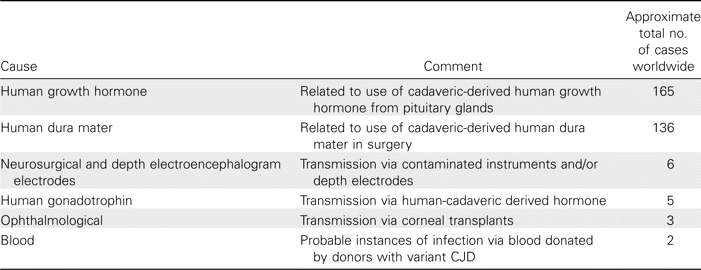
Iatrogenic Creutzfeldt-Jakob disease (CJD): recognized causes and worldwide occurrence.

FRAGMENTO:
Iatrogenic Creutzfeldt-Jakob Disease (CJD) is simply CJD (most likely sporadic CJD) that is transmitted from one person to another by medical or surgical treatment (table 2) [20]. It is important to note that all forms of prion disease are potentially transmissible, even, remarkably, autosomal dominantly inherited genetic diseases. In addition, there are increasing concerns that variant CJD will lead to significant secondary transmission, with 2 reported cases of probable blood transmission [2122].
REFERENCE:
Richard Knight; Creutzfeldt-Jakob Disease: A Rare Cause of Dementia in Elderly Persons, Clinical Infectious Diseases, Volume 43, Issue 3, 1 August 2006, Pages 340–346,

-----------------------------------------------------------
Sigue este Blog en Facebook y Twitter
Ayúdanos a traducir las fichas de seguridad de microorganismos. www.seguridadbiologica.blogspot.com

#Prions: Beyond a Single Protein

Since the term protein was first coined in 1838 and protein was discovered to be the essential component of fibrin and albumin, all cellular proteins were presumed to play beneficial roles in plants and mammals. However, in 1967, Griffith proposed that proteins could be infectious pathogens and postulated their involvement in scrapie, a universally fatal transmissible spongiform encephalopathy in goats and sheep. Nevertheless, this novel hypothesis had not been evidenced until 1982, when Prusiner and coworkers purified infectious particles from scrapie-infected hamster brains and demonstrated that they consisted of a specific protein that he called a “prion.” Unprecedentedly, the infectious prion pathogen is actually derived from its endogenous cellular form in the central nervous system. Unlike other infectious agents, such as bacteria, viruses, and fungi, prions do not contain genetic materials such as DNA or RNA. The unique traits and genetic information of prions are believed to be encoded within the conformational structure and posttranslational modifications of the proteins. Remarkably, prion-like behavior has been recently observed in other cellular proteins—not only in pathogenic roles but also serving physiological functions. The significance of these fascinating developments in prion biology is far beyond the scope of a single cellular protein and its related disease.
REFERENCIA:
Das AS, Zou W-Q. Prions: Beyond a Single Protein. Clinical Microbiology Reviews. 2016;29(3):633-658.

-----------------------------------------------------------
Sigue este Blog en Facebook y Twitter
Ayúdanos a traducir las fichas de seguridad de microorganismos. www.seguridadbiologica.blogspot.com

lunes, 2 de julio de 2018

The Characterization of #Surgical Smoke from Various Tissues and Its Implications for #Occupational #Safety

Electrosurgery produces surgical smoke. Different tissues produce different quantities and types of smoke, so we studied the particle characteristics of this surgical smoke in order to analyze the implications for the occupational health of the operation room personnel. We estimated the deposition of particulate matter (PM) from surgical smoke on the respiratory tract of operation room personnel using clinically relevant tissues from Finnish landrace porcine tissues including skeletal muscle, liver, subcutaneous fat, renal pelvis, renal cortex, lung, bronchus, cerebral gray and white matter, and skin. In order to standardize the electrosurgical cuts and smoke concentrations, we built a customized computer-controlled platform. The smoke particles were analyzed with an electrical low pressure impactor (ELPI), which measures the concentration and aerodynamic size distribution of particles with a diameter between 7 nm and 10 μm. There were significant differences in the mass concentration and size distribution of the surgical smoke particles depending on the electrocauterized tissue. Of the various tissues tested, liver yielded the highest number of particles. In order to better estimate the health hazard, we propose that the tissues can be divided into three distinct classes according to their surgical smoke production: 1) high-PM tissue for liver; 2) medium-PM tissues for renal cortex, renal pelvis, and skeletal muscle; and 3) low-PM tissues for skin, gray matter, white matter, bronchus, and subcutaneous fat.
REFERENCE:
Karjalainen, Markus et al. “The Characterization of Surgical Smoke from Various Tissues and Its Implications for Occupational Safety.” Ed. Sachiko Matsuzaki. PLoS ONE 13.4 (2018): e0195274. PMC. Web. 4 June 2018.

-----------------------------------------------------------
Sigue este Blog en Facebook y Twitter
Ayúdanos a traducir las fichas de seguridad de microorganismos.

miércoles, 27 de junio de 2018

Potential Impact of a 2-Person Security Rule on #BioSafety Level 4 #Laboratory Workers

Directors of all major BioSafety Level 4 (BSL-4) laboratories in the United States met in 2008 to review the current status of biocontainment laboratory operations and to discuss the potential impact of a proposed 2-person security rule on maximum-containment laboratory operations. Special attention was paid to the value and risks that would result from a requirement that 2 persons be physically present in the laboratory at all times. A consensus emerged indicating that a video monitoring system represents a more efficient, economical standard; provides greater assurance that pathogens are properly manipulated; and offers an increased margin of employee safety and institutional security. The 2-person security rule (1 to work and 1 to observe) may decrease compliance with dual responsibilities of safety and security by placing undue pressure on the person being observed to quickly finish the work, and by placing the observer in the containment environment unnecessarily.
REFERENCE:
LeDuc, James W. et al. “Potential Impact of a 2-Person Security Rule on BioSafety Level 4 Laboratory Workers.” Emerging Infectious Diseases 15.7 (2009): e081523. PMC. Web. 4 June 2018.

-----------------------------------------------------------
Sigue este Blog en Facebook y Twitter
Ayúdanos a traducir las fichas de seguridad de microorganismos.

lunes, 25 de junio de 2018

Surveillance of #laboratory exposures to human #pathogens and toxins: #Canada 2016

BACKGROUND: Canada recently enacted legislation to authorize the collection of data on laboratory incidents involving a biological agent. This is done by the Public Health Agency of Canada (PHAC) as part of a comprehensive national program that protects Canadians from the health and safety risks posed by human and terrestrial animal pathogens and toxins.
OBJECTIVE: To describe the first year of data on laboratory exposure incidents and/or laboratory-acquired infections in Canada since the Human Pathogens and Toxins Regulations came into effect.
METHODS: Incidents that occurred between January 1 and December 31, 2016 were self-reported by federally-regulated parties across Canada using a standardized form from the Laboratory Incident Notification Canada (LINC) surveillance system. Exposure incidents were described by sector, frequency of occurrence, timeliness of reporting, number of affected persons, human pathogens and toxins involved, causes and corrective actions taken. Microsoft Excel 2010 was used for basic descriptive analyses.
RESULTS: In 2016, 46 exposure incidents were reported by holders of 835 active licences in Canada representing 1,352 physical areas approved for work involving a biological agent, for an overall incidence of 3.4%. The number of incidents was highest in the academic (n=16; 34.8%) and hospital (n=12; 26.1%) sectors, while the number of reported incidents was relatively low in the private industry sector. An average of four to five incidents occurred each month; the month of September presented as an outlier with 10 incidents.​: A total of 100 people were exposed, with no reports of secondary exposure. Four incidents led to suspected (n=3) or confirmed (n=1) cases of laboratory-acquired infection. Most incidents involved pathogens classified at a risk group 2 level that were manipulated in a containment level 2 laboratory (91.3%). Over 22 different species of human pathogens and toxins were implicated, with bacteria the most frequent (34.8%), followed by viruses (26.1%). Eleven (23.9%) incidents involved a security sensitive biologic agent. Procedure breaches (n=15) and sharps-related incidents (n=14) were the most common antecedents to an exposure. In 10 (21.7%) cases, inadvertent possession (i.e., isolation of an unexpected biological agent during routine work) played a role. Possible improvements to standard operating procedures were cited in 71.7% of incidents. Improvements were also indicated for communication (26.1%) and management (23.9%).
CONCLUSIONS: The Laboratory Incident Notification Canada is one of the first surveillance systems in the world to gather comprehensive data on laboratory incidents involving human pathogens and toxins. Exposure incidents reported in the first year were relatively rare, occurring in less than 4% of containment zones within laboratory settings.

REFERENCE:
Bienek, A, M Heisz, and M Su. “Surveillance of Laboratory Exposures to Human Pathogens and Toxins: Canada 2016.” Canada Communicable Disease Report 43.11 (2017): 228–235. Print.

-----------------------------------------------------------
Sigue este Blog en Facebook y Twitter
Ayúdanos a traducir las fichas de seguridad de microorganismos.

miércoles, 20 de junio de 2018

Coltivirus-related virus isolated from bats infect human cells in vitro

BACKGROUND: Zoonotic transmission events play a major role in the emergence of novel diseases. While such events are virtually impossible to predict, wildlife screening for potential emerging pathogens can be a first step. Driven by recent disease epidemics like severe acute respiratory syndrome (SARS), Middle East respiratory syndrome (MERS), and Ebola, bats have gained special interest as reservoirs of emerging viruses.
METHODS: As part of a bigger study investigating pathogens in African bats we screened animals for the presence of known and unknown viruses.
RESULTS: We isolated and characterised a novel reovirus from blood of free-tailed bats (Chaereophon aloysiisabaudiae) captured in 2006 in Côte d'Ivoire. The virus showed closest relationship with two human pathogenic viruses, Colorado tick fever virus and Eyach virus, and was able to infect various human cell lines in vitro.
CONCLUSION: The study shows the presence of a coltivirus-related virus in bats from Sub-Sahara Africa. Serological studies could help to assess its impact on humans or wildlife health.
REFERENCE:
Weiss S, et al. A novel Coltivirus-related virus isolated from free-tailed bats from Côte d'Ivoire is able to infect human cells in vitro. Virol J. 2017 Sep 18;14(1):181.


-----------------------------------------------------------
Sigue este Blog en Facebook y Twitter
Ayúdanos a traducir las fichas de seguridad de microorganismos.