Lista de correo. Espere su aprobación.
Correo electrónico:
Consultar este grupo

martes, 10 de noviembre de 2015

Membresías 2016 #AMEXBIO

Una de las fuentes de ingreso de AMEXBIO son las aportaciones de los miembros, por lo que invitamos a actualizar su membresía o unirse como miembro activo.

Los beneficios que obtendrás al pagar tu membresía 2016 son:
  1. Cuotas preferenciales para el Simposio Anual, cursos en línea, eventos, seminarios y productos que organice y promueva AMEXBIO.
  2. Poder conocer las diferentes convocatorias de las instituciones que apoyan con recursos o descuentos para participar en eventos nacionales e internacionales sobre temas de bioseguridad.
  3. Contar con su perfil académico y poder participar como profesor en nuestros cursos en línea o cursos presenciales.
  4. Participar activamente en todos los eventos académicos que organice nuestra Asociación.
  5. Constancia de miembro activo.
  6. Asistir a las Asambleas y participar activamente
La membresía 2016 es de $ 900.-

APROVECHA EL BUEN FIN DE AÑO

1. Si ya eres miembro y estas al corriente (Estatus Active):
    Paga el importe de $ 800.00** (actualiza tu perfil, hay campos nuevos)

2. Si ya eres miembro pero no estás al corriente (Estatus Pending Renewal o Lapsed):
Los miembros fundadores, titulares y numerarios que hayan dejado de pagar por varios años, podrán ponerse al corriente con todas sus cuotas al pagar   $ 400.00, además de pagar lo correspondiente a lamembresía 2016 de $ 800.00. 
El total del depósito sería de $ 1,200.00** para ponerse al corriente y renovar hasta febrero de 2017. (actualiza tu perfil, hay campos nuevos)

3. Si no eres miembro (Estatus visitante o en blanco):
Los profesores o investigadores de nuevo ingreso deberán enviar el pago de $ 800.00**,  actualizar su perfil en la página de miembros: www.amexbio.wildapricot.org y enviar la documentación solicitada, al correo electrónico de miembros@amexbio.org.

CONVOCATORIA NUEVOS MIEMBROS

Por favor ayúdanos a distribuir esta información entre tus contactos que les pueda interesar en participar en AMEXBIO.
**- Depósito bancario a nombre de:
Cliente: ASOCIACION MEXICANA DE BIOSEGURIDAD A.C.
Banco: BANAMEX
CLABE interbancaria: 002180024179950244
Sucursal: 0241
Cuenta: 7995024
Referencia:(nombre del miembro)
Enviar el comprobante de depósito escaneado y datos de facturación (si es necesario) al siguiente correo electrónico: tesoreria@amexbio.org


Se emitirá la factura correspondiente, así como la constancia de membresía, que se enviarán por correo electrónico.

Atentamente
Consejo Directivo AMEXBIO 2015-2106

** Vigencia de promoción: al 30 de Diciembre 2015

-----------------------------------------------------------
Sigue este Blog en Facebook y Twitter

lunes, 9 de noviembre de 2015

A New Synthesis for Dual Use Research of Concern #DURC

In 2004, the National Research Council (NRC) published Biotechnology Research in an Age of Terrorism, which introduced the term "dual use dilemma" to denote beneficial life sciences research whose results could be misused to cause harm. That phrase evolved into “dual use research of concern” or DURC. The subsequent decade was characterized by a dichotomy in the response of scientists and the public, with both avid interest and complete disinterest. DURC was a largely specialized issue with awareness confined to a small group of experts in the scientific, government, and security communities until a vigorous and sometimes acrimonious debate erupted in 2011–2012 when two manuscripts reported the experimental derivation of mammalian transmissible H5N1 influenza. Here, we examine a decade of dual use and propose a new synthesis for moving forward.

REFERENCE:

Imperiale MJ, Casadevall A (2015) A New Synthesis for Dual Use Research of Concern. PLoS Med 12(4): e1001813. doi:10.1371/journal.pmed.1001813

-----------------------------------------------------------
Sigue este Blog en Facebook y Twitter

jueves, 5 de noviembre de 2015

Parasitic cancer in human host

Neoplasms occur naturally in invertebrates but are not known to develop in tapeworms. We observed nests of monomorphic, undifferentiated cells in samples from lymph-node and lung biopsies in a man infected with the human immunodeficiency virus (HIV). The morphologic features and invasive behavior of the cells were characteristic of cancer, but their small size suggested a nonhuman origin. A polymerase-chain-reaction (PCR) assay targeting eukaryotes identified Hymenolepis nana DNA. Although the cells were unrecognizable as tapeworm tissue, immunohistochemical staining and probe hybridization labeled the cells in situ. Comparative deep sequencing identified H. nana structural genomic variants that are compatible with mutations described in cancer. Invasion of human tissue by abnormal, proliferating, genetically altered tapeworm cells is a novel disease mechanism that links infection and cancer. 

REFERENCE:
Malignant Transformation of Hymenolepis nana in a Human Host. Muehlenbachs A, Bhatnagar J, Agudelo CA, Hidron A, Eberhard ML, Mathison BA, Frace MA, Ito A, Metcalfe MG, Rollin DC, Visvesvara GS, Pham CD, Jones TL, Greer PW, Vélez Hoyos A, Olson PD, Diazgranados LR, Zaki SR. N Engl J Med. 2015 Nov 5;373(19):1845-1852.

PUNZOCORTANTES: Tipos de dispositivos de seguridad

Descargar poster completo en PDF
Cuando seleccióne un dispositivo punzocortante es importante considerar:
El dispositivo no debe comprometer el cuidado del paciente.
El dispositivo debe ser confiable.
El mecanismo de seguridad debe ser parte integral del dispositivo, no debe ser un component accesorio.
El dispositivo debe ser de fácil manejo, y requerir el mínimo cambio en la técnica de manejo.
La activación del dispositivo debe ser conveniente y permitir que al usuario el apropiado control del procedimiento.
El dispositivo no debe crear otros riesgos o fuentes de exposición a la sangre.
Debe ser de único manejo o de activación autimática.
La activación debe manifestarse de forma audible, táctil o visual.
La activación del dispositivo no debe ser reversible una vez activada.

TIPOS:
  1. CONECTORES SIN AGUJAS. Permiten la conexión de soluciones sin el uso de agujas punzocortantes.
  2. DISPOSITIVOS RETRÁCTILES. Permite la inactivación de los punzocortantes (agujas, lancetas), retrayendolos y ocultándolos después de su uso. 
  3. CAMISAS PROTECTORAS. Con dispositivos que cubren a la lanceta o aguja después de utilizarlos. Generalmente unidos a las porciones plásticas de las agujas o busturies.
  4. AGUJAS ALADAS. Permiten un mejor manejo de agujas.
  5. AGUJAS OCULTAS. Diseñado con un punto/sin núcleo desviado para eliminar el potencial de "extracción de muestras", o el corte de un tapón del tabique de silicona de un puerto vascular.
  6. TRANSPORTADOR DE PUNZOCORTANTES. Facilita la transferencia de punzocortantes, que prevé la colocación segura y recuperación de objetos punzantes.
  7. CONTENEDORES DE PUNZOCORTANTES. Contenedores para la eliminación de objetos punzantes, colocados lo más cerca posible de las áreas donde se utilizan o se encuentran los objetos punzantes.
Este artículo es con propósitos educativos. El blog no recomienda ninguna marca en específico.

REFERENCE:
-----------------------------------------------------------
Sigue este Blog en Facebook y Twitter

martes, 3 de noviembre de 2015

Economic evaluations of mask and respirator use for protection against respiratory infection transmission

Background
There has been increasing debate surrounding mask and respirator interventions to control respiratory infection transmission in both healthcare and community settings. As decision makers are considering the recommendations they should evaluate how to provide the most efficient protection strategies with minimum costs. The aim of this review is to identify and evaluate the existing economic evaluation literature in this area and to offer advice on how future evaluations on this topic should be conducted.
Methods
We searched the Scopus database for all literature on economic evaluation of mask or respirator use to control respiratory infection transmission. Reference lists from the identified studies were also manually searched. Seven studies met our inclusion criteria from the initial 806 studies identified by the search strategy and our manual search.
Results
Five studies considered interventions for seasonal and/or pandemic influenza, with one also considering SARS (Severe Acute Respiratory Syndrome). The other two studies focussed on tuberculosis transmission control interventions. The settings and methodologies of the studies varied greatly. No low-middle income settings were identified. Only one of the reviewed studies cited clinical evidence to inform their mask/respirator intervention effectiveness parameters. Mask and respirator interventions were generally reported by the study authors to be cost saving or cost-effective when compared to no intervention or other control measures, however the evaluations had important limitations.
Conclusions
Given the large cost differential between masks and respirators, there is a need for more comprehensive economic evaluations to compare the relative costs and benefits of these interventions in situations and settings where alternative options are potentially applicable. There are at present insufficient well conducted cost-effectiveness studies to inform decision-makers on the value for money of alternative mask/respirator options.
Keywords: Respirator, Facemask, Economic evaluation, Cost-effectiveness, Influenza, Tuberculosis

REFERENCE:
Shohini Mukerji, C. Raina MacIntyre, Anthony T. Newall. Review of economic evaluations of mask and respirator use for protection against respiratory infection transmission. BMC Infect Dis. 2015; 15: 413. Published online 2015 October 13.
-----------------------------------------------------------
Sigue este Blog en Facebook y Twitter

jueves, 29 de octubre de 2015

miércoles, 28 de octubre de 2015

A cluster randomised trial of cloth masks compared with medical masks

Cloth mask, Aliexpress.com
Objective
The aim of this study was to compare the efficacy of cloth masks to medical masks in hospital healthcare workers (HCWs). The null hypothesis is that there is no difference between medical masks and cloth masks.
Setting
14 secondary-level/tertiary-level hospitals in Hanoi, Vietnam.
Participants
1607 hospital HCWs aged ≥18 years working full-time in selected high-risk wards.
Intervention
Hospital wards were randomised to: medical masks, cloth masks or a control group (usual practice, which included mask wearing). Participants used the mask on every shift for 4 consecutive weeks.
Main outcome measure
Clinical respiratory illness (CRI), influenza-like illness (ILI) and laboratory-confirmed respiratory virus infection.
Results
The rates of all infection outcomes were highest in the cloth mask arm, with the rate of ILI statistically significantly higher in the cloth mask arm (relative risk (RR)=13.00, 95% CI 1.69 to 100.07) compared with the medical mask arm. Cloth masks also had significantly higher rates of ILI compared with the control arm. An analysis by mask use showed ILI (RR=6.64, 95% CI 1.45 to 28.65) and laboratory-confirmed virus (RR=1.72, 95% CI 1.01 to 2.94) were significantly higher in the cloth masks group compared with the medical masks group. Penetration of cloth masks by particles was almost 97% and medical masks 44%.
Conclusions
This study is the first RCT of cloth masks, and the results caution against the use of cloth masks. This is an important finding to inform occupational health and safety. Moisture retention, reuse of cloth masks and poor filtration may result in increased risk of infection. Further research is needed to inform the widespread use of cloth masks globally. However, as a precautionary measure, cloth masks should not be recommended for HCWs, particularly in high-risk situations, and guidelines need to be updated.
Trial registration number
Australian New Zealand Clinical Trials Registry: ACTRN12610000887077.
Keywords: Influenza, Cloth mask

REFERENCE:
MacIntyre, C Raina et al. “A Cluster Randomised Trial of Cloth Masks Compared with Medical Masks in Healthcare Workers.” BMJ Open 5.4 (2015): e006577. PMC. Web. 22 Oct. 2015.

-----------------------------------------------------------
Sigue este Blog en Facebook y Twitter

lunes, 26 de octubre de 2015

Laboratory-Acquired #Dengue Virus Infection—A Case Report #LAIs

The WHO estimates there may be 50 million dengue virus (DENV) infections worldwide every year, with the disease being endemic in more than 100 countries [1]. There has been a dramatic rise in the incidence of dengue in recent decades, making this an arbovirus of major international public health concern. Dengue viruses belong to the family Flaviviridae and are transmitted between humans via infected female Aedes mosquitoes, particularly Aedes aegypti. In the state of Queensland, Australia, infected travellers from overseas have facilitated numerous DENV outbreaks [2], [3]. However, these outbreaks are limited to the far north of the state, the only area of Australia where Ae. aegypti occurs [4]. There have been case reports of non-vector, healthcare-associated transmission of DENVs—four cases of percutaneous transmission via needlestick injuries, mucocutaneous transmission through a blood splash to the face, vertical transmission, and transmission via bone marrow transplant (summarised in [5]). We report the first case to our knowledge of DENV infection acquired by a laboratory scientist conducting mosquito infection and transmission experiments.

REFERENCE:
Britton, Sumudu et al. “Laboratory-Acquired Dengue Virus Infection—A Case Report.” Ed. Maria G. Guzman. PLoS Neglected Tropical Diseases 5.11 (2011): e1324. PMC. Web. 3 Sept. 2015.

-----------------------------------------------------------
Sigue este Blog en Facebook y Twitter

viernes, 23 de octubre de 2015

MERS-CoV Outbreak in the Republic of Korea, 2015

philstar.com
Objectives: The outbreak of Middle East respiratory syndrome coronavirus (MERS-CoV) infection in the Republic of Korea started from the index case who developed fever after returning from the Middle East. He infected 26 cases in Hospital C, and consecutive nosocomial transmission proceeded throughout the nation. We provide an epidemiologic description of the outbreak, as of July 2015.
Methods: Epidemiological research was performed by direct interview of the confirmed patients and reviewing medical records. We also analyzed the incubation period, serial interval, the characteristics of superspreaders, and factors associated with mortality. Full genome sequence was obtained from sputum specimens of the index patient.
Results: A total of 186 confirmed patients with MERS-CoV infection across 16 hospitals were identified in the Republic of Korea. Some 44.1% of the cases were patients exposed in hospitals, 32.8% were caregivers, and 13.4% were healthcare personnel. The most common presenting symptom was fever and chills. The estimated incu bation period was 6.83 days and the serial interval was 12.5 days. A total of 83.2% of the transmission events were epidemiologically linked to five superspreaders, all of whom had pneumonia at presentation and contacted hundreds of people. Older age [odds ratio (OR) = 4.86, 95% confidence interval (CI) 1.90e12.45] and underlying respiratory disease (OR = 4.90, 95% CI 1.64 e14.65) were significantly associated with mortality. Phylogenetic analysis showed that the MERS-CoV of the index case clustered closest with a recent virus
from Riyadh, Saudi Arabia.
Conclusion: A single imported MERS-CoV infection case imposed a huge threat to public health and safety. This highlights the importance of robust preparedness and optimal infection prevention control. The lessons learned from the current outbreak will contribute to more up-to-date guidelines and global health security.

REFERENCE:
Korea Centers for Disease Control and Prevention. “Middle East Respiratory Syndrome Coronavirus Outbreak in the Republic of Korea, 2015.” Osong Public Health and Research Perspectives 6.4 (2015): 269–278. PMC. Web. 22 Oct. 2015.

-----------------------------------------------------------
Sigue este Blog en Facebook y Twitter

lunes, 19 de octubre de 2015

Accidental Infection of Laboratory Worker with Vaccinia #LAIs

We report the accidental needlestick inoculation of a laboratory worker with vaccinia virus. Although the patient had previously been vaccinated against smallpox, severe lesions appeared on the fingers. Western blot and polymerase chain reaction–restriction fragment length polymorphism were used to analyze the virus recovered from the lesions. The vaccinia virus–specific immunoglobulin G levels were measured by enzyme-linked immunosorbent assay. Our study supports the need for vaccination for laboratory workers that routinely handle orthopoxvirus.

REFERENCE:
Moussatché, Nissin et al. “Accidental Infection of Laboratory Worker with Vaccinia.” Emerging Infectious Diseases 9.6 (2003): 724–726. PMC. Web. 11 Sept. 2015.
-----------------------------------------------------------
Sigue este Blog en Facebook y Twitter

viernes, 16 de octubre de 2015

NSF/ANSI Standard 49 Certification Testing of Biosafety Cabinets

NSF International maintains NSF/ANSI Standard 49 Class II (laminar flow) biosafety cabinetry and also certifies that biosafety cabinets conform to the requirements of the standard. More than 20 tests are required during initial qualification testing; of these, the biological challenge tests are the most critical to ensuring that the model tested will provide personnel, product, and cross contamination protection.

REFERENCE:
Maren H. Roush and Stephen C. Williams. NSF/ANSI Standard 49 Certification Testing of Biosafety Cabinets. JALA 2009;14:171–3

-----------------------------------------------------------
Sigue este Blog en Facebook y Twitter

jueves, 15 de octubre de 2015

Freedom and Responsibility in Synthetic Genomics: The Synthetic Yeast Project

First introduced in 2011, the Synthetic Yeast Genome (Sc2.0) Project is a large international synthetic genomics project that will culminate in the first eukaryotic cell (Saccharomyces cerevisiae) with a fully synthetic genome. With collaborators from across the globe and from a range of institutions spanning from do-it-yourself biology (DIYbio) to commercial enterprises, it is important that all scientists working on this project are cognizant of the ethical and policy issues associated with this field of research and operate under a common set of principles. In this commentary, we survey the current ethics and regulatory landscape of synthetic biology and present the Sc2.0 Statement of Ethics and Governance to which all members of the project adhere. This statement focuses on four aspects of the Sc2.0 Project: societal benefit, intellectual property, safety, and self-governance. We propose that such project-level agreements are an important, valuable, and flexible model of self-regulation for similar global, large-scale synthetic biology projects in order to maximize the benefits and minimize potential harms.

REFERENCE:
Sliva, Anna et al. “Freedom and Responsibility in Synthetic Genomics: The Synthetic Yeast Project.” Genetics 200.4 (2015): 1021–1028. PMC. Web. 24 Sept. 2015.

-----------------------------------------------------------
Sigue este Blog en Facebook y Twitter

lunes, 12 de octubre de 2015

The Hidden Geometry of Complex, Network-Driven Contagion Phenomena

The global spread of epidemics, rumors, opinions, and innovations are complex, network-driven dynamic processes. The combined multiscale nature and intrinsic heterogeneity of the underlying networks make it difficult to develop an intuitive understanding of these processes, to distinguish relevant from peripheral factors, to predict their time course, and to locate their origin. However, we show that complex spatiotemporal patterns can be reduced to surprisingly simple, homogeneous wave propagation patterns, if conventional geographic distance is replaced by a probabilistically motivated effective distance. In the context of global, air-traffic–mediated epidemics, we show that effective distance reliably predicts disease arrival times. Even if epidemiological parameters are unknown, the method can still deliver relative arrival times. The approach can also identify the spatial origin of spreading processes and successfully be applied to data of the worldwide 2009 H1N1 influenza pandemic and 2003 SARS epidemic.

REFERENCE:
Brockmann D, Helbing D. The hidden geometry of complex, network-driven contagion phenomena. Science. 2013 Dec 13;342(6164):1337-42.
-----------------------------------------------------------
Sigue este Blog en FacebookTwitter

viernes, 9 de octubre de 2015

NOM-018-STPS-2015, Sistema armonizado para la identificación y comunicación de peligros y riesgos por sustancias químicas peligrosas en los centros de trabajo.

1. Objetivo
Establecer los requisitos para disponer en los centros de trabajo del sistema armonizado de identificación y comunicación de peligros y riesgos por sustancias químicas peligrosas, a fin de prevenir daños a los trabajadores y al personal que actúa en caso de emergencia.
2. Campo de aplicación
La presente Norma Oficial Mexicana rige en todo el territorio nacional y aplica a todos los centros de trabajo donde se manejen sustancias químicas peligrosas. No aplica a productos terminados tales como: farmacéuticos, aditivos alimenticios, artículos cosméticos, residuos de plaguicidas en los alimentos y residuos peligrosos.

REFERENCIA:
Diario Oficial de la Federación, Octubre 09, 2015. Tercera Sección. NOM-018-STPS-2015, Sistema armonizado para la identificación y comunicación de peligros y riesgos por sustancias químicas peligrosas en los centros de trabajo.
DESCARGAR

-----------------------------------------------------------
Sigue este Blog en Facebook y Twitter

lunes, 5 de octubre de 2015

PODCAST: #Nobel Prize in Physiology or Medicine 2015


The Nobel Assembly at Karolinska Institutet has today decided to award the 2015 Nobel Prize in Physiology or Medicine with one half jointly to William C. Campbell and Satoshi Ōmura
for their discoveries concerning a novel therapy against infections caused by roundworm parasites and the other half to Youyou Tu for her discoveries concerning a novel therapy against Malaria
Diseases caused by parasites have plagued humankind for millennia and constitute a major global health problem. In particular, parasitic diseases affect the world''s poorest populations and represent a huge barrier to improving human health and wellbeing. This year''s Nobel Laureates have developed therapies that have revolutionized the treatment of some of the most devastating parasitic diseases.
William C. Campbell and Satoshi Ōmura discovered a new drug, Avermectin, the derivatives of which have radically lowered the incidence of River Blindness and Lymphatic Filariasis, as well as showing efficacy against an expanding number of other parasitic diseases. Youyou Tu discovered Artemisinin, a drug that has significantly reduced the mortality rates for patients suffering from Malaria.
These two discoveries have provided humankind with powerful new means to combat these debilitating diseases that affect hundreds of millions of people annually. The consequences in terms of improved human health and reduced suffering are immeasurable.
Please visite http://www.nobelprize.org/ for more information, and view the complete press release on the following link


REFERENCE:
"The Nobel Prize in Physiology or Medicine 2015". Nobelprize.org. Nobel Media AB 2014. Web. 5 Oct 2015. <http://www.nobelprize.org/nobel_prizes/medicine/laureates/2015/>

-----------------------------------------------------------
Sigue este Blog en Facebook y Twitter

Quaternary Ammonium Biocides: Efficacy in Application

Quaternary ammonium compounds (QACs) are among the most commonly used disinfectants. There has been concern that their widespread use will lead to the development of resistant organisms, and it has been suggested that limits should be place on their use. While increases in tolerance to QACs have been observed, there is no clear evidence to support the development of resistance to QACs. Since efflux pumps are believe to account for at least some of the increased tolerance found in bacteria, there has been concern that this will enhance the resistance of bacteria to certain antibiotics. QACs are membrane-active agents interacting with the cytoplasmic membrane of bacteria and lipids of viruses. The wide variety of chemical structures possible has seen an evolution in their effectiveness and expansion of applications over the last century, including non-lipid-containing viruses (i.e., noroviruses). Selection of formulations and methods of application have been shown to affect the efficacy of QACs. While numerous laboratory studies on the efficacy of QACs are available, relatively few studies have been conducted to assess their efficacy in practice. Better standardized tests for assessing and defining the differences between increases in tolerance versus resistance are needed. The ecological dynamics of microbial communities where QACs are a main line of defense against exposure to pathogens need to be better understood in terms of sublethal doses and antibiotic resistance.

REFERENCE:
Gerba, Charles P. “Quaternary Ammonium Biocides: Efficacy in Application.” Ed. V. Müller. Applied and Environmental Microbiology 81.2 (2015): 464–469. PMC. Web. 9 July 2015.

-----------------------------------------------------------
Sigue este Blog en Facebook y Twitter

viernes, 2 de octubre de 2015

Biological Risks and Laboratory-Acquired Infections: A Reality That Cannot be Ignored in Health Biotechnology #LAIs

Advances and research in biotechnology have applications over a wide range of areas, such as microbiology, medicine, the food industry, agriculture, genetically modified organisms, and nanotechnology, among others. However, research with pathogenic agents, such as virus, parasites, fungi, rickettsia, bacterial microorganisms, or genetic modified organisms, has generated concern because of their potential biological risk – not only for people, but also for the environment due to their unpredictable behavior. In addition, concern for biosafety is associated with the emergence of new diseases or re-emergence of diseases that were already under control. Biotechnology laboratories require biosafety measures designed to protect their staff, the population, and the environment, which may be exposed to hazardous organisms and materials. Laboratory staff training and education is essential, not only to acquire a good understanding about the direct handling of hazardous biological agents but also knowledge of the epidemiology, pathogenicity, and human susceptibility to the biological materials used in research. Biological risk can be reduced and controlled by the correct application of internationally recognized procedures such as proper microbiological techniques, proper containment apparatus, adequate facilities, protective barriers, and special training and education of laboratory workers. To avoid occupational infections, knowledge about standardized microbiological procedures and techniques and the use of containment devices, facilities, and protective barriers is necessary. Training and education about the epidemiology, pathogenicity, and biohazards of the microorganisms involved may prevent or decrease the risk. In this way, the scientific community may benefit from the lessons learned in the past to anticipate future problems. Keywords: biological risks, biosafety, biotechnology, laboratory-acquired infections, health.

REFERENCE:
Coelho, Ana Cláudia, and Juan García Díez. “Biological Risks and Laboratory-Acquired Infections: A Reality That Cannot Be Ignored in Health Biotechnology.” Frontiers in Bioengineering and Biotechnology 3 (2015): 56. PMC. Web. 21 Aug. 2015.
-----------------------------------------------------------
Sigue este Blog en Facebook y Twitter

miércoles, 30 de septiembre de 2015

Política gubernamental para la investigación de preocupación de uso dual #DURC

La investigación de preocupación de uso dual [DURC, Dual Use Research of Concern] es un término que hace referencia a toda investigación científica que es realizada con propósitos legítimos para generar conocimiento, información, tecnologías y/o productos, que pueden ser utilizados con fines benévolos o para causar daño. La mayoría de las investigaciones científicas tienen un potencial para generar información que puede ser mal utilizada. Sin embargo, aquellas que pueden ser utilizadas de forma inmediata y que son una amenaza a la salud pública y la seguridad para la agricultura, la ganadería, el ambiente, los animales, o la seguridad son de gran preocupación. El manejo de los riesgos por las DURC, debe ser compartido por investigadores, editores, editoriales, comités de bioseguridad, ciencia y bioética, instituciones de vigilancia, gobiernos locales, estatales y federales. En EU se ha establecido una política institucional gubernamental para la vigilancia de la investigación de preocupación de uso dual. Pueden ver esta información en la página sobre DURC en  http://www.phe.gov/s3/dualuse. También pueden descargar los siguientes documentos:


-----------------------------------------------------------
Sigue este Blog en Facebook y Twitter

lunes, 28 de septiembre de 2015

CDC. Workbook for Designing, Implementing and Evaluating a Sharps Injury Prevention Program


An effective sharps injury prevention program includes several components that must work in concert to prevent healthcare personnel from suffering needlesticks and other sharps-related injuries. This program plan is designed to be integrated into existing performance improvement, infection control, and safety programs. It is based on a model of continuous quality improvement, an approach that successful healthcare organizations are increasingly adopting. We can describe this model in a variety of terms, but the underlying concept is that of a systematic, organizationwide approach for continually improving all processes (Processes Performance Improvement) involved in the delivery of quality products and services. The program plan also draws on concepts from the industrial hygiene profession, in which prevention interventions are prioritized based on a hierarchy of control strategies.

REFERENCE:
-----------------------------------------------------------

Sigue este Blog en Facebook y Twitter

viernes, 25 de septiembre de 2015

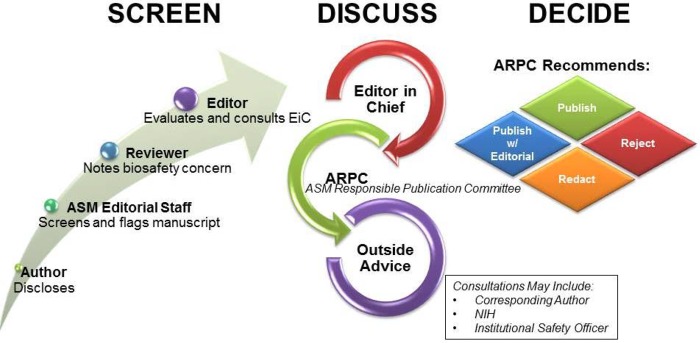
Dual-Use Research of Concern (#DURC) Review at American Society for Microbiology Journals

Scheme of the review process used by
ASM journals for manuscripts containing DURC.
The potential use of biological knowledge for nefarious purposes has attracted significant concern. The field of microbiology has come under particular scrutiny because some microbes and toxins are potential agents for bioterrorism and biological warfare. In 2005, the U.S. government established the National Science Advisory Board for Biosecurity (NSABB) to address issues related to biosecurity and dual-use research. Over the past decade, the NSABB has considered several topics, including defining the boundary between research that requires no special oversight and research that could be misapplied, which is known as dual-use research of concern (DURC). One of the major accomplishments of the NSABB was to draft a definition for DURC as “life sciences research that, based on current understanding, can be reasonably anticipated to provide knowledge, information, products, or technologies that could be directly misapplied to pose a significant threat with broad potential consequences to public health and safety, agricultural crops and other plants, animals, the environment, materiel, or national security.” In addition to defining the type of research that should elicit heightened concern, the NSABB recommended that research be examined for DURC potential throughout its life span, from experimental conception to final dissemination of the results and developed tools for communicating findings that meet the definition. Furthermore, the NSABB sought to establish a culture of responsibility to mitigate risks associated with DURC that extended through the entire scientific enterprise and included journals and editors. In 2007, the American Society for Microbiology (ASM) responded to the NSABB directives by introducing a questionnaire in the manuscript referee review form used by its journals that asked reviewers to provide an assessment about whether the work involved experiments of concern.

REFERENCE:
Casadevall, Arturo et al. “Dual-Use Research of Concern (DURC) Review at American Society for Microbiology Journals.” mBio 6.4 (2015): e01236–15. PMC. Web. 24 Sept. 2015.

---------------------------------------------------------
Sigue este Blog en Facebook y Twitter

miércoles, 23 de septiembre de 2015

Novel Human Virus That Shares Genomic Features with Hepaciviruses and Pegiviruses

To investigate the transmission of novel infectious agents by blood transfusion, we studied changes in the virome composition of blood transfusion recipients pre- and posttransfusion. Using this approach, we detected and genetically characterized a novel human virus, human hepegivirus 1 (HHpgV-1), that shares features with hepatitis C virus (HCV) and human pegivirus (HPgV; formerly called GB virus C or hepatitis G virus). HCV and HPgV belong to the genera Hepacivirus and Pegivirus of the family Flaviviridae. HHpgV-1 was found in serum samples from two blood transfusion recipients and two hemophilia patients who had received plasma-derived clotting factor concentrates. In the former, the virus was detected only in the posttransfusion samples, indicating blood-borne transmission. Both hemophiliacs were persistently viremic over periods of at least 201 and 1,981 days. The 5′ untranslated region (UTR) of HHpgV-1 contained a type IV internal ribosome entry site (IRES), structurally similar to although highly divergent in sequence from that of HCV and other hepaciviruses. However, phylogenetic analysis of nonstructural genes (NS3 and NS5B) showed that HHpgV-1 forms a branch within the pegivirus clade distinct from HPgV and homologs infecting other mammalian species. In common with some pegivirus variants infecting rodents and bats, the HHpgV-1 genome encodes a short, highly basic protein upstream of E1, potentially possessing a core-like function in packaging RNA during assembly. Identification of this new human virus, HHpgV-1, expands our knowledge of the range of genome configurations of these viruses and may lead to a reevaluation of the original criteria by which the genera Hepacivirus and Pegivirus are defined.
IMPORTANCE More than 30 million blood components are transfused annually in the United States alone. Surveillance for infectious agents in the blood supply is key to ensuring the safety of this critical resource for medicine and public health. Here, we report the identification of a new and highly diverse HCV/GB virus (GBV)-like virus from human serum samples. This new virus, human hepegivirus 1 (HHpgV-1), was found in serum samples from blood transfusion recipients, indicating its potential for transmission via transfusion products. We also found persistent long-term HHpgV-1 viremia in two hemophilia patients. HHpgV-1 is unique because it shares genetic similarity with both highly pathogenic HCV and the apparently nonpathogenic HPgV (GBV-C). Our results add to the list of human viruses and provide data to develop reagents to study virus transmission and disease association and for interrupting virus transmission and new human infections.

REFERENCE:
Kapoor A, et al. Virome Analysis of Transfusion Recipients Reveals a Novel Human Virus That Shares Genomic Features with Hepaciviruses and Pegiviruses. September 2015 mBio vol. 6 no. 5 e01466-15

-----------------------------------------------------------
Sigue este Blog en Facebook y Twitter

lunes, 21 de septiembre de 2015

State-of-the-Art in Biosafety and Biosecurity in European Countries

The terms biosafety and biosecurity are widely used in different concepts and refer not only to protection of human beings and their surrounding environment against hazardous biological agent, but also to global disarmament of weapons of mass destruction. As a result, the biosafety and biosecurity issues should be considered interdisciplinary based on multilateral agreements against proliferation of biological weapons, public health and environmental protection. This publication presents information on both, international and national biosafety and biosecurity legislation. Status of national implementation of the Biological and Toxin Weapons Convention, penalization issues and measures to account for and secure production, use, storage of particularly dangerous pathogens or activities involving humans, plants and animals where infection may pose a risk have been analyzed. Safety and security measures in laboratories have been studied. Moreover, dual-use technology and measures of secure transport of biohazard materials have been also taken into account. In addition, genetic engineering regulations, biosecurity activities in laboratories and code of conducts have been investigated, as well. Keywords: Biosafety, Biosecurity, Legislation, BTWC

REFERENCE:
Bielecka, Anna, and Ali Akbar Mohammadi. “State-of-the-Art in Biosafety and Biosecurity in European Countries.” Archivum Immunologiae et Therapiae Experimentalis 62.3 (2014): 169–178. PMC. Web. 20 Aug. 2015.
-----------------------------------------------------------
Sigue este Blog en Facebook y Twitter

jueves, 17 de septiembre de 2015

To PAPR or not to PAPR?

The present outbreak of Ebola has health care professionals seeking guidance on isolation precautions for routine care and aerosol-generating procedures (AGPs). The most recent guidelines state that during AGPs, health care professionals should wear respiratory protection at least as protective as a National Institute for Occupational Safety and Health-certified fit tested N95 filtering face piece respirator or higher; for example, a powered air-purifying respirator (PAPR). The present review discusses the advantages and disadvantages of using a PAPR versus an N95 mask, and relates the experience of the Jewish General Hospital (Montreal, Quebec) of PAPR policy implementation. Training programs on proper donning and doffing of personal protective equipment and quality control systems need to be in place. Respiratory therapists are frontline during AGPs and need to be active in the decision making of the type of equipment chosen to protect them.

REFERENCE:
Roberts V. To PAPR or not to PAPR? Can J Respir Ther. 2014 Fall;50(3):87-90. Review.
-----------------------------------------------------------
Sigue este Blog en Facebook y Twitter

lunes, 14 de septiembre de 2015

Health worker #Ebola infections in Guinea, Liberia and Sierra Leone

This preliminary report summarizes the impact of the Ebola epidemic on the health workforce of Guinea, Liberia and Sierra Leone. It investigates the determinants of infection and describes safe practices put in place to protect health workers during the epidemic. The report covers the period from 1 January 2014 to 31 March 2015 and is presents findings from the 815 confirmed and probable cases for whom individual case reports were available.

The Ebola epidemic has taken a heavy toll on the already scarce health workforce. Among the health workers for whom final outcome is known, two-thirds of those infected died. Preliminary analysis shows that, depending on their occupation in the health service, health workers are between 21 and 32 times more likely to be infected with Ebola than people in the general adult population. With higher risks of exposure in caring for others, health workers were disproportionately impacted and traumatised by Ebola.

Health worker infections can be prevented. WHO and partners have worked with ministries of health, partners, managers and health workers to put in place infection prevention control (IPC) and occupational health and safety (OHS) strategies and supplies to prevent health worker infections and improve patient safety. Health worker protection and support must be at the core of emergency response, preparedness and efforts to build a resilient health system. Cementing this lesson learnt into practice can be a lasting tribute to health workers.

REFERENCE:
Health worker #Ebola infections in Guinea, Liberia and Sierra Leone
Number of pages: 16.  Publication date: May 2015.  Languages: English
WHO reference number: WHO/EVD/SDS/REPORT/2015.1

-----------------------------------------------------------
Sigue este Blog en Facebook y Twitter
viernes, 11 de septiembre de 2015

Genetic Analysis of a Sarcoma Accidentally Transplanted from a Patient to a Surgeon #LAIs

Modern concepts of cancer immunology originated from the classic observations by Jensen, Loeb, Tyzzer, and Little in the early years of the 20th century of the rejection of transplanted allogeneic tumors and the acceptance of syngeneic tumors. Despite this law of transplantation, there are several clinical examples of the accidental transplantation of a malignant tumor or tumor cells into a healthy recipient. We describe the accidental transplantation of a malignant sarcoma from a patient to a surgeon. Using molecular methods, we showed that the sarcomas in the unrelated patient and surgeon were genetically identical.

REFERENCE:
Gärtner HV, Seidl C, Luckenbach C, Schumm G, Seifried E, Ritter H, Bültmann B. Genetic analysis of a sarcoma accidentally transplanted from a patient to a surgeon. N Engl J Med. 1996 Nov 14;335(20):1494-6.
-----------------------------------------------------------
Sigue este Blog en Facebook y Twitter

jueves, 10 de septiembre de 2015

Reduced Efficiency of Chlorine Disinfection of Naegleria fowleri in a Drinking Water Distribution Biofilm

Naegleria fowleri associated with biofilm and biological demand water (organic matter suspended in water that consumes disinfectants) sourced from operational drinking water distribution systems (DWDSs) had significantly increased resistance to chlorine disinfection. N. fowleri survived intermittent chlorine dosing of 0.6 mg/L for 7 days in a mixed biofilm from field and laboratory-cultured Escherichia coli strains. However, N. fowleri associated with an attached drinking water distribution biofilm survived more than 30 times (20 mg/L for 3 h) the recommended concentration of chlorine for drinking water. N. fowleri showed considerably more resistance to chlorine when associated with a real field biofilm compared to the mixed laboratory biofilm. This increased resistance is likely due to not only the consumption of disinfectants by the biofilm and the reduced disinfectant penetration into the biofilm but also the composition and microbial community of the biofilm itself. The increased diversity of the field biofilm community likely increased N. fowleri's resistance to chlorine disinfection compared to that of the laboratory-cultured biofilm. Previous research has been conducted in only laboratory scale models of DWDSs and laboratory-cultured biofilms. To the best of our knowledge, this is the first study demonstrating how N. fowleri can persist in a field drinking water distribution biofilm despite chlorination.

REFERENCE:
Miller HC, Wylie J, Dejean G, Kaksonen A, Sutton D, Braun K, Puzon G. Reduced efficiency of chlorine disinfection of Naegleria fowleri in drinking water distribution biofilm. Environ Sci Technol. 2015 Aug 19.
-----------------------------------------------------------
Sigue este Blog en Facebook y Twitter

lunes, 7 de septiembre de 2015

WHO Guidelines for Containment of Poliovirus Following Type-Specific #Polio Eradication

In 1988, the World Health Assembly of the World Health Organization (WHO) resolved to eradicate polio worldwide. Among the three wild poliovirus (WPV) types (type 1, type 2, and type 3), WPV type 2 (WPV2) has been eliminated in the wild since 1999, and WPV type 3 (WPV3) has not been reported since 2012. In 2015, only Afghanistan and Pakistan have reported WPV transmission. On May 25, 2015, all WHO Member States endorsed World Health Assembly resolution 68.3 on full implementation of the Polio Eradication and Endgame Strategic Plan 2013-2018 (the Endgame Plan), and with it, the third Global Action Plan to minimize poliovirus facility-associated risk (GAPIII). All WHO Member States have committed to implementing appropriate containment of WPV2 in essential laboratory and vaccine production facilities* by the end of 2015 and of type 2 oral poliovirus vaccine (OPV2) within 3 months of global withdrawal of OPV2, which is planned for April 2016. This report summarizes critical steps for essential laboratory and vaccine production facilities that intend to retain materials confirmed to contain or potentially containing type-specific WPV, vaccine-derived poliovirus (VDPV), or OPV/Sabin viruses, and steps for nonessential facilities† that process specimens that contain or might contain polioviruses. National authorities will need to certify that the essential facilities they host meet the containment requirements described in GAPIII. After certification of WPV eradication, the use of all OPV will cease; final containment of all polioviruses after polio eradication and OPV cessation will minimize the risk for reintroduction of poliovirus into a polio-free world.

REFERENCE:
Previsani N, Tangermann RH, Tallis G, Jafari HS. World Health Organization Guidelines for Containment of Poliovirus Following Type-Specific Polio Eradication - Worldwide, 2015. MMWR Morb Mortal Wkly Rep. 2015 Aug 28;64(33):913-7.

-----------------------------------------------------------
Sigue este Blog en Facebook y Twitter

jueves, 3 de septiembre de 2015

MERS-CoV in Upper Respiratory Tract and Lungs of Dromedary Camels, Saudi Arabia, 2013-2014

To assess the temporal dynamics of Middle East respiratory syndrome coronavirus (MERS-CoV) infection in dromedary camels, specimens were collected at 1-2 month intervals from 2 independent groups of animals during April 2013-May 2014 in Al-Ahsa Province, Saudi Arabia, and tested for MERS-CoV RNA by reverse transcription PCR. Of 96 live camels, 28 (29.2%) nasal swab samples were positive; of 91 camel carcasses, 56 (61.5%) lung tissue samples were positive. Positive samples were more commonly found among young animals (<4 years of age) than adults (>4 years of age). The proportions of positive samples varied by month for both groups; detection peaked during November 2013 and January 2014 and declined in March and May 2014. These findings further our understanding of MERS-CoV infection in dromedary camels and may help inform intervention strategies to reduce zoonotic infections.

 REFERENCE: 
Khalafalla AI, Lu X, Al-Mubarak AI, Dalab AH, Al-Busadah KA, Erdman DD. MERS-CoV in Upper Respiratory Tract and Lungs of Dromedary Camels, Saudi Arabia, 2013-2014. Emerg Infect Dis. 2015 Jul;21(7):1153-8. 
-----------------------------------------------------------
Sigue este Blog en Facebook y Twitter

lunes, 31 de agosto de 2015

Probable Crimean-Congo hemorrhagic fever virus transmission occurred after aerosol-generating medical procedures in Russia: nosocomial cluster

We report here a fatal case of laboratory confirmed Crimean-Congo hemorrhagic fever (CCHF), which caused nosocomial infection in eight health care workers (HCWs), who had provided medical care for the patient. All the HCWs survived. The report demonstrates that airborne transmission of CCHF is a real risk, at least when the CCHF patient is in a ventilator. During performance of any aerosol-generating medical procedures for any CCHF patient airborne precautions should always be added to standard precautions, in particular, airway protective N95 mask or equivalent standard, eye protection, single airborne precaution room, or a well-ventilated setting.
REFERENCE:
Pshenichnaya NY, Nenadskaya SA. Probable Crimean-Congo hemorrhagic fever virus transmission occurred after aerosol-generating medical procedures in Russia: nosocomial cluster. Int J Infect Dis. 2015 Apr;33:120-2.
-----------------------------------------------------------
Sigue este Blog en Facebook y Twitter

jueves, 27 de agosto de 2015

Transmisión de arbovirus (flavivirus) sin necesidad de vectores biológicos

Hay que recordar que quienes trabajan con virus como dengue, virus del Oeste del Nilo, fiebre amarilla pueden adquirir la infección en el laboratorio, SIN necesidad de vectores biológicos.


http://www.researchgate.net/publication/228656801_Non-vector_transmission_of_dengue_and_other_mosquito-borne_flaviviruses

-----------------------------------------------------------
Sigue este Blog en Facebook y Twitter

BSL-3 Laboratory Practices in the United States: Comparison of Select Agent and Non–Select Agent Facilities

New construction of biosafety level 3 (BSL-3) laboratories in the United States has increased in the past decade to facilitate research on potential bioterrorism agents. The Centers for Disease Control and Prevention inspect BSL-3 facilities and review commissioning documentation, but no single agency has oversight over all BSL-3 facilities. This article explores the extent to which standard operating procedures in US BSL-3 facilities vary between laboratories with select agent or non–select agent status. Comparisons are made for the following variables: personnel training, decontamination, personal protective equipment (PPE), medical surveillance, security access, laboratory structure and maintenance, funding, and pest management. Facilities working with select agents had more complex training programs and decontamination procedures than non–select agent facilities. Personnel working in select agent laboratories were likely to use powered air purifying respirators, while non–select agent laboratories primarily used N95 respirators. More rigorous medical surveillance was carried out in select agent workers (although not required by the select agent program) and a higher level of restrictive access to laboratories was found. Most select agent and non–select agent laboratories reported adequate structural integrity in facilities; however, differences were observed in personnel perception of funding for repairs. Pest management was carried out by select agent personnel more frequently than non–select agent personnel. Our findings support the need to promote high quality biosafety training and standard operating procedures in both select agent and non–select agent laboratories to improve occupational health and safety.

REFERENCE:
Richards, Stephanie L., Victoria C. Pompei, and Alice Anderson. “BSL-3 Laboratory Practices in the United States: Comparison of Select Agent and Non–Select Agent Facilities.” Biosecurity and Bioterrorism : Biodefense Strategy, Practice, and Science 12.1 (2014): 1–7. PMC. Web. 30 July 2015. -----------------------------------------------------------
Sigue este Blog en Facebook y Twitter

lunes, 24 de agosto de 2015

Pathogen transfer and high variability in pathogen removal by detergent wipes

BACKGROUND:
The rise in health care-associated infections has placed a greater emphasis on cleaning and disinfection practices. The majority of policies advocate using detergent-based products for routine cleaning, with detergent wipes increasingly being used; however, there is no information about their ability to remove and subsequently transfer pathogens in practice.
METHODS: Seven detergent wipes were tested for their ability to remove and transfer Staphylococcus aureus, Acinetobacter baumannii, and Clostridium difficile spores using the 3-stage wipe protocol.
RESULTS: The ability of the detergent wipes to remove S aureus, A baumannii, and C difficile spores from a stainless steel surface ranged from 1.50 log10 (range, 0.24-3.25), 3.51 log10 (range, 3.01-3.81), and 0.96 log10 (range, 0.26-1.44), respectively, following a 10-second wiping time. All wipes repeatedly transferred significant amounts of bacteria/spores over 3 consecutive surfaces, although the percentage of total microorganisms transferred from the wipes after wiping was low for a number of products.
CONCLUSIONS: Detergent-based wipe products have 2 major drawbacks: their variability in removing microbial bioburden from inanimate surfaces and a propensity to transfer pathogens between surfaces. The use of additional complementary measures such as combined detergent/disinfectant-based products and/or antimicrobial surfaces need to be considered for appropriate infection control and prevention.

REFERENCE:
Ramm L, et al. Pathogen transfer and highvariability in pathogen removal by detergent wipes. Am J Infect Control. 2015 Jul 1;43(7):724-8.
-----------------------------------------------------------
Sigue este Blog en Facebook y Twitter

jueves, 20 de agosto de 2015

Worker Health and Safety Practices in Research Facilities Using Nonhuman Primates, North America

Since 1975, federal quarantine regulations have restricted nonhuman primate importation to scientific, educational, or exhibition purposes to limit risks for disease introduction. Infectious diseases resulting from importation of nonhuman primates need to be prevented to ensure that colonies of these animals are available for research and to protect persons working with them from exposure to established and emerging zoonotic diseases.

REFERENCE:
Emily W. Lankau. Worker Health and Safety Practices in Research Facilities Using Nonhuman Primates, North America. Emerg Infect Dis. 2014 Sep; 20(9): 1589–1590. 
-----------------------------------------------------------
Sigue este Blog en Facebook y Twitter

lunes, 17 de agosto de 2015

Debate on MERS-CoV respiratory precautions: surgical mask or N95 respirators?

Since the emergence of Middle East respiratory syndrome coronavirus (MERS-CoV) in mid-2012, there has been controversy over the respiratory precaution recommendations in different guidelines from various international bodies. Our understanding of MERS-CoV is still evolving. Current recommendations on infection control practices are heavily influenced by the lessons learnt from severe acute respiratory syndrome. A debate on respiratory precautions for MERS-CoV was organised by Infection Control Association (Singapore) and the Society of Infectious Disease (Singapore). We herein discuss and present the evidence for surgical masks for the protection of healthcare workers from MERS-CoV.

REFERENCE:
Chung SJ, Ling ML, Seto WH, Ang BS, Tambyah PA. Debate on MERS-CoV respiratory precautions: surgical mask or N95 respirators? Singapore Med J. 2014
Jun;55(6):294-7.
-----------------------------------------------------------
Sigue este Blog en Facebook y Twitter

jueves, 13 de agosto de 2015

Guidelines for safe work practices in human and animal medical diagnostic laboratories. Recommendations of a CDC-convened, Biosafety Blue Ribbon Panel.

Prevention of injuries and occupational infections in U.S. laboratories has been a concern for many years. CDC and the National Institutes of Health addressed the topic in their publication Biosafety in Microbiological and Biomedical Laboratories, now in its 5th edition (BMBL-5). BMBL-5, however, was not designed to address the day-to-day operations of diagnostic laboratories in human and animal medicine. In 2008, CDC convened a Blue Ribbon Panel of laboratory representatives from a variety of agencies, laboratory organizations, and facilities to review laboratory biosafety in diagnostic laboratories. The members of this panel recommended that biosafety guidelines be developed to address the unique operational needs of the diagnostic laboratory community and that they be science based and made available broadly. These guidelines promote a culture of safety and include recommendations that supplement BMBL-5 by addressing the unique needs of the diagnostic laboratory. They are not requirements but recommendations that represent current science and sound judgment that can foster a safe working environment for all laboratorians. Throughout these guidelines, quality laboratory science is reinforced by a common-sense approach to biosafety in day-to-day activities. Because many of the same diagnostic techniques are used in human and animal diagnostic laboratories, the text is presented with this in mind. All functions of the human and animal diagnostic laboratory--microbiology, chemistry, hematology, and pathology with autopsy and necropsy guidance--are addressed. A specific section for veterinary diagnostic laboratories addresses the veterinary issues not shared by other human laboratory departments. Recommendations for all laboratories include use of Class IIA2 biological safety cabinets that are inspected annually; frequent hand washing; use of appropriate disinfectants, including 1:10 dilutions of household bleach; dependence on risk assessments for many activities; development of written safety protocols that address the risks of chemicals in the laboratory; the need for negative airflow into the laboratory; areas of the laboratory in which use of gloves is optional or is recommended; and the national need for a central site for surveillance and nonpunitive reporting of laboratory incidents/exposures, injuries, and infections.

REFERENCE:
Miller JM, et al.; Biosafety Blue Ribbon Panel; Centers for Disease Control and Prevention (CDC). Guidelines for safe work practices in human and animal medical diagnostic laboratories. Recommendations of a CDC-convened, Biosafety Blue Ribbon Panel. MMWR Surveill Summ. 2012 Jan 6;61 Suppl:1-102. Erratum in: MMWR Surveill Summ. 2012 Mar 30;61(12):214.
-----------------------------------------------------------
Sigue este Blog en Facebook y Twitter

lunes, 10 de agosto de 2015

Evaluation of a Disinfectant Wipe Intervention on Fomite-to-Finger Microbial Transfer

Inanimate surfaces, or fomites, can serve as routes of transmission of enteric and respiratory pathogens. No previous studies have evaluated the impact of surface disinfection on the level of pathogen transfer from fomites to fingers. Thus, the present study investigated the change in microbial transfer from contaminated fomites to fingers following disinfecting wipe use. Escherichia coli (108 to 109 CFU/ml), Staphylococcus aureus (109 CFU/ml), Bacillus thuringiensis spores (107 to 108 CFU/ml), and poliovirus 1 (108 PFU/ml) were seeded on ceramic tile, laminate, and granite in 10-μl drops and allowed to dry for 30 min at a relative humidity of 15 to 32%. The seeded fomites were treated with a disinfectant wipe and allowed to dry for an additional 10 min. Fomite-to-finger transfer trials were conducted to measure concentrations of transferred microorganisms on the fingers after the disinfectant wipe intervention. The mean log10 reduction of the test microorganisms on fomites by the disinfectant wipe treatment varied from 1.9 to 5.0, depending on the microorganism and the fomite. Microbial transfer from disinfectant-wipe-treated fomites was lower (up to <0.1% on average) than from nontreated surfaces (up to 36.3% on average, reported in our previous study) for all types of microorganisms and fomites. This is the first study quantifying microbial transfer from contaminated fomites to fingers after the use of disinfectant wipe intervention. The data generated in the present study can be used in quantitative microbial risk assessment models to predict the effect of disinfectant wipes in reducing microbial exposure.

REFERENCE:
Lopez, Gerardo U. et al. “Evaluation of a Disinfectant Wipe Intervention on Fomite-to-Finger Microbial Transfer.” Ed. D. W. Schaffner. Applied and Environmental Microbiology 80.10 (2014): 3113–3118. PMC. Web. 9 July 2015.

-----------------------------------------------------------
Sigue este Blog en Facebook y Twitter

jueves, 6 de agosto de 2015

Analysis of variation in total airborne bacteria concentration to assess the performance of biological safety cabinets in microbial laboratories

BACKGROUND: The purpose of this study was to compare the concentration of total airborne bacteria (TAB) in biosafety cabinets (BSCs) at universities and hospital microbial laboratories to assess the performance of BSCs.
METHODS: TAB was determined by using the single-stage Anderson sampler (BioStage Viable Cascade Impactor). The samples were obtained three times (with the BSC turned off and the shield open; with the BSC turned off and the shield closed; and with the BSC tuned on and operating) from the areas in front of 11 BSCs.
RESULTS: TAB concentrations of accredited and nonaccredited BSCs were determined. No significant differences were observed in the TAB concentrations of the accredited BSCs and the nonaccredited BSCs for the areas outside the BSCs in the laboratories (p > 0.05). TAB concentrations for the BSCs sampled with the shield open and the instrument turned off showed differences based on the sampling site outside the BSC in each laboratory.
CONCLUSION: These results imply that TAB concentration is not altered by the performance of the BSCs or TAB itself and/or concentration of TAB outside the BSC is not a good index of BSC performance.

REFERENCE:
Hwang SH, Park HH, Yoon CS. Analysis of variation in total airborne bacteria concentration to assess the performance of biological safety cabinets in microbial laboratories. Saf Health Work. 2014 Mar;5(1):23-6.
-----------------------------------------------------------
Sigue este Blog en Facebook y Twitter