| Lista de correo. Espere su aprobación. |
| Consultar este grupo |
viernes, 13 de septiembre de 2019
17 casos confirmados de #Sarampión en #México 2019Sep11
REFERENCIA:
Página Web: https://www.gob.mx/salud/documentos/casos-confirmados-por-sarampion-2019.
Dirección General de Epidemiología, Secretaría de Salud
Fecha de publicación: 11 de septiembre de 2019
SARAMPIÓN, MÉXICO: Casos Confirmados 2019
-----------------------------------------------------------
Sigue este Blog en Facebook y Twitter
-----------------------------------------------------------
jueves, 12 de septiembre de 2019
#VIDEOS: Good Microbiological Practices and Procedures #GMPP, @WHO (3/3)
Biological safety cabinets (BSC)
1. Introduction: Biological safety cabinets (BSCs) are primary containment devices designed to protect laboratory workers and the surrounding environment from potential exposure to infectious agents. This video provides an overview of the type of activities that should be conducted within BSCs and how BSCs work as well as different types of BSCs available, followed by installation recommendations to ensure proper containment.
2. Preparatory steps: Prior to working with infectious material inside BSCs, there are a few important steps to take to make sure that work will be done safely and the cabinet is functioning correctly, including proper maintenance, disinfection and organization of workflow.
3. Best practices for safe usage: It is always important to follow best practices while working in BSC to help maintain adequate airflow within the cabinet, leading to prevention of exposures and release of pathogens. Work from ‘clean’ to ‘dirty’ and dispose of contaminated waste inside the cabinet and complete the work by decontamination.
4: Incident management: In the event of an emergency or cabinet malfunction, operators must be prepared to quickly react in a safe and secure manner. This video highlights the importance of a facility’s Standard Operating Procedures and spill control. It also provides guidance on a loss of cabinet power or any other emergencies.
REFERENCE:
Biosafety video series. who.int/ihr/publications/biosafety-video-series/en/
Sigue este Blog en Facebook y Twitter
-----------------------------------------------------------
miércoles, 11 de septiembre de 2019
#VIDEOS: Good Microbiological Practices and Procedures #GMPP, @WHO (2/3)
4. Surface decontamination: In the laboratory, there are many surfaces and pieces of equipment that can become contaminated by biological agents or other hazardous materials. Decontamination is required to reduce the risk of infection or harm. Disinfectants, which are chemicals which can kill or neutralise biological agents, are often used for surface decontamination. The choice of disinfectant, their concentration and contact time will all vary depending on the biological agents you are handling.
5: Autoclaves: Of all the methods available to decontaminate laboratory waste, autoclaving is one of the easiest and most effective. Autoclaving combines heat, steam and high pressure to kill biological agents. It is important to note that some biological agents are more robust than others, for example bacterial spores and prions. Pre-treatment with disinfectant, increased temperature, pressure, and contact time may be required to neutralise such agents.
6. Workflow: The term “Workflow” is used to describe how the laboratory is set up into different work areas, and the procedures and systems that enable the people in the facility to carry out their work efficiently and safely. It is important that the workflow at the facility reduces the likelihood of staff being exposed to biological agents; biological agents being released outside the laboratory; and cross contamination.
7. Transport. There will always be a need to transport biological material from one place to another. This could be within a single laboratory, between laboratories in the same facility, or between facilities in different locations. Safe methods and procedures must be in place to prevent any release and risk of infection to the individuals transporting the materials or anyone else the materials might come into contact with.
-----------------------------------------------------------
-----------------------------------------------------------
martes, 10 de septiembre de 2019
#VIDEOS: Good Microbiological Practices and Procedures #GMPP, @WHO (1/3)
1. Personal protective equipment (PPE): Personal Protective Equipment, or PPE, is the clothing and equipment that forms the last line of defence between you and harmful materials in the laboratory environment. It’s essential that you know what you should be wearing, when you should be wearing it, and how it should be stored, cleaned, maintained and disposed of.
2. Pipettes: Work in a microbiology laboratory involves a lot of handling and transferring of liquids in small, precise volumes. This is mainly done using pipettes. It is important to know how to use them properly so that you can make accurate volume transfers,reduce the numbers of aerosols generated and prevent contamination of the pipette and subsequent cross contamination of samples.
3. Sharps: “Sharps” refers to items that have sharp points or cutting edges capable of piercing or cutting human skin. Typical items in the laboratories are scalpels, needles, scissors, tweezers and pieces of broken glass or plastic. The risk of injury is obvious, but when contaminated with biological agents they create a greater hazard, so the use of sharps should be reduced to a minimum wherever possible. Where they are needed, they should be handled and disposed of carefully.
-----------------------------------------------------------
Sigue este Blog en Facebook y Twitter
-----------------------------------------------------------
lunes, 9 de septiembre de 2019
#LIBRO: Integrando la Investigación Clínica en la Respuesta Epidémica: La Experiencia del #Ébola (INGLÉS)
![]() |
Publication Info342 pages | 6 x 9ISBNs:
|
Integrando la Investigación Clínica en la Respuesta Epidémica: La Experiencia del Ébola evalúa el valor de los ensayos clínicos realizados durante la epidemia 2014-2015 y hace recomendaciones sobre cómo podría mejorarse la realización de los ensayos en el contexto de una futura enfermedad infecciosa emergente o eventos reemergente internacionales.
REFERENCIA:
National Academies of Sciences, Engineering, and Medicine. 2017. Integrating Clinical Research into Epidemic Response: The Ebola Experience. Washington, DC: The National Academies Press. https://doi.org/10.17226/24739.
-----------------------------------------------------------
Sigue este Blog en Facebook y Twitter
-----------------------------------------------------------
viernes, 6 de septiembre de 2019
Eliminación de contaminaciones microbianas de los textiles
La eliminación de contaminaciones microbianas de los textiles es un aspecto importante del lavado, aparte de la eliminación de manchas y suciedad de los textiles usados y desgastados. Aunque el marco para el lavado institucional está bien regulado para garantizar la limpieza higiénica mediante el uso de altas temperaturas y agentes blanqueadores, hay varios puntos abiertos, especialmente en el lavado doméstico. En ambos casos, la eficiencia energética de los electrodomésticos es el principal impulsor de la innovación y ha resultado en una disminución general de las temperaturas de lavado que a su vez puede afectar la eficacia antimicrobiana del lavado. Por lo tanto, los diferentes factores que influyen en la entrada y eliminación de células microbianas en el proceso de lavado y los posibles efectos adversos de los contaminantes microbianos en la lavadora y en los textiles, así como las medidas adecuadas, se abordan en este artículo, centrándose en el área clínica pero también considerando el entorno doméstico, que cobrará importancia en el futuro, por ejemplo por el aumento de personas mayores y enfermas atendidas en el hogar.
-------------------------------
-----------------------------------------------------------
Sigue este Blog en Facebook y Twitter
-----------------------------------------------------------
-------------------------------
The elimination of microbial contaminations from textile is an important aspect of laundering apart from the removal of stains and dirt from used and worn textiles. Although the framework for institutional laundering is well regulated to ensure hygienic cleanliness via the use of e.g. high temperatures and bleaching agents, there are several open points, especially in domestic laundering. In both cases, energy efficiency of appliances is a main driver for innovation and has resulted in a general decrease in washing temperatures which in turn can impact the antimicrobial efficacy of laundering. Thus, the different factors influencing the input and removal of microbial cells in the laundering process and possible adverse effects of microbial contaminants in the washing machine and on the textiles as well as suitable counteractions are discussed in this article, focusing on the clinical area but also considering the domestic environment, which will gain importance in the future, e.g. by the increase of elderly and ill persons being cared for at home.
REFERENCE:
Bockmühl DP, Schages J, Rehberg L. Laundry and textile hygiene in healthcare and beyond. Microb Cell. 2019;6(7):299–306. Published 2019 Jul 1. doi:10.15698/mic2019.07.682
Sigue este Blog en Facebook y Twitter
-----------------------------------------------------------
miércoles, 4 de septiembre de 2019
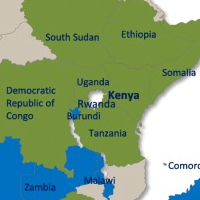
Construyendo la capacidad de laboratorio para el diagnóstico de patógenos en Kenia
Desde 1979, múltiples programas de los CDC en Kenia han apoyado el desarrollo de experiencia en diagnóstico y capacidad de laboratorio en Kenia. En 2004, el programa de Detección Global de Enfermedades (DGD) de los CDC dentro de la División de Protección Global de la Salud en Kenia (DGHP-Kenia) inició una estrecha colaboración con el Instituto de Investigación Médica de Kenia (KEMRI) y desarrolló una asociación de laboratorio llamada Programa de Sistemas de Diagnóstico y Laboratorio (DLSP). DLSP se basó en los esfuerzos previos de los programas de malaria, virus de inmunodeficiencia humana (VIH) y tuberculosis (TB) y apoyó la expansión de la experiencia y capacidad de diagnóstico en KEMRI y el Ministerio de Salud. Primero, DLSP desarrolló capacidad de laboratorio para la vigilancia de enfermedades diarreicas, respiratorias, zoonóticas y febriles para comprender la carga etiológica de estas enfermedades comunes y apoyar decisiones basadas en evidencia sobre la introducción de vacunas y recomendaciones en Kenia. En segundo lugar, hemos evaluado e implementado nuevas tecnologías de diagnóstico como TaqMan Array Cards (TAC) para detectar patógenos emergentes o reemergentes y recientemente hemos agregado un secuenciador de próxima generación (NGS). En tercer lugar, DLSP brindó un rápido apoyo de diagnóstico de laboratorio para la investigación de brotes a Kenia y países regionales. Cuarto, DLSP ha estado ayudando al laboratorio nacional de salud pública de Kenia-Centro Nacional de Influenza y laboratorio de referencia de microbiología para obtener la certificación de la Organización Mundial de la Salud (OMS) y la acreditación ISO15189 respectivamente. Quinto, hemos apoyado el desarrollo del currículo de bioseguridad y bioseguridad para ayudar a los laboratorios de Kenia a manejar de manera segura y apropiada los patógenos infecciosos. Estos logros resaltan cómo, en colaboración con los programas existentes de los CDC que trabajan en VIH, tuberculosis y malaria, la Agenda de Seguridad de Salud Global puede mejorar significativamente la salud pública en Kenia y la región. Además, Kenia ofrece un ejemplo de cómo la ciencia de laboratorio puede ayudar a los países a detectar y controlar los brotes de enfermedades infecciosas y otras amenazas a la salud pública más rápidamente, mejorando así la seguridad sanitaria mundial.
-----------------------------------------------------------
Sigue este Blog en Facebook y Twitter
-----------------------------------------------------------
REFERENCIA:
Hunsperger, Elizabeth et al. Building laboratory capacity to detect and characterize pathogens of public and global health security concern in Kenya. BMC Public Health vol. 19, Suppl 3 477. 10 May. 2019, doi:10.1186/s12889-019-6770-9
Sigue este Blog en Facebook y Twitter
-----------------------------------------------------------
lunes, 2 de septiembre de 2019
#LIBRO: La biodefensa en la era de la biología sintética (INGLÉS)
![]() |
Publication Info188 pages | 8.5 x 11ISBNs:
|
La biodefensa en la era de la biología sintética explora y visualiza los posibles usos indebidos de la biología sintética. Este informe desarrolla un marco para guiar una evaluación de las preocupaciones de seguridad relacionadas con los avances en biología sintética, evalúa los niveles de preocupación garantizados para tales avances e identifica opciones que podrían ayudar a mitigar esas preocupaciones.
REFERENCE:
National Academies of Sciences, Engineering, and Medicine. 2018. Biodefense in the Age of Synthetic Biology. Washington, DC: The National Academies Press. https://doi.org/10.17226/24890.
-----------------------------------------------------------
Sigue este Blog en Facebook y Twitter
-----------------------------------------------------------
viernes, 30 de agosto de 2019
Developing Global Standards for Human Genome Editing, WHO
WHO is establishing a global multi-disciplinary expert panel to examine the scientific, ethical, social and legal challenges associated with human genome editing (both somatic and germ cell). The panel will review the current literature on the state of the research and its applications, and societal attitudes towards the different uses of this technology. WHO will then receive advice from the panel on appropriate oversight and governance mechanisms, both at the national and global level. Core to this work will be understanding how to promote transparency and trustworthy practices and how to ensure appropriate risk/benefit assessments are performed prior to any decision on authorization.
The recent application of tools such as CRISPR-Cas9 to edit the human genome have highlighted the need for the development of standards in this area. WHO’s expert working group will work in a consultative manner and build on existing initiatives. As WHO proceeds, we are liaising with relevant UN and other international agencies, and are in communication with Academies of Science and Medicine as well as with bodies that have produced previous reports.
REFERENCE:
First report of the Advisory Committee on Developing Global Standards for Governance and Oversight of Human Genome Editing (18-19 March 2019, Geneva) pdf, 251kb. REPORT OF THE FIRST MEETING. WHO.
-----------------------------------------------------------
Sigue este Blog en Facebook y Twitter
-----------------------------------------------------------
The recent application of tools such as CRISPR-Cas9 to edit the human genome have highlighted the need for the development of standards in this area. WHO’s expert working group will work in a consultative manner and build on existing initiatives. As WHO proceeds, we are liaising with relevant UN and other international agencies, and are in communication with Academies of Science and Medicine as well as with bodies that have produced previous reports.
REFERENCE:
First report of the Advisory Committee on Developing Global Standards for Governance and Oversight of Human Genome Editing (18-19 March 2019, Geneva) pdf, 251kb. REPORT OF THE FIRST MEETING. WHO.
-----------------------------------------------------------
Sigue este Blog en Facebook y Twitter
-----------------------------------------------------------
jueves, 29 de agosto de 2019
VIDEO: Sean Kaufman los invita al #SIBB19, en Guanajuato.
#Biosafety Considerations for Plants Developed by New Genetic Modification Techniques
The question whether new genetic modification techniques (nGM) in plant development might result in non-negligible negative effects for the environment and/or health is significant for the discussion concerning their regulation. However, current knowledge to address this issue is limited for most nGMs, particularly for recently developed nGMs, like genome editing, and their newly emerging variations, e.g., base editing. This leads to uncertainties regarding the risk/safety-status of plants which are developed with a broad range of different nGMs, especially genome editing, and other nGMs such as cisgenesis, transgrafting, haploid induction or reverse breeding. A literature survey was conducted to identify plants developed by nGMs which are relevant for future agricultural use. Such nGM plants were analyzed for hazards associated either (i) with their developed traits and their use or (ii) with unintended changes resulting from the nGMs or other methods applied during breeding. Several traits are likely to become particularly relevant in the future for nGM plants, namely herbicide resistance (HR), resistance to different plant pathogens as well as modified composition, morphology, fitness (e.g., increased resistance to cold/frost, drought, or salinity) or modified reproductive characteristics. Some traits such as resistance to certain herbicides are already known from existing GM crops and their previous assessments identified issues of concern and/or risks, such as the development of herbicide resistant weeds. Other traits in nGM plants are novel; meaning they are not present in agricultural plants currently cultivated with a history of safe use, and their underlying physiological mechanisms are not yet sufficiently elucidated. Characteristics of some genome editing applications, e.g., the small extent of genomic sequence change and their higher targeting efficiency, i.e., precision, cannot be considered an indication of safety per se, especially in relation to novel traits created by such modifications. All nGMs considered here can result in unintended changes of different types and frequencies. However, the rapid development of nGM plants can compromise the detection and elimination of unintended effects. Thus, a case-specific premarket risk assessment should be conducted for nGM plants, including an appropriate molecular characterization to identify unintended changes and/or confirm the absence of unwanted transgenic sequences.
REFERENCE:Eckerstorfer, Michael F et al. “An EU Perspective on Biosafety Considerations for Plants Developed by Genome Editing and Other New Genetic Modification Techniques (nGMs).” Frontiers in bioengineering and biotechnology vol. 7 31. 5 Mar. 2019, doi:10.3389/fbioe.2019.00031
-----------------------------------------------------------
Sigue este Blog en Facebook y Twitter
-----------------------------------------------------------
miércoles, 28 de agosto de 2019
Guía para el control de infecciones asociadas a la atención a la salud
Escrita por expertos internacionales en los campos de control de infecciones y epidemiología hospitalaria, la Guía para el Control de Infecciones Asociadas a la Atención en Saludde ISID reúne los principios e intervenciones más recientes que permitirán reducir la tasa de infección y el impacto de las consecuencias asociadas con ella para los pacientes, sus familias y los sistemas de salud, que incluyen: hospitalizaciones más largas; discapacidad a largo plazo; aumento de la resistencia antimicrobiana; mayores costos financieros y muertes innecesarias.
A medida que aumenta la importancia del campo de la prevención de infecciones y la ciencia que lo respalda continúa evolucionando, los objetivos de esta Guía son facilitar la implementación de medidas efectivas de prevención y control en los diferentes niveles de recursos para mejorar la calidad de la atención de salud, minimizar el riesgo, salvar vidas, reducir costos y limitar el uso de antibióticos para combatir estas infecciones a menudo prevenibles en todo el mundo.
La Guía está dividida en cuatro partes. Haga clic en cada capítulo para acceder a su contenido:
Agua del hospital
Aislamiento de enfermedades transmisibles
Alimentos:
Consideraciones para el control de infecciones hospitalarias
Áreas de laboratorio
Áreas de pacientes
y limpieza ambiental
Atuendo del
personal de atención médica en entornos no quirúrgicos
Control de
infecciones en obstetricia
Departamento de
urgencias y áreas de recepción
Desinfección en el
entorno hospitalario
Desviación positiva
en la prevención de infecciones
Estrategias
horizontales y verticales de control de infecciones
La farmacia
Gestión de residuos
Higiene de manos
Monitoreo de la
higiene de las manos
Nuevas tecnologías
para la prevención de infecciones
Paquetes para la
prevención de infecciones y prácticas seguras
Preparación del
paciente para la cirugía
Problemas de
organización y registro, incluyendo epidemias
El quirófano
Reutilización de
dispositivos desechables
El trabajador de la
salud como fuente de transmisión
Optimización de antimicrobianos en el entorno
hospitalario
Papel del laboratorio de microbiología en el control de infecciones
Resistencia a los antibióticos
Difteria, tétanos y tos ferina
Enterobacterias resistentes a carbapenem
Patógenos entéricos
bacterianos: Clostridium difficile, Salmonella, Shigella, Escherichia coli y
otros
Sarampión
Tuberculosis
-----------------------------------------------------------
Sigue este Blog en Facebook y Twitter
-----------------------------------------------------------
A medida que aumenta la importancia del campo de la prevención de infecciones y la ciencia que lo respalda continúa evolucionando, los objetivos de esta Guía son facilitar la implementación de medidas efectivas de prevención y control en los diferentes niveles de recursos para mejorar la calidad de la atención de salud, minimizar el riesgo, salvar vidas, reducir costos y limitar el uso de antibióticos para combatir estas infecciones a menudo prevenibles en todo el mundo.
La Guía está dividida en cuatro partes. Haga clic en cada capítulo para acceder a su contenido:
1. PREVENCIÓN
DE INFECCIONES EN EL AMBIENTE HOSPITALARIO
Agua del hospital
Aislamiento de enfermedades transmisibles
Alimentos:
Consideraciones para el control de infecciones hospitalarias
Áreas de laboratorio
Áreas de pacientes
y limpieza ambiental
Atuendo del
personal de atención médica en entornos no quirúrgicos
Control de
infecciones en obstetricia
Departamento de
urgencias y áreas de recepción
Desinfección en el
entorno hospitalario
Desviación positiva
en la prevención de infecciones
Estrategias
horizontales y verticales de control de infecciones
La farmacia
Gestión de residuos
Higiene de manos
Monitoreo de la
higiene de las manos
Nuevas tecnologías
para la prevención de infecciones
Paquetes para la
prevención de infecciones y prácticas seguras
Preparación del
paciente para la cirugía
Problemas de
organización y registro, incluyendo epidemias
El quirófano
Reutilización de
dispositivos desechables
El trabajador de la
salud como fuente de transmisión
2. RESISTENCIA
A LOS ANTIMICROBIANOS Y OPTIMIZACIÓN DE SU USO
Optimización de antimicrobianos en el entorno
hospitalario
Papel del laboratorio de microbiología en el control de infecciones
Resistencia a los antibióticos
3. INFECCIONES ADQUIRIDAS EN EL
HOSPITAL
4. PATÓGENOS
DE RELEVANCIA EPIDEMIOLÓGICA
Difteria, tétanos y tos ferina
Enterobacterias resistentes a carbapenem
Patógenos entéricos
bacterianos: Clostridium difficile, Salmonella, Shigella, Escherichia coli y
otros
Sarampión
Tuberculosis
-----------------------------------------------------------
Sigue este Blog en Facebook y Twitter
-----------------------------------------------------------
lunes, 26 de agosto de 2019
#LIBRO: La Edición del Genoma Humano (INGLÉS)
![]() |
Publication Info328 pages | 6 x 9ISBNs:
|
La Edición del Genoma Humano considera preguntas importantes sobre la aplicación humana de la edición del genoma, que incluyen: equilibrar los beneficios potenciales con riesgos no intencionados, gobernar el uso de la edición del genoma, incorporar los valores sociales en las aplicaciones clínicas y las decisiones políticas, y respetar las diferencias inevitables entre naciones y culturas que moldear cómo y si usar estas nuevas tecnologías. Este informe propone criterios para la edición de líneas germinales heredables, proporciona conclusiones sobre la necesidad crucial de educación pública y participación, y presenta 7 principios generales para la gobernanza de la edición del genoma humano.
REFERENCE:
National Academies of Sciences, Engineering, and Medicine. 2017. Human Genome Editing: Science, Ethics, and Governance. Washington, DC: The National Academies Press. https://doi.org/10.17226/24623.
-----------------------------------------------------------
Sigue este Blog en Facebook y Twitter
-----------------------------------------------------------
viernes, 23 de agosto de 2019
Gene editing using CRISPR/Cas9: implications for dual-use and biosecurity
We have read with interest the recent paper by Kang, et al (2017), addressing clinical and ethical issues related to the safe and responsible use of CRISPR/Cas. The authors provide a number of important considerations about the current capabilities offered by this novel gene-editing tool, including germ line editing in embryos, and potential diverse uses in adult human applications. The authors posit that the tool in of itself does not represent a threat, and that periodic assessment will ensure its responsible use. We agree, but with caveat: namely, that any tool that imparts great capability also involves at least some risk, if not threat, that the power conferred by such capacity can be used to leverage or evoke a variety of ends. This deviation of intent is a principal concern of dual-use research and its applications.
REFERENCE:
DiEuliis, Diane, and James Giordano. Gene editing using CRISPR/Cas9: implications for dual-use and biosecurity. Protein & cell vol. 9,3 (2018): 239-240. doi:10.1007/s13238-017-0493-4
-----------------------------------------------------------
Sigue este Blog en Facebook y Twitter
-----------------------------------------------------------
REFERENCE:
DiEuliis, Diane, and James Giordano. Gene editing using CRISPR/Cas9: implications for dual-use and biosecurity. Protein & cell vol. 9,3 (2018): 239-240. doi:10.1007/s13238-017-0493-4
-----------------------------------------------------------
Sigue este Blog en Facebook y Twitter
-----------------------------------------------------------
miércoles, 21 de agosto de 2019
Arthropod Containment Guidelines, Version 3.2
The Arthropod Containment Guidelines are a product of the work of the American Committee of Medical Entomology, a subcommittee of the American Society of Tropical Medicine and Hygiene. The guidelines provide a reference for research laboratories to assess risk and establish protocols for the safe handling of arthropod vectors of human and animal disease agents. The guidelines were originally published in 2004 and have been updated here to reflect the spectrum of vector taxa under investigation, and the demands of working with vector arthropods in the context of the Select Agent Rule.
REFERENCIA:
American Committee Of Medical Entomology American Society Of Tropical Medicine And Hygiene. Arthropod Containment Guidelines, Version 3.2. Vector borne and zoonotic diseases (Larchmont, N.Y.) vol. 19,3 (2019): 152-173. doi:10.1089/vbz.2018.2431
-----------------------------------------------------------
Sigue este Blog en Facebook y Twitter
-----------------------------------------------------------
REFERENCIA:
American Committee Of Medical Entomology American Society Of Tropical Medicine And Hygiene. Arthropod Containment Guidelines, Version 3.2. Vector borne and zoonotic diseases (Larchmont, N.Y.) vol. 19,3 (2019): 152-173. doi:10.1089/vbz.2018.2431
-----------------------------------------------------------
Sigue este Blog en Facebook y Twitter
-----------------------------------------------------------
martes, 20 de agosto de 2019
#CIENInarios Conferencia: "LOS CONFLICTOS DE LA RESPONSABILIDAD".
#CIENInarios Conferencia de Bioseguridad:
"LOS CONFLICTOS DE LA RESPONSABILIDAD". Sean G. Kaufman.
10 a 12 hrs. Viernes Agosto 30, 2019. Auditorio Dr. Fernando Rébora Gutiérrez.
Instituto Nacional de Enfermedades Respiratorias,
Calzada de Tlalpan 4502, Col. Sección XVI, Tlalpan, CDMX. 14080.
-----------------------------------------------------------
-----------------------------------------------------------
Suscribirse a:
Entradas (Atom)


