 |
| Overview of horizontal gene transfer in food products (For complete image click HERE). |
REFERENCIA:
Verraes C. Antimicrobial Resistance in the Food Chain: A Review. Int J Environ Res Public Health. 2013 July; 10(7): 2643–2669.

|
| Overview of horizontal gene transfer in food products (For complete image click HERE). |




 |
| ISBN 92 75 32380 1 OPS/HSP/HSE/08-2001 |

 |
| Vacunación |
Esta producción describe los problemas sanitarios y las actividades de socorro realizadas a raíz de los terremotos del 19 y 20 de septiembre de 1985 en México. El primer sismo, de magnitud 8,1 en la escala de Richer, dejó más de 10.000 muertos o desaparecidos y miles de heridos.

 |
| Publication details Pages: 301 Pub. date: 2005 Language : English ISBN 924154616 6 Download English |
 Abstract
Bolton SL, Kotwal G, Harrison MA, Law SE, Harrison JA, Cannon JL. Sanitizerefficacy against murine norovirus, a surrogate for human norovirus, on stainless steel surfaces when using three application methods. Appl Environ Microbiol. 2013
Feb;79(4):1368-77. doi: 10.1128/AEM.02843-12. Epub 2012 Dec 21. PubMed PMID:
23263949; PubMed Central PMCID: PMC3568589.
 |
| Download |
 |
| Published:July 2013 ST/SG/AC.10/1/Rev.18 Complete set of two volumes Sales No. 13.VIII.1 ISBN 978-92-1-139146-6 Price: US$ 155 Languages: E, F (A, C, R forthcoming) UNECE.ORG |


Benassai S. CLP Regulation and the transport of dangerous goods. Ann Ist Super
Sanita. 2011;47(2):153-6. doi: 10.4415/ANN_11_02_06. PubMed PMID: 21709384.
 |
Organización Panamericana de la Salud
“Manual de esterilización para centros de salud”
Washington, D.C.: OPS, © 2008
ISBN 978-92-75-32926-9 |
 |
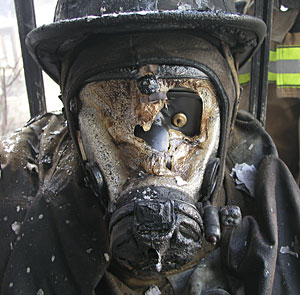
| Types of respiratos usen in the study left: Drager; right: MSA |
Balkhyour MA. Evaluation of full-facepiece respirator fit on fire fighters in the municipality of Jeddah, Saudi Arabia. Int J Environ Res Public Health. 2013
Jan 14;10(1):347-60. doi: 10.3390/ijerph10010347. PubMed PMID: 23343987; PubMed
Central PMCID: PMC3564146.
 |
| ISBN: 978-9978-45-930-0 |
 |
| Biosafety precautions |
Elduma AH. Assessment of biosafety precautions in Khartoum state diagnostic laboratories, Sudan. Pan Afr Med J. 2012;11:19. Epub 2012 Feb 3. PubMed PMID:
22514753; PubMed Central PMCID: PMC3325057.
 |
| Black-light examination of the floor after the completion of study 1. |
Hickman-Davis JM, Nicolaus ML, Petty JM, Harrison DM, Bergdall VK.
Effectiveness of shoe covers for bioexclusion within an animal facility. J Am
Assoc Lab Anim Sci. 2012 Mar;51(2):181-8. PubMed PMID: 22776118; PubMed Central
PMCID: PMC3314521.

Kampf G, Ostermeyer C, Werner HP, Suchomel M. Efficacy of hand rubs with a lowalcohol concentration listed as effective by a national hospital hygiene society in Europe. Antimicrob Resist Infect Control. 2013 Jun 12;2(1):19. [Epub ahead of
print] PubMed PMID: 23759059; PubMed Central PMCID: PMC3689097.


Singh M, Sharma R, Gupta PK, Rana JK, Sharma M, Taneja N. Comparative efficacyevaluation of disinfectants routinely used in hospital practice: India. Indian J
Crit Care Med. 2012 Jul;16(3):123-9. doi: 10.4103/0972-5229.102067. PubMed PMID:
23188950; PubMed Central PMCID: PMC3506067

Oladeinde BH, Omoregie R, Odia I, Osakue EO, Imade OS. Biorisk assessment ofmedical diagnostic laboratories in Nigeria. Saf Health Work. 2013 Jun;4(2):100-4.
doi: 10.1016/j.shaw.2013.04.006. Epub 2013 Apr 25. PubMed PMID: 23961333.

 |
| Teaching microbiology laboratory www.mmg.msu.edu |
 |
| Vea imagen AQUI |
Oficiales de salud observan con horror como las bacterias llegan a ser resistente al poderoso antibiótico carbapenema, uno de los más recientes medicamentos en los estantes.Como regla, los oficiales de salud de alto rango evitan utilizar adjetivos apocalípticos. Por lo que fué preocupante escuchar a Thomas Frieden y Sally Davies advertir de la "pesadilla" que se acerca y de la "amenaza catastrófica" con pocos días de diferencia en Marzo.


 There is an increasing concern about the potential health hazards posed to workers exposed to inhalation of nanoparticles (NPs). Common sources of nanoparticles in working environments include fumes and exhausts from different processes like laser ablation and milling. Nanoparticles have potential toxic properties: a high particle surface area, number concentration, and surface reactivity. Inhalation, the most common route of nanoparticle exposure, has been shown to cause adverse effects on pulmonary functions, and the deposited particles in the lung can be translocated to the blood system by passing through the pulmonary protection barriers. Filtration is the simplest and most common method of aerosol control. It is widely used in mechanical ventilation and respiratory protection. However, concerns have been raised regarding the effectiveness of filters for capturing nanoparticles.
